



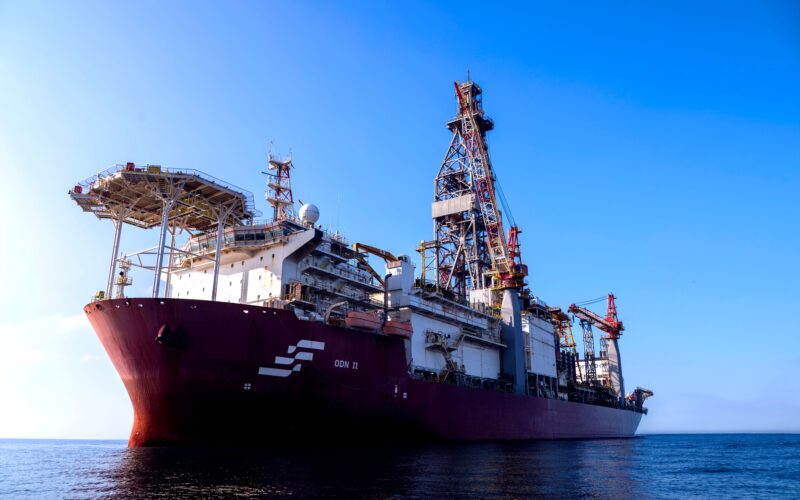
Petróleo Brasileiro S.A. – Petrobras (B3: PETR3, PETR4; NYSE: PBR, PBR.A) has identified another oil-bearing interval in the Morpho exploration well in Block FZA-M-59, extending the significance of an August discovery at the same ultra-deepwater location off Brazil’s Amapá coast. The latest interval was encountered as Petrobras continued drilling into deeper exploratory targets after its first hydrocarbon-bearing section, with the company saying the new oil discovery was identified through electric logs, rock indications and fluid samples collected during drilling. The well sits in water approximately 2,886 metres deep in the Foz do Amazonas Basin, part of Brazil’s broader Equatorial Margin exploration frontier.
The result is strategically important because it adds another positive subsurface data point at a location where Petrobras owns 100% of the block and is trying to establish whether an underexplored frontier can eventually contribute to reserve replacement. It is equally important not to overstate what has been proven. Petrobras has not disclosed recoverable resources, reservoir size, flow-test results, commercial reserves, development economics or a production timetable for Morpho, meaning the October 2 announcement establishes another oil occurrence rather than a commercial field.
What exactly changed between Petrobras’ August and October Morpho discoveries?
Petrobras first announced the presence of hydrocarbons at Morpho on August 14 after identifying a hydrocarbon-bearing interval through electric logs and rock indications. At that stage, drilling continued because the company wanted to evaluate deeper exploratory objectives rather than end the well after the initial discovery. Morpho is located around 175 kilometres from the Amapá coast and nearly 500 kilometres from the mouth of the Amazon River, while Petrobras operates Block FZA-M-59 with a 100% interest under a concession awarded in Brazil’s 11th licensing round in 2013.
The October update confirms that continuing deeper produced another oil-bearing interval. Petrobras said laboratory analysis of the first discovery has already confirmed good-quality oil, while samples and data from the newer interval are still being characterised and integrated into the wider geological model. The distinction matters because multiple hydrocarbon intervals can strengthen geological understanding without automatically proving that enough connected, recoverable oil exists to justify development.
For investors and the broader Brazilian upstream sector, Morpho is therefore becoming a geological story with increasing evidence but still limited commercial information. The next stage is not another headline about oil presence; it is reservoir evaluation capable of answering how much oil may be recoverable, how productive the formations could be and whether a development concept can clear Petrobras’ capital-allocation thresholds.
Why does a second oil interval materially improve the Equatorial Margin exploration case?
Frontier exploration depends on proving several elements of a petroleum system rather than merely drilling one successful well. Operators need evidence of source rocks, migration pathways, reservoir quality, trapping mechanisms and hydrocarbons accumulated in sufficient volume to support commercial development. Each additional oil-bearing interval at Morpho provides Petrobras with more information about how those elements interact inside the Foz do Amazonas Basin.
This matters because the Brazilian Equatorial Margin extends across a vast offshore area and is being evaluated partly in the context of significant discoveries made elsewhere along the wider equatorial Atlantic geological trend, including Guyana and Suriname. Petrobras itself characterises the margin as an important new frontier whose potential depends on further studies, licensing and project development rather than as a proven production province.
Morpho therefore cannot validate the economics of the entire Equatorial Margin on its own. Geological success at one block does, however, improve the value of seismic interpretation and exploration concepts applied to surrounding acreage, potentially influencing where Petrobras places its next wells and how aggressively it allocates capital across the frontier.
How much is Petrobras prepared to invest before commercial production is even visible?
Petrobras’ 2026–2030 business plan provides for approximately US$2.5 billion of investment in the Equatorial Margin and 15 new wells over the five-year period. That capital programme demonstrates that management views the region as a material reserve-replacement opportunity, but the US$2.5 billion should not be interpreted as money committed specifically to developing Morpho because it covers the wider exploration programme and related activity across the frontier.
This is an important capital-allocation distinction. Exploration expenditure buys information first and production only if the resulting discoveries prove commercial. A company can spend heavily across seismic, licensing, drilling and appraisal before determining whether a field deserves the much larger investment required for subsea infrastructure, floating production systems and export facilities.
Petrobras has deepwater operating experience from the Campos and Santos basins, which lowers some technical-learning risk relative to a less experienced operator. Yet frontier geology remains uncertain regardless of corporate expertise, and a successful exploration programme must ultimately convert discoveries into reserves capable of generating returns competitive with Petrobras’ existing pre-salt opportunities.
Why does 2,886 metres of water make Morpho economically demanding even if the reservoir proves large?
Ultra-deepwater discoveries require expensive drilling, subsea production equipment and offshore facilities capable of operating under extreme pressure and difficult marine conditions. Water depth alone does not determine project viability, but 2,886 metres places Morpho firmly inside a technical environment where development requires sophisticated subsea architecture and significant upfront capital.
Petrobras has extensive experience operating at these depths, which is one reason the company can contemplate frontier exploration that would be technically inaccessible to many smaller producers. The economic question is whether Morpho ultimately contains enough recoverable hydrocarbons to spread those infrastructure costs across a sufficiently large production base.
A small discovery can be valuable when it sits close to existing infrastructure. Morpho does not currently have that advantage because the Amapá deepwater frontier lacks the dense production hubs and pipelines found in mature Brazilian basins. If commercial development eventually occurs, project scale will therefore matter greatly.
Why is a resource estimate now more important than another discovery announcement?
The latest result changes the probability that Morpho contains a meaningful petroleum accumulation, but it does not establish its value. Investors need volumetric estimates, reservoir pressure, porosity, permeability, fluid characteristics and eventually flow information before they can begin modelling recoverability and economics.
Petrobras has explicitly said analysis is continuing and that collected information will be integrated with the drilling dataset. That language is important because the October discovery remains part of an evaluation process rather than a declaration of commerciality.
The most consequential next disclosure could therefore be quieter than the latest discovery announcement. A resource estimate showing meaningful scale, or an appraisal plan that suggests Petrobras sees a credible development case, would shift Morpho from geological evidence toward investment relevance. Conversely, additional oil indications without sufficient connected volume could leave the project commercially unresolved for years.
What does Morpho mean for Petrobras’ reserve-replacement strategy?
Petrobras already has one of the world’s strongest deepwater production portfolios through Brazil’s pre-salt, but those assets cannot remove the need to replenish long-term reserves. Large offshore projects take many years from exploration to first oil, meaning the company has to identify future production sources well before existing fields approach decline.
That is why the Equatorial Margin matters strategically even though commercial output remains uncertain. Petrobras says exploration in FZA-M-59 aligns with its long-term strategy of replacing oil and gas reserves through new frontiers while supporting Brazil’s future energy demand.
Morpho has now delivered two encouraging drilling results, including a deeper oil-bearing interval and confirmation that oil from the earlier discovery is of good quality. The evidence has strengthened, but the investment thesis must remain disciplined: Petrobras has found more oil, not yet a field whose recoverable size, development cost or future production can be responsibly stated.
Discover more from Business-News-Today.com
Subscribe to get the latest posts sent to your email.