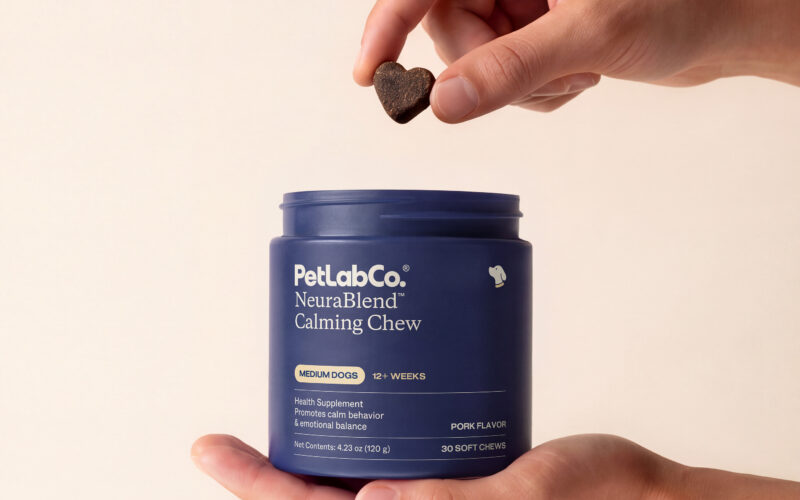
PetLabCo, the New York-based pet wellness brand, has launched NeuraBlend Calming Chew, a daily soft chew designed to support calm behavior in dogs experiencing changes in routine or stressful situations. Announced on October 13, 2026, the product combines ten active ingredients, including L-theanine, ashwagandha, valerian root and a postbiotic blend, without incorporating melatonin. It represents PetLabCo’s first entry into the calming product category, extending an existing portfolio spanning digestive health, joint support, seasonal wellness and dental care. The launch creates another potential recurring-purchase category for the company, although ingredient-level research and veterinary review should not be interpreted as proof that the complete formulation effectively treats canine anxiety disorders.
The product arrives ahead of a period when families may be preparing for holiday travel, boarding arrangements and changes to household routines. PetLabCo is positioning NeuraBlend around both anticipated stressful events and everyday situations such as car journeys, unfamiliar environments and fireworks. This broad application gives the product potential relevance beyond a single seasonal purchasing period.
PetLabCo has developed the product as a pork-flavored chew available in formulations suited to different dog sizes. This delivery format aligns with the company’s wider pet supplement model, where products are designed to become part of regular pet care routines. For the business, the challenge is to build consumer confidence around behavioral wellness while distinguishing a nutritional product from veterinary treatment.
What are the ten ingredients in PetLabCo NeuraBlend, and how is the formula designed to work?
NeuraBlend combines a postbiotic blend, botanical ingredients, amino acids and other nutritional components within a single chew. Its ingredients include PRIOME MW, chamomile, L-theanine, KSM-66 ashwagandha root extract, passion flower, valerian root, L-tryptophan, alpha-lactalbumin, gamma-aminobutyric acid and magnesium citrate. PetLabCo groups the ingredients around four proposed mechanisms involving the gut-brain axis, stress response, neurotransmitter activity and botanical support.
The postbiotic component, PRIOME MW, contains heat-treated microorganisms and is marketed around gut-brain signaling. Postbiotics differ from live probiotic organisms because they involve preparations of inanimate microorganisms or their components. Their inclusion reflects growing commercial interest in whether gastrointestinal biology can influence behavior and broader wellness outcomes.
L-theanine and selected botanical ingredients are commonly marketed in calming formulations because of their proposed effects on relaxation-related pathways. Ashwagandha has also been investigated for stress-related outcomes in humans and dogs, although research results depend on the particular extract, dosage and study design. Combining these ingredients in a new formulation does not automatically produce additive benefits.
The inclusion of amino acids and neurotransmitter-related compounds gives NeuraBlend a broader formulation strategy than products based on a single calming botanical. However, demonstrating a plausible biological mechanism is different from establishing meaningful behavioral improvement. Product-specific controlled trials would be necessary to determine whether the complete ten-ingredient formulation produces reliable outcomes.
Why has PetLabCo introduced a melatonin-free calming chew for everyday canine stress?
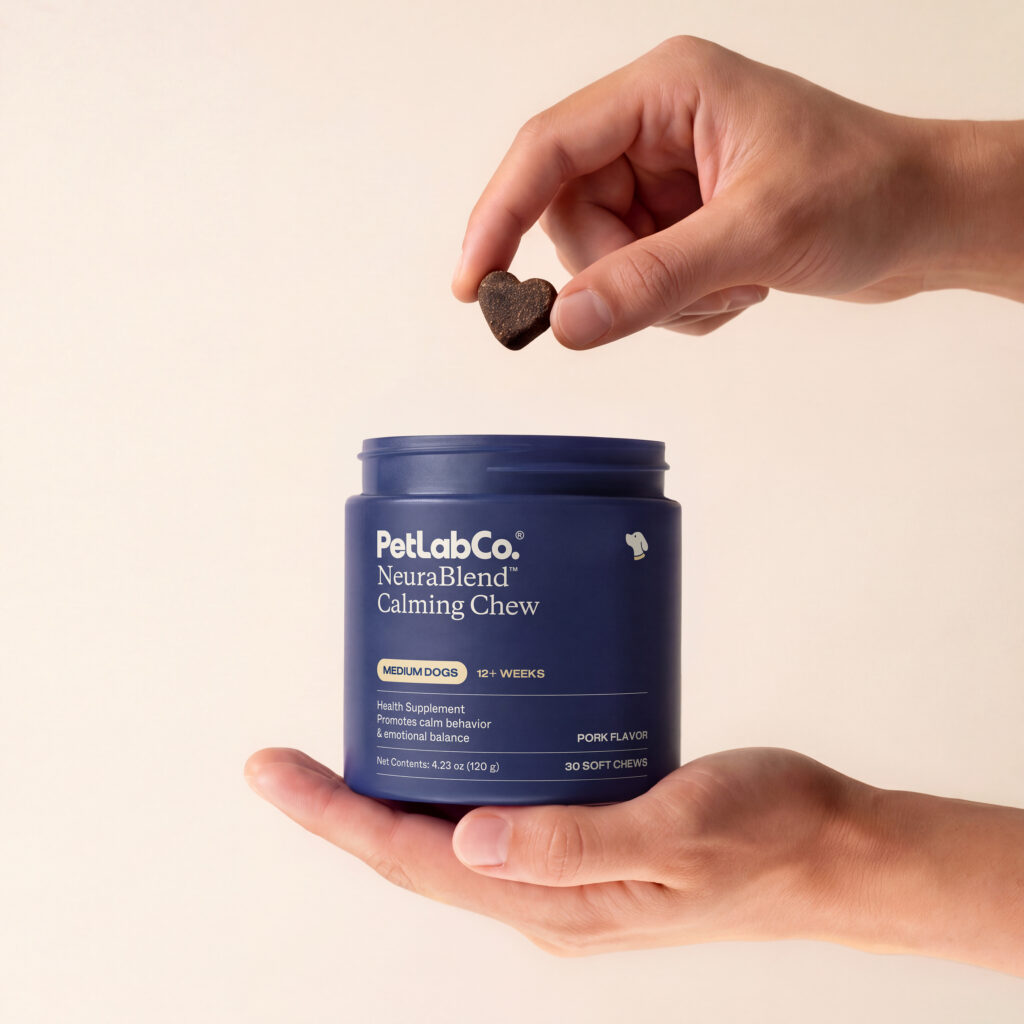
PetLabCo emphasizes that NeuraBlend does not contain melatonin, positioning it for daily use without relying on that hormone as a calming ingredient. The company markets the formula as supporting relaxed behavior while avoiding unwanted sluggishness. That differentiation could appeal to owners seeking a product intended for routine use rather than occasional sedation.
However, the absence of melatonin does not independently prove that a formulation is non-sedating or free from adverse effects. Botanical ingredients and other active substances may have physiological effects, and responses can vary between animals. The product’s safety and tolerability therefore need to be considered according to the full formulation and the individual dog’s health status.
The company has also developed a protocol for anticipated stressful events that begins seven days beforehand and extends beyond the event itself. This approach frames the product around preparation rather than solely immediate intervention. It could encourage sustained use, but the announcement does not establish that the schedule has been validated in a controlled clinical trial of the complete formulation.
Chris Masanto, chief executive officer and co-founder of PetLabCo, explained that the company wanted a calming product suitable for incorporation into everyday routines while also helping owners prepare for predictable stressful situations. The strategy reflects a wider commercial opportunity in preventive pet wellness, where owners increasingly seek products addressing specific concerns before they become disruptive.
How much does PetLabCo NeuraBlend cost, and what does the pricing reveal about its market positioning?
PetLabCo has introduced NeuraBlend in 30-day tubs with recommended retail prices varying by dog size. The small-dog format is priced at $38.60, the medium-dog format at $41.26 and the large-dog format at $43.93. The products are intended for dogs within specified weight ranges, with the formulation scaled to accommodate different sizes.
This pricing places NeuraBlend within the premium pet wellness market rather than the basic treat category. The format encourages daily purchasing behavior, potentially creating a recurring monthly expenditure for pet owners who adopt the product. The company also promotes subscription purchasing options, consistent with its broader direct-to-consumer strategy.
Subscription sales can provide a more predictable revenue stream than occasional purchases if customer retention remains strong. They also introduce an additional commercial consideration: owners need to perceive sufficient benefit to justify recurring costs. If the product does not deliver noticeable improvements in a dog’s everyday behavior, discontinuation could limit the value of initial customer acquisition.
The size-based pricing also shows how the company is adapting its product economics to different consumption requirements. Larger dogs receive a formulation with higher amounts of several active ingredients, reflecting the need for differentiated serving quantities. Consumers may compare those costs with alternative calming products, behavioral training and veterinary services when evaluating overall value.
What does veterinary evidence say about ingredients used in calming supplements for dogs?
Evidence for canine calming supplements varies considerably by ingredient. Research has investigated L-theanine, ashwagandha and other substances for stress-related behavior, but studies are often limited by sample sizes, differing formulations or methodological constraints. Results from human clinical studies should not automatically be used to establish effectiveness in dogs.
A randomized controlled study of standardized ashwagandha root extract in domestic dogs reported improvements in certain stress-related measures compared with placebo. Such results provide a basis for further scientific investigation but do not establish that every ashwagandha-containing product will produce equivalent benefits. The finished formulation, amount administered and intended use all influence the relevance of research findings.
PetLabCo describes NeuraBlend as veterinarian-reviewed, which indicates professional involvement in formulation assessment. That is not equivalent to regulatory approval as a treatment for an anxiety disorder or evidence that the finished product has completed clinical efficacy trials. The distinction is important because canine anxiety may involve behavioral or medical conditions requiring individual veterinary evaluation.
United States regulatory treatment of animal wellness products also differs from that of human dietary supplements. The Food and Drug Administration does not apply the human dietary supplement framework in the same way to animal products, which may be regulated as foods or drugs depending on their intended use and claims. Manufacturers therefore need to ensure that product positioning remains consistent with applicable animal health requirements.
Can NeuraBlend become a meaningful addition to PetLabCo’s pet wellness portfolio?
NeuraBlend expands PetLabCo into an additional category that may generate year-round purchasing rather than dependence on a limited number of seasonal events. Although holiday travel provides a timely reason for launching the product, canine behavioral concerns can arise throughout the year. The company can therefore position NeuraBlend around everyday pet care as well as predictable stressful situations.
The launch also provides an opportunity to introduce existing PetLabCo customers to another specialized product. Owners purchasing digestive, joint or dental wellness formulations may be receptive to a behavioral wellness offering from the same brand. That commercial advantage depends on trust, product compatibility and the perceived benefits of the new formulation.
PetLabCo has not disclosed sales forecasts, initial order volumes or revenue expectations for NeuraBlend. As a result, the financial contribution of the launch remains uncertain. Product-specific efficacy research, customer retention and sustainable subscription demand would provide more meaningful indicators of success than the breadth of the ingredient list.
The company has entered a category where consumers may be seeking convenient solutions to challenging behavioral situations. Its commercial potential will be strongest if NeuraBlend develops a credible position as a supportive wellness product while recognizing the limitations of supplementation for clinically significant anxiety. The next measurable proof point will be whether sustained consumer adoption is accompanied by transparent safety information and stronger evidence for the complete formulation.
Key takeaways from PetLabCo’s NeuraBlend calming chew launch
- PetLabCo introduced NeuraBlend on October 13, 2026.
- The product is the company’s first entry into the canine calming category.
- NeuraBlend combines ten active ingredients.
- Its formulation includes L-theanine, ashwagandha, valerian root and a postbiotic blend.
- The product contains no melatonin.
- Recommended retail prices range from $38.60 to $43.93 for 30-day tubs.
- The company targets everyday stress and predictable situations such as travel.
- Veterinary review does not establish finished-product clinical efficacy.
- Recurring demand, safety and product-specific evidence will determine commercial sustainability.
Discover more from Business-News-Today.com
Subscribe to get the latest posts sent to your email.