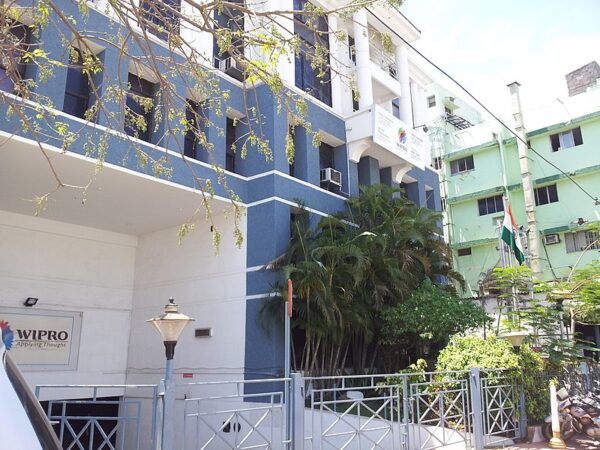

PDS Limited (NSE: PDSL, BSE: 538730) has realigned its manufacturing leadership and strategy in a bid to drive operational consistency, strengthen high-value customer relationships, and scale its segment profitability. The appointment of Abhishek Nawani as Chief Executive Officer of Manufacturing marks the formal consolidation of its regional units under a unified commercial vision while retaining local autonomy.
The move signals a deeper integration across the company’s fast-growing manufacturing segment, which has already recovered from prior losses and posted ₹788 crore in revenue with ₹33 crore in pre-tax profit in FY25, up from a PBT loss of ₹104 crore in FY21. For a company that built its reputation as a platform for global sourcing and fashion infrastructure, the renewed focus on manufacturing reflects a broader ambition: to move further up the value chain and institutionalize customer-led operations.
Why is PDS Limited realigning its manufacturing leadership now—and what does it aim to solve?
The timing of this leadership shift aligns with PDS Limited’s transition from segment stabilization to growth enablement. Its FY25 financials reveal a manufacturing business that has turned the corner—profitability has returned, revenues have nearly tripled in four years, and newly acquired Indian assets such as Knit Gallery (₹267 crore in FY25 revenue) have been integrated into the portfolio.
But for PDS Limited, the challenge now is not survival, but consistency. The company’s manufacturing units, including Progress Apparels and Good Earth in Bangladesh, and Knit Gallery in India, have been operating as independent profit centers. This structure helped maintain local accountability and agility, but it limited the company’s ability to present a cohesive manufacturing front to major clients. As global fashion buyers seek partners with multi-country scale, ESG alignment, and operational integration, PDS Limited is moving to centralize strategic oversight without losing execution-level flexibility.
The appointment of Abhishek Nawani to lead the manufacturing segment is a step toward solving this coordination gap. Nawani, who has over 30 years of apparel sourcing and manufacturing experience across India, Bangladesh, Indonesia, Cambodia, and Egypt, will be responsible for the entire P&L of the segment. His mandate spans customer engagement, unit-level synergies, and executional consistency—key levers for delivering better margins as PDS Limited scales its physical infrastructure.
How does this move position PDS against global sourcing and manufacturing competition?
With more than $2.2 billion in Gross Merchandise Value and a global footprint covering 90 offices in 22 countries, PDS Limited has long competed as a sourcing partner to large Western retailers. But as the fashion supply chain reconfigures around speed, sustainability, and multi-shore production capacity, the line between sourcing agent and manufacturer is blurring.
By integrating its manufacturing capabilities more tightly under one leadership umbrella, PDS Limited is mimicking platform strategies seen in other global supply chain leaders. Instead of operating merely as a broker between buyers and factory owners, the company is building a vertically coordinated model with ownership or deep operational alignment across critical production nodes.
This makes it more competitive against regional apparel manufacturing groups with strong ESG credentials, such as Hirdaramani in Sri Lanka or Busana Apparel Group in Indonesia, which already offer integrated services. Notably, Nawani himself has prior leadership experience with Busana and PVH, bringing relevant playbook experience to the table.
PDS Limited’s approach also differentiates it from traditional vertically integrated retailers, who often suffer from internal complexity and asset rigidity. By allowing its units to remain independent profit centers while orchestrating strategy centrally, the company is attempting a hybrid model that blends decentralization with coherence—a balancing act that could unlock client stickiness without overextending capital.
What are the execution risks as PDS transitions from recovery to scalable growth in manufacturing?
Although PDS Limited’s manufacturing rebound is impressive, the transition from recovery to repeatability brings new risks. Chief among them is operational discipline. As the company scales manufacturing output and builds longer-term customer relationships, lapses in quality, delivery schedules, or ESG compliance could have cascading effects on global contracts.
Furthermore, while the regional units will remain autonomous, alignment on sourcing norms, cost structures, and reporting will be essential for delivering the promised consistency to multinational buyers. The risk of friction between independent unit leadership and centralized P&L control cannot be discounted.
There’s also the capital discipline factor. PDS Limited’s ability to grow manufacturing without overcommitting on asset-heavy expansion, particularly in volatile regions like Bangladesh, will determine how sustainable this growth trajectory is. The company’s recent acquisition of Knit Gallery hints at a preference for M&A-driven scale rather than greenfield expansion, which may help moderate upfront risk, but could increase integration complexity.
Lastly, attracting and retaining skilled leadership at the unit level while shifting strategic control to the group CEO of manufacturing may present cultural alignment challenges, especially in geographies where management autonomy has traditionally been high.
What does this say about PDS Limited’s broader transformation strategy?
This leadership announcement is not just about organizational structure—it signals a strategic pivot in how PDS Limited defines its core value proposition. From being seen primarily as a high-volume sourcing platform, the company is now positioning itself as a value chain orchestrator with embedded manufacturing capacity. This aligns with global fashion buyers’ post-pandemic priorities: nearshoring, vendor consolidation, and integrated ESG compliance.
By advancing this hybrid model, PDS Limited is trying to capture value beyond sourcing commissions and towards manufacturing-linked profitability. The 2025 performance turnaround in the manufacturing segment has given it financial headroom and confidence to bet bigger.
Longer term, the company’s ability to standardize processes across units, improve margin control, and deepen client commitments through manufacturing will shape how much wallet share it can win from global brands. Whether PDS can translate its scale and footprint into durable competitive advantage will depend on how it manages complexity at scale while retaining executional flexibility on the ground.
Key takeaways on how PDS Limited’s manufacturing realignment could impact growth and positioning
- PDS Limited has appointed Abhishek Nawani as Chief Executive Officer of Manufacturing to centralize leadership across its profit-generating manufacturing units.
- The move follows a dramatic financial recovery in the segment, with FY25 revenues reaching ₹788 crore and pre-tax profit turning positive at ₹33 crore.
- Manufacturing units in Bangladesh and India will retain operational independence but now align under a unified growth and customer engagement strategy.
- This structure allows PDS to present an integrated front to global clients while driving internal consistency and cost efficiencies.
- The company’s hybrid model blends central strategy with local autonomy. This may offer an advantage over both sourcing agents and traditional manufacturers.
- Execution risks include quality control, inter-unit friction, and integration complexity, particularly as customer contracts grow in size and scope.
- The strategic shift positions PDS Limited to capture higher-margin value upstream in the global fashion supply chain.
- Investor sentiment will depend on how successfully the company balances growth with capital discipline and operational control.
Discover more from Business-News-Today.com
Subscribe to get the latest posts sent to your email.