

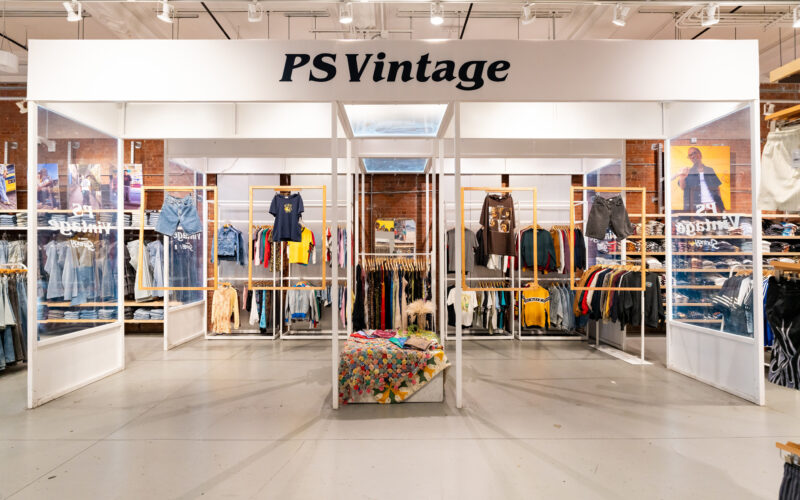
Pacsun has launched its PS Vintage resale program in 16 stores, extending a concept that first appeared online into physical retail at a time when both secondhand fashion and store-based discovery are gaining renewed strategic weight. The move, announced on April 11, adds a rotating assortment of one-of-a-kind pre-loved apparel sourced through partner SPRINGY, giving Pacsun a fresh merchandising layer that is designed to drive store visits, dwell time, and repeat engagement. For Pacsun, this is not just a sustainability-friendly add-on. It is a retail traffic play, a margin experiment, and a brand-positioning move aimed squarely at younger shoppers who increasingly value individuality over uniform trend cycles.
Why is Pacsun moving PS Vintage into stores when digital resale already exists?
That is the real question here, because online resale is not exactly a new frontier. Pacsun already launched PS Vintage online in late 2025, also with SPRINGY, so the jump into stores suggests management believes the category works better when shoppers can browse unpredictably, touch the fabric, and try on pieces in real time. In other words, Pacsun seems to be treating resale less like e-commerce inventory and more like experiential merchandising. Vintage is not just bought. It is hunted. Retailers know that treasure-hunt behavior is one of the few things the internet still struggles to fully replicate without making the experience feel like scrolling through digital attic clutter.
That matters because Pacsun is also leaning back into brick-and-mortar expansion. The retailer said in late 2025 that it was increasing its domestic store count for the first time in 18 years, after opening nine U.S. locations in 2025 and signing additional leases for 2026. That broader expansion context makes PS Vintage look less like an isolated concept and more like part of a bigger thesis: if stores are going to earn their keep again, they need to offer reasons to visit that go beyond basic replenishment shopping. Resale, especially curated vintage, fits that brief rather neatly.

How does Pacsun’s PS Vintage strategy fit the wider resale fashion boom in 2026?
The timing is hardly accidental. The resale market continues to grow faster than the broader apparel market, and ThredUp’s 2026 resale report said Gen Z is expected to drive 40% of overall growth in the category. That is a useful signal for Pacsun because Gen Z is not merely resale-curious. It is increasingly identity-driven in its fashion choices, and vintage gives retailers a way to sell uniqueness without designing it from scratch every season. That is retail’s version of having customers pay for scarcity while still talking about values. Neat trick if you can pull it off.
But there is a second layer here. Resale is becoming attractive not just because of sustainability optics, but because it helps brands participate in value-conscious spending without entering a race to the bottom on new-product discounts. Inflation-weary consumers still want style, but many do not want full-price sameness. Curated secondhand lets retailers serve that need while preserving a sense of discovery and cultural credibility. Pacsun’s positioning around youth culture makes that particularly relevant. A generic basics retailer doing this might look opportunistic. Pacsun doing it can plausibly claim it is matching how its audience already shops and expresses itself.
Can in-store resale actually improve Pacsun’s traffic and customer retention economics?
Potentially, yes, though the answer depends on execution. In-store resale can do something traditional assortment often cannot: make every visit feel unfinished. Because no two pieces are identical and inventory refreshes continuously, customers have a reason to come back frequently without waiting for a formal product drop. That gives Pacsun a rotating source of novelty that does not rely solely on brand collaborations or seasonal resets.
This could be especially useful in malls and lifestyle centers where footfall is recovering unevenly and retailers need more than price promotions to stay relevant. A vintage section can act as a traffic magnet inside the store while still feeding cross-sell opportunities into Pacsun’s newer apparel and accessories business. Shoppers may arrive for the one-off denim jacket and leave with a full-price pair of sneakers or a modern basics bundle. That is where the economics get interesting. The resale rack is not just a category. It can be an acquisition funnel.
Still, this model is not frictionless. Curation quality has to remain high. If the vintage mix begins to feel random, overpicked, or too obviously engineered, the magic evaporates. Gen Z shoppers are highly responsive to authenticity cues and equally fast at detecting when something feels staged for them rather than discovered by them. Curated chaos works. Fake chaos does not.
What does the SPRINGY partnership tell us about how Pacsun wants to scale resale?
The partnership with SPRINGY is an important clue because it suggests Pacsun does not want to build a secondhand sourcing and operations engine from scratch. That is sensible. Resale logistics are messy, and cleaning, grading, categorising, pricing, and replenishing one-of-a-kind inventory is a different operational muscle from buying standard seasonal apparel at scale. By leaning on a specialist partner, Pacsun reduces operational complexity while testing how far resale can travel inside its store network.
That approach also gives Pacsun optionality. If PS Vintage proves effective as a traffic and loyalty driver, Pacsun can expand it further without having first sunk large capital into a standalone resale infrastructure. If performance disappoints, it can slow the rollout with less pain. For many retailers, partnerships like this are the modern version of dipping a stylish sneaker into cold water before buying the whole pool.
The rollout itself also hints at an iterative strategy. When PS Vintage launched online in December 2025, Pacsun said a nationwide in-store rollout was coming to 15 locations in January 2026. The latest announcement says the concept is now available in 16 stores, indicating that the company has moved beyond the original launch framing and is gradually building a broader physical test bed.
Why does Pacsun’s resale push matter for mall retail and youth-focused fashion brands?
Because it reflects a wider shift in what stores are expected to do. For years, physical retail was judged mostly on distribution efficiency and conversion. Now it is being asked to function as theatre, community signal, and content backdrop, all while still selling product. Resale slots neatly into that expanded job description. It adds texture to the floor, creates story-worthy finds, and gives younger shoppers something that feels less standardized than wall-to-wall newness.
For youth-focused brands, that could become increasingly important as fashion cycles fragment and algorithm-driven trend saturation makes uniqueness harder to monetize. Everyone can copy a trend quickly. Not everyone can offer a genuinely one-of-one in-store find. In that sense, Pacsun is not simply adding vintage. It is defending relevance in a world where sameness is easier to manufacture than ever.
The broader fashion sector is already moving in this direction. Analysts at McKinsey flagged resale growth as one of the major themes shaping the industry in 2026, while multiple apparel brands continue to test take-back, resale, and recommerce models. The significance of Pacsun’s move is that it is not presenting resale as an afterthought bolted onto a corporate responsibility page. It is integrating it into the shopping experience itself.
What could go wrong if Pacsun tries to turn PS Vintage into a bigger store concept?
The obvious risk is inconsistency. Resale sounds romantic until supply quality slips, size availability gets patchy, or pricing starts to feel too close to new merchandise. If shoppers perceive the assortment as overpriced thrift rather than curated vintage, the concept can lose credibility fast. A one-of-a-kind product only feels special if the shopper believes it earned that status.
There is also a branding tightrope. Pacsun has long traded on trend relevance, youth culture, and accessible style. Vintage complements that identity, but only if it stays additive rather than cannibalistic. Too much floor space devoted to one-off items can complicate a retailer’s operating rhythm, especially if forecasting, staffing, and merchandising are built around scalable inventory models.
And then there is the sustainability narrative, which always deserves a raised eyebrow. Resale can reduce waste and extend garment life, but its environmental benefit depends on whether it meaningfully displaces new purchases rather than simply encouraging more overall consumption. Retailers love circularity language. Reality tends to be slightly less circular and slightly more cash-register-shaped. Pacsun will need to ensure the concept feels commercially disciplined rather than morally accessorized.
What does Pacsun’s PS Vintage launch suggest about the next phase of fashion retail strategy?
It suggests that the next phase of fashion retail will be less about choosing between physical and digital and more about designing stores that can do things the feed cannot. Pacsun appears to be betting that young consumers still want physical retail, just not the old version of it. They want stores that feel curated, social, and personally rewarding, not merely transactional.
PS Vintage fits that thesis because it combines several trends at once: resale growth, value sensitivity, individuality, and store rediscovery. It also gives Pacsun a way to expand its fashion vocabulary without depending entirely on new-product cycles. That may prove especially useful if the apparel environment remains volatile and youth spending becomes more selective.
For now, the rollout is small enough to be called a test but strategic enough to be taken seriously. If it works, Pacsun gains a replicable playbook for making stores feel culturally alive again. If it does not, the lesson for the industry will be equally clear: not every resale trend translates neatly from browser tab to shop floor.
What are the key takeaways on how Pacsun’s PS Vintage store rollout could affect fashion retail strategy?
- Pacsun is using resale as a store-traffic and engagement tool, not merely a sustainability message.
- The PS Vintage rollout aligns with Pacsun’s broader decision to grow its physical footprint again after years of contraction.
- In-store vintage gives Pacsun a stronger treasure-hunt dynamic that pure e-commerce resale often struggles to reproduce.
- The partnership with SPRINGY lets Pacsun test resale economics without building the full backend itself.
- Gen Z’s growing role in resale demand makes the concept strategically aligned with Pacsun’s core consumer base.
- Rotating one-of-a-kind inventory can support repeat visits and cross-selling into full-price merchandise.
- Execution risk remains high because curation quality, pricing discipline, and authenticity all matter more in resale than in standard assortment.
- The move reflects a wider industry shift toward stores as discovery environments rather than simple distribution points.
- If PS Vintage scales successfully, rival youth-focused retailers may face pressure to create their own in-store recommerce or vintage concepts.
- The bigger retail signal is that physical stores may regain relevance when they offer unpredictability, not just availability.
Discover more from Business-News-Today.com
Subscribe to get the latest posts sent to your email.