



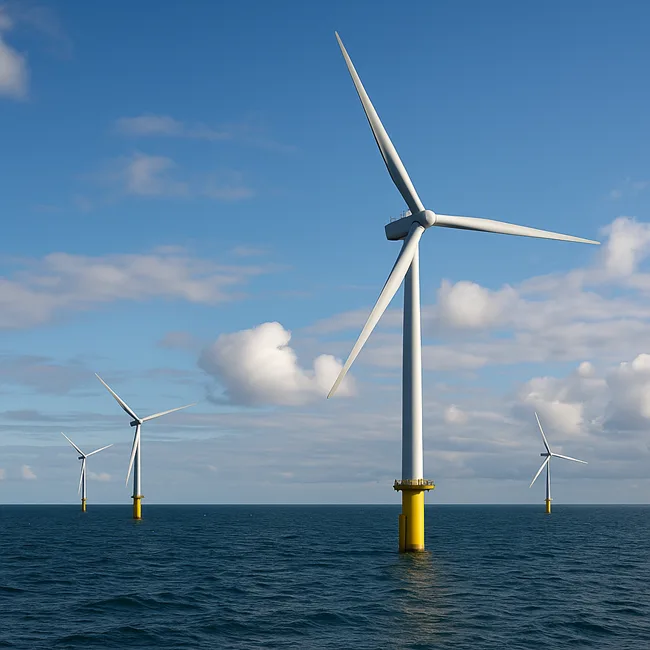
The Department for Energy Security and Net Zero has granted development consent for the 1.5 gigawatt Outer Dowsing Offshore Wind (Generating Station), developed by TotalEnergies SE, Corio Generation, and Gulf Development. The decision enables construction of up to 100 turbines 54 kilometres off the Lincolnshire coast, positioning the project as a material contributor to the United Kingdom’s 50 gigawatt offshore wind target by 2030. Strategically, the approval advances one of the largest Round 4 seabed awards toward execution at a time when cost inflation, grid constraints, and supply chain bottlenecks are reshaping project economics across the North Sea.
How does the Outer dowsing offshore wind approval reshape the UK’s offshore wind delivery pipeline?
Development Consent Order approval removes the primary planning hurdle under the Planning Act 2008 framework, allowing the Outer Dowsing project to move toward final investment decision and construction sequencing. The Planning Inspectorate completed the examination within statutory timelines, marking the 104th energy application processed to date, reinforcing the UK’s institutional capacity to process complex infrastructure at scale.
For policymakers, this matters because delivery cadence, not policy ambition, is the binding constraint. The United Kingdom has committed to 50 gigawatts of offshore wind by 2030, but attrition risk across consenting, financing, and grid connection has threatened timelines. By advancing a 1.5 gigawatt asset through consent, the government reduces execution uncertainty within the Round 4 cohort and signals regulatory continuity to investors assessing multi-billion-pound capital allocation.
The project’s secured grid connection for November 2030 aligns with national targets. However, the real test lies in synchronising turbine procurement, transmission build-out, and supply chain mobilisation in a cost environment that has forced renegotiations across several UK offshore wind projects in recent years.
Why is TotalEnergies deepening its UK offshore wind exposure at this stage of the cycle?
TotalEnergies SE has positioned itself as a multi-energy portfolio manager, targeting 100 gigawatts of renewable generation capacity globally by 2030. Outer Dowsing strengthens its UK offshore footprint, adding to a pipeline that spans both bottom-fixed and floating wind.
The strategic calculus is clear. Offshore wind in the Southern North Sea offers scale, policy support, and long-duration contracted revenue potential. By progressing a 1.5 gigawatt project with construction potentially beginning in 2027 and first power targeted for 2030, TotalEnergies locks in optionality ahead of tightening decarbonisation mandates across Europe.
For Corio Generation, a Macquarie Asset Management portfolio company, the consent validates a development-led model that aims to originate and de-risk assets before recycling capital. For Gulf Development, the Thai energy investor, the project represents geographic diversification and long-duration hard-asset exposure aligned with net zero commitments.
Execution discipline will determine whether this strategic exposure translates into acceptable returns. Offshore wind economics remain sensitive to turbine pricing, interest rates, and contract-for-difference auction parameters. Any misalignment between capital costs and strike prices could compress margins.
What are the grid and infrastructure implications of the Lincolnshire landfall and Surfleet Marsh substation?
The project includes offshore and onshore high voltage cables, with landfall near Anderby Marsh and an onshore substation at Surfleet Marsh in South Lincolnshire. From a system perspective, the integration challenge is not generation capacity alone but transmission readiness.
The United Kingdom’s grid infrastructure has become a bottleneck for renewable integration. By securing a defined connection timeline, Outer Dowsing reduces one layer of uncertainty, but the broader question remains whether National Grid upgrades and offshore transmission owner frameworks can keep pace with cumulative offshore additions.
For Lincolnshire and the East Midlands, the infrastructure footprint introduces both local economic stimulus and environmental scrutiny. The six-month examination incorporated community input, reflecting heightened sensitivity to onshore cable routing and land use impacts. The Planning Inspectorate’s recommendation to the Secretary of State indicates that environmental mitigation measures met statutory thresholds.
How credible are the economic impact claims of £2 billion investment and 1,000 construction jobs?
The project sponsors estimate up to £2 billion of UK investment over a lifetime exceeding 35 years, with more than 1,000 skilled construction jobs and hundreds of operations roles. These projections align with sector benchmarks for assets of comparable scale.
However, from an executive standpoint, the distribution of economic value warrants scrutiny. Turbine manufacturing remains concentrated among a limited set of European and Asian suppliers. The extent to which domestic content is embedded in nacelles, blades, foundations, and cables will determine the depth of local multiplier effects.
The British Energy Security Strategy has framed offshore wind as a pillar of industrial regeneration, targeting 90,000 jobs in the sector by 2028. Projects like Outer Dowsing contribute to that ambition, but sustained benefits depend on supply chain localisation rather than episodic construction peaks.
What execution risks could derail Outer dowsing offshore wind between consent and first power?
Securing development consent is a milestone, not a guarantee of delivery. Offshore wind developers across Europe have recently faced cost overruns, contract renegotiations, and supply chain delays. Turbine manufacturers have adjusted pricing to restore margins after absorbing inflationary shocks.
Financing risk remains material. Interest rates have stabilised relative to peak levels, but long-duration infrastructure remains capital intensive. Developers must align power price support mechanisms with funding structures that preserve equity returns.
There is also geopolitical exposure. The Southern North Sea has become a strategic energy corridor. Cable security, maritime congestion, and evolving defence considerations introduce a non-trivial risk layer that did not feature as prominently in earlier offshore wind build-outs.
Finally, 2030 remains an immovable policy anchor. If construction begins in 2027, schedule compression will leave limited margin for delay. Any slippage could push commissioning beyond the 2030 window, undermining contribution to national targets.
Does Outer dowsing offshore wind materially strengthen the UK’s energy security position?
At 1.5 gigawatts, Outer Dowsing is projected to generate enough electricity to supply approximately 1.6 million households, equivalent to around 80 percent of households in the East Midlands. From an energy security perspective, domestic offshore wind displaces imported fossil fuels and enhances supply resilience.
However, energy security is multidimensional. Intermittent generation must be paired with storage, grid flexibility, and balancing mechanisms. Offshore wind strengthens the supply side, but system reliability depends on integration with batteries, interconnectors, and flexible generation assets.
In that sense, Outer Dowsing should be viewed as a capacity building block rather than a standalone security solution. Its strategic value compounds when assessed within the broader North Sea cluster.
What does this decision signal about UK regulatory credibility for large-scale energy infrastructure?
The Planning Inspectorate’s completion of examination within statutory timelines reinforces the predictability of the Development Consent Order regime. For institutional investors evaluating multi-decade infrastructure exposure, regulatory consistency is as critical as subsidy levels.
The approval of Outer Dowsing indicates that, despite political transitions and evolving climate debates, the UK continues to process nationally significant infrastructure projects within a structured framework. That predictability lowers perceived sovereign risk relative to jurisdictions where permitting has stalled large renewable pipelines.
In competitive capital markets, regulatory credibility can be as decisive as resource quality.
What are the key takeaways for executives and investors assessing Outer dowsing offshore wind?
- Development Consent Order approval removes the primary planning barrier for a 1.5 gigawatt Southern North Sea asset aligned with the UK 50 gigawatt offshore wind target.
- TotalEnergies SE, Corio Generation, and Gulf Development are advancing a capital-intensive project that will test cost discipline in a still-fragile offshore wind supply chain.
- Grid connection timing for 2030 is critical; any transmission delays could undermine contribution to national clean power goals.
- The project reinforces UK regulatory predictability under the Planning Act 2008, supporting investor confidence in nationally significant infrastructure.
- Economic impact projections hinge on domestic supply chain participation rather than headline construction job numbers alone.
- Financing structures must absorb turbine price volatility and interest rate sensitivity to protect long-term returns.
- Offshore wind continues to anchor UK energy security strategy, but system resilience depends on storage and grid flexibility integration.
- The 2027 to 2030 execution window leaves limited tolerance for procurement or construction delays.
- Successful delivery would strengthen TotalEnergies’ European renewables portfolio and validate Corio Generation’s development-led model.
Discover more from Business-News-Today.com
Subscribe to get the latest posts sent to your email.