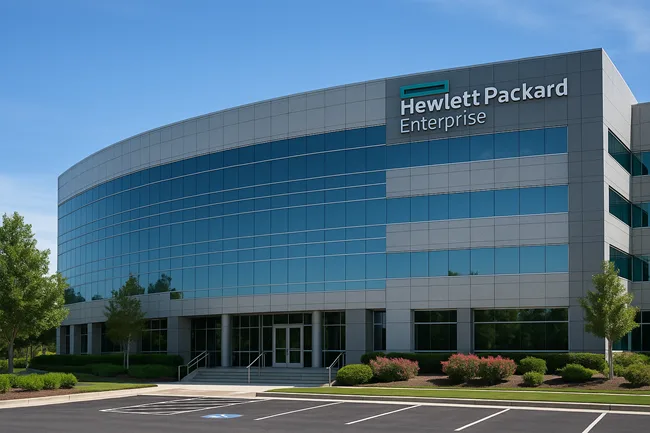
Open Text Corporation (OpenText, NASDAQ: OTEX, TSX: OTEX) has announced a €105 million investment in Cork and Galway to expand agentic AI, sovereign cloud, cybersecurity and digital operations capacity for European, Middle East and African markets. OpenText expects the investment to create 400 jobs over three years, while establishing a new Cork Centre of Excellence and expanding research and operations activity in Ireland. The move gives OpenText a stronger regional platform as European enterprises and public-sector organisations demand tighter control over AI governance, data location and cyber resilience. The announcement comes as OTEX trades around $22 on Nasdaq, near the lower end of its 52-week range of about $20 to $39.90, after recent five-day and one-month weakness. For investors, the issue is not whether 400 jobs sound impressive, but whether OpenText can turn a high-cost European expansion into durable cloud growth, regulatory relevance and margin-protected enterprise demand.
Why is OpenText investing €105 million in Ireland for agentic AI and sovereign cloud?
OpenText’s Ireland investment is best read as a strategic capacity decision, not a routine headcount announcement. The company is placing more engineering, research and operations capability inside the European technology perimeter at a time when enterprise buyers are becoming more selective about where AI workloads are hosted, how data is governed and whether cloud providers can support regulated environments. Ireland gives OpenText access to a deep multinational technology base, English-speaking talent, European Union market access and an established foreign direct investment ecosystem through IDA Ireland.
The company’s focus on agentic AI is especially important because the next enterprise software cycle is moving from passive analytics toward systems that can execute tasks, coordinate workflows and interact across data environments. That makes governance more complicated. When AI agents move from answering questions to taking actions, customers need stronger controls around permissions, auditability, data boundaries and model behaviour. OpenText appears to be positioning Ireland as a development base for precisely that problem, which is where enterprise AI becomes less glamorous but more commercially valuable.
The sovereign cloud angle gives the investment a more defensive and durable logic. European organisations, particularly in government, financial services, healthcare, critical infrastructure and regulated industries, are unlikely to treat AI adoption as a simple public-cloud procurement exercise. They need flexibility across hybrid public cloud, private cloud and sovereign cloud models. OpenText’s bet is that trusted data management, cybersecurity and compliance-heavy cloud operations will matter as much as model performance. That may not produce flashy consumer AI headlines, but enterprise software has always preferred boring revenue to noisy applause.

How does the Ireland expansion fit OpenText’s wider cloud and portfolio reset?
The Ireland investment lands shortly after OpenText reported third-quarter fiscal 2026 revenue of $1.28 billion, up 2.2% year over year, with cloud revenue rising 6.6% to $493 million. Annual recurring revenue reached about $1.06 billion, while adjusted EBITDA came in at $438 million with a 34.1% margin. Those figures show a business that still has meaningful cash-generation capacity, but also one that needs cloud and AI-led growth to become more visible to investors after a difficult period for the stock.
OpenText has also been cleaning up its portfolio. The company completed the US$150 million sale of Vertica to Rocket Software, with net proceeds intended for debt reduction. That divestiture matters because it shows management trying to narrow capital allocation toward core areas rather than carrying every legacy asset into the AI cycle. The Ireland investment therefore looks like the other side of the same strategy, sell or reduce emphasis on non-core assets, then redeploy attention toward cloud, AI data management, cybersecurity and regulated enterprise workloads.
The challenge is that strategic clarity does not automatically become revenue acceleration. OpenText must prove that its Ireland expansion can support customer wins, product differentiation and stickier enterprise renewals, not merely larger operating infrastructure. A €105 million commitment is significant, but shareholders will judge it against growth, margin stability and balance-sheet discipline. In that sense, Cork and Galway are not just locations. They are execution tests.
What does sovereign cloud demand in Europe mean for OpenText’s competitive position?
Sovereign cloud demand in Europe is becoming more relevant because the region is tightening expectations around AI governance, data protection and operational resilience. The European Union’s AI Act has entered a phased implementation period, and enterprise customers are preparing for compliance obligations that increase the need for traceability, accountability and risk controls. That environment creates a clearer opening for software vendors that can combine AI tools with governance, security and data-management depth.
OpenText’s opportunity is to compete less on raw AI excitement and more on trust infrastructure. Hyperscale cloud providers dominate compute scale, while specialist cybersecurity and data-platform companies compete around narrower functions. OpenText’s potential advantage lies in stitching together enterprise content, data governance, cybersecurity, workflow automation and cloud deployment flexibility. If the company can make those capabilities work together cleanly, it can sell into customers that do not want AI experiments scattered across disconnected systems.
The risk is that sovereign cloud can become a crowded label rather than a defensible product category. Large cloud platforms, regional European providers, cybersecurity companies and systems integrators are all chasing the same regulatory tailwind. OpenText needs clear proof points, such as regulated-sector adoption, measurable compliance value and workload migration wins. Without those, sovereign cloud messaging can sound important while doing less heavy lifting in the sales pipeline than investors hope.
Why does OpenText’s stock weakness matter when assessing the Ireland investment?
OTEX stock has been trading close to its 52-week low, which changes how investors may interpret the Ireland announcement. A company trading near the lower end of its yearly range does not receive automatic credit for strategic ambition. Investors usually ask whether new investment will accelerate growth, dilute margins or delay debt reduction. That question is especially relevant for OpenText because the company already has to balance capital returns, cloud reinvestment, portfolio simplification and balance-sheet priorities.
The recent stock weakness suggests the market is not yet fully convinced that OpenText’s AI and cloud repositioning will translate into stronger valuation momentum. The company’s third-quarter results showed cloud growth and strong adjusted EBITDA, but cash flow was down year over year and overall growth remained modest. That combination creates a familiar software-investor tension: the business is profitable and cash-generative, but the growth story needs sharper evidence.
The Ireland investment could help close that gap if it strengthens OpenText’s relevance in regulated AI adoption across Europe. However, it could also add to investor caution if hiring, research spending and operations costs move faster than commercial conversion. In market terms, the announcement is strategically constructive but not an immediate valuation reset. OTEX needs follow-through in bookings, cloud revenue, customer retention and margin discipline before this becomes more than a credible long-term signal.
What execution risks could limit the return from OpenText’s Cork and Galway expansion?
The first execution risk is talent productivity. Hiring 400 people in high-skilled AI, cybersecurity and cloud roles is valuable only if those teams build products and operational capabilities that customers actually buy at attractive economics. Ireland is a strong technology hub, but competition for skilled workers remains intense. If hiring costs rise faster than revenue contribution, the investment could pressure operating leverage before it improves market position.
The second risk is product integration. OpenText has a broad portfolio, and broad portfolios can be powerful when integrated well or frustrating when they feel stitched together by committee. Agentic AI, sovereign cloud and cybersecurity require coordinated architecture, clear customer use cases and strong governance layers. If the Ireland teams produce impressive individual capabilities that do not integrate cleanly into OpenText’s wider platform, the commercial impact could be slower than the headline suggests.
The third risk is regulatory and customer timing. European customers may want compliant AI and sovereign cloud options, but procurement cycles in regulated sectors are often slow. Public-sector and large-enterprise buyers can take years to move from strategic intent to full deployment. OpenText may be right about the direction of demand but still face a lag before the investment shows up meaningfully in revenue growth. In enterprise software, being early can be clever, but being too early can feel like paying rent on tomorrow’s market.
What are the key takeaways from OpenText’s Ireland AI and sovereign cloud investment for investors?
- OpenText’s €105 million Ireland investment is strategically meaningful because it targets agentic AI, sovereign cloud and cybersecurity, three areas where European enterprise demand is becoming more compliance-driven and operationally complex.
- The creation of 400 jobs across Cork and Galway gives OpenText greater EMEA execution capacity, but the investment will ultimately be judged by customer wins, cloud bookings and recurring revenue conversion.
- The Cork Centre of Excellence strengthens Ireland’s role in OpenText’s European strategy and gives the company a regional base for regulated AI and cloud operations.
- OTEX stock weakness means investors are unlikely to reward the announcement immediately unless it is followed by clearer evidence of sustained cloud growth and margin protection.
- OpenText’s third-quarter fiscal 2026 results showed solid cloud growth and strong adjusted EBITDA, but overall revenue growth remained modest, leaving the company under pressure to sharpen its growth narrative.
- The US$150 million Vertica divestiture supports the view that OpenText is narrowing its portfolio and redirecting attention toward core enterprise AI, cloud and cybersecurity opportunities.
- Sovereign cloud demand in Europe could become a stronger commercial tailwind as organisations prepare for stricter AI governance, data control and cyber-resilience expectations.
- The biggest competitive challenge is differentiation, since hyperscalers, regional cloud providers, cybersecurity specialists and enterprise software rivals are all pursuing regulated AI and sovereign cloud demand.
- Execution risk is concentrated around hiring productivity, platform integration, customer adoption timelines and the ability to convert regulatory relevance into profitable cloud revenue.
- The investment is best viewed as a long-term strategic signal for OTEX rather than a near-term trading catalyst, with the market likely waiting for measurable booking and revenue evidence.
Discover more from Business-News-Today.com
Subscribe to get the latest posts sent to your email.