NovaGold Resources Inc. (NYSE American: NG; TSX: NG) has agreed to acquire Paulson Advisers LLC’s 40% interest in Donlin Gold through an all-share transaction that would give the company 100% ownership of the Alaska project. The combination would create Delaware-incorporated NovaGold Corporation with an indicated equity value of approximately $4.2 billion. Current NovaGold shareholders, including Paulson as an existing investor, would collectively own around 65% of the new company, while Paulson would receive approximately 35% on a fully diluted basis for its Donlin Gold stake. Including Paulson’s existing NovaGold shares, the investment firm would hold roughly 40% of the new company’s economic interest, although its voting power would be capped at 19.99%. The central tension is clear: NovaGold is simplifying control of Donlin Gold just as financing, updated project economics and construction readiness become the decisive tests.
How does NovaGold’s all-share acquisition of Paulson’s stake change Donlin Gold ownership?
NovaGold Corporation, referred to in the transaction documents as New NG, would acquire every outstanding NovaGold Resources share in exchange for one voting common share of the new company. Immediately before that arrangement is completed, Paulson-controlled entities would contribute their entire interest in Donlin Gold Holdings LLC and Donlin Gold Holdings II LLC to New NG.
Paulson would receive voting and non-voting New NG shares in return for its 40% Donlin Gold interest. The number of shares will be determined using a 10% discount to the equity value of Paulson’s stake implied by NovaGold’s 10-day volume-weighted average share price through July 21, 2026.
That pricing mechanism is important because the widely reported $4.2 billion figure is not a cash purchase price for Paulson’s stake. It is the indicated equity value of the combined company using NovaGold’s July 21 closing price of $5.63 and the relevant enlarged share count.
NovaGold said the deal would be accretive to existing shareholders across net asset value, gold resources and projected attributable production per share. The company estimates that attributable production would increase by more than 520,000 ounces annually during Donlin Gold’s first 10 full years if the project enters production as currently modelled.
Why could full ownership make Donlin Gold easier to govern and finance as a single-asset company?
NovaGold currently owns 60% of Donlin Gold and funds 60% of project expenditure, but it shares equal governance and operating control with Paulson. That arrangement was created after NovaGold and Paulson acquired Barrick Mining Corporation’s former 50% interest for $1 billion in June 2025.
Full ownership would eliminate the mismatch between NovaGold’s economic exposure and its governance rights. Decisions covering engineering, financing, permitting, construction planning and stakeholder engagement could be taken within one corporate structure rather than negotiated between two owners with equal voting power.
The change could also simplify discussions with lenders, governmental agencies, sovereign wealth funds and other potential capital providers. A financing counterparty would be dealing with one owner, one board and one capital structure rather than a project-level partnership.
NovaGold also expects a single owner to provide a clearer point of contact for Calista Corporation, which holds the mineral rights, and The Kuskokwim Corporation, which owns the surface estate. Those relationships remain commercially and socially important because Donlin Gold sits on private Alaska Native Corporation land.
Simplification, however, should not be confused with financing completion. The transaction removes a governance layer, but it does not by itself supply the billions of dollars required to construct the mine.

What does the announced $4.2 billion NovaGold equity value actually represent for investors?
The approximately $4.2 billion valuation is a market-derived equity value for the proposed combined company. It is not Donlin Gold’s independently validated project value, its enterprise value, the value of Paulson’s 40% interest alone or the amount of construction capital available to management.
NovaGold had a market capitalisation of approximately $2.47 billion at the July 21 closing price. The proposed company would have a larger equity value because new shares would be issued to Paulson in exchange for its project interest. If NovaGold’s share price changes, the indicated value of the enlarged company will change with it.
The distinction matters because a higher pro forma equity value does not automatically create additional cash. The transaction preserves NovaGold’s treasury by avoiding a cash acquisition payment, but the enlarged share count distributes future Donlin Gold economics across a broader shareholder base.
The company’s accretion argument therefore depends on the value of the additional 40% project interest exceeding the economic cost of the shares issued. The 10% discount embedded in the exchange formula supports that case mechanically, although the lasting outcome will depend on the updated feasibility study, capital requirements and ultimate financing structure.
Can a $4.2 billion developer finance Donlin Gold’s estimated $9.2 billion construction cost?
Donlin Gold’s estimated initial construction cost is approximately $9.23 billion under the November 2025 technical report. Estimated sustaining capital adds another $2.33 billion over the mine’s operating life. The initial capital requirement alone is more than twice the proposed company’s announced equity value.
NovaGold ended May 2026 with $370.2 million in cash and term deposits. Management believes that treasury is sufficient to complete the bankable feasibility study, cover corporate costs for at least 12 months and exercise an option to retire a Barrick-related promissory note for $100 million before December 3, 2026.
The company expects fiscal 2026 operating expenditure of approximately $98.5 million, comprising $78.8 million for its current share of Donlin Gold spending and $19.7 million for corporate general and administrative costs. NovaGold has also acknowledged that additional capital will eventually be required to begin detailed engineering and advance the project beyond the feasibility stage.
By paying with shares, NovaGold avoids weakening its near-term cash position. Full ownership could also broaden the financing structures available to the company, including project debt, further equity, strategic capital and official-sector participation.
Yet greater control also means greater responsibility. NovaGold would capture all future project value, but it would also carry the full economic consequences of capital-cost escalation, construction delays and additional equity issuance. Financing terms that place excessive pressure on future cash flow or cause heavy dilution could offset part of the strategic benefit created by consolidation.
Why do Donlin Gold’s scale and grade still support the strategic case for consolidation?
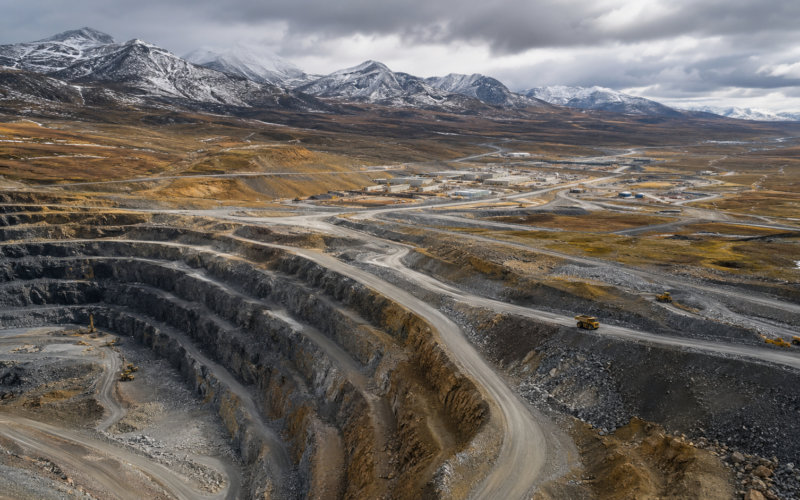
Donlin Gold contains approximately 40 million ounces of measured and indicated gold resources, inclusive of mineral reserves, based on 560 million tonnes grading an average of 2.22 grams per tonne. The proposed mine is expected to produce approximately 1.3 million ounces annually during its first 10 full years and average around 1.1 million ounces annually over a projected 27-year operating life, subject to construction and operating performance.
The November 2025 technical report estimated an after-tax net present value of approximately $5.1 billion at a 5% discount rate and a gold price of $2,100 per ounce. The same assumptions produced an estimated after-tax internal rate of return of 10.3% and a payback period of 6.5 years. Life-of-mine operating costs were estimated at approximately $831 per ounce.
Those economics give Donlin Gold considerable sensitivity to higher gold prices. Gold futures were trading above $4,100 per ounce on July 22, substantially above the technical report’s reference price. However, project lenders are unlikely to underwrite a multibillion-dollar construction package solely against short-term spot prices. Conservative long-term pricing, engineering confidence and adequate contingency allowances will matter more.
The 2027 bankable feasibility study is therefore essential. It must integrate the power plant, natural gas pipeline, pressure oxidation circuit, oxygen plant and other major infrastructure packages while updating capital, operating and scheduling assumptions. High gold prices improve the potential reward, but they do not make remote-site construction risks disappear. Even gold cannot wave a magic wand over a $9.2 billion capital bill.
How will Paulson’s 40% economic interest be balanced against independent governance?
John Paulson and NovaGold Chairman Thomas S. Kaplan would become co-chairs of the new 11-member board. Paulson would be entitled to nominate two directors while its equity ownership remains above 15%, one director while ownership is between 10% and 15%, and no automatic nominee if its interest falls below 10%.
Paulson’s total economic interest would be approximately 40%, but its voting interest would be limited to 19.99%. The transaction agreements also include standstill provisions, voting restrictions and a lock-up covering the shares issued for Paulson’s Donlin Gold interest.
The lock-up would expire at the earliest of completed Donlin Gold project financing, Paulson’s ownership falling below 10% through permitted dilution or another permitted reduction, or the third anniversary of the transaction’s effective date.
These provisions are intended to preserve NovaGold’s independence while retaining Paulson as a long-term cornerstone shareholder. They limit formal voting control, although a shareholder with around 40% economic exposure and board representation would still have substantial influence over strategic direction.
NovaGold’s board unanimously recommended the transaction after receiving financial and legal advice. Citi provided an opinion that the consideration was fair from a financial perspective to NovaGold shareholders other than Paulson, subject to the assumptions and limitations contained in that opinion.
What does NovaGold’s share-price reaction say about sentiment toward the Donlin Gold deal?
NovaGold Resources shares closed at $5.63 on July 21, up 7.85% for the session, before the transaction was announced publicly. The shares were indicated approximately 2.8% higher at $5.79 in premarket trading on July 22 following the release.
The immediate post-announcement indication was positive, but NovaGold’s longer-term performance shows that investor confidence remains conditional. The shares had declined approximately 1.2% over five trading days and 9.2% over one month. They were trading near the lower end of a 52-week range of $5.07 to $14.40 and had fallen approximately 39% over the preceding three months.
That contrast captures the current sentiment. Investors appear receptive to the cleaner ownership structure, but the market continues to apply a substantial discount for a long-duration, pre-production project with significant capital requirements.
A sustained rerating would likely require more than completion of the Paulson transaction. The market will need evidence that the feasibility study protects project returns, that outstanding permitting matters remain manageable and that NovaGold can assemble a credible financing package without overwhelming the enlarged company’s balance sheet or shareholders.
Which approvals and project milestones could determine whether the Donlin Gold deal delivers?
The transaction requires approval from at least two-thirds of the votes cast at a special NovaGold shareholder meeting. It also remains subject to court approval under British Columbia law, regulatory and stock-exchange approvals, approval for the new shares to list on the New York Stock Exchange and other customary closing conditions.
Directors, certain senior officers, Electrum Strategic Resources L.P. and Paulson have entered voting-support agreements covering approximately 28% of NovaGold’s outstanding shares. The parties expect the transaction to close during the fourth quarter of 2026.
The arrangement is intended to qualify as a tax-free exchange for United States federal income-tax purposes. NovaGold expects it to be treated as a taxable disposition for Canadian shareholders, with further information to be included in the shareholder circular.
Project-level regulatory work will continue separately. Donlin Gold’s existing federal and state permits remain in effect, while an Alaska Supreme Court decision is pending concerning the project’s Clean Water Act Section 401 Water Quality Certification. NovaGold has described that proceeding as the only remaining legal challenge to the project’s state permits.
Completion of the corporate transaction would therefore be an important governance milestone, not a construction decision. The subsequent proof points are the 2027 bankable feasibility study, resolution or management of remaining permitting matters, selection of a financing structure and a formal decision on whether to build.
Why is the 2027 feasibility study the real test of NovaGold’s full-ownership strategy?
NovaGold’s agreement with Paulson improves three elements of the Donlin Gold proposition. It concentrates ownership, removes project-level shared control and preserves cash by using equity rather than making another large cash payment.
What remains unresolved is more consequential. Donlin Gold still requires updated bankable economics, a multibillion-dollar financing package and an executable construction plan for a large remote project. NovaGold also remains a development-stage company without production revenue, reporting a second-quarter 2026 net loss of $25.5 million as spending on engineering and project preparation increased.
The investment case would strengthen if the 2027 feasibility study confirms robust returns under conservative gold-price assumptions, contains capital escalation and gives lenders confidence in schedule and infrastructure delivery. It would weaken if estimated construction costs rise materially, project milestones slip or financing requires dilution that absorbs much of the additional project ownership gained through this transaction.
Full ownership gives NovaGold a clearer path and a larger potential prize. The decisive measurement, however, will be whether the company can convert that simplified structure into a financeable construction decision without allowing the $9.2 billion funding requirement to overwhelm the project’s underlying economics.
What are the key takeaways from NovaGold’s Paulson deal and full Donlin Gold ownership?
- NovaGold Resources has agreed to acquire Paulson Advisers’ 40% Donlin Gold interest through an all-share transaction.
- The transaction would give the proposed U.S.-domiciled NovaGold Corporation 100% ownership of Donlin Gold.
- The announced $4.2 billion figure represents the combined company’s indicated equity value, not cash consideration for Paulson’s stake.
- Current NovaGold shareholders would collectively own approximately 65% of the new company, while Paulson would receive roughly 35% for its project interest.
- Paulson’s total economic ownership would be around 40%, although its voting interest would be capped at 19.99%.
- Consolidation removes the existing mismatch under which NovaGold funds 60% of Donlin Gold expenditure while sharing equal governance control.
- Donlin Gold’s estimated $9.23 billion initial construction cost remains substantially larger than the proposed company’s equity value.
- NovaGold’s $370.2 million treasury can support the feasibility study and near-term obligations, but not full mine construction.
- The transaction requires shareholder, court, regulatory and exchange approvals and is expected to close in the fourth quarter of 2026.
- The 2027 bankable feasibility study and a credible project-financing plan will provide the most important evidence of whether full ownership creates lasting shareholder value.
Discover more from Business-News-Today.com
Subscribe to get the latest posts sent to your email.