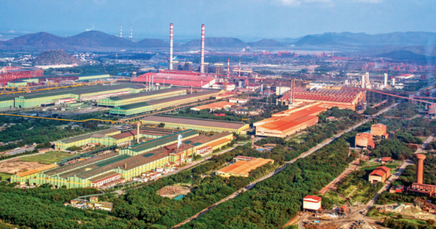


Northern Star Resources Limited (ASX:NST) has delivered the three developments investors were waiting for: a new external chief executive, planned board leadership change and confirmation that revised annual production guidance was achieved. The Australian gold producer appointed Glencore executive Suresh Vadnagra as its next managing director and chief executive officer, while Michael Ashforth will replace Michael Chaney as chairman after the November annual general meeting. Northern Star also reported preliminary June-quarter gold sales of 433,000 ounces, lifting FY26 sales to 1.543 million ounces. By 11:29am AEST on July 2, 2026, NST shares were trading around A$19.38, up 3.09 per cent, giving the company a market capitalisation of approximately A$27.7 billion.
The positive reaction reflects relief rather than complete rehabilitation. Northern Star has met its heavily reduced FY26 production target, found an external chief executive with major-project and operational experience, and accelerated leadership succession while activist investor Elliott Investment Management continues to demand wider change. The next major test arrives with the June-quarter report on July 29, when investors will receive final all-in sustaining costs, operating detail and the first clearer indication of whether the strong final quarter represents a durable recovery or a year-end sprint that will be difficult to repeat.
Why does Northern Star’s July leadership and production update matter so much for ASX:NST investors?
The July 2 announcements address two different problems that had become intertwined in Northern Star’s valuation. The first was operational credibility after repeated production and cost guidance changes. The second was confidence in whether the existing leadership and board could extract the full value of the company’s unusually large gold portfolio.
The production update provides evidence that the business finished FY26 with momentum. Preliminary June-quarter gold sales of 433,000 ounces were substantially higher than the 381,000 ounces sold in the March quarter. Kalgoorlie delivered 844,000 ounces for the year, Yandal contributed 434,000 ounces and Pogo sold 265,000 ounces, allowing all three production centres to achieve their revised targets.
The leadership appointments answer a separate investor demand. Suresh Vadnagra is currently responsible for Glencore’s nickel and zinc industrial assets, a global portfolio covering more than 25 mines, smelters and refineries. His previous role at Newcrest Mining included oversight of major projects such as Red Chris, Cadia, Havieron and Wafi-Golpu, while earlier experience included the ramp-up of the Las Bambas copper mine in Peru.
The market’s initial response suggests investors see the combination as meaningful. However, a new chief executive cannot instantly reverse years of operational disappointment, and Vadnagra will not formally begin until October 5. Ryan Gurner, Northern Star’s chief financial officer and newly appointed deputy chief executive, will act as interim chief executive between Stuart Tonkin’s departure and Vadnagra’s commencement. That transition period leaves the company’s immediate execution burden with the existing management team.
What does Northern Star Resources own, and why is its portfolio difficult for the market to value?
Northern Star is Australia’s largest listed pure-play gold producer, with operating centres in Western Australia and Alaska and a major undeveloped project in the Pilbara. Its producing portfolio includes KCGM and associated Kalgoorlie operations, the Yandal assets of Jundee, Thunderbox and Bronzewing, and the underground Pogo mine in Alaska. Hemi, acquired through the takeover of De Grey Mining Limited, provides a fourth prospective production centre.
The scale of this portfolio is considerable. Northern Star reported group Mineral Resources of 88.9 million ounces and Ore Reserves of 28.4 million ounces as of March 31, 2026. Hemi alone contained approximately 13.2 million ounces of Mineral Resources and 5.5 million ounces of Ore Reserves under Northern Star’s updated estimates.
Northern Star’s differentiation is not merely the size of its gold inventory. KCGM gives it exposure to one of Australia’s largest gold systems, Pogo offers a high-grade underground operation in Alaska, and Hemi introduces a large-scale open-pit development opportunity. The company is therefore capable of generating growth through mill expansion, mine optimisation, exploration and project development rather than relying on repeated external acquisitions.
That breadth is also why valuation has become complicated. Investors are being asked to fund a large KCGM expansion, operational improvement across mature mines and the progressive development of Hemi at the same time. A portfolio with several major assets can reduce dependence on any single mine, but it can also create a sprawling capital programme in which one operational miss obscures progress elsewhere.
The core debate is whether Northern Star owns a collection of assets worth materially more than its current equity valuation or whether execution complexity justifies a persistent discount. The answer will depend on cash flow, cost control and capital returns, not simply the number of ounces sitting in the company’s resource statement.
Does meeting revised FY26 production guidance genuinely restore Northern Star’s operating credibility?
Northern Star’s 1.543 million ounces of FY26 gold sales exceeded its revised guidance of more than 1.5 million ounces. The company also closed June with unaudited cash and bullion of approximately A$1.255 billion, up from A$1.183 billion at the end of March, and reported no corporate bank debt. Those figures show that the business remained financially resilient despite operational disruption and heavy project expenditure.
The problem is that investors remember where guidance began. Northern Star entered FY26 expecting gold sales of 1.7 million to 1.85 million ounces before a series of operational setbacks forced the target down. Issues included processing performance at KCGM, reduced productivity at Jundee and other disruptions that prevented the company from fully benefiting from historically strong gold prices.
Meeting a lowered target is still better than missing it again. The 433,000-ounce June quarter suggests that production recovered strongly across the portfolio and that management was able to deliver the revised plan during the most important quarter of the financial year. It also offers evidence that some problems were temporary rather than evidence of permanent asset deterioration.
However, the cost outcome is not yet available. Northern Star maintained FY26 group all-in sustaining cost guidance of A$2,600 to A$2,800 per ounce, which had already been increased from A$2,300 to A$2,700 per ounce. A strong production quarter accompanied by costs near or above the top of that range would offer less reassurance than the headline sales figure suggests.
The July 29 quarterly report is therefore the more complete credibility test. Investors need to see final cost performance, mine-level production data, cash movement, capital expenditure and commissioning detail for KCGM. One good quarter may stabilise expectations, but several consecutive quarters of reliable delivery will be required before the market treats guidance as dependable again.
Can Suresh Vadnagra satisfy Elliott’s demands and deliver the operational reset investors expect?
Suresh Vadnagra’s appointment appears closely aligned with the profile sought by investors demanding change. He is an external candidate with experience spanning operations, major projects, portfolio strategy, transactions and business transformation. His background across Glencore, Newcrest Mining, BHP, Iluka Resources and MMG gives him exposure to complex assets rather than a career confined to a single commodity or operating model.
His immediate strategic priorities are already visible. KCGM must move from construction into reliable commissioning, Hemi requires a disciplined development decision, and Northern Star’s existing mines need to deliver more consistent production and lower unit costs. He must also decide whether every asset belongs in the long-term portfolio or whether selected divestments could simplify the group and improve capital allocation.
Elliott Investment Management has invested more than A$1 billion in Northern Star and pressed for an external chief executive, meaningful board renewal, an operational review and a formal examination of strategic alternatives. The activist investor has argued that Northern Star’s assets are substantially more valuable than the returns delivered to shareholders and has pushed the company to consider possibilities ranging from asset sales to a broader corporate transaction.
The appointment of an external chief executive and confirmation of chairman succession address important parts of that campaign. Michael Ashforth brings experience across law, investment banking, corporate advisory, transactions and capital allocation, and will replace Michael Chaney after the November annual general meeting. The timing gives Northern Star a new chief executive in October and a new chairman shortly afterwards.
These appointments do not automatically settle the disagreement with Elliott. The company has resisted the idea that immediately launching a sale process is the best course, while acknowledging that other companies and advisers have raised possible combinations and portfolio alternatives. The tension is therefore shifting from whether leadership will change to whether the new leadership will pursue a sufficiently ambitious strategic review.
Vadnagra’s compensation also places considerable emphasis on long-term performance and retention. His annual fixed remuneration will be A$2.2 million, supplemented by potential short-term and long-term incentives, a A$1.6 million sign-on payment and A$4 million of sign-on rights. Investors will expect measurable operational and shareholder-return conditions to justify a package of that scale.
How could the KCGM mill expansion and Hemi project reshape Northern Star’s long-term valuation?
The KCGM mill expansion is the most immediate operational catalyst. Stage one is designed to increase processing capacity from approximately 13 million tonnes per annum to 27 million tonnes per annum. Commissioning remains scheduled for early FY27, while stage two, which will consolidate treatment from the Gidji facility into the new Fimiston plant, is expected to be completed by the end of calendar 2026.
The investment case is that higher throughput should allow Northern Star to process more of KCGM’s large ore inventory while simplifying the processing footprint. Management has previously indicated that KCGM could reach steady-state annual production of approximately 900,000 ounces from FY29 after a two-year ramp-up. If achieved at improving unit costs, that outcome could transform KCGM from the source of recent disappointment into the principal engine of group cash generation.
Commissioning risk remains significant. Large processing plants rarely move directly from construction completion to nameplate capacity without interruptions, bottlenecks or changes to recovery and maintenance assumptions. Northern Star has indicated that the timing of commissioning will influence future gold-sales guidance, making the early FY27 transition one of the most important operational periods in the company’s recent history.
Hemi offers a different kind of growth. Located approximately 85 kilometres south of Port Hedland, it is a large, low-strip-ratio open-pit opportunity with underground and regional exploration potential. Northern Star acquired the project through the De Grey Mining transaction, which valued the target at roughly A$5 billion when announced. Earlier development assumptions envisaged average production of approximately 530,000 ounces annually during the project’s first decade.
Hemi could give Northern Star a lower-cost production centre capable of balancing mature and more complex operations elsewhere in the portfolio. However, it also requires permits, detailed engineering, infrastructure, construction capital and a disciplined final investment decision. The project’s geological attractiveness does not remove the risk of cost inflation or development delays.
The sequencing of KCGM and Hemi will be central to the new chief executive’s capital-allocation strategy. Northern Star needs to complete and ramp up the mill expansion before committing shareholders to another period of intensive construction spending. Moving too slowly could delay valuable production, but moving too quickly could stretch management capacity and weaken returns.
Is the Northern Star Resources share price discount justified by execution risks or excessive pessimism?
NST shares traded around A$19.38 during late-morning trading on July 2, compared with a 52-week range of A$15.30 to A$31.96. Despite the positive session, the stock remained approximately 39 per cent below its yearly high and around 21 per cent below its level at the beginning of 2026.
The short-term trend also shows why confidence remains fragile. Using the July 2 intraday price, the shares were approximately 3 per cent lower than the June 25 close and around 8 per cent below the June 2 close. The activist announcement generated a sharp one-day rally in early June, but the share price subsequently surrendered much of that gain as investors debated whether the board’s response went far enough.
Analyst consensus remains more constructive than the prevailing share price. The average target among 16 analysts was approximately A$25.99, implying potential upside of roughly one-third from the July 2 price, although individual targets ranged from A$15 to A$33.50. That unusually wide range reflects disagreement over future production, margins, project execution and the strategic value of the portfolio.
The balance sheet provides some support for the bullish argument. Northern Star ended FY26 with A$1.255 billion of cash and bullion, no corporate bank debt and substantial exposure to elevated Australian-dollar gold prices. It also purchased A$129 million of shares during the June quarter under its A$500 million on-market buyback programme.
The bearish argument is that a strong balance sheet and large resources have not yet translated into dependable guidance or peer-leading shareholder returns. Investors have repeatedly lowered the multiple they are willing to pay for future production because promised growth has been accompanied by cost pressure, construction spending and operational variability.
The current valuation therefore looks like a credibility discount rather than a judgement that the assets lack value. Northern Star can narrow that discount by commissioning KCGM smoothly, stabilising costs and setting realistic guidance. Another material disappointment would suggest the discount is structural rather than temporary.
How does the changing gold-price environment affect the Northern Star Resources investment thesis?
Gold was trading near US$4,053 an ounce on July 2, up approximately 22 per cent over 12 months but down close to 9 per cent during the preceding month. The metal had fallen sharply from its January record above US$5,600 after changing interest-rate expectations, a stronger United States dollar and reduced speculative momentum weakened the market.
Northern Star still benefits from a historically high gold-price environment, particularly when revenue is converted into Australian dollars. Its March-quarter realised gold price was A$5,283 an ounce, comfortably above the company’s production costs despite elevated all-in sustaining expenditure. This margin helps finance the KCGM expansion, early Hemi work, exploration, dividends and share repurchases.
The danger is that strong gold prices can conceal operational inefficiency. When the commodity price rises faster than costs, even underperforming mines may produce acceptable cash flow. A falling gold price exposes which producers have genuinely improved productivity and which have relied on the commodity cycle to compensate for missed targets.
Northern Star’s investment case should therefore not depend on gold returning to its record high. The more durable thesis requires KCGM throughput growth, better asset reliability, tighter cost control and disciplined investment at Hemi. Gold-price strength should amplify operational success, not serve as the only reason the equity appears attractive.
The changing macro environment also increases the importance of hedging and capital decisions. A company investing billions of Australian dollars in growth projects must balance exposure to future upside with protection against adverse commodity moves. Investors will watch whether the new leadership prioritises balance-sheet flexibility while the group passes through its peak construction and commissioning cycle.
Why are retail investors watching ASX:NST despite its size and institutional shareholder base?
Northern Star is not a speculative explorer dependent on a single drill result. It is a large producer with billions of dollars in annual revenue, extensive resources, operating cash flow and several established mining centres. The retail interest instead comes from the unusually clear conflict between asset quality and execution history.
The bullish interpretation is straightforward. Northern Star owns KCGM, Pogo and Hemi, has achieved revised FY26 production guidance, carries no corporate bank debt and has appointed an experienced external chief executive. If operational performance normalises, the present valuation could prove too pessimistic relative to the company’s production potential and analyst consensus.
The cautious interpretation is equally clear. Guidance was reduced repeatedly before being achieved, KCGM commissioning remains unfinished, Hemi requires substantial future investment and management must restore trust while responding to an activist shareholder seeking potentially disruptive strategic change.
The new leadership announcement has added another layer. Some investors will view the appointment as evidence that the board is responding quickly and constructively. Others may argue that replacing the chief executive and chairman does not go far enough without a formal asset review, more extensive board renewal or a willingness to consider a sale.
That disagreement is likely to maintain elevated investor attention. The share price now reacts not only to gold production and commodity prices, but also to speculation around portfolio restructuring, corporate interest and Elliott’s next move. This makes NST a turnaround and strategic-event stock as much as a conventional gold producer.
What should Northern Star investors watch between the July quarterly report and the new CEO’s arrival?
The first milestone is the June-quarter report scheduled for July 29. Investors should focus on group and mine-level all-in sustaining costs, cash generation, capital expenditure and any remaining expenditure required before KCGM’s expanded mill reaches commissioning. The market already knows production met revised guidance, so the quality and cost of those ounces will determine whether the result genuinely exceeds expectations.
The second milestone is FY26 financial results on August 20. Those accounts should provide greater visibility into earnings, dividends, project spending and the impact of high realised gold prices. They may also show whether the A$500 million share-buyback programme is an efficient use of capital while the stock trades below its earlier highs.
The third milestone is the beginning of KCGM mill commissioning. Progress must be assessed through throughput, recovery, plant availability and the speed at which new capacity translates into additional gold sales. Delayed commissioning or unreliable performance could undermine FY27 guidance before the new chief executive has fully assumed control.
Suresh Vadnagra starts on October 5, creating the fourth milestone. Investors will want an early statement of priorities covering operational accountability, portfolio structure, disclosure, capital allocation and Hemi. His willingness to challenge existing assumptions may matter as much as his ability to execute the current plan.
The November annual general meeting will complete the formal chairman transition to Michael Ashforth and is expected to include shareholder votes relating to parts of Vadnagra’s incentive package. It may also become a focal point for investor scrutiny of governance renewal and the company’s response to Elliott.
The largest risk is that the market prices the leadership announcement as the beginning of a turnaround before operational evidence arrives. Northern Star’s valuation could recover quickly if costs improve and KCGM commissions successfully. Equally, the initial rally could fade if investors discover that leadership change has not fixed the underlying production and project-management issues.
What are the key Northern Star Resources takeaways for investors watching ASX:NST?
- Northern Star Resources achieved revised FY26 gold-sales guidance with preliminary annual sales of 1.543 million ounces after a strong 433,000-ounce June quarter.
- Suresh Vadnagra will become managing director and chief executive officer on October 5, bringing global operations, major-project and portfolio-transformation experience.
- Michael Ashforth will replace Michael Chaney as chairman after the November annual general meeting, advancing the company’s governance renewal.
- NST shares rose after the announcement but remain far below their A$31.96 yearly high, reflecting a continuing market discount for execution and guidance risk.
- The July 29 quarterly report is the next major catalyst because it will reveal whether stronger production was accompanied by acceptable costs and cash conversion.
- KCGM’s expansion to 27 million tonnes of annual processing capacity could materially improve future production, but commissioning and ramp-up risks remain substantial.
- Hemi adds large-scale, lower-cost growth potential, although the project will require permits, engineering discipline and major capital before it contributes production.
- Elliott Investment Management’s A$1 billion-plus investment keeps strategic alternatives, asset sales and further governance change firmly in the investor debate.
- Northern Star’s strongest rerating path depends on repeated operational delivery rather than another rise in the gold price.
Discover more from Business-News-Today.com
Subscribe to get the latest posts sent to your email.