
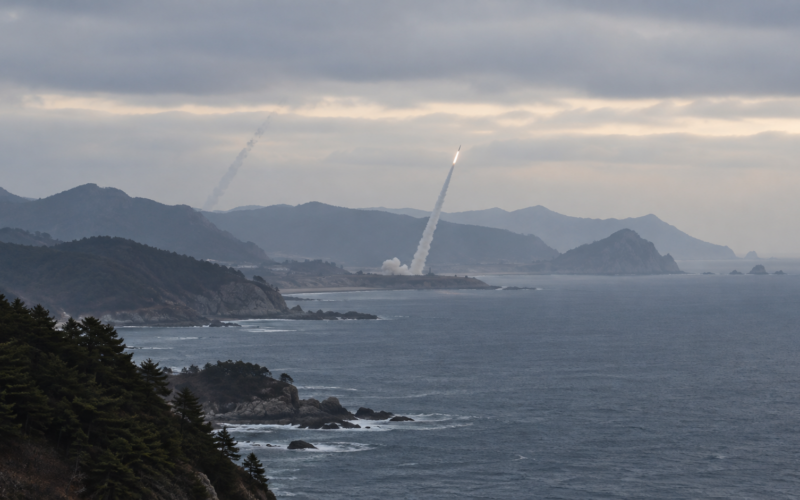
North Korea fired two short-range missiles from its eastern Wonsan area on September 20, with the launches occurring less than three hours apart as Pyongyang renewed its criticism of United States-led military exercises in the region. South Korea’s defence authorities said the first projectile travelled about 450 kilometres and appeared to belong to the Hwasong-11 family, while the second flew more than 600 kilometres. Japan said the first projectile appeared to be ballistic and landed outside its exclusive economic zone.
The launches marked North Korea’s second round of missile testing in roughly a week, following a September 12 test, and came after senior North Korean official Kim Yo Jong accused the United States and its allies of worsening tensions through military exercises. South Korea, Japan and the United States shared tracking information as the launches unfolded, underscoring the increasingly integrated missile-warning arrangements among the three countries.
What exactly did North Korea launch from Wonsan on September 20?
South Korea’s Joint Chiefs of Staff detected the first launch from Wonsan at around 3 p.m. local time and assessed the projectile as a short-range ballistic missile. It travelled approximately 450 kilometres before falling into waters east of the Korean Peninsula, while Japanese authorities also assessed that the weapon appeared to be ballistic and had landed outside Japan’s exclusive economic zone.
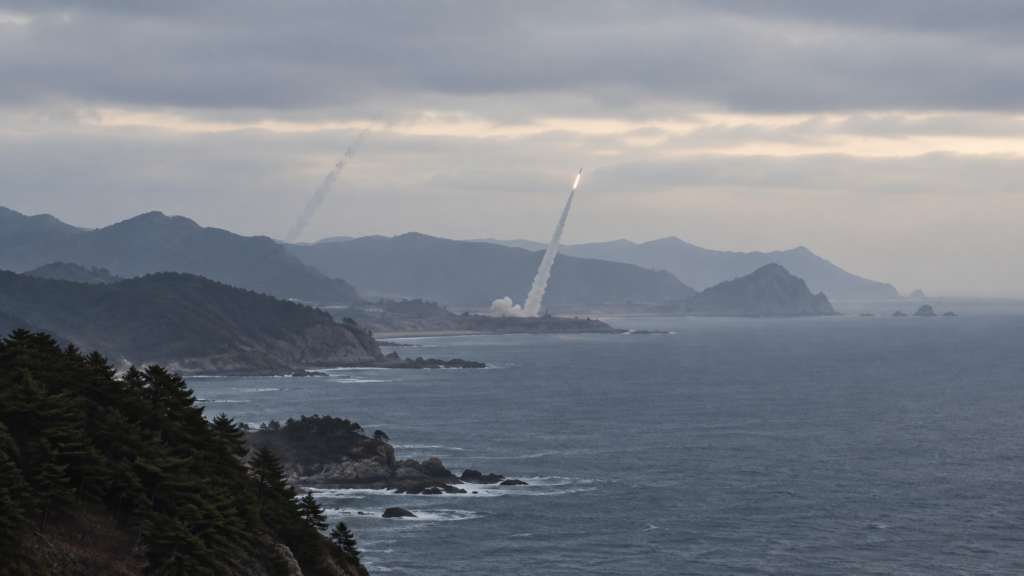
A second launch followed at around 5:50 p.m. from the same Wonsan area. South Korea’s defence ministry said that missile travelled more than 600 kilometres, creating two separate missile events within approximately three hours. Seoul said intelligence agencies in South Korea and the United States monitored developments from the initial stages and shared missile information with Japan.
The first missile was provisionally assessed by South Korea as belonging to the Hwasong-11 series. That family encompasses solid-fuel short-range systems designed for rapid deployment and manoeuvrability, characteristics that complicate detection and interception compared with older liquid-fuel systems requiring longer preparation.
Why are the September 20 missile launches strategically important?
The immediate military significance comes from frequency rather than unprecedented range. North Korea has been conducting repeated missile tests while simultaneously expanding its nuclear arsenal and arguing that United States-led exercises justify continued strengthening of its deterrent.
Seoul’s National Security Council condemned the latest launch and said ballistic-missile activity violated United Nations Security Council resolutions. Japan also protested through diplomatic channels, while Defence Minister Shinjiro Koizumi said the launches threatened regional and international security.
The pattern places persistent pressure on South Korean and Japanese air-defence and early-warning systems. Even relatively short-range weapons can threaten military bases, ports, logistics centres and population centres across South Korea and parts of Japan if deployed during a conflict.
Why is Pyongyang linking the tests to US-led military exercises?
North Korea routinely portrays exercises involving the United States, South Korea and Japan as preparations for hostile military action. Kim Yo Jong said on September 18 that US-led exercises were contributing to worsening tensions and indicated that Pyongyang would continue strengthening its nuclear forces.
Her statement followed a multinational naval exercise that ran from August 29 through September 10 near Guam and involved the United States, South Korea and Japan. Washington, Seoul and Tokyo describe such exercises as defensive training intended to improve interoperability and regional deterrence.
Those competing interpretations have created a recurring security cycle. Allied military exercises are followed by North Korean condemnations and weapons tests, which then become part of the justification for additional allied missile-defence training and military cooperation.
How do the Hwasong-11 missiles fit into North Korea’s expanding arsenal?
The Hwasong-11 family has become an important part of North Korea’s short-range missile capability because solid propellant allows systems to move and launch with less preparation than older liquid-fuel designs. Mobile launchers can disperse across road networks, making them harder to identify before launch.
Some versions have also been designed to fly on trajectories intended to complicate interception. That makes their military relevance different from intercontinental ballistic missiles, which attract more attention because they are designed to reach distant targets including the continental United States.
Short-range missiles are instead directly relevant to a Korean Peninsula conflict. Their potential targets include military facilities, command infrastructure, airfields and ports used by South Korean and United States forces.
Could the launches affect diplomatic efforts with North Korea?
The latest tests underline how limited recent diplomatic progress has been. Pyongyang continues to treat nuclear weapons and advanced missile capabilities as central to national security, while Seoul, Washington and Tokyo continue demanding compliance with international resolutions restricting North Korean ballistic-missile activity.
Missile testing does not necessarily rule out future diplomacy, but it changes the negotiating environment by allowing North Korea to improve its capabilities while political talks remain stalled. Each successful test can provide data on range, guidance, propulsion and operational procedures.
The strategic question is therefore whether future engagement can move beyond temporary pauses in testing toward arrangements that materially constrain weapons development. At present, the September launches indicate that Pyongyang has no intention of voluntarily slowing its missile programme.
What are the key takeaways from North Korea’s September 20 missile tests?
North Korea launched two short-range missiles from Wonsan within approximately three hours, with the first flying around 450 kilometres and the second more than 600 kilometres. South Korea and Japan identified the activity as ballistic-missile testing, while Seoul said the first weapon appeared to come from the Hwasong-11 series.
The tests were not isolated from the wider regional security environment. They followed another North Korean launch on September 12 and came days after Pyongyang criticised US-led military exercises, reinforcing a cycle in which military training, missile testing and stronger regional defence cooperation feed into one another.
What should be watched after North Korea’s latest ballistic-missile launches?
The next question is whether Pyongyang follows the September 20 launches with additional missile or nuclear-related activity. Repeated short-range tests can be used to demonstrate operational readiness rather than simply prototype new technology, particularly when multiple launches occur in a compressed time window.
Attention will also turn to how South Korea, Japan and the United States respond. Their increasing real-time information sharing means North Korean launches are now being monitored through a more integrated regional network, making missile testing both a demonstration of Pyongyang’s capabilities and a continuing test of the allies’ collective warning architecture.
Discover more from Business-News-Today.com
Subscribe to get the latest posts sent to your email.