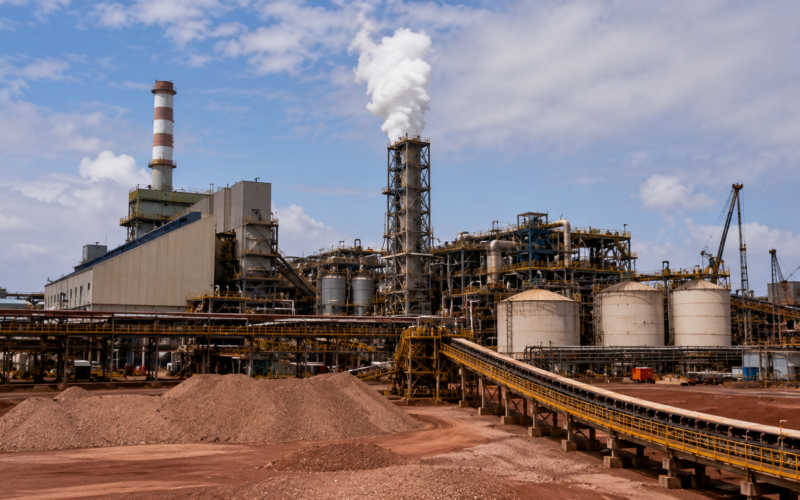
Norsk Hydro ASA (Oslo Bors: NHY), the Oslo-listed integrated aluminium and energy group headed by Chief Executive Eivind Kallevik, said on 13 August that its Alunorte refinery in Barcarena, in Brazil’s northern state of Pará, has begun ramping alumina production back to full capacity after a two-day forced curtailment triggered by a gas supply disruption from its long-term supplier CELBA. The refinery, with nameplate capacity of about 6.3 million tonnes of alumina a year, had cut output to 50 percent on 12 August as a contingency measure. Restart was made possible by two developments: approval from Brazil’s oil, natural gas and biofuels regulator, the Agência Nacional do Petróleo, Gás Natural e Biocombustíveis, for Alunorte to act as a self-importer of natural gas; and a temporary terminal access agreement with CELBA, part of the New Fortress Group, which owns the sole gas import terminal serving the refinery. Management estimates lost production of 100,000 to 120,000 tonnes and a potential Bauxite & Alumina segment financial impact of $75 million to $100 million in the third quarter, reflecting both the shortfall and the higher cost of buying gas above contracted prices. The central tension is operational rather than balance-sheet: the ramp-up restores volumes, but the underlying dispute over a 15-year gas supply contract with a financially stressed counterparty, which controls single-source infrastructure, has not been resolved.
Why did Alunorte cut alumina production to 50 percent capacity and how did the CELBA gas supply notification force the contingency
The Alunorte refinery is the largest alumina producer outside China and a critical link in Norsk Hydro’s upstream chain, converting bauxite mined at the nearby Mineração Rio do Norte and Paragominas operations into alumina that feeds the group’s own smelters in Norway and at the Qatalum joint venture in Qatar, as well as third-party customers. It is also unusual in one respect that has now become material: the Barcarena LNG import terminal that supplies its natural gas is isolated from the Brazilian national pipeline grid, which means LNG cargoes are the refinery’s only viable feedstock for the fuel used in the calcination stage of alumina production. That terminal, referred to as CELBA and operated by New Fortress Energy, has historically procured the LNG cargoes itself and delivered volumes to Alunorte under a 15-year contract that took effect in March 2024. When CELBA notified Alunorte earlier this month that it could no longer guarantee availability on contract terms, arguing it needed to source gas on market terms compatible with its current financial situation, Norsk Hydro moved quickly to protect the plant and stepped output down to half capacity while it pursued a workaround.

How does the ANP self-importer approval and the spot LNG cargo change the near-term operating picture at Alunorte
The workaround came in two parts. First, the Agência Nacional do Petróleo cleared Alunorte to import its own gas directly, activating a permit the refinery already holds to bring LNG into Barcarena. Second, Alunorte reached a temporary terminal access agreement with CELBA so that a Hydro-sourced cargo could physically be received through the same infrastructure. According to reporting attributed to S&P Global Platts, the refinery procured a cargo from a European major that had previously supplied volumes to New Fortress for the terminal, with the LNG carrier Maran Gas Vergina delivering under third-party access arrangements. That combination is what allowed production to move back toward full capacity within days rather than weeks. It also shifts the commercial architecture around Alunorte materially, because it establishes a working template under which the refinery can source its own molecules rather than depending exclusively on the counterparty that owns the terminal.
What is the read across for the third quarter results from the estimated $75 to $100 million Bauxite & Alumina hit
Set against Norsk Hydro’s second-quarter run rate, the disclosed range is meaningful but not disruptive to the group thesis. The company reported second-quarter adjusted EBITDA of NOK 8,923 million, up from NOK 7,790 million a year earlier, with the Aluminium Metal segment alone contributing NOK 6.4 billion and Bauxite & Alumina delivering a materially weaker result on lower alumina prices. Adjusted earnings per share rose to NOK 2.2 from NOK 1.7, free cash flow reached NOK 4 billion, and the twelve-month adjusted return on average capital employed printed at 10.9 percent, above the company’s through-the-cycle target of 10 percent. Converting the estimated Q3 hit of $75 million to $100 million at prevailing exchange rates points to roughly NOK 800 million to NOK 1.05 billion, or somewhere between 9 and 12 percent of the second quarter’s group adjusted EBITDA. Given that management had already flagged higher expected Bauxite & Alumina production and sales in the third quarter, the disruption largely offsets what would have been a positive segment swing rather than compressing a rising trajectory. Investors will get the full read across when Norsk Hydro publishes its third-quarter results on 22 October.
How does the tight aluminium market and the Iran gas backdrop amplify the significance of an Alunorte disruption
The timing matters as much as the size. Aluminium prices touched a seven-week high during the disruption, with a market already reflecting low visible inventories and elevated European and Middle Eastern gas prices following the conflict in Iran, which has disrupted regional LNG flows and complicated access through the Strait of Hormuz. Alumina prices, which averaged about $308 per tonne in the second quarter and moved up toward $330 per tonne late in the quarter according to Norsk Hydro’s own read, had been softening earlier in the year, and the global alumina market was estimated to remain about 1.6 million tonnes long in 2026. A confirmed multi-week outage at the largest refinery outside China would have tightened that balance quickly. The rapid restart, coupled with news of the ANP approval, took some of that risk premium out of the market almost as fast as it had priced in, with reports that Indian aluminium equities came under pressure once the recovery was disclosed. For Norsk Hydro shareholders, that is the mixed edge: the same tightness that lifted upstream margins in the second quarter is also what made the Alunorte interruption so market-sensitive.
What does the CELBA and New Fortress Energy backdrop imply for the durability of the temporary agreement
The commercial context on the supplier side deserves attention because it shapes the probability distribution of the long-term solution Norsk Hydro says it is still pursuing. CELBA is part of the New Fortress Group, whose parent New Fortress Energy has publicly navigated a stretched liquidity position and undertaken portfolio and refinancing steps over the past several quarters. That backdrop is consistent with CELBA’s own framing that it needs to source gas on terms aligned with its current financial situation, and it also explains why an existing 15-year contract can come under pressure less than eighteen months after it took effect. Reports have surfaced that New Fortress had sought a substantial fee for allowing Alunorte to import its own cargo through the terminal it controls, which the temporary access agreement has for now stepped past. Norsk Hydro has been careful to describe the arrangement as temporary while a longer-term solution is worked out, and has not yet quantified any structural gas cost step-up beyond the third-quarter figure. Any durable resolution will need to reconcile three interests: Alunorte’s need for firm, contract-priced feedstock at industrial scale, CELBA’s need for a commercial return on the terminal it built, and the ANP’s interest in orderly access to critical energy infrastructure.
What did BNP Paribas and the sell-side consensus say about Norsk Hydro before and after the Alunorte news
Sell-side positioning around the disruption was mixed but not alarmed. BNP Paribas cut its Norsk Hydro price target to NOK 118 from NOK 137 on 13 August while reiterating an outperform rating, according to newswire summaries; the target reduction reflected a broader model refresh rather than a specifically Alunorte-linked downgrade. Across a wider panel of 17 analysts tracked by MarketScreener, the consensus rating stood at hold with an average price target of NOK 95.59, implying a spread of about 6.49 percent above the 14 August close of NOK 89.76. The share reaction to the Alunorte news itself was muted, with NHY down 0.29 percent on the session and down 0.97 percent over five days, while still up about 14.78 percent year-to-date. That combination suggests the market interpreted the disruption as a bounded, quantified one-quarter event within a supportive full-year setup rather than as a signal of structural upstream risk.
What are the strategic proof points to watch beyond the Q3 print into a long-term Alunorte gas solution
Several markers will matter over the next two quarters. The first is whether the temporary terminal access holds without interruption through the balance of the third quarter and into the fourth, and whether Alunorte can consistently source spot LNG cargoes at prices that keep the eventual outcome inside management’s disclosed $75 million to $100 million window. The second is whether Norsk Hydro discloses either an amended contract with CELBA or a more permanent independent import architecture during the third-quarter results on 22 October. The third is the direction of alumina prices, which will determine how much of the segment profitability rebound management had flagged for the third quarter survives the disruption. The fourth is the Qatalum joint venture, which management has already indicated is being managed through elevated Middle Eastern operating risk and remains a separate live variable in the group’s upstream footprint. A recent Rio Tinto pledge of AU$1.1 billion under a new long-term power arrangement covering the Tomago Aluminium smelter, in which Norsk Hydro holds a minority stake, is a reminder that upstream aluminium economics globally continue to be reset by energy contracts rather than by metal prices alone.
Key takeaways for investors following the Alunorte restart and the outstanding CELBA gas supply dispute at Norsk Hydro
- Norsk Hydro’s Alunorte refinery in Barcarena, Pará, is ramping alumina production back to full capacity from a 50 percent contingency setting after CELBA notified the plant of gas availability disruptions on 12 August.
- The restart was enabled by ANP approval for Alunorte to act as a self-importer of natural gas and a temporary terminal access agreement with CELBA, part of the New Fortress Group, which owns the sole Barcarena LNG import terminal.
- Management estimates the disruption cost 100,000 to 120,000 tonnes of alumina production and a potential third-quarter Bauxite & Alumina financial impact of $75 million to $100 million from lost volumes and above-contract gas costs.
- Against second-quarter adjusted EBITDA of NOK 8.9 billion and Aluminium Metal segment EBITDA of NOK 6.4 billion, the disclosed range implies a hit of roughly 9 to 12 percent of one quarter’s group EBITDA rather than a structural earnings reset.
- The Barcarena terminal is not connected to the Brazilian national gas grid, which means LNG imports are Alunorte’s only feedstock route and single-source infrastructure risk is the underlying vulnerability the temporary arrangement addresses.
- CELBA has framed its position as needing gas supply on market terms compatible with its current financial situation, and the wider New Fortress Energy liquidity backdrop is likely to shape the longer-term contract discussion Norsk Hydro says it is still pursuing.
- The disruption briefly lifted aluminium prices to a seven-week high, reflecting tight inventories and elevated regional gas prices around the Iran conflict, before the ramp-up news softened that premium.
- Norsk Hydro’s second-quarter print already showed operational strength with adjusted EPS of NOK 2.2, free cash flow of NOK 4 billion, twelve-month adjusted RoaCE of 10.9 percent and full-year 2026 capital expenditure guidance held at around NOK 13.5 billion.
- Sell-side positioning is mixed but not distressed: BNP Paribas cut its price target to NOK 118 from NOK 137 while reiterating outperform, and a wider 17-analyst consensus sits at hold with an average target of NOK 95.59 versus the 14 August close of NOK 89.76.
- The next measurable proof points are the durability of temporary terminal access through the third quarter, the shape of any longer-term CELBA arrangement disclosed at the 22 October third-quarter results, alumina price direction against a market estimated 1.6 million tonnes long in 2026, and Qatalum’s operating status against the Middle East backdrop.
Discover more from Business-News-Today.com
Subscribe to get the latest posts sent to your email.