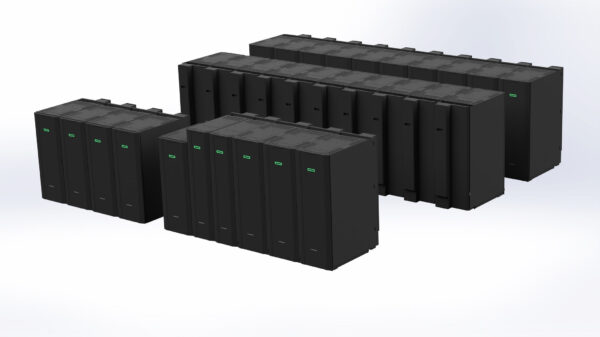
Nokia Corporation (NYSE: NOK) has launched an AI Networking Innovation Lab in Sunnyvale, California, to accelerate development, testing and validation of AI-native data center networking architectures. The move places Nokia Corporation more directly inside the infrastructure layer supporting large-scale AI training and real-time inference, where network performance, congestion control, telemetry and multi-vendor validation are becoming business-critical. The announcement comes as Nokia Corporation’s U.S.-listed ADR has gained investor attention, with $NOK closing at $15.47 on May 22, 2026 after a 9.10% rise to a new 52-week high. For Nokia Corporation, the lab is not just another research facility, but a strategic attempt to convert AI infrastructure complexity into a stronger role in data center networking.
Why is Nokia Corporation building an AI networking lab for data centers now?
The timing of Nokia Corporation’s AI Networking Innovation Lab matters because artificial intelligence infrastructure is moving from experimental cluster building into an industrial-scale deployment cycle. Large AI training systems and distributed inference workloads are exposing bottlenecks that cannot be solved by graphics processing units alone. As model sizes, data movement and inference latency expectations increase, the network between compute, storage and orchestration layers becomes a constraint on the return enterprises can generate from their AI investments.
Nokia Corporation is using the Sunnyvale lab to address that constraint from a systems perspective. The company said the lab will bring together AI networking protocols, switching silicon, hardware platforms, telemetry, automation and new architectural concepts designed for AI-driven data centers. That is significant because data center operators are increasingly wary of isolated vendor claims. They want tested reference architectures that can survive real-world congestion, failure scenarios and interoperability challenges.
The lab also reflects a broader shift in the networking market. Traditional data center switching was already a competitive space, but AI workloads have changed the performance brief. Lossless fabrics, remote direct memory access over converged Ethernet, emerging Ultra Ethernet Consortium approaches, real-time congestion management and rapid troubleshooting are now central to how AI clusters perform. Nokia Corporation is trying to position itself not merely as a supplier of network equipment, but as a validator of complex AI networking blueprints.

How does the Nokia Corporation AI Networking Innovation Lab change its role in cloud and AI infrastructure?
Nokia Corporation’s most important strategic signal is that it wants to move closer to the design phase of AI infrastructure, not remain limited to post-procurement network deployment. By creating a lab where partners can test architectures before production rollout, Nokia Corporation can influence the standards, protocols and reference designs that cloud providers, sovereign AI builders and enterprise infrastructure buyers may eventually adopt.
That matters because AI infrastructure buying decisions are increasingly ecosystem decisions. Customers are not simply choosing switches, servers or storage independently. They are evaluating whether an integrated stack can deliver predictable performance across graphics processing units, network interface cards, storage systems, automation platforms and observability tools. Nokia Corporation’s lab is therefore aimed at reducing one of the biggest barriers to AI infrastructure adoption, which is the fear that expensive systems will underperform once real workloads hit production.
The partner list gives the strategy additional weight. Early collaborators include AMD, Everpure, Keysight, Lenovo, Nscale, Supermicro, VIAVI and Weka. That mix covers compute, systems, testing, cloud infrastructure, storage and validation. In practical terms, Nokia Corporation is trying to create a neutral proving ground where multi-vendor AI architectures can be tested before customers commit capital at scale. If the lab succeeds, Nokia Corporation could gain influence over infrastructure decisions earlier in the sales cycle.
What does Nokia Corporation’s partner ecosystem reveal about the AI data center market?
The partner ecosystem around Nokia Corporation’s lab shows how fragmented and interdependent the AI infrastructure market has become. No single vendor controls the full stack. AI data center operators need processor vendors, server manufacturers, storage providers, network specialists, test equipment companies and cloud operators to align around performance, compatibility and operational resilience.
The inclusion of AMD is particularly important because AI infrastructure competition is no longer framed only around graphics processing unit availability. The broader system architecture around those accelerators, including networking and data movement, increasingly determines whether customers can use expensive compute resources efficiently. For AMD and other compute providers, collaboration with Nokia Corporation helps demonstrate that enterprise AI systems can operate in open, heterogeneous environments rather than forcing buyers into tightly locked infrastructure stacks.
Keysight and VIAVI bring another layer of significance because testing and measurement are now central to AI network credibility. Enterprises do not want theoretical throughput figures. They need to know how networks behave under AI training pressure, congestion events, workload bursts and component failures. Nokia Corporation’s validation-led approach suggests that the market is shifting toward proof-based infrastructure selling, where tested designs may carry more commercial value than raw hardware specifications.
Can Nokia Validated Designs reduce deployment risk for enterprise AI infrastructure buyers?
Nokia Validated Designs appear to be the commercial bridge between the lab’s research activity and real-world customer adoption. The purpose of such designs is to give enterprises and operators tested blueprints for deploying AI data center networking architectures with lower integration risk. In a market where AI infrastructure budgets can reach enormous levels, deployment certainty is becoming a strategic advantage.
The key issue is not whether AI workloads require better networks. That argument has largely been settled. The harder question is whether companies can deploy AI-ready networks quickly without discovering late-stage compatibility problems between hardware, storage, orchestration and automation layers. Nokia Corporation’s lab is designed to test multi-vendor systems against authentic AI training and inference workloads, including failure scenarios and congestion behavior.
If Nokia Validated Designs gain traction, Nokia Corporation could benefit from a more consultative infrastructure role. The company would be selling confidence, not just capacity. That could be valuable for sovereign AI initiatives, hyperscalers, cloud providers and large enterprises that need to shorten time-to-deployment while avoiding expensive architecture mistakes. However, the approach also raises execution expectations. Validated designs must remain current as AI workloads, protocols and silicon roadmaps evolve quickly.
How could Nokia Corporation’s AI networking strategy affect competitors and cloud infrastructure suppliers?
Nokia Corporation’s move puts pressure on networking competitors that are also trying to capture AI data center growth. The company is entering a field where incumbents and challengers are racing to prove that their networking architectures can support high-performance AI clusters without lock-in, instability or operational complexity. Nokia Corporation’s differentiation rests on ecosystem validation and standards-driven openness rather than a purely proprietary stack.
That positioning could appeal to customers who want bargaining power across vendors. Open, multi-vendor architectures can reduce dependency on any single supplier, which is especially important for governments, cloud builders and enterprises concerned about resilience, cost control and procurement flexibility. Nokia Corporation’s partnership-heavy model therefore aligns with the market’s growing preference for interoperable AI infrastructure.
The competitive risk is that AI infrastructure buyers may still gravitate toward more vertically integrated platforms if they believe those platforms deliver faster deployment or stronger performance guarantees. Nokia Corporation has to prove that open validation can match or exceed the operational simplicity of more tightly controlled ecosystems. In other words, openness is attractive, but only if it does not become another word for integration headache. AI data centers are expensive enough without turning the network layer into a group project with invoices.
What does Nokia Corporation’s stock performance suggest about investor sentiment toward AI infrastructure exposure?
Nokia Corporation’s U.S.-listed ADR performance suggests that investors are increasingly receptive to the company’s AI infrastructure positioning, although short-term stock moves should not be treated as proof that the lab alone changed the investment case. The ADR closed at $15.47 on May 22, 2026, rising 9.10% and setting a new 52-week high. Trading volume was also above the recent average, indicating stronger market attention around Nokia Corporation’s shares.
The stock move matters because Nokia Corporation has historically been viewed through telecom cycles, carrier capital expenditure patterns and network equipment demand. The AI Networking Innovation Lab gives investors another lens through which to evaluate the company, namely whether Nokia Corporation can participate in the data center infrastructure cycle created by artificial intelligence. That potential narrative is more growth-oriented than traditional telecom equipment spending.
A neutral reading suggests that investor sentiment is improving, but the strategic test remains revenue conversion. Labs, partnerships and validated designs can create credibility, but shareholders will eventually look for orders, margin contribution, customer adoption and proof that Nokia Corporation can compete profitably in AI data center networking. The market reaction gives Nokia Corporation a stronger platform. It does not remove the burden of execution.
What execution risks could limit Nokia Corporation’s AI-native networking ambitions?
The main execution risk is that AI infrastructure technology is moving faster than traditional validation cycles. Protocols, accelerator architectures, cooling requirements, storage patterns and inference deployment models are all evolving rapidly. Nokia Corporation must ensure that its AI Networking Innovation Lab remains relevant to the architectures customers will deploy tomorrow, not merely the systems they are testing today.
Another risk is commercialization. A lab can strengthen credibility, but turning validation into recurring revenue requires disciplined go-to-market execution. Nokia Corporation must persuade hyperscalers, cloud providers, sovereign AI operators and enterprises that its validated networking architectures materially reduce deployment risk, improve performance or lower total cost of ownership. Without that commercial bridge, the lab may be viewed as strategically interesting but financially modest.
There is also a competitive timing risk. The AI infrastructure market rewards speed, but enterprise buyers also demand reliability. Nokia Corporation has to balance innovation with trust. Moving too slowly could leave the company behind faster ecosystem players. Moving too quickly without sufficient proof could damage the credibility that the lab is designed to build. The sweet spot is narrow, but the prize is meaningful.
What happens next if Nokia Corporation succeeds in AI-native data center networking?
If Nokia Corporation succeeds, the AI Networking Innovation Lab could become a strategic anchor for a broader data center networking franchise. The company could use validated designs to win earlier involvement in customer architecture decisions, strengthen partner relevance and create a more differentiated position in AI infrastructure procurement. That would help Nokia Corporation diversify its growth narrative beyond traditional telecom network cycles.
Success would also support a broader industry shift toward validated, multi-vendor AI infrastructure. As enterprises move from pilot projects to production-scale AI systems, they will need tested architectures that reduce the risk of underutilized compute, unstable inference performance and operational complexity. Nokia Corporation’s lab could become part of that transition if customers trust the designs and partners continue to align around the platform.
If the strategy falls short, the risk is not simply missed growth. Nokia Corporation could find itself competing in a crowded AI infrastructure market where stronger platform players control customer relationships and reduce networking vendors to component suppliers. That is why the Sunnyvale lab is strategically important. It is Nokia Corporation’s attempt to move up the value chain before AI data center networking becomes another commoditized hardware battle.
Key takeaways on Nokia Corporation’s AI networking lab and its impact on AI data center infrastructure
- Nokia Corporation’s AI Networking Innovation Lab positions the company closer to the architecture and validation layer of AI infrastructure, not just the hardware supply layer.
- The Sunnyvale lab targets one of the biggest AI data center bottlenecks, which is network performance under large-scale training and real-time inference workloads.
- Nokia Corporation’s partner ecosystem, including AMD, Keysight, Lenovo, Nscale, Supermicro, VIAVI and Weka, reflects the multi-vendor nature of modern AI infrastructure.
- Nokia Validated Designs could become a commercial differentiator if customers view them as credible tools for reducing deployment risk and integration complexity.
- The strategy aligns with demand for open, standards-driven AI infrastructure that avoids excessive vendor lock-in.
- Nokia Corporation still needs to prove that lab activity can translate into orders, revenue contribution and stronger margins.
- The $NOK stock move to a new 52-week high suggests stronger investor attention, but the market will need evidence of commercial traction.
- Competitors may respond by emphasizing tighter vertical integration, faster deployment or proprietary performance advantages.
- The biggest execution challenge is keeping validation cycles aligned with rapidly changing AI workloads, silicon roadmaps and cloud architecture requirements.
- A successful AI networking strategy could help Nokia Corporation expand its relevance beyond telecom capital expenditure cycles and into a more durable AI infrastructure growth market.
Discover more from Business-News-Today.com
Subscribe to get the latest posts sent to your email.