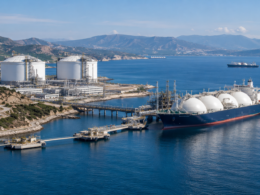



Naturgy Energy Group S.A. (BME: NTGY) is facing a significant shareholder reset after CVC Capital Partners sold its full 13.8% stake in the Spanish energy company for around €4 billion through Goldman Sachs. The transaction removes one of Naturgy Energy Group S.A.’s major long-term financial investors just months after BlackRock exited its remaining stake in the company. Naturgy Energy Group S.A. shares have recently traded near €29.94, close to their 52-week high, suggesting that the market is treating the higher free float and ownership reshuffling as a potential catalyst rather than a warning sign. The stake sale matters because it could alter governance dynamics, liquidity, takeover speculation and capital allocation expectations around one of Spain’s most important gas and power companies.
Why did CVC Capital Partners sell its full Naturgy stake after years in the shareholder base?
CVC Capital Partners’ exit from Naturgy Energy Group S.A. marks the end of a long private equity chapter in one of Spain’s most strategically relevant utilities. The sale was not a small portfolio adjustment. It involved the full disposal of a 13.8% holding worth around €4 billion, making it a major block trade in European energy equities and a visible sign that financial investors are reassessing mature utility holdings after years of ownership.
The timing is important because CVC Capital Partners is not exiting in isolation. BlackRock, through its Global Infrastructure Partners exposure, sold its remaining 11.4% stake in Naturgy Energy Group S.A. earlier this year. That means two large financial shareholders have now reduced or removed exposure to Naturgy Energy Group S.A. within a short period. For a utility with a historically tight shareholder structure, that is not background noise. That is the ownership table being rearranged while everyone is still seated.
For CVC Capital Partners, the logic may be straightforward. Naturgy Energy Group S.A. shares have risen close to their 52-week high, giving the fund an attractive monetisation window. Private equity and infrastructure investors often hold energy assets for long periods, but exits become more attractive when market prices improve, liquidity is available, and strategic uncertainty can be transferred to public-market investors. The sale also allows CVC Capital Partners to recycle capital into new opportunities at a time when infrastructure, energy transition and regulated assets remain competitive investment arenas.
For Naturgy Energy Group S.A., the exit changes the company’s market profile. A larger free float can improve liquidity, attract broader institutional coverage and make the stock more investable for funds that previously struggled with limited availability. However, it can also reduce the stability that comes from a concentrated shareholder base. More tradable shares can mean more market attention, but also more pressure if investors demand faster strategic moves.
How does CVC’s exit change Naturgy Energy Group’s shareholder structure?
The most immediate consequence of the CVC Capital Partners sale is a shift in ownership power. Naturgy Energy Group S.A. has long had a concentrated shareholder structure involving CriteriaCaixa, IFM Global Infrastructure Fund, CVC Capital Partners and Global Infrastructure Partners. With CVC Capital Partners now exiting and BlackRock having already sold down its position, the balance between anchor shareholders and public-market investors becomes more fluid.
CriteriaCaixa remains the key shareholder to watch. The Spanish holding company increased its stake to 28.5% after buying part of BlackRock’s earlier placement. That placed CriteriaCaixa closer to the 30% threshold that can carry takeover implications under Spanish market rules. If CriteriaCaixa were to increase its stake further, investors would immediately focus on whether that creates mandatory bid considerations or a broader strategic repositioning of control.
IFM Global Infrastructure Fund also remains relevant because it still owns a meaningful stake in Naturgy Energy Group S.A. A utility with large stakes held by long-term infrastructure investors can have a different strategic rhythm from a utility with a widely dispersed shareholder base. The more CVC Capital Partners and BlackRock reduce financial-owner influence, the more the market will watch whether CriteriaCaixa and IFM Global Infrastructure Fund become more active in shaping future strategy.
This is where governance becomes the real story. Naturgy Energy Group S.A. is not only an electricity and gas company. It is a regulated infrastructure, energy security and transition asset in Spain and Latin America. Ownership changes can influence dividend policy, capital expenditure, renewable investment, network strategy, asset disposals and takeover speculation. Investors will want to know whether the new shareholder mix creates stability, strategic freedom or another round of corporate maneuvering.
Why is the free-float increase important for Naturgy stock and investor sentiment?
A higher free float can be one of the most important market changes for a listed utility because it improves liquidity and may broaden institutional participation. Naturgy Energy Group S.A. has often been viewed as a high-quality but tightly held stock, which can limit trading activity and reduce its attractiveness for some institutional investors. If more shares are now available in the market, the company may become easier to own, easier to index, and easier to price against European utility peers.
Naturgy Energy Group S.A. shares recently traded around €29.94, matching the upper end of their 52-week range, with a 52-week low of €24.30. That price action suggests that investors are not viewing the CVC Capital Partners exit as a distress signal. Instead, the market appears to be pricing in the benefits of improved liquidity, potential shareholder simplification and perhaps even renewed speculation around corporate action.
That does not mean the stock is risk-free from here. A share price near a 52-week high leaves less room for disappointment if the ownership reset does not lead to clearer strategy, better capital allocation or stronger earnings visibility. Utilities are often valued for stability, dividend reliability and regulated earnings, but Naturgy Energy Group S.A. also carries exposure to gas markets, power prices, regulatory intervention, Latin American operations and energy transition spending.
The investor sentiment layer is therefore balanced. The stake sale removes a large overhang and increases liquidity. It also raises questions about who buys the shares, whether long-only institutions replace financial sponsors, and whether the new shareholder base pushes for a more active capital allocation agenda. Naturgy Energy Group S.A. is getting a wider audience. Now it has to decide what story it wants that audience to hear.
What does the Naturgy stake sale reveal about private equity exits from European infrastructure?
CVC Capital Partners’ sale is part of a broader pattern in which private equity and infrastructure investors are monetising mature holdings when market conditions allow. European infrastructure assets remain attractive, but they are no longer automatic buy-and-hold stories at any price. Higher interest rates, evolving regulation, energy transition demands and portfolio rebalancing needs have made exits more tactical.
For private equity and infrastructure funds, selling into strength can make sense. Naturgy Energy Group S.A. has recovered from lower levels, trades near a yearly high, and remains a recognised Spanish utility with a sizeable market value. If CVC Capital Partners can exit a mature position at around €4 billion, the fund can return capital or redeploy into assets where it sees more upside, more control or better risk-adjusted returns.
The BlackRock exit earlier this year adds weight to the signal. Two large financial shareholders exiting within months suggests that large funds may see Naturgy Energy Group S.A. as a good monetisation candidate after years of holding rather than as a fresh accumulation opportunity. That does not necessarily mean the company is overvalued. It means the strategic ownership phase involving these funds may have run its course.
For European utilities, this matters because infrastructure investors have been important owners of regulated energy assets, gas networks, renewables platforms and power infrastructure. If more funds start exiting mature stakes, public markets could see more block trades, higher liquidity and shifting governance dynamics. The phrase “patient capital” still applies, but apparently patience also has an exit price.
How could the CVC exit affect Naturgy’s energy transition and capital allocation strategy?
Naturgy Energy Group S.A. operates across gas, electricity, networks, generation and international energy markets, which means shareholder structure can influence how aggressively the company invests in transition-related areas. A more liquid shareholder base may increase pressure for clearer capital allocation, stronger disclosure, and a more compelling balance between dividends and growth investment.
The company’s strategic challenge is not simple. Gas remains important for energy security, especially in Europe after the disruptions of recent years. At the same time, utilities are under pressure to invest in renewables, grid flexibility, storage, electrification and lower-carbon infrastructure. Naturgy Energy Group S.A. must manage both sides of that equation while maintaining returns for investors who often value utilities for income stability.
A concentrated shareholder base can sometimes support longer-term decisions because major investors can tolerate strategic patience. A broader public-market base can increase scrutiny around returns on capital, dividend sustainability and project risk. If the free float rises sharply, Naturgy Energy Group S.A. may need to communicate its investment case more clearly to a wider range of investors.
There is also the possibility of renewed corporate action. A simplified shareholder structure can make future deals easier, whether through stake-building, asset disposals, partnership structures or strategic reviews. The CVC Capital Partners exit does not automatically trigger any of those outcomes, but it does create a more open field. In capital markets, fewer locked doors usually means more people checking the handles.
What are the biggest risks after CVC Capital Partners exits Naturgy?
The first risk is governance uncertainty. With major financial investors exiting, the market will closely watch whether CriteriaCaixa, IFM Global Infrastructure Fund or other investors increase influence. If the shareholder base becomes more fluid without clear strategic direction, Naturgy Energy Group S.A. could face more speculation than clarity.
The second risk is valuation pressure. Naturgy Energy Group S.A. trades near its 52-week high, which means the market may already be pricing in improved liquidity and ownership simplification. If earnings, dividends or strategic updates fail to support that optimism, the stock could face profit-taking after the block trade excitement fades.
The third risk is regulatory exposure. Spanish utilities operate in a policy-sensitive environment where energy prices, gas supply, network returns, consumer protection and transition investment can all attract government attention. A shareholder reset does not remove regulatory risk. If anything, higher public-market visibility can make policy issues more prominent.
The fourth risk is capital allocation tension. Investors may disagree on whether Naturgy Energy Group S.A. should prioritise dividends, renewable investment, gas infrastructure, deleveraging, acquisitions or asset sales. A more liquid shareholder base can bring useful discipline, but it can also bring conflicting expectations. Utilities like quiet rooms. Shareholder resets tend to open the windows.
What happens next for Naturgy Energy Group and Spain’s energy ownership landscape?
The next phase depends on who absorbs the CVC Capital Partners stake and whether the new holders behave as passive investors or strategic participants. If the shares move into a broad institutional base, Naturgy Energy Group S.A. may benefit from better liquidity and broader market relevance. If a strategic or anchor investor builds exposure, speculation around control and governance could intensify.
CriteriaCaixa’s position remains central. Any additional stake-building by the Spanish holding company would attract close attention because of its proximity to the 30% level. IFM Global Infrastructure Fund’s role also remains important, especially if it chooses to stay long term while other financial investors exit. The post-CVC shareholder register will say a lot about Naturgy Energy Group S.A.’s next strategic chapter.
For Spain’s energy sector, the transaction reinforces the importance of ownership structure in utilities. These companies sit at the intersection of national energy security, regulated returns, decarbonisation policy and investor income. When large shareholders move, the implications extend beyond trading desks.
For Naturgy Energy Group S.A., the shareholder reset may become an opportunity if management can use higher liquidity and renewed investor attention to sharpen the company’s story. If not, the company risks becoming a vehicle for speculation rather than strategy. CVC Capital Partners has exited. The next question is who decides what Naturgy Energy Group S.A. becomes now.
Key takeaways on what CVC’s Naturgy exit means for Spanish energy investors
- CVC Capital Partners has sold its full 13.8% stake in Naturgy Energy Group S.A. for around €4 billion.
- The transaction follows BlackRock’s earlier exit from its remaining Naturgy Energy Group S.A. stake, creating a major shareholder reset.
- The sale increases Naturgy Energy Group S.A.’s free float and could improve liquidity for institutional investors.
- Naturgy Energy Group S.A. shares are trading near their 52-week high, suggesting constructive market sentiment around the ownership reshuffle.
- CriteriaCaixa remains the shareholder to watch because its 28.5% stake sits close to the 30% level that can carry takeover implications.
- IFM Global Infrastructure Fund remains another important long-term investor in the company’s ownership structure.
- The transaction could increase pressure on Naturgy Energy Group S.A. to clarify capital allocation, dividend policy and energy transition investment priorities.
- The sale reflects a broader pattern of private equity and infrastructure funds monetising mature European infrastructure holdings.
- The main risks are governance uncertainty, valuation pressure, regulatory exposure and competing shareholder expectations.
- The broader signal is that Spain’s utility ownership map is becoming more liquid, more open and potentially more active.
Discover more from Business-News-Today.com
Subscribe to get the latest posts sent to your email.