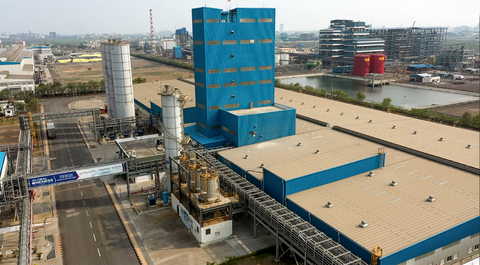




LyondellBasell Industries N.V. (NYSE: LYB) returned to profitability in the third quarter of 2026, reporting net income of $758 million compared with an $890 million loss a year earlier, as stronger oxyfuels margins, improved operating performance and restructuring initiatives supported its earnings recovery. The global chemicals manufacturer generated $8.5 billion in quarterly revenue, an increase of approximately 10%, while adjusted EBITDA excluding identified items climbed to $1.51 billion from $835 million. The company also announced an agreement to sell its former Houston refinery site to Valero Energy Corporation for $320.5 million, advancing its strategy of exiting non-core operations and strengthening its financial position.
The earnings recovery represents an important development for LyondellBasell as the chemicals industry continues navigating volatile feedstock costs, uneven polymer demand and geopolitical disruptions. However, the dramatic improvement in reported profitability requires careful interpretation because the previous year’s results included substantial impairment charges, while third-quarter adjusted earnings declined sequentially from the second quarter of 2026. For investors, the central question is whether the company’s improving cash generation, cost reductions and portfolio restructuring can support sustainable profitability despite continuing uncertainty across global chemical markets.
Why LyondellBasell returned to a $758 million quarterly profit despite continuing pressure on global polymer markets
LyondellBasell reported third-quarter revenue of $8.499 billion, compared with $7.727 billion in the corresponding period of 2025. The approximately 10% increase reflected stronger contributions from selected chemical products and favourable conditions in its Intermediates and Derivatives business.
Revenue nevertheless declined from $9.177 billion in the second quarter, highlighting the uneven nature of the recovery. Management attributed continued market uncertainty to geopolitical developments, changing customer purchasing patterns and volatile chemical product prices.
Reported net income reached $758 million, equivalent to $2.32 per diluted share, compared with a net loss of $890 million, or $2.77 per share, a year earlier. The swing represents a substantial improvement in headline profitability, although the comparison was influenced by unusually large charges recorded during the previous year.
Third-quarter 2025 results included approximately $1.2 billion in asset write-downs, which significantly reduced reported earnings. These charges included impairments affecting European operations and the company’s Advanced Polymer Solutions business.
Excluding identified items, third-quarter 2026 net income reached $828 million, compared with $330 million a year earlier. Adjusted diluted earnings per share increased to $2.54 from $1.01, indicating that profitability improved even after excluding major accounting and restructuring effects.
EBITDA reached $1.42 billion, compared with a negative $480 million in the previous year. EBITDA excluding identified items increased to $1.51 billion from $835 million, representing growth of approximately 81%.
The adjusted figures provide a clearer perspective on operating performance because they exclude specified items such as significant asset write-downs, restructuring expenses and certain transaction-related costs. However, they remain non-GAAP measures and should be considered alongside reported earnings and cash flow.
A comparison with the preceding quarter reveals a different trend. Net income excluding identified items declined from $1.40 billion in the second quarter to $828 million, while adjusted EBITDA decreased from $2.13 billion to $1.51 billion.
The sequential decline demonstrates that the earnings recovery has not followed a consistently upward trajectory. Stronger year-over-year results are encouraging, but changing market conditions continue to influence quarterly profitability.
For investors, the most important distinction is between the recovery from an exceptionally weak prior-year comparison and the company’s ability to sustain earnings through changing industry conditions.
How LyondellBasell’s $320.5 million Houston refinery sale strengthens its portfolio transformation strategy
LyondellBasell separately announced an agreement to sell its former Houston refinery site and related assets to Valero Refining-Texas, a wholly owned subsidiary of Valero Energy Corporation. The transaction carries a total purchase price of $320.5 million and is expected to close during the fourth quarter of 2026.
The proposed sale follows LyondellBasell’s decision to cease refining operations at the facility. Management evaluated alternative uses and ownership arrangements before determining that divestment offered the most attractive option for advancing its strategic priorities.
Under the agreement, Valero Energy will assume responsibility for ongoing site operations, environmental liabilities, pension costs and related employee obligations. The transfer of these responsibilities could reduce LyondellBasell’s future exposure to expenses associated with maintaining the former refinery property.
The transaction also includes arrangements intended to provide continued employment for the site’s workforce. Management has indicated that the agreement supports an orderly transition to a buyer whose core business includes refining operations.
The sale remains subject to regulatory approvals and customary closing conditions. Consequently, the $320.5 million consideration should not be treated as cash already received or as a completed contribution to the company’s balance sheet.
The financial importance of the transaction extends beyond its purchase price. Exiting the former refinery site allows LyondellBasell to reduce its exposure to an operation that no longer aligns with its preferred portfolio structure.
The company has increasingly emphasised businesses where it believes its manufacturing capabilities, technology and market positions can generate stronger long-term returns. These include polyolefins, oxyfuels, propylene oxide and acetyls.
The Houston transaction also follows the divestment of selected European Olefins and Polyolefins assets earlier in 2026. That sale resulted in a significant accounting loss during the second quarter but formed part of the company’s broader effort to reshape its manufacturing footprint.
Portfolio restructuring can improve capital efficiency when proceeds are used to strengthen the balance sheet or support more profitable operations. However, the ultimate benefits depend on transaction completion, retained liabilities and the earnings potential of the remaining businesses.
For shareholders, the refinery sale provides evidence that management is taking concrete steps to simplify operations rather than relying exclusively on cost reductions to improve financial performance.
Why stronger oxyfuels margins and operational improvements supported LyondellBasell’s chemicals earnings recovery
The Intermediates and Derivatives business delivered a substantial improvement in profitability during the third quarter, supported primarily by stronger oxyfuels market conditions. Management highlighted favourable gasoline blending economics, supply disruptions and improved operating reliability as important contributors.
Oxyfuels are chemical components used in fuel blending to improve gasoline characteristics, including octane performance. Their profitability can be influenced by gasoline demand, feedstock prices, competing supply and regional market conditions.
LyondellBasell reported that higher gasoline blending values and global supply disruptions significantly expanded oxyfuels margins in Europe and the United States. These favourable conditions helped offset weaker performance in other chemical product categories.
The company’s Channelview propylene oxide and tertiary butyl alcohol facility operated at approximately 110% utilisation during the quarter. Management attributed the performance to initiatives implemented through its Value Enhancement Program.
Its Bayport facility also operated at full rates following a successful restart in June. Strong customer demand supported production, contributing to the division’s improved earnings.
The acetyls business benefited from improved operating reliability at the company’s La Porte facility. Better reliability can support profitability by reducing unplanned interruptions and allowing manufacturers to meet customer demand more consistently.
The strength of Intermediates and Derivatives illustrates the advantages of operating across several chemical markets. When polymer margins weaken, other product categories can provide earnings support.
However, oxyfuels profitability is sensitive to market conditions that may change quickly. Supply disruptions and unusually favourable gasoline blending economics do not necessarily represent permanent improvements.
Investors should therefore distinguish operational gains, such as improved plant reliability, from market-driven benefits that may reverse. Sustainable earnings growth will require continued manufacturing efficiency alongside favourable product demand.
The results nevertheless demonstrate the potential value of LyondellBasell’s diversified portfolio. Stronger performance in Intermediates and Derivatives provided an important contribution during a period of uneven polymer market conditions.
How polyethylene pricing, European asset sales and global demand are affecting LyondellBasell’s outlook
LyondellBasell’s Olefins and Polyolefins businesses continued experiencing pressure from changing polymer prices and regional market conditions. The company reported weaker sequential profitability in its Americas division as prices declined for polymers and olefin products.
Despite these pressures, management indicated that industry integrated polyethylene margins ended the third quarter approximately 50% above their 2025 levels. Positive polyethylene price momentum during September provided some encouragement for the outlook.
Polyethylene is used extensively in packaging, consumer goods, industrial products and infrastructure applications. Demand is influenced by manufacturing activity, consumer spending and the availability of competing materials.
Strong domestic and export demand can support production volumes, but profitability also depends on the relationship between selling prices and feedstock costs. Even relatively modest price movements can have significant effects on margins across large manufacturing operations.
The European, Asian and international Olefins and Polyolefins business experienced weaker polymer pricing during the quarter. Sales volumes were also lower sequentially following the divestment of selected European assets in May.
The reduction in volumes partly reflects the company’s deliberate decision to exit certain operations rather than solely weaker customer demand. This distinction is important when evaluating changes in revenue and production activity.
Management expects global market conditions to remain uncertain, particularly because of geopolitical developments affecting energy and chemical supply chains. The company indicated that a return to conditions prevailing before recent Middle East disruptions could take longer than initially anticipated.
Customer purchasing behaviour has also been influenced by inventory levels and product price volatility. Buyers may delay orders when they expect prices to decline or accelerate purchases when supply concerns increase.
These factors can create fluctuations in quarterly demand that do not necessarily reflect longer-term consumption trends. LyondellBasell’s ability to adjust operating rates and direct products toward more attractive markets remains important.
For investors, the outlook depends partly on whether stronger polyethylene pricing can be sustained. Continued recovery would support profitability, while renewed price pressure could offset benefits from restructuring and cost reductions.
How $1.7 billion in operating cash flow and debt repayment strengthen LyondellBasell’s financial position
LyondellBasell generated $1.7 billion in cash from operating activities during the third quarter, supported by earnings and the release of working capital. The cash performance represents an important component of the company’s financial recovery.
Working capital releases occur when businesses reduce cash tied up in inventories, receivables or other operating requirements. These movements can strengthen quarterly cash generation, although they may not recur at the same level in subsequent periods.
The company allocated $303 million to capital expenditure during the quarter. It also returned $224 million to shareholders through dividends, maintaining distributions while continuing to invest in manufacturing operations.
LyondellBasell repaid a €500 million debt maturity in September as planned. Management reported that cash increased by approximately $600 million during the quarter despite the repayment.
At the end of September, the company held approximately $3.23 billion in cash and cash equivalents. Total available liquidity reached $7.69 billion, including committed borrowing facilities.
The liquidity position provides financial flexibility during a period of uncertain chemical market conditions. It also supports management’s stated objective of strengthening the balance sheet through disciplined debt reduction.
The company’s capital allocation priorities remain focused on operating assets safely, maintaining financial resilience, supporting its dividend and investing selectively in opportunities that improve long-term returns.
These priorities reflect the capital-intensive nature of chemical manufacturing. Plants require regular maintenance, environmental compliance spending and investment to preserve operational reliability.
A stronger balance sheet can also reduce financial pressure during industry downturns. However, liquidity alone does not guarantee earnings growth, particularly when product margins remain volatile.
The proposed Houston refinery sale could provide additional proceeds once completed. The assumption of specified site obligations by Valero Energy may also support LyondellBasell’s longer-term financial flexibility.
For shareholders, the combination of operating cash generation, debt repayment and portfolio divestments strengthens the company’s financial position. The next challenge is converting these improvements into consistent cash generation across different market environments.
Why LyondellBasell’s cost reduction programme and manufacturing efficiency initiatives matter for future margins
LyondellBasell continues implementing its Cash Improvement Plan and Value Enhancement Program as part of a broader effort to strengthen profitability. These initiatives focus on reducing structural costs, improving asset utilisation and increasing operational efficiency.
Management reported progress in reducing global structural fixed costs during the third quarter. Lower fixed costs can improve profitability by reducing the expenses required to operate manufacturing facilities regardless of production volumes.
The company also highlighted improvements in plant reliability, including the completion of a planned turnaround at its Clinton facility on schedule and below budget.
Manufacturing turnarounds involve scheduled shutdowns for maintenance, inspections and equipment improvements. Completing these projects efficiently can reduce lost production time and limit unexpected expenditure.
The Clinton turnaround provides an example of the operational discipline management is seeking across its portfolio. Reliable facilities are particularly important in chemicals manufacturing because unplanned interruptions can create substantial production losses.
The company has also been adjusting feedstocks and directing products toward markets offering more attractive returns. Such flexibility can help protect margins when regional supply and demand conditions diverge.
However, cost reductions cannot fully eliminate exposure to chemical industry cycles. Weak demand or sustained pricing pressure can still affect profitability even when manufacturing efficiency improves.
Restructuring programmes may also require upfront spending before anticipated savings are realised. During the third quarter, LyondellBasell recorded $77 million in site closure costs and $2 million in Cash Improvement Plan costs.
These expenses contributed to the difference between reported earnings and results excluding identified items. Investors should evaluate whether the expected savings justify the associated costs.
The company’s long-term earnings potential will depend on maintaining operational improvements while responding effectively to market changes. A leaner cost structure may strengthen resilience, but product demand and pricing remain important external factors.
What LyondellBasell’s fourth-quarter operating outlook signals about chemicals demand and profitability
LyondellBasell expects fourth-quarter operating conditions to reflect normal seasonal demand patterns alongside continuing uncertainty in global chemical supply. Management also anticipates a seasonal release of working capital, which could support cash generation.
The company expects its North American Olefins and Polyolefins assets to operate at approximately 85% capacity. European Olefins and Polyolefins operating rates are expected to average around 60%.
Intermediates and Derivatives assets are expected to operate at approximately 75% capacity. The forecasts reflect anticipated demand, planned maintenance and management’s efforts to align production with market conditions.
The relatively low expected operating rate in Europe highlights continuing pressure on the region’s chemical manufacturing environment. Energy costs, competitive supply and weaker polymer pricing remain relevant considerations.
A planned maintenance project at a North American polypropylene facility will also affect fourth-quarter operating activity. Such maintenance is necessary to preserve long-term reliability but can temporarily reduce production volumes.
Management expects oxyfuels demand and margins to remain strong, providing a potential source of earnings support. However, the company has cautioned that geopolitical conditions and supply disruptions could remain unpredictable.
The outlook suggests that LyondellBasell is prioritising operational flexibility rather than maximising production regardless of market conditions. Adjusting operating rates can help reduce exposure to unfavourable margins, although lower utilisation may also increase unit costs.
For investors, the fourth quarter will provide an important test of whether the company’s cost improvements can offset seasonal demand weakness. Continued cash generation would strengthen confidence in the restructuring strategy.
The company’s ability to maintain attractive margins while operating below full capacity will also influence expectations for 2027. Improvements in chemical demand could create additional operating leverage, but a prolonged downturn would remain challenging.
How investors should assess LyondellBasell’s earnings recovery and portfolio restructuring strategy
LyondellBasell’s third-quarter results provide evidence of a substantial recovery from the previous year’s weak financial performance. Higher adjusted earnings, strong cash generation and progress on portfolio restructuring support a more constructive assessment of the company’s operating position.
However, the headline swing from an $890 million loss to a $758 million profit should not be interpreted as an equivalent improvement in recurring operating performance. Significant prior-year impairment charges contributed to the comparison, while adjusted earnings declined sequentially.
The stronger performance in Intermediates and Derivatives demonstrates the value of the company’s diversified chemical portfolio. Oxyfuels profitability and improved plant reliability helped offset pressure in polymer markets.
The proposed $320.5 million Houston refinery sale represents another important strategic development. Exiting the former refinery site could simplify operations, generate cash proceeds and reduce exposure to certain ongoing obligations.
The transaction also reinforces management’s willingness to reshape the portfolio in pursuit of stronger capital efficiency. However, its financial benefits will depend on successful completion and the company’s subsequent use of the proceeds.
LyondellBasell’s liquidity position provides an additional source of resilience. Approximately $7.7 billion in available liquidity offers flexibility to manage debt, fund operations and respond to changing market conditions.
The company’s dividend remains an important consideration for income-focused shareholders. Maintaining distributions while strengthening the balance sheet will depend on sustained operating cash generation.
From a market sentiment perspective, the earnings release contains both encouraging and cautionary signals. The year-over-year recovery and stronger cash flow support the fundamental outlook, while sequentially weaker adjusted earnings and uncertain polymer demand temper expectations.
A verified assessment of the immediate stock-market reaction would require current share-price performance, trading volumes and changes in analyst estimates. The earnings announcement alone does not establish whether investors responded positively or negatively.
The central investment question is whether LyondellBasell can sustain its improved financial performance after unusually favourable oxyfuels conditions normalise. Continued cost reductions, reliable manufacturing operations and disciplined capital allocation will be critical.
The latest results suggest that management’s restructuring strategy is beginning to produce measurable financial benefits. Nevertheless, a durable earnings recovery will require stronger underlying chemical demand and consistent profitability across the company’s operating segments.
Key takeaways on LyondellBasell’s $758 million profit and $320.5 million Houston refinery sale
- LyondellBasell reported third-quarter net income of $758 million, reversing an $890 million loss a year earlier.
- Quarterly revenue increased approximately 10% to $8.5 billion, supported by stronger performance in selected chemical markets.
- Adjusted EBITDA excluding identified items rose to $1.51 billion from $835 million a year earlier.
- Prior-year impairment charges contributed significantly to the dramatic improvement in reported profitability.
- LyondellBasell agreed to sell its former Houston refinery site to Valero Energy for $320.5 million.
- Strong oxyfuels margins and improved plant reliability supported profitability in the Intermediates and Derivatives business.
- Operating cash flow reached $1.7 billion, while the company repaid a €500 million debt maturity.
- Total available liquidity stood at approximately $7.7 billion at the end of September.
- Management expects continued uncertainty in polymer markets and reduced fourth-quarter operating rates.
- Investors will monitor chemical pricing, cost reductions, refinery-sale completion and sustainable cash generation.
Discover more from Business-News-Today.com
Subscribe to get the latest posts sent to your email.