Lynas Rare Earths Limited (ASX: LYC) heads into Thursday’s session at A$19.06 after closing up 2.64% on Wednesday, with the stock now sitting close to broker consensus 12-month price targets after a sustained rally tracking the structural shift in the global rare earths supply chain since China tightened export controls in October 2025. The move comes weeks after Lynas Rare Earths reported a Q3 FY26 quarterly result that delivered A$265 million in invoiced sales revenue, the highest since Q4 FY22, alongside the first commercial production of samarium oxide outside China. The next confirmed catalyst is the FY26 full year result on 1 September 2026, with the search for a successor to long-serving CEO Amanda Lacaze and the Mt Weld flotation expansion ramp toward the 12,000 tonnes per annum NdPr target the items the market is pricing into the current re-rating.
What does Lynas Rare Earths actually own and why is the company unique outside China?
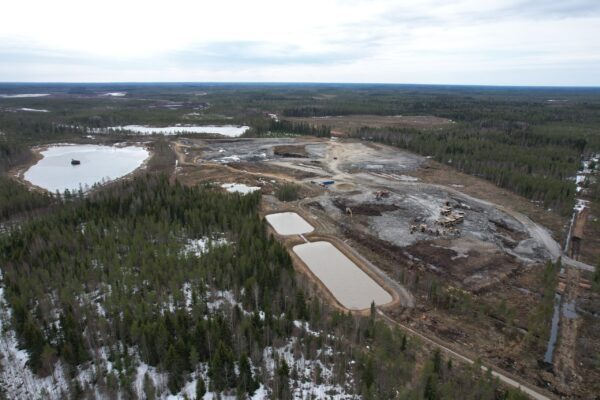
Lynas Rare Earths operates the Mt Weld rare earths mine and concentration plant near Laverton in Western Australia, a rare earths processing facility in Kalgoorlie, Western Australia, and the Lynas Advanced Materials Plant in Gebeng, Malaysia. The company is the largest rare earth producer outside China and, as of December 2025, the only producer of separated heavy rare earths dysprosium and terbium outside China. In March 2026 Lynas Rare Earths produced samarium oxide for the first time, ahead of the previously announced April target, becoming the only commercial producer of separated light and heavy rare earths in the Western world.
The strategic uniqueness sits in the vertical integration. Mt Weld is one of the highest-grade, lowest-cost, and longest-life rare earth deposits in the world, with mine life exceeding 20 years and the lowest unit cost position globally for separated neodymium-praseodymium oxide. The Kalgoorlie cracking and leaching plant processes Mt Weld concentrate into mixed rare earth carbonate, which is then shipped to Malaysia for separation into individual rare earth oxides. That structure is what allows Lynas Rare Earths to operate independently of any Chinese supply chain step, which is precisely the configuration Western governments and customers are now willing to pay a premium to access.
Why is the rare earths price action doing the heavy lifting on the LYC share price right now?
The pricing backdrop has shifted decisively since China’s October 2025 export controls. Neodymium and praseodymium oxide reached US$111.5 per kilogram on 25 February 2026, a figure confirmed by Lynas Rare Earths in its half-year results, representing a 42% gain year-to-date from 1 January 2026. The FOB China premium for neodymium oxide at US$184 per kilogram versus the domestic benchmark of US$113 per kilogram represents a 63% spread. Heavy rare earths command an even sharper premium structure, with dysprosium oxide trading at US$190 per kilogram on China’s domestic market and US$317 per kilogram on the FOB China export price.
For Lynas Rare Earths the operating leverage is direct. The company sells at premium to spot pricing, captures the FOB China premium structure for non-Chinese supply, and increasingly negotiates index-independent contracts with Western customers willing to pay for supply chain security. The March quarter delivered a 115% increase in revenue on the prior corresponding period, with rare earth oxide production up 69% to roughly 3,230 tonnes and the average NdPr selling price up 25% quarter-on-quarter. The combination of price uplift and volume ramp through Mt Weld expansion is the mechanical driver of the share price re-rating from sub-A$10 levels last year to current levels above A$19.
How does the heavy rare earths breakthrough change the long-term Lynas Rare Earths thesis?
The Malaysia heavy rare earths separation circuit is the most consequential capacity addition in the company’s history. The Kuantan facility began producing dysprosium and terbium in 2025, becoming the world’s first commercial heavy rare earths separation facility outside China in 30 years. The circuit can separate up to 1,500 tonnes of heavy rare earths per year, with a second heavy rare earths processing plant slated for completion in Malaysia by 2028.
The economic significance reaches well beyond the headline production number. Heavy rare earths command 3 to 5 times the pricing of light rare earths, with terbium oxide trading at over US$1,000 per kilogram on the FOB China market and dysprosium at US$317 per kilogram. Even at modest production volumes the revenue contribution is meaningful, and the demand profile is anchored to high-coercivity magnets used in EV traction motors operating in high-temperature environments, offshore wind turbine generators, and defence systems. The samarium oxide first production in March extended this product range further, opening exposure to specialised magnet, optical, catalyst, and medical applications that have historically been entirely Chinese-supplied.
What does the Q3 FY26 quarterly result tell investors about operational execution?
The March quarter delivered the strongest financial result Lynas Rare Earths has reported since Q4 FY22, with A$265 million in invoiced sales revenue representing a 115% increase on the prior corresponding period. NdPr production reached 1,996 tonnes, total rare earth oxide production was 3,200 tonnes, and the company produced 8 tonnes of dysprosium and terbium alongside the first samarium oxide. The average selling price across all rare earth products was A$84.60 per kilogram, with the average NdPr selling price up 25% quarter-on-quarter.
The execution context matters because the previous year had been operationally difficult. Q3 FY25 saw REO production drop to 1,911 tonnes, cash reserves halved to A$268.9 million, and the company faced power supply issues at Kalgoorlie that contributed an estimated A$8 to A$12 million in unplanned expenses during November 2025. The Q3 FY26 result confirms the operational reset is complete. Lynas Rare Earths holds a A$1.03 billion cash position following a completed A$930 million equity raising, providing substantial capital for ongoing heavy rare earth separation expansion at Kalgoorlie and Malaysia. The Mt Weld flotation expansion is operating at 70% of nameplate capacity, with the ramp toward the 12,000 tonnes per annum NdPr production target set for full delivery.
How does the JARE offtake reset the long-term Lynas Rare Earths revenue floor?
The most consequential commercial development of 2026 is the revised supply agreement with Japan Australia Rare Earths. The reset agreement locks in 5,000 tonnes per annum of NdPr through to 2038 at a US$110 per kilogram floor price, which sits at the centre of current broker model assumptions. The structure is unusually favourable for a long-dated offtake. The floor protects Lynas Rare Earths against any retracement in spot pricing if Chinese export controls ease or new Western capacity comes online, while leaving incremental capacity available to be sold into potentially higher-return Western contracts at spot or premium pricing.
For LYC shareholders the JARE reset functionally underwrites a baseline cash flow profile through to 2038, then layers Mt Weld expansion volume and heavy rare earths production on top of that floor. This is why broker price targets have moved sharply higher across the past quarter. Analyst fair value estimates have stepped from A$16.65 in mid-March to roughly A$19.81 by the start of May, with bullish broker targets reaching A$24 to A$26. The most bearish broker target sits at A$9.50, which still reflects views that have not yet incorporated the JARE floor or the Q3 FY26 operational delivery.
How does the US Australia critical minerals agreement and Pentagon funding shape the Lynas Rare Earths story?
The geopolitical backdrop is now an explicit part of the Lynas Rare Earths investment thesis rather than ambient context. The US Australia critical minerals agreement signed by President Donald Trump and Australian Prime Minister Anthony Albanese in late 2025 reset the strategic framework for non-Chinese rare earths supply, with US government commitments flowing directly into Western producer support structures. Lynas Rare Earths has received US$258 million in Pentagon funding for its planned Seadrift, Texas heavy rare earths refinery, and the company has signed memoranda of understanding with US magnet producer Noveon Magnetics and Korea’s JS Link for downstream supply chain integration.
The Texas project itself has hit complications worth flagging. The Seadrift facility is dealing with sharply higher wastewater treatment costs, and Lynas Rare Earths has flagged material uncertainty over the project’s future. Capital is instead flowing to Malaysia, with a second heavy rare earths processing plant slated for completion there by 2028. The capital reallocation to Malaysia is operationally pragmatic but does mean US production capacity remains a future rather than a near-term contributor. For investors that creates a binary catalyst window: either the Texas project finds a workable path forward with additional government support, or the company formally pivots its Western supply chain build-out toward the Malaysian expansion track.
What execution and leadership transition risks should retail investors weigh?
The most significant near-term governance variable is the CEO succession. Amanda Lacaze, the longest-serving female CEO in the ASX 200 index, is stepping down after 12 years, having grown the company’s market capitalisation from around A$400 million to nearly A$15 billion across her tenure. She will remain until the end of the current financial year while the board conducts a global search for a successor. Amanda Lacaze rebuilt Lynas Rare Earths from a near-collapse balance sheet into the only commercially viable Western rare earths producer, and the next CEO inherits a company in fundamentally different operating shape. The risk is execution discontinuity at exactly the point when the company is scaling heavy rare earths production, navigating the Texas project decision, and absorbing a substantial capital programme.
The second risk is rare earth price volatility. The structural undersupply story is genuine, but rare earth pricing has historically been driven by Chinese policy decisions, technology adoption rates, and strategic stockpiling activities. Any easing of Chinese export controls, a substantial inventory release from Chinese strategic reserves, or substitution toward rare earth-free motor designs would compress the premium pricing structure that currently underwrites Lynas Rare Earths’ margins. The JARE floor at US$110 per kilogram offers some protection against the downside scenario, but only on the contracted 5,000 tonnes per annum portion of production. The third risk is the Texas project. A formal walkaway from Seadrift would clarify capital allocation but would also remove a strategic optionality that has been part of the LYC equity story for several years.
How is the market currently pricing LYC versus what the broker consensus implies?
The stock heads into Thursday’s session at A$19.06 with broker views that have moved sharply higher across the past quarter. The consensus 12-month price target now sits at roughly A$19.86, up materially from the A$12.55 consensus that prevailed earlier in the year, with 9 brokers recommending the stock as a buy and 3 recommending it as a sell. The bullish broker case at A$24 to A$26 implies 25% to 36% upside from current levels, while the bearish case at A$9.50 implies more than 50% downside if the rare earths pricing premium structure compresses.
What this spread tells retail investors is that the structural debate about Western rare earths pricing is genuinely unresolved at the analyst level. The bulls are building models off the JARE floor, heavy rare earths production scaling, and the Pentagon partnership structure. The bears are pricing in eventual normalisation of Chinese export policy, new Western capacity from MP Materials and other emerging producers, and the inherent volatility of rare earth pricing across cycles. The stock at current levels sits effectively at consensus, which means incremental positive newsflow from the FY26 result, the Mt Weld ramp, or the CEO succession process is what would push the stock beyond the consensus range rather than simply confirm it.
What are forums and retail investors saying about LYC ahead of the next catalyst?
The HotCopper LYC thread has been highly active throughout the rare earths rally, with retail commentary focused on the China export controls, the dysprosium and terbium production milestones, and the Pentagon funding context for the Texas project. X cashtag activity has shifted from the speculative magnet-metals trade narrative toward operational milestone tracking, with the September FY26 result flagged as the next concrete catalyst window.
The dominant retail investor question is whether the current pricing premium structure for non-Chinese rare earths is durable through the next two to three years, when MP Materials in the United States is expected to commission its own dysprosium and terbium separation capability and additional Western capacity comes online. The answer largely depends on the pace at which automakers and defence contractors formally re-source their rare earth supply chains, which the current contract data suggests is already happening but at a slower pace than the price action implies. For investors approaching LYC at current levels, the position is essentially a bet on continued geopolitical bifurcation of the rare earths supply chain rather than a bet on commodity prices alone.
Key takeaways for retail investors watching LYC
- Lynas Rare Earths heads into Thursday’s session at A$19.06 after closing up 2.64% on Wednesday, with the stock now trading close to consensus 12-month broker targets after a sharp re-rating since the October 2025 China export controls.
- The Q3 FY26 quarterly result delivered A$265 million in revenue, the strongest since Q4 FY22, with NdPr production at 1,996 tonnes, dysprosium and terbium production at 8 tonnes, and the first commercial samarium oxide ahead of schedule.
- The Malaysia heavy rare earths separation circuit makes Lynas Rare Earths the only commercial producer of separated dysprosium, terbium, and samarium outside China. The economic significance is the 3 to 5 times pricing premium for heavy versus light rare earths.
- The revised JARE supply agreement locks in 5,000 tonnes per annum of NdPr to 2038 at a US$110 per kilogram floor price, providing the baseline revenue structure that broker models are now built around.
- The Texas Seadrift project faces material uncertainty due to wastewater treatment cost escalation. Capital is flowing to Malaysia instead, with a second heavy rare earths plant targeted for 2028.
- The CEO succession is the most significant near-term governance variable. Amanda Lacaze steps down at the end of the current financial year after 12 years, with the board conducting a global search for a successor.
- Broker consensus 12-month price target sits at roughly A$19.86, with bullish targets at A$24 to A$26 and bearish at A$9.50. The stock at current levels is trading at consensus, which means further upside requires incremental positive newsflow from the FY26 result on 1 September.
Discover more from Business-News-Today.com
Subscribe to get the latest posts sent to your email.