Lindian Resources Limited (ASX: LIN), an Australian critical minerals company developing rare earths operations in Malawi and Kazakhstan, has confirmed that its Kangankunde project remains on schedule to produce its first monazite concentrate in December 2026. The October 16 construction update shows ore stockpiles increasing to approximately 149,000 tonnes, while structural installation in the project’s major separation circuits has reached about 90% completion and electrical commissioning preparations are accelerating. Site energisation is targeted for the first week of November, providing a critical step towards testing processing equipment and introducing ore into the plant. The fully funded Stage 1 development is designed to produce approximately 20,000 tonnes of rare earth monazite concentrate annually, with an established offtake agreement covering part of the planned output. The remaining challenge is to convert construction progress into reliable production, demonstrate recoveries and concentrate quality, and establish an efficient export operation.
Why does Lindian Resources’ October construction update strengthen its December 2026 production target?
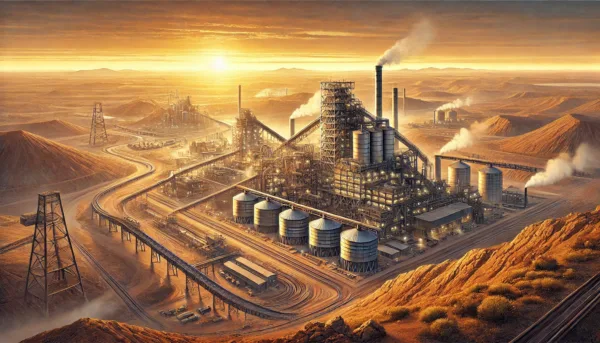
The Kangankunde project is approaching the transition from physical construction towards staged commissioning, with several major mechanical and electrical systems now installed or nearing completion. Lindian reported that structural steel in the wet high-intensity magnetic separation and multigravity separation areas was approximately 90% complete, while shaking table installation had reached approximately 80%. The regrind mill has been installed, pumps are positioned within the separation circuits and piping work is continuing. These activities are important because the plant’s ability to produce marketable monazite concentrate depends on several interconnected processing stages operating together.
Electrical installation is also progressing, with both motor control centres positioned and connections to equipment and field instrumentation under way. Four of the plant’s 11 remote input/output panels have been installed, while work continues on programmable logic controllers, supervisory control and data acquisition systems and associated process-control networks. These systems will allow operators to monitor and control the processing plant during commissioning and routine operations. Their installation is a necessary precursor to demonstrating that the mechanical equipment can operate as an integrated production system.
Lindian has already moved beyond several earlier construction milestones. The project completed its first production blast in July 2026, established mining operations and accumulated substantial quantities of ore before the processing facility became operational. This sequencing provides material for commissioning without requiring initial plant testing to depend entirely on simultaneous mining activity. However, the completed mechanical works and available ore inventory do not establish that the processing plant has reached commercial production.
The October update also provides a more specific target than the company’s earlier guidance for first production during the fourth quarter. December remains the expected month for initial concentrate output, but no date has been confirmed for the first shipment or the achievement of nameplate production capacity. Commissioning results, equipment performance and completion of remaining infrastructure will determine whether the timetable is maintained. First concentrate production would mark a major operating milestone, but stable production and cash generation will require further progress.
How does the increase to 149,000 tonnes of ore improve Kangankunde’s commissioning readiness?
Lindian reported that ore stockpiles at the run-of-mine pad had increased from approximately 125,000 tonnes in September to 149,000 tonnes in October. The additional 24,000 tonnes represent an increase of 19.2%, consistent with the company’s rounded 19% figure. The stockpiled material provides a feed inventory for initial plant testing and subsequent production ramp-up, reducing dependence on freshly mined ore during commissioning. Lindian stated that the tonnage estimate is derived from its existing Ore Reserve estimates rather than a newly reported independent stockpile measurement.
Mining activities are continuing alongside processing plant construction. Development of a temporary access ramp is progressing towards the upper pit levels, where drilling has commenced to open additional mining faces. Grade-control drilling and sampling are also under way to support ore definition and feed scheduling. At the stockpile area, filling around the crusher foundation has been completed, while final surfacing and construction of the feed structures needed for commissioning are progressing.
The stockpile represents approximately 7.5 tonnes of ore inventory for every tonne of annual concentrate capacity under the proposed 20,000-tonne Stage 1 production target. However, this is a comparison between different material streams rather than an estimate of concentrate that can be produced from the available stockpile. Actual concentrate output will depend on ore grade, mineral recovery, processing performance and other operating assumptions. The physical accumulation of ore is therefore a positive readiness indicator, but it cannot be converted directly into a revenue estimate.
For project execution, maintaining a suitable stockpile can provide flexibility while equipment is tested and processing parameters are refined. Operators may need to adjust feed rates, grinding settings and separation conditions before consistent concentrate production becomes possible. A reliable supply of characterized ore allows those adjustments to take place without interruptions caused by insufficient mining feed. The next test will be whether the processing plant achieves the recovery, throughput and concentrate specifications anticipated in the development studies.
Why is November site energisation a critical milestone for Lindian’s rare earth processing plant?
The October update identifies the first week of November as the target for energising Kangankunde’s processing infrastructure. The 33-kilovolt overhead power line has already been commissioned to the transformer yard, while earthworks for the 4-megavolt-ampere transformer yard are complete. Additional civil works, H-pole installation and pole stringing are scheduled to commence on October 19. Two 1,250-kilovolt-ampere plant transformers have also completed factory acceptance testing in accordance with requirements of Malawi’s electricity utility, ESCOM, and have returned to site.
Completing the electrical infrastructure will allow the company to move beyond mechanical installation towards testing motors, activating control systems and commissioning equipment. The plant cannot demonstrate sustained processing performance until electricity, process controls, pumps and separation circuits operate reliably together. As a result, site energisation provides a measurable near-term test of the construction schedule. The power line reaching the transformer yard should not be confused with confirmation that the entire plant is already energised.
Water infrastructure and tailings management are advancing on a parallel schedule. At the tailings storage facility, bulk earthworks have been completed and final trimming of the cyclone embankment is finished. Construction continues on the clay core drain, toe embankment and associated drainage systems, while geotextile placement and drainage outfall pipe installation have been completed at the return water dam. High-density polyethylene lining is under way, with the remaining tailings facility works targeted for November completion.
The company is also procuring borehole pumps, with completion of the water supply infrastructure planned for November ahead of first ore introduction. This creates several interdependent milestones during a relatively short commissioning window. Any delay affecting electrical connections, water availability or tailings infrastructure could influence the December production timetable even if the main processing equipment is mechanically complete. The importance of the latest announcement lies in the specificity of these milestones, which provide a clearer basis for assessing whether construction remains on schedule.
Can Kangankunde’s 20,000-tonne Stage 1 output target support Lindian’s rare earth supply ambitions?
Kangankunde’s initial development is designed to produce approximately 20,000 tonnes of monazite concentrate annually, with the company targeting a product grading around 55% total rare earth oxides. At that planned grade and annual concentrate volume, the product would contain approximately 11,000 tonnes of rare earth oxides before any subsequent refining or separation losses. This calculation describes potential contained material at design capacity, not actual 2026 production or saleable separated oxide output. Production rates and concentrate specifications will need to be demonstrated during commissioning and ramp-up.
The project is supported by a substantial mineral resource. Lindian’s May 2024 estimate identified 261 million tonnes of resources grading an average 2.14% total rare earth oxides, comprising 61 million tonnes of indicated resources and 200 million tonnes of inferred resources. A maiden probable Ore Reserve of 23.7 million tonnes grading 2.9% was subsequently declared. These figures indicate the geological scale of the deposit, but mineral resources outside the reserve category should not be treated as material already demonstrated to be economically mineable.
The deposit is notable for its reported neodymium and praseodymium content, elements used in permanent magnets for electric vehicles, wind turbines, industrial equipment and other applications. Lindian also describes the deposit as having exceptionally low levels of uranium and thorium, a potential processing advantage because radioactive impurities can complicate concentrate handling and downstream refining. Nevertheless, commercially relevant value depends on recoverable rare earth content, concentrate quality, processing charges and customer pricing arrangements. A large resource does not independently establish project profitability.
Kangankunde’s proposed concentrate production also occupies an intermediate position within the rare earth supply chain. The mine and processing plant will produce a mineral concentrate rather than finished magnet-grade neodymium or praseodymium oxide. Those higher-value products require additional chemical processing and separation. Lindian’s wider strategy involves gaining access to downstream processing capacity so that it can participate in more stages of the value chain rather than relying exclusively on concentrate sales.
How does Lindian’s 15-year Iluka Resources agreement support commercial sales from Kangankunde?
Lindian’s existing strategic partnership with Iluka Resources Limited (ASX: ILU) provides a long-term customer arrangement for part of Kangankunde’s planned output. The agreement covers 6,000 tonnes of monazite concentrate annually over an initial 15-year term, equivalent to 90,000 tonnes across that period, subject to the agreed contractual provisions. Based on the proposed Stage 1 output of 20,000 tonnes a year, the allocation represents approximately 30% of planned annual concentrate production. This provides an identifiable offtake arrangement without implying that the remaining 70% is already sold under equivalent contracts.
The Iluka partnership also includes a US$20 million construction term loan facility supporting the project’s development. The facility has a five-year tenor and includes provisions allowing early repayment without penalty. Its commercial structure is linked to the longer-term concentrate supply agreement, creating a relationship between financing and future production. However, the existence of the facility should not be interpreted as confirmation that the entire amount has been drawn or remains available on unchanged terms at every reporting date.
The intended destination is Iluka’s Eneabba rare earth refinery development in Western Australia, which forms part of Australia’s efforts to expand downstream processing capabilities. The arrangement potentially connects a Malawian rare earth mine with Australian refining infrastructure, creating a supply chain outside the dominant established processing networks. However, contracted supply volumes and actual deliveries remain separate considerations, especially while Kangankunde has not yet achieved first production. Revenue recognition will depend on product delivery, applicable contractual terms and pricing.
Lindian’s October update indicates that outbound concentrate logistics arrangements are nearing finalisation, including rail transport, freight forwarding and product sampling. The company has not yet confirmed completion of all those contracts or identified a first shipment date. Transport arrangements are commercially significant because mining and processing performance cannot translate into customer deliveries without reliable export logistics. Finalising the logistics chain will therefore be an important milestone after the plant moves into commissioning.
How does Lindian Resources’ funding position affect the Kangankunde production ramp-up?
Lindian’s latest annual report shows that it held approximately A$107.9 million in cash and cash equivalents at June 30, 2026, compared with A$3.5 million a year earlier. The stronger balance sheet followed two institutional placements totaling A$191.5 million during the financial year, including an A$100 million placement completed in April 2026. The company has also arranged a US$11.6 million composite facility with NBS Bank in Malawi, comprising US$4.6 million in asset finance and US$7 million in working capital support. Approximately A$17 million in NBS facilities remained undrawn at the June reporting date.
Management considers the Stage 1 development fully funded, providing an important degree of financial flexibility as the project moves through commissioning. However, the June cash balance is not a current October cash figure, and spending on construction, equipment and operating readiness will have continued since the financial year-end. The company has not provided an updated project cash balance in the October 16 construction announcement. Consequently, its latest historical liquidity should not be interpreted as cash still available in full immediately before first production.
Lindian reported a net loss after tax of approximately A$31.8 million for the year ended June 2026, compared with A$9.3 million in the previous financial year. The latest loss included significant noncash expenses, including A$16.5 million associated with the termination of its previous sale and purchase agreement with Gerald Metals. This accounting result should not be confused with the cash expenditure required to complete Kangankunde. The more relevant near-term financial measures will be remaining construction expenditure, commissioning costs, working capital requirements and the timing of initial concentrate receipts.
The project also has an earlier Stage 1 feasibility estimate showing a pre-tax net present value of US$794 million at an 8% discount rate and an internal rate of return of 99%. These are modelled project economics based on the feasibility study’s assumptions rather than realized earnings, a current independent valuation or cash available to shareholders. Actual outcomes will depend on concentrate pricing, recovery rates, operating costs and the production schedule. Commissioning performance will provide the first operating evidence needed to assess how closely the project follows its economic model.
How could the Stage 2 expansion and Kazakhstan processing business increase Lindian’s long-term scale?
Lindian is developing Kangankunde as the foundation of a wider rare earth business rather than limiting its strategy to a 20,000-tonne annual concentrate operation. Its Stage 2 definitive feasibility study is examining a processing pathway involving approximately 4 million tonnes of ore per year. The company’s longer-term objective is to reach total monazite concentrate capacity of approximately 120,000 tonnes annually, including the initial Stage 1 operation. Achieving that target would represent a sixfold increase over the Stage 1 design capacity, but it remains subject to feasibility results, investment decisions and project execution.
The Stage 2 mining licence has already been expanded from 900 hectares to 2,500 hectares, providing an established permitting basis for the proposed larger operation. Nevertheless, a mining licence does not mean that all additional processing infrastructure is funded, constructed or ready to operate. The definitive feasibility study will be important for refining capital requirements, mining schedules, processing capacity and expected economics. The company had previously targeted completion of that study during December 2026, creating another potential milestone alongside first concentrate production.
Lindian has also completed the acquisition of the SARECO hydrometallurgical processing facility in Stepnogorsk, Kazakhstan, securing full ownership of the asset. The facility is intended to provide a route for converting rare earth-bearing feedstock into higher-value mixed rare earth carbonate. This could allow Lindian to participate in additional processing stages and reduce exclusive dependence on selling mineral concentrate to third parties. However, the processing plant’s commercial contribution will depend on operational readiness, feedstock supply, recoveries and customer arrangements.
In September 2026, Lindian entered a technology and engineering services agreement with Carester SAS to advance a proposed rare earth oxide separation facility in Kazakhstan. The planned development has a nameplate capacity of 8,000 tonnes of rare earth oxides annually, with a definitive feasibility study targeted for the fourth quarter of 2026. The companies also agreed to a long-term offtake arrangement covering specified heavy rare earth products, subject to the contractual framework. The proposed separation facility remains a development project and should not be counted as current rare earth oxide production capacity.
The wider strategy creates the possibility of an integrated supply chain connecting Malawian mining, Kazakhstan processing and downstream customers in Europe and other markets. This could provide exposure to several product categories rather than concentrate alone. However, each stage involves separate technical, commercial and capital requirements, and success at Kangankunde does not automatically establish the feasibility of downstream expansion. The December production milestone is therefore an important starting point for the wider strategy rather than its completion.
Why have Lindian Resources shares fallen despite progress towards rare earth production?
Lindian Resources shares closed at A$0.385 on October 15, 2026, declining 9.41% from the previous session’s A$0.425 closing price. Trading volume reached approximately 13.6 million shares, indicating substantial activity ahead of the October 16 construction announcement. The stock had closed at A$0.595 on September 25, meaning it declined approximately 35.3% over that period. The movement shows that operational progress and share-price performance have not followed the same trajectory in recent weeks.
The October 15 decline occurred before Lindian’s latest ASX announcement, which was released on the following trading morning. It therefore cannot be characterized as a negative market reaction to the new construction figures or December production confirmation. Mining development stocks can experience substantial valuation changes as investors reassess commodity prices, project schedules, funding requirements and the risks associated with commissioning. However, the available trading data does not establish which individual factors drove Lindian’s recent decline.
The company’s financial prospects remain highly sensitive to the transition from development to cash-generating operations. Completion of construction could reduce some project execution uncertainty, but commissioning introduces a different set of questions involving plant reliability, metallurgical recovery and the commercial quality of the concentrate produced. Share-price sentiment could improve if these milestones are delivered consistently, although their influence will depend on expectations already reflected in the market value. Delays or weaker-than-expected initial operating performance could instead prolong uncertainty.
Lindian’s operating outlook has become more tangible as December approaches. The company has established significant ore inventories, advanced its processing plant and identified an early-November target for site energisation, providing measurable evidence of physical progress. Its strongest near-term catalysts are therefore operational rather than speculative: electrical commissioning, completion of water and tailings systems, first ore processing and production of marketable monazite concentrate. Sustained output, concentrate shipments and initial customer revenue will provide a more decisive test of the project’s economics.
What are the key takeaways from Lindian Resources’ Kangankunde rare earths project update?
- Lindian Resources has reaffirmed its target of producing the first monazite concentrate at Kangankunde in December 2026.
- Ore stockpiles increased 19% to approximately 149,000 tonnes, providing feed material for commissioning and initial operations.
- Structural installation in the main magnetic and gravity separation areas has reached approximately 90%, while shaking tables are 80% complete.
- The 33-kilovolt power line has been commissioned to the transformer yard, with site energisation targeted for early November.
- Water infrastructure and remaining tailings storage facility construction are scheduled for completion during November.
- Stage 1 is designed to produce approximately 20,000 tonnes of monazite concentrate annually, although commercial output has not yet been achieved.
- Iluka Resources has a 15-year agreement covering 6,000 tonnes of concentrate annually, representing approximately 30% of planned Stage 1 capacity.
- Lindian reported A$107.9 million in cash at June 30 and considers Stage 1 fully funded, while its Stage 2 and downstream expansion plans remain subject to further development milestones.
- Lindian shares closed at A$0.385 on October 15, down 9.41% for the session, ahead of the latest construction announcement.
- Electrical commissioning, first concentrate production, export readiness and the initial production ramp-up will determine whether Kangankunde can transition into a commercially reliable rare earths operation.
Discover more from Business-News-Today.com
Subscribe to get the latest posts sent to your email.