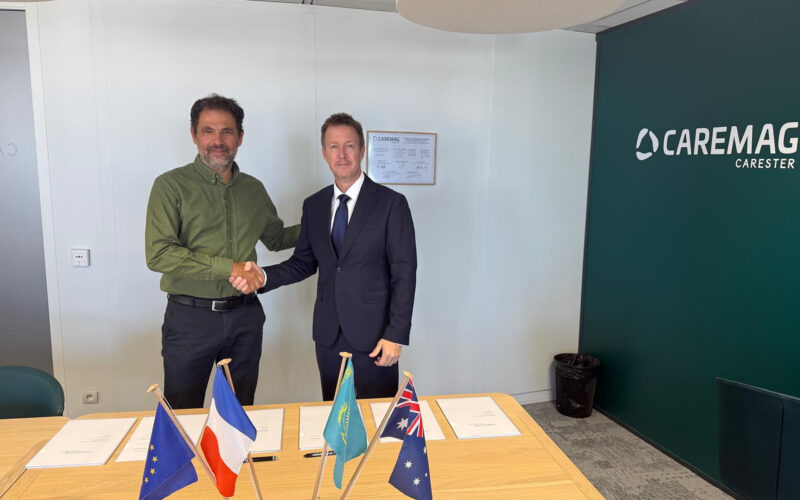
Lindian Resources Limited (ASX: LIN) has signed a technology and engineering partnership with Carester SAS alongside a binding long-term offtake agreement covering 70% of a planned heavy rare earth product stream from Kazakhstan, pushing its strategy beyond mining and mixed rare earth carbonate toward separated magnet materials. Carester and Tetra Tech Coffey will advance a Definitive Feasibility Study (DFS) for an 8,000-tonne-per-year rare earth oxide solvent-extraction and separation facility at Stepnogorsk, with completion targeted by the end of 2026. Under the commercial agreement, Carester will purchase 70% of Lindian’s planned SEGH heavy rare earth output for an initial 10 years, with two additional five-year extension options, while receiving a right of first refusal over 70% of mixed heavy rare earth carbonate production from SARECO. The products are intended to feed Carester’s Caremag refinery in Lacq, France, a facility backed by €216 million of French and Japanese funding and targeting large-scale production of dysprosium and terbium oxides. The partnership therefore gives Lindian a credible downstream customer before its oxide plant has been built, but the economic case still depends on the DFS defining capital costs, operating costs, feed availability and the actual volume of separated oxides the Kazakhstan hub can sustain.
The agreement is the latest step in a rapid restructuring of Lindian from a single-project rare earth developer into a proposed multi-country processing chain. Kangankunde in Malawi is approaching Stage 1 commissioning, Lindian acquired 100% of the existing SARECO hydrometallurgical plant in Kazakhstan for US$20 million in August, and the company has subsequently secured exclusive access to an existing heavy rare earth stockpile in Kazakhstan. The proposed solvent-extraction facility would sit one stage further downstream, converting feed from SARECO and potentially third-party sources into separated neodymium-praseodymium oxide and heavy rare earth products. If each component performs as planned, Lindian would have exposure from monazite concentrate through mixed carbonate and ultimately separated oxides rather than relying solely on mine-gate concentrate sales.
Why does Carester taking 70% of Lindian’s planned heavy rare earth output matter before the oxide plant is built?
The most commercially useful element of the Carester agreement is that Lindian is developing its downstream facility with a defined customer and technology partner rather than first building separation capacity and then searching for buyers. Rare earth separation is technically complex, capital intensive and dependent on highly specific product specifications, making customer qualification and process design closely interconnected.
Carester brings direct experience in solvent extraction and rare earth separation and is developing its own industrial-scale Caremag refinery in France. In practical terms, that gives Lindian an engineering partner that understands the chemical specifications required by the eventual downstream customer because Carester is also that customer. The arrangement should reduce some interface risk between what Lindian plans to manufacture in Kazakhstan and what Caremag needs to process in France.
The offtake covers 70% of the planned SEGH heavy rare earth product for an initial decade, while Lindian retains 30% that could potentially be marketed elsewhere. Extension options could increase the relationship to as long as 20 years. Carester also receives a right of first refusal over 70% of SARECO’s mixed heavy rare earth carbonate rather than an automatic obligation to purchase that entire volume, an important distinction when assessing contracted revenue.
The agreement is binding, but it does not create current revenue. Lindian still needs to restart and operate SARECO, confirm feed chemistry, complete the oxide-facility DFS, finance and construct the new separation plant, reach product specifications and deliver commercial volumes. The offtake therefore reduces future route-to-market uncertainty without removing project-development risk.
How could Lindian’s proposed 8,000tpa Stepnogorsk oxide facility change the value captured from rare earth production?
The economic logic behind downstream integration is that separated rare earth oxides generally command substantially greater value than an upstream concentrate containing the same elements because the downstream processor performs the technically demanding work of cracking, leaching, purification and separation. Lindian’s current development strategy is designed to capture more of those processing margins rather than selling every tonne of Kangankunde material as monazite concentrate.
Kangankunde Stage 1 has plant capacity of approximately 20,000 tonnes per year of monazite concentrate. Lindian’s existing agreement with Iluka Resources allocates 6,000 tonnes annually to Iluka’s Eneabba refinery for an initial 15 years, leaving additional Stage 1 material available for SARECO and other customers. Lindian’s Kazakhstan strategy has contemplated approximately 12,500 tonnes per year of Kangankunde concentrate being processed through SARECO, while local Kazakhstan feedstock could create an additional stream that does not depend on material shipped from Malawi.
SARECO converts monazite and compatible feeds into higher-value mixed rare earth carbonate or related intermediate products. The proposed 8,000tpa solvent-extraction facility would then move further downstream by separating individual magnet rare earth oxides, including neodymium and praseodymium, while producing a heavy rare earth stream containing strategically valuable elements such as dysprosium, terbium and yttrium.
Lindian describes the proposed oxide plant as approximately 1.5 times the scale of the existing SARECO processing facility and intends to design it so that compatible third-party material can also be processed. That matters because a separation plant does not need to depend exclusively on one mine if it can qualify multiple feed sources. Higher utilization would spread fixed costs across more tonnes and could create a processing business alongside Lindian’s own mining operations.
The DFS will determine whether that theoretical operating leverage survives detailed engineering. Solvent extraction requires numerous stages, substantial reagent consumption, careful impurity management and highly controlled product specifications. An 8,000tpa nameplate figure describes processing capacity rather than guaranteed production, and Lindian has specifically cautioned that it should not be treated as a production forecast.
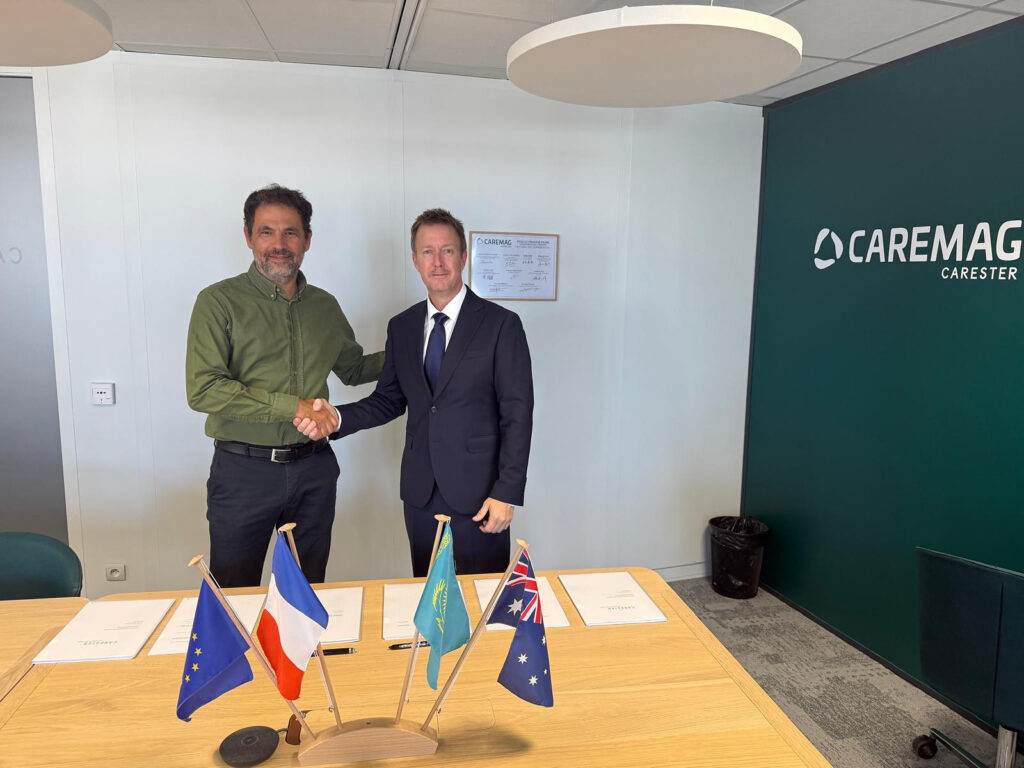
Why is Caremag in France a strategically stronger customer than an unbuilt refinery without government backing?
Caremag gives the offtake greater credibility because its financing is unusually advanced for a Western heavy rare earth separation project. Carester announced in 2025 that the Lacq facility had secured €216 million of financing, comprising €110 million from Japanese partners and €106 million of French government support.
Japan Organization for Metals and Energy Security and Iwatani Corporation are participating through Japan France Rare Earth Company, with the Japanese investment combining equity and shareholder financing. The French package includes subsidies, repayable advances and a Green Industry tax credit. Caremag has been targeting operations from late 2026.
At steady state, Carester says Caremag is designed to process about 5,000 tonnes of mining concentrates and recycle about 2,000 tonnes of magnets annually. It targets approximately 600 tonnes per year of dysprosium and terbium oxides, which Carester has described as equivalent to around 15% of current global production, together with about 800 tonnes of neodymium-praseodymium oxide.
That makes the facility strategically aligned with the exact products Lindian is attempting to develop. Dysprosium and terbium improve the high-temperature performance of neodymium-iron-boron permanent magnets used in applications including electric vehicles, wind turbines, advanced electronics, robotics and defence systems. These heavy rare earths have become particularly important to governments attempting to reduce supply-chain dependence on China.
Caremag is nevertheless building a diversified feedstock ecosystem rather than depending exclusively on Lindian. Carester has entered arrangements with multiple Western rare earth developers and downstream manufacturers. That diversification improves Caremag’s feed-security proposition but means Lindian’s offtake should not be interpreted as making it the refinery’s sole or dominant future supplier.
Why could the pricing formula matter as much as the 10-year duration of the Carester agreement?
Lindian says pricing for the relevant products will be linked to Carester’s realized prices and will incorporate applicable government-supported floor-price mechanisms in France, Europe, the United States or Japan for the magnet rare earth oxides and yttrium produced through Caremag.
That structure could become economically important if Western governments increasingly use price-support mechanisms to protect non-Chinese rare earth supply chains from periods of unusually low market pricing. Building a Western processing plant requires substantial capital, but downstream producers can struggle to compete if spot markets are periodically driven below levels that support new capacity. Government-backed pricing mechanisms can change that investment equation by reducing downside volatility.
Lindian already has a similar strategic feature in its separate Iluka arrangement. Pricing for Kangankunde concentrate supplied to Iluka is linked to the realized value of neodymium and praseodymium oxides at Eneabba and incorporates a floor price above Kangankunde’s expected operating cost, together with pass-through exposure to qualifying government price support.
The Carester structure potentially extends that concept further downstream. Instead of receiving only concentrate-level payability, Lindian could gain exposure to prices realized for separated heavy rare earth products after additional processing. Whether that produces materially higher margins will depend on the final recovery rates, conversion costs, transport, Carester payability formula and oxide prices.
The headline rare earth prices cited by Lindian should therefore be treated as scenarios rather than guaranteed realizations. The company referenced Western forecasts of US$541 per kilogram for dysprosium, US$1,988 per kilogram for terbium and US$383 per kilogram for yttrium, significantly above contemporary Asian spot benchmarks. Actual future revenue will depend on volumes produced and realized prices when commercial deliveries begin.
How does the Aktau heavy rare earth stockpile strengthen the Carester offtake strategy?
The Carester agreement arrives only days after Lindian secured exclusive access to an existing Kazakhstan stockpile containing heavy rare earth-bearing material that was historically used as feedstock for SARECO. That sequence potentially reduces one of the most obvious weaknesses in the downstream plan: dependence on transporting all feed from Malawi.
Lindian secured an option over 13,389 tonnes of previously extracted material at Aktau, including approximately 7,549 tonnes prepared for transportation and another 5,840 tonnes being dried. The material contains dysprosium, terbium and yttrium, the same heavy rare earths that Caremag intends to separate into higher-value products.
The company also obtained 12 months of exclusivity to evaluate another 15,000 to 20,000 tonnes of material. If the additional material proves technically and economically suitable, the overall accessible inventory could reach approximately 28,389 to 33,389 tonnes. Lindian paid no upfront consideration for the exclusivity or option, while purchase pricing remains subject to future negotiation.
Sampling and metallurgical work are therefore crucial. Historical use at SARECO is encouraging but does not automatically establish current product recoveries or economic value. Lindian needs to confirm grades, mineralogy, contaminants and recoveries before treating the stockpile as a dependable commercial feed source.
If results are positive, locally sourced heavy rare earth material could give SARECO an earlier and more diversified production profile while Kangankunde ramps up. It could also make the Stepnogorsk separation facility more strategically interesting by combining a large African light rare earth resource with Kazakhstan heavy rare earth feed rather than depending on one orebody for every product.
Does Lindian have enough capital to build another downstream facility after buying SARECO and constructing Kangankunde?
Lindian entered the second half of 2026 with substantial liquidity after an A$100 million institutional placement completed earlier in the year. At June 30, the company reported A$280.7 million of cash and cash equivalents, together with A$117 million of restricted cash, taking total cash including restricted balances to approximately A$399 million.
The headline cash figure should not be treated as completely uncommitted capital. Lindian is simultaneously completing Kangankunde, funding working capital and operational readiness, restarting SARECO and paying for its Kazakhstan acquisition. It paid US$20 million for 100% ownership of SARECO after increasing the proposed acquisition from an initial 51% joint-venture interest.
Management says cash flows from Kangankunde and SARECO, together with existing liquidity and available banking facilities, are intended to fund the proposed oxide-separation plant internally. If achieved, that would allow Lindian to move downstream without another major equity financing specifically for the SX facility.
The difficulty is that the project does not yet have a disclosed DFS capital estimate. Until Carester and Tetra Tech finish engineering work, investors cannot compare required capex with Lindian’s remaining cash and projected operating cash flow. Brownfield advantages at Stepnogorsk could reduce costs because the site already has access to power, gas, water, rail, reagents, sulphuric acid, skilled labor, additional land and roughly 15,500 square metres of warehousing acquired with SARECO.
Those advantages may reduce infrastructure intensity, but they are not a substitute for a quantified capital estimate. The year-end DFS therefore becomes the document that converts an attractive integration concept into something investors can test financially.
Why does the Carester partnership make Lindian’s December 2026 milestone cluster unusually important?
Lindian is attempting to deliver several interconnected milestones within a compressed period. SARECO preventative maintenance and commissioning activities are targeted around October, while Kangankunde Stage 1 commissioning is expected during November. First production from both operations remains targeted for the fourth quarter.
At the same time, the company expects the Kangankunde Stage 2 Definitive Feasibility Study and the new Kazakhstan oxide-separation DFS by December. The combination means Lindian could enter 2027 with operating data from its first mine and processing facility alongside engineering studies defining two potential growth projects.
That sequencing creates significant upside if execution is successful because cash-generating Stage 1 assets could begin supporting downstream expansion. It also creates concentration of execution risk. Delays at Kangankunde could affect concentrate availability for SARECO, while slower SARECO commissioning would postpone the operating evidence needed to validate further investment in separation.
The Aktau feed option partially reduces that dependence by providing a potential local Kazakhstan feed source, but its suitability remains under evaluation. Caremag itself is also targeting late-2026 operations, meaning Lindian’s customer and its own upstream processing system are simultaneously moving through commissioning and development phases.
The strength of the strategy is that the pieces reinforce one another. Kangankunde supplies high-grade monazite, SARECO converts concentrate into mixed products, the proposed SX facility separates higher-value oxides, and Carester supplies technology while providing a long-term market for heavy rare earth output. The weakness is that several of those pieces still need to become operating assets before the integrated economics can be demonstrated.
What does Lindian Resources’ A$0.765 share price say about expectations before the Carester announcement?
Lindian last traded at A$0.765 on August 31 before entering a trading halt on September 1 ahead of the Carester announcement. The closing price implies an equity market capitalization of roughly A$1.4 billion based on approximately 1.85 billion shares on issue.
The stock had eased about 3% across the preceding five trading sessions and was around 25% below its 52-week high of A$1.025, but remained almost four times its A$0.205 52-week low. That range reflects the substantial rerating Lindian has already experienced as Kangankunde moved through construction and the company added SARECO to its downstream strategy.
There is no valid market reaction to the Carester deal yet because Lindian remained halted when the announcement was released. Any eventual move after trading resumes will also need to be interpreted against an already elevated valuation relative to the company’s position before its rare earth strategy accelerated.
That valuation increases the importance of converting announcements into operating evidence. The market is no longer valuing Lindian simply as an undeveloped Malawi resource. The company now carries expectations around Kangankunde commissioning, SARECO restart, heavy rare earth feedstock, Stage 2 expansion and downstream oxide separation.
The Carester agreement strengthens that strategic architecture because it adds both separation expertise and a credible customer. It does not yet quantify how much additional earnings the oxide strategy can generate. The most important valuation evidence will come from the DFS capital estimate, production recoveries, realized payabilities and eventually cash flow.
Can Lindian really become an integrated mine-to-separated-oxide producer across Malawi, Kazakhstan and France?
The emerging supply chain is unusual because the stages are spread across three countries rather than housed at one integrated mining complex. Kangankunde provides upstream monazite in Malawi, SARECO and the proposed SX facility provide hydrometallurgical processing and separation in Kazakhstan, while Caremag in France provides another destination for heavy rare earth intermediates and separated products.
That geography creates logistical complexity but also provides strategic flexibility. Lindian is not committed to sending every Kangankunde tonne through the same route. Iluka already has a 15-year agreement for 6,000 tonnes of annual concentrate supply into Australia, Kazakhstan provides a second downstream pathway, and Lindian could retain additional products for other customers.
The Kazakhstan platform may become more important if the company can source substantial third-party or domestic feed. An 8,000tpa separation plant operating only on Lindian material has one economic profile; the same plant processing additional compatible rare earth material could have a substantially larger addressable business.
Government support could reinforce that opportunity. Kazakhstan’s Ministry of Industry and Construction has described the proposed separation project as strategically important to the country’s ambitions to move further downstream in rare earths and has committed to supporting development. Existing industrial infrastructure at Stepnogorsk also reduces the need to create an entirely new processing precinct.
The next proof point is nevertheless straightforward. Carester and Tetra Tech must deliver a DFS showing what the 8,000tpa facility costs, what it can recover and how economically it can produce saleable oxides. If those numbers are competitive, the 70% Carester offtake would give Lindian a ready commercial pathway for a large portion of the planned heavy rare earth output. If capital intensity or operating costs prove substantially higher than expected, the binding offtake alone will not make the project economic.
Lindian has moved rapidly from mine development into a far more ambitious processing strategy, and the Carester partnership makes the proposed value chain considerably more tangible. A funded French customer, a binding long-term agreement, an existing Kazakhstan hydrometallurgical plant and potential local heavy rare earth feed provide stronger foundations than a conceptual downstream plan. The measurable test now shifts to the fourth quarter of 2026: Kangankunde and SARECO need to enter production while the oxide DFS establishes whether Lindian can move another step downstream without undermining capital discipline.
What are the key takeaways from Lindian Resources’ Carester rare earth offtake and oxide-separation partnership?
- Lindian Resources has signed a Technology and Engineering Services Agreement with Carester for a proposed 8,000tpa rare earth oxide separation facility in Stepnogorsk, Kazakhstan.
- Carester and Tetra Tech Coffey are advancing the Definitive Feasibility Study, which Lindian expects to complete by the end of 2026.
- Carester has agreed to purchase 70% of planned SEGH heavy rare earth production for an initial 10 years.
- The offtake can be extended twice for five years, potentially increasing the commercial relationship to 20 years.
- Carester also has a right of first refusal over 70% of mixed heavy rare earth carbonate production from SARECO.
- The products are intended to feed Carester’s Caremag refinery in France, which has secured €216 million of French and Japanese funding.
- Caremag targets approximately 600tpa of dysprosium and terbium oxides and 800tpa of neodymium-praseodymium oxide at steady state.
- Lindian acquired 100% of the existing SARECO processing facility for US$20 million and is targeting first processing during Q4 2026.
- Lindian recently secured exclusive access to 13,389 tonnes of existing Kazakhstan heavy rare earth-bearing material and rights to evaluate another 15,000 to 20,000 tonnes.
- Lindian last traded at A$0.765 before entering a trading halt, leaving no post-Carester market reaction available when the announcement was assessed.
Discover more from Business-News-Today.com
Subscribe to get the latest posts sent to your email.