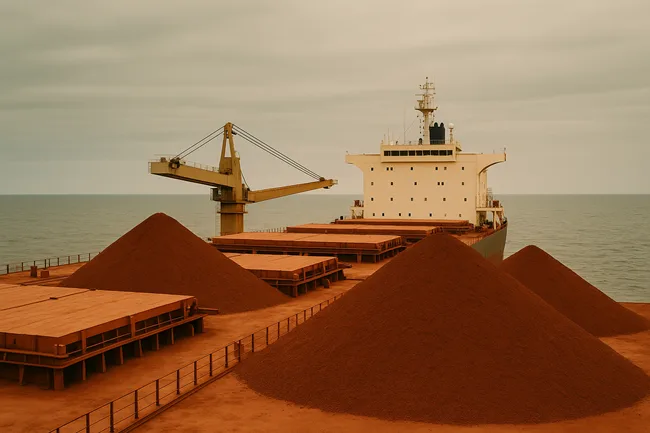





In a dramatic end to one of the most closely watched stories in the battery recycling sector, Li-Cycle Holdings Corp. has sold its key spoke-and-hub assets—including the Rochester Hub, multiple spoke facilities in the United States, Canada, and Germany, and its intellectual-property portfolio—to Glencore Canada Corporation. The sale was executed via a court-approved credit bid that also transferred certain liabilities, bringing to a close a high-profile insolvency process and signaling Li-Cycle’s exit from its original business model.
The deal represents both a collapse and a rebirth. For Li-Cycle, once hailed as North America’s most promising lithium-ion battery recycler, it marks the end of independent operations. For Glencore, it represents an opportunity to absorb the physical and intellectual assets of its largest debtor into a new integrated division: Glencore Battery Recycling.
How did Glencore acquire Li-Cycle’s spoke-and-hub assets and what does the transaction involve?
The transaction was structured as a credit bid. Glencore, already Li-Cycle’s largest secured creditor, used its debt position to take ownership of the Rochester Hub, all North American and German spoke facilities, and Li-Cycle’s portfolio of patents and proprietary processes. In doing so, Glencore assumed certain liabilities but avoided the need for an upfront cash outlay.
The sale process had been unfolding since May 2025, when Li-Cycle entered creditor protection under Canada’s Companies’ Creditors Arrangement Act and sought Chapter 15 recognition in the United States. At that point, Glencore had already stepped forward with a stalking horse bid to set the floor for the auction. Other interested buyers never materialized, leaving Glencore as the inevitable acquirer.
The result is a transfer of nearly all of Li-Cycle’s tangible and intangible value into the hands of one of the world’s largest commodity traders and miners, effectively converting debt into ownership. Remaining Li-Cycle entities not included in the sale are either still under creditor protection or being wound down.
Why was the Rochester Hub considered central to Li-Cycle’s ambitions and how did it become a liability?
The Rochester Hub was the crown jewel of Li-Cycle’s strategy. Designed to refine “black mass” produced at regional spokes into high-purity lithium carbonate, nickel sulfate, cobalt sulfate, and graphite, it was intended as the first commercial-scale hydrometallurgical facility of its kind in North America.
In theory, the spoke-and-hub model gave Li-Cycle both local reach and centralized efficiency. Batteries collected at spoke facilities in Arizona, Alabama, New York, Ontario, and Germany were shredded into black mass, which would then be transported to the Rochester Hub for processing into battery-grade material. The Hub was forecast to produce enough refined material to supply hundreds of thousands of electric vehicles annually.
But execution faltered. The Rochester project faced steep cost overruns, ballooning from initial estimates of under USD 600 million to well over USD 1 billion. Delays in construction, contractor liens, and the company’s inability to raise sufficient equity to meet conditions of a conditional loan from the U.S. Department of Energy created cascading financial stress. Instead of being an anchor, the Rochester Hub became an anchor chain, pulling the company into insolvency.
What financial and operational pressures forced Li-Cycle into creditor protection?
Li-Cycle’s troubles were not confined to one project. Despite significant backing from Glencore—USD 200 million in 2022 and a further USD 75 million in 2024—the company’s capital structure proved unsustainable. By the end of 2024, it reported assets of USD 861 million against liabilities of USD 598 million, but cash flow was strained by project costs and negative gross profit margins.
Operationally, Li-Cycle had downsized sharply, cutting its workforce from more than 500 in 2023 to fewer than 120 by late 2024. By the time of the asset sale in August 2025, staffing was said to have dwindled to only a few dozen employees. For a company meant to scale an industrial network across continents, this downsizing underscored its inability to sustain operations.
Investors saw little relief in financial results. Negative gross margins, reported at over minus 170 percent in late 2024, reflected high costs relative to minimal revenues. Liquidity pressures mounted as the Department of Energy delayed releasing its loan until private funding conditions were met. Without equity partners to match federal backing, Li-Cycle could not bridge the financing gap.
The insolvency filings in May 2025 crystallized what many in the market already suspected: the company had neither the resources nor the investor confidence to complete its flagship project.
How does Glencore’s takeover alter the competitive landscape in battery recycling?
Glencore’s acquisition has immediate strategic implications. The Swiss-based commodity major has long been a powerhouse in mining, smelting, and trading metals such as copper, cobalt, and nickel. By acquiring Li-Cycle’s spoke-and-hub assets, Glencore extends its reach deeper into the circular economy, capturing not just raw materials but also the infrastructure to recycle and re-refine them.
The rebranded Glencore Battery Recycling division now controls Li-Cycle’s network of spoke facilities, which handle the first stage of processing, and the unfinished Rochester Hub, which still carries the potential to become a critical North American refining hub. Combined with its existing mining operations in cobalt and nickel, Glencore now holds an unusually integrated position in the electric vehicle materials chain.
For competitors like Redwood Materials in the United States and European players such as Umicore, this acquisition raises the stakes. Glencore can now leverage global trading reach, scale, and financial stability to accelerate the battery recycling sector in ways a distressed Li-Cycle never could.
What are the main risks and uncertainties associated with Glencore’s new recycling division?
While the asset acquisition strengthens Glencore’s strategic position, execution risk remains high. The Rochester Hub is still incomplete, with unresolved questions around permitting, contractor disputes, and financing. Glencore has yet to outline whether it will pursue completion of the project, repurpose the facilities, or scale them back.
Another uncertainty surrounds government support. The Department of Energy had extended a conditional loan of USD 475 million to Li-Cycle, but that loan was never drawn. Whether Glencore can re-qualify for such funding is unclear, especially as U.S. political priorities shift and public financing of green infrastructure faces scrutiny.
Environmental and community expectations also present challenges. Recycling facilities require strict adherence to environmental standards, and Glencore, with its global reputation shaped by a history of both operational success and regulatory disputes, will be under pressure to demonstrate best-in-class compliance.
Institutional investors remain cautious, noting that Glencore acquired valuable assets at a distressed discount but must now prove that it can transform them into a profitable division. Without clear timelines or commitments, investor sentiment, while broadly positive, remains guarded.
What lessons does Li-Cycle’s collapse hold for investors and policymakers in the energy transition?
Li-Cycle’s rise and fall highlight the tension between ambition and execution in the clean-tech sector. The spoke-and-hub model was innovative and technically viable, but financial discipline lagged behind ambition. Heavy reliance on government loans, coupled with insufficient private-market equity, created a fragile foundation.
For policymakers, the case underscores the difficulty of balancing industrial strategy with financial reality. Public loans can catalyze projects, but without private capital, such funding can become contingent rather than catalytic. For investors, the lesson is clear: in capital-intensive sectors like battery recycling, execution capability is just as critical as technology and vision.
Glencore’s entry changes the calculus. Unlike a mid-sized recycler, Glencore brings scale, balance sheet strength, and commodity trading expertise. The firm can absorb setbacks that would cripple a smaller operator. Yet, even for Glencore, the path ahead depends on whether it can overcome the structural challenges that derailed Li-Cycle.
What is the forward outlook for Glencore Battery Recycling and the global supply chain?
Looking forward, Glencore Battery Recycling has the potential to reshape the North American and European battery supply chain. If the Rochester Hub is completed, it could provide a domestic source of lithium, cobalt, nickel, and graphite at a time when governments are keen to reduce reliance on imports.
Global demand for electric vehicles continues to grow, and with it, the demand for recycled materials. By controlling both mining assets and recycling infrastructure, Glencore positions itself to capture margins across the lifecycle of critical minerals. The firm may also find synergies in trading and blending recycled material with mined output, optimizing supply for automakers and battery producers.
For now, however, Glencore’s strategy remains opaque. Investors will watch closely for announcements on whether construction at the Rochester Hub resumes, how the spoke network will be integrated, and whether the intellectual-property portfolio will be leveraged for licensing or retained in-house.
What does Li-Cycle’s asset sale to Glencore reveal about the risks and realities of scaling battery recycling in the energy transition?
Li-Cycle’s journey from start-up innovator to distressed asset sale is a cautionary tale of how the promise of clean-tech infrastructure can be undone by financing gaps and cost overruns. Its exit leaves Glencore in control of a critical set of facilities and intellectual property, consolidating the company’s role in the global energy transition.
The battery recycling industry now stands at a crossroads. With Glencore’s resources, the vision behind Li-Cycle’s spoke-and-hub model may finally have the chance to become reality. But as institutional investors point out, the story is far from over: execution, financing, and regulatory alignment will determine whether Glencore can turn distressed assets into a cornerstone of the circular economy.
Discover more from Business-News-Today.com
Subscribe to get the latest posts sent to your email.