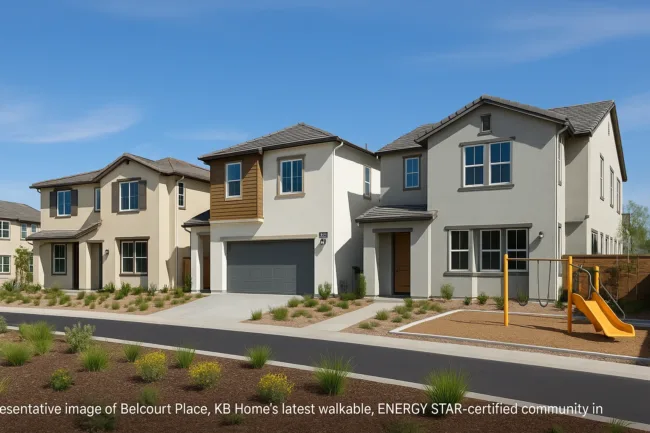
Krishvi Group is preparing one of the largest residential investment programmes in its history, committing approximately ₹760 crore across three Bengaluru housing developments spanning about 6.5 acres in Hennur and HBR Layout. The projects are expected to create roughly 7 lakh square feet of residential development and combined gross development value of approximately ₹1,050 crore, putting the capital programme heavily into two northern Bengaluru micro-markets rather than spreading it across the wider city.
The numbers create an interesting project-economics relationship. Planned investment equals roughly 72% of the stated ₹1,050 crore GDV, leaving a difference of about ₹290 crore between projected gross sales value and announced investment before considering financing costs, taxes, marketing, overheads and the economics of the joint-development structure. That simple comparison should not be treated as expected profit, but it shows why execution, pricing and land structure will be crucial to the eventual returns.
How are Krishvi Group’s ₹760 crore and ₹1,050 crore Bengaluru numbers different?
The ₹760 crore figure is the developer’s announced capital deployment across the three developments. The ₹1,050 crore figure is projected gross development value, representing the potential sales value associated with the completed projects rather than cash already collected or guaranteed revenue.
This distinction matters because real-estate announcements often place investment and GDV beside each other even though they describe fundamentally different financial concepts. Investment reflects the capital expected to be committed to land, construction, approvals and associated development, while GDV depends on the volume and price of homes eventually sold.
Across approximately 7 lakh square feet, the ₹1,050 crore GDV implies an average gross value of around ₹15,000 per square foot of development. That calculation is only a broad scale indicator because saleable area can differ from total development area and premium units, amenities, parking and project mix can materially affect realised pricing.
The ₹760 crore capital commitment similarly equates to roughly ₹10,850 per square foot across the stated 7 lakh-square-foot footprint. Again, that is not a construction-cost estimate because the capital figure may incorporate land economics and development commitments beyond pure building cost.
Why is Krishvi using two different land models in Hennur and HBR Layout?
Krishvi has said the Hennur developments will be executed through outright acquisitions, while HBR Lakeside Residences will follow a joint-development model.
The difference materially affects capital intensity. With outright land ownership, the developer captures the full project economics but must commit capital to acquiring or controlling the site before substantial customer collections are generated.
Joint development allows a landowner and developer to share project economics, potentially reducing upfront land expenditure for the developer. The trade-off is that Krishvi does not retain the entire project value because economic benefits are shared according to the agreement.
Using both approaches can therefore help balance growth and balance-sheet requirements. Krishvi can take direct ownership where it sees particularly strong land economics while using partnerships in established neighbourhoods where land acquisition may be expensive.
The structure also helps explain why the ₹760 crore investment figure should not be spread evenly across all three projects. Hennur and HBR Layout carry different ownership economics, and project-level returns will depend on those specific arrangements.
Why are Hennur and HBR Layout central to Krishvi Group’s next Bengaluru growth phase?
Krishvi’s own project pipeline identifies forthcoming developments in both Hennur and HBR, confirming that the two locations form part of its active Bengaluru expansion rather than only an early investment concept.
Hennur has grown as a northern residential corridor supported by connectivity toward employment districts and the airport side of Bengaluru, while HBR Layout represents a more established urban residential market. Krishvi management has positioned the two areas differently, viewing Hennur as an emerging premium corridor and HBR as a mature location offering established infrastructure.
That creates a portfolio balance. Hennur offers greater potential for larger-format development and future appreciation, while HBR gives the developer access to a more established residential catchment where new supply may be constrained by land availability.
The strategy also keeps Krishvi within Bengaluru, where it has an established project history across locations including Indiranagar, Whitefield, Panathur, Bellandur and the Hosur Road corridor. Its own portfolio shows developments extending across nearly two decades, reducing the market-entry risk associated with expanding into an unfamiliar city.
How demanding is a ₹760 crore expansion for a boutique Bengaluru developer?
Krishvi describes itself as a boutique, design-led developer rather than a volume-oriented national builder. Its website says the group intentionally takes on a limited number of projects, making a three-project ₹760 crore deployment a meaningful change in scale.
The capital commitment is therefore important even though ₹760 crore is modest beside multibillion-rupee programmes announced by India’s largest listed developers. A smaller developer has fewer operating projects across which to absorb construction delays, financing costs or slower sales.
The 6.5-acre combined land footprint is also relatively compact compared with the ₹1,050 crore expected GDV, indicating a premium urban residential strategy rather than a low-density suburban township model.
That can support stronger pricing but raises execution expectations. Buyers paying premium Bengaluru prices generally demand design quality, timely construction and amenities capable of differentiating a project from larger branded competitors.
What must happen before the ₹1,050 crore GDV becomes realised revenue?
The projects are still part of Krishvi’s upcoming development pipeline. The group’s own website lists Hennur and HBR as “coming soon,” meaning the announcement should not be interpreted as ₹1,050 crore of homes already launched or sold.
Formal launch schedules, detailed project configurations, RERA registrations and selling prices will provide the next meaningful evidence on the projects. Sales velocity after launch will then determine how quickly the projected GDV converts into bookings and customer collections.
This is especially important because the announced investment-to-GDV relationship appears relatively tight compared with projects where developers control land at very low historical cost. A slower sales cycle or higher construction expenses could materially change project economics.
Krishvi’s ₹760 crore commitment nevertheless demonstrates confidence in North Bengaluru residential demand. The real test will come when buyers are asked to validate the company’s projected ₹1,050 crore value through actual bookings.
Discover more from Business-News-Today.com
Subscribe to get the latest posts sent to your email.