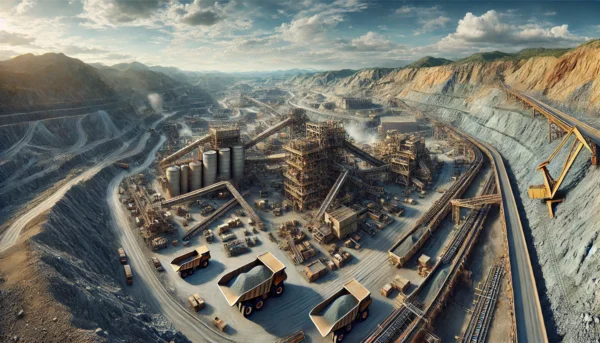
KGL Resources Limited (ASX: KGL), an Australian copper development company, has approved the final investment decision for its Jervois Copper Project in the Northern Territory, advancing a long-planned mining development toward construction and commercial production. The decision, announced on 15 October 2026, follows the arrangement of approximately A$689 million in aggregate project funding through equity, existing cash resources and a precious-metals streaming agreement involving Wheaton Precious Metals. The company is targeting first copper concentrate production during the first half of calendar 2028, with an initial mine life of approximately 10 years. Although the decision resolves a major development milestone, the project’s financial performance will depend on construction execution, operating costs, copper prices and the economic obligations attached to its financing structure.
The Jervois project is located approximately 380 kilometres northeast of Alice Springs and is intended to become a new source of copper, with associated silver and gold production. KGL Resources has already progressed engineering, equipment procurement, infrastructure preparation and contracting activities, reducing some of the uncertainties ordinarily associated with moving from feasibility studies into construction. The board’s approval allows the company to accelerate development against an established investment framework rather than continue indefinitely in the project-planning stage.
What does KGL Resources’ final investment decision mean for the Jervois Copper Project?
A final investment decision represents the point at which a project’s owners formally commit to advancing development on the basis of an approved technical, commercial and funding plan. For KGL Resources, the decision moves Jervois from a development proposal toward full project execution, with capital expenditure, construction scheduling and operational preparations becoming increasingly important. It does not mean that mining production has commenced or that all potential construction and commissioning risks have been eliminated.
The project incorporates open-pit and underground mining operations, supported by mineral processing infrastructure designed to recover copper and associated precious metals. The initial operating plan provides for approximately 30,000 tonnes of copper production annually at steady state, together with silver and gold by-products. This production target is distinct from the weight of copper concentrate that will be shipped, because concentrate contains copper alongside other materials.
KGL Resources has indicated that its project capital costs remain consistent with the estimate contained in the Baseline Economic Model released in April 2026, after allowing for scope changes and current pricing assumptions. Approximately 60% of the project’s total cost is now covered by executed contracts, providing greater certainty over a substantial portion of anticipated expenditure. The remaining uncontracted components still expose the project to procurement, labour, construction and scheduling pressures.
The company’s commercial challenge is therefore shifting from securing development funding toward controlling execution. A mining project can have attractive resource characteristics and supportive long-term commodity fundamentals but still experience weaker financial returns if construction costs rise or production begins later than planned. Maintaining the integrity of the project budget and schedule will be essential to protecting the economics that supported the board’s investment decision.
How does the A$689 million financing package change KGL Resources’ balance-sheet and project funding position?
KGL Resources has assembled a funding package incorporating newly raised equity, existing financial resources and proceeds associated with a precious-metals streaming agreement with Wheaton Precious Metals. The agreement with Wheaton involves a US$300 million precious-metals stream, under which the project will have obligations relating to future silver and gold production. The broader approximately A$689 million figure represents aggregate financing arrangements and should not be interpreted as unrestricted cash already received or as the capital cost of the mine.
Streaming arrangements can provide substantial development capital without relying exclusively on conventional borrowing or additional ordinary-share issuance. In exchange, the mining company commits to delivering specified future metal production under contractual pricing and delivery terms. This means the financing improves near-term funding availability but also allocates part of the project’s future precious-metals economics to its financing partner.
For Jervois, the streaming structure is commercially relevant because copper remains the principal planned product while silver and gold contribute additional economic value. Financing supported by precious-metals output can help fund the development of the underlying copper operation, but it also means that the financial benefit from future by-product production will depend on the terms of the agreement. The cash-flow implications must therefore be evaluated across the full operating life rather than solely on the size of the funding commitment.
The financing package also includes conditions associated with the Wheaton agreement, making the satisfaction of applicable contractual requirements an important part of the development process. KGL Resources has described the project as fully funded through to production, but that assessment relies on the company’s stated cost assumptions, available facilities and completion of relevant funding conditions. Construction contingencies and adequate liquidity will remain necessary even with the funding package in place.
Why does Sedgman’s processing plant contract matter for the Jervois construction schedule?
KGL Resources has progressed the engineering, procurement and construction arrangements for the Jervois processing plant, with Sedgman appointed to deliver the facility. The agreement forms a significant component of the project’s contracted expenditure and provides a defined delivery framework for essential processing infrastructure. The company has also advanced commitments for long-lead equipment, including grinding mills, flotation equipment and an IsaMill.
Early commitment to long-lead equipment can reduce the risk that manufacturing or shipping delays prevent the processing plant from being completed on schedule. Major mining developments often require specialised equipment with limited supplier availability, meaning procurement decisions can influence the critical path well before installation begins. By placing orders ahead of peak construction activity, KGL Resources is seeking to improve the predictability of the development programme.
The company has also commenced site preparation, including work associated with the construction village and enabling infrastructure. These activities help establish the logistical and operational base required for a substantial construction workforce in a relatively remote part of Central Australia. Access to suitable accommodation, water, transportation and equipment maintenance infrastructure will affect the efficiency of construction as well as eventual mine operations.
Development of the processing plant is expected to be followed by commissioning and a ramp-up period of approximately six months during 2028. That means first concentrate production should not be confused with immediate achievement of the mine’s planned steady-state operating capacity. The quality of commissioning and the rate at which the plant achieves expected throughput and recoveries will influence early cash generation.
What are the economic implications of developing a new copper mine in Australia’s Northern Territory?
The Jervois project represents a potential new source of domestic copper production at a time when the metal remains central to electricity infrastructure, power equipment, transport systems and industrial manufacturing. Copper demand is influenced by both conventional economic activity and capital investment in electrification, renewable energy systems and digital infrastructure. For a new producer, the commercial attraction comes from entering the market with an established production platform that can operate across changing commodity-price cycles.
The initial 10-year mine plan provides the development with a defined operating horizon, while additional exploration could identify opportunities to extend production or improve the mining sequence. Such expansion potential should remain separate from the production and mine-life assumptions supporting the current investment decision. Exploration discoveries become economically relevant only when they can be incorporated into mine plans and supported by technical and commercial studies.
The project is also expected to generate significant activity for regional contractors, equipment suppliers and service businesses. Northern Territory government estimates indicate that construction could support up to 350 jobs, with the operating workforce potentially reaching around 550. These employment figures are forward-looking project estimates rather than evidence that all positions have already been created.
For KGL Resources, regional economic development may help strengthen relationships with government, suppliers and local communities, but remote operating conditions can also increase logistical costs. Labour availability, transport distances, water infrastructure and equipment supply can affect the cost of producing each tonne of copper. Achieving a competitive operating cost will be important if the project is to remain commercially resilient during periods of lower metal prices.
Why did KGL Resources shares fall after the Jervois investment decision, and what comes next?
KGL Resources shares closed at A$0.14 on 15 October 2026, approximately 6.7% below the previous session’s A$0.15 closing price. The decline occurred despite the final investment decision, suggesting that the announcement did not produce an immediate sustained positive market response. However, the share-price movement should not be attributed solely to the development decision because financing expectations, commodity prices, trading liquidity and broader market conditions may also have influenced investor positioning.
The distinction between reaching a funding milestone and generating operating cash flow is particularly relevant for development-stage mining companies. KGL Resources has reduced uncertainty around project sanction and financing, but shareholders remain exposed to construction performance and future commodity-market conditions. The company’s value proposition will increasingly depend on measurable physical progress rather than the existence of a development plan alone.
The immediate milestones include further contracting, construction mobilisation, completion of enabling infrastructure and the delivery of equipment required for the processing plant. The company’s schedule anticipates first concentrate during the first half of 2028, with the subsequent commissioning period determining when the operation can approach its planned capacity. The extent to which completed expenditure remains consistent with the approved project budget will be a critical indicator of execution quality.
KGL Resources has cleared an important investment hurdle, but the economic value of Jervois will emerge only as the mine is constructed, commissioned and operated. Progress on procurement, civil works and plant construction will provide increasingly tangible evidence of whether the development is advancing on its intended schedule. The strongest confirmation of the investment decision will come from bringing the operation into production without materially compromising its projected cost structure or future cash generation.
Key takeaways from KGL Resources’ Jervois copper mine investment decision
- KGL Resources approved the final investment decision on 15 October 2026.
- The Jervois Copper Project is located in Australia’s Northern Territory.
- Approximately A$689 million in aggregate financing arrangements support development.
- The funding structure includes a US$300 million precious-metals stream with Wheaton Precious Metals.
- Roughly 60% of total project costs are covered by executed contracts.
- Sedgman is responsible for the processing plant EPC programme.
- First copper concentrate is targeted for the first half of 2028.
- Planned steady-state output is approximately 30,000 tonnes of copper annually.
- KGL Resources shares closed 6.7% lower on the announcement date.
- Construction progress and commissioning will be the next measurable tests.
Discover more from Business-News-Today.com
Subscribe to get the latest posts sent to your email.