
The Estée Lauder Companies Inc. (NYSE: EL) has taken a minority investment in 111SKIN, the luxury clinical skin care brand founded by plastic and reconstructive surgeon Dr. Yannis Alexandrides. The transaction gives The Estée Lauder Companies a strategic foothold in one of prestige beauty’s most attractive subsegments, where procedure-adjacent skin care, longevity claims, and high-performance formulas are increasingly shaping consumer demand. Financial terms were not disclosed, but the timing matters because The Estée Lauder Companies is trying to rebuild growth momentum while investors remain focused on margin recovery, portfolio discipline, and the credibility of its Beauty Reimagined strategy. With The Estée Lauder Companies stock still well below its 52-week high despite a recent guidance lift, the 111SKIN deal looks less like a vanity investment and more like a targeted attempt to buy optionality in a premium category with stronger pricing power.
Why is The Estée Lauder Companies investing in 111SKIN as clinical skin care gains luxury momentum?
The minority investment in 111SKIN points to a clear strategic shift inside The Estée Lauder Companies. Prestige beauty is no longer being defined only by heritage, fragrance storytelling, celebrity-led colour cosmetics, or department-store counters. The fastest-growing conversation in premium skin care is now closer to dermatology, aesthetics, recovery, prevention, and visible outcomes. Consumers who once bought luxury creams because they promised aspiration are increasingly buying high-priced products because they appear connected to clinical routines, post-procedure recovery, and long-term skin health.
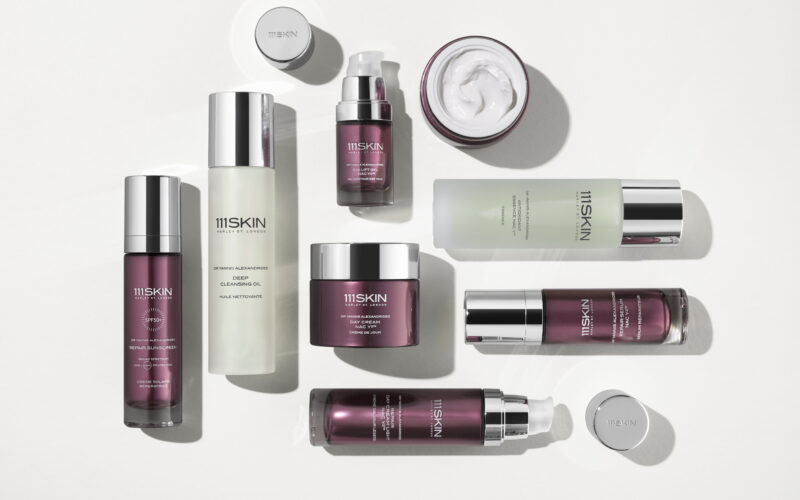
111SKIN gives The Estée Lauder Companies exposure to that shift without forcing the company into a full acquisition at a time when capital allocation discipline matters. Founded in 2012, 111SKIN was developed from Dr. Yannis Alexandrides’ clinical practice and built around NAC Y2, the brand’s proprietary complex designed to support skin repair and resilience. The brand now has more than 30 products, including its Black Diamond and Reparative collections, with pricing that ranges from $50 to $1,000. That pricing architecture matters because it allows 111SKIN to operate across entry-level prestige, ultra-premium treatment products, and spa-led luxury rituals.

The most important signal is that The Estée Lauder Companies appears to be moving deeper into clinical credibility at a time when the beauty industry’s old growth engines are under pressure. The company already owns major skin care assets such as La Mer, Clinique, Dr.Jart+, The Ordinary and NIOD through the DECIEM family of brands, and Estée Lauder itself. However, 111SKIN sits in a different lane. It is not mass clinical, not pure dermatology, and not traditional luxury. It is surgeon-founded, treatment-inspired, and positioned for consumers willing to pay for products that sound closer to aesthetic medicine than cosmetics. That is exactly where premium beauty wants to be when inflation-weary shoppers become choosier but still pay for perceived efficacy.
How does 111SKIN strengthen The Estée Lauder Companies’ Beauty Reimagined turnaround strategy?
The Estée Lauder Companies’ Beauty Reimagined strategy is not just about cutting costs, even though restructuring is currently dominating investor attention. The company has expanded its restructuring programme and is targeting significant annual savings, while also raising fiscal 2026 profit expectations after stronger-than-expected quarterly performance. That creates a dual narrative for investors: the company is cutting into its legacy cost base while trying to prove it still has the creative and scientific muscle to grow in high-value beauty categories.
The 111SKIN investment fits the growth half of that equation. It gives The Estée Lauder Companies a relatively contained way to support a brand with global distribution, luxury positioning, and direct-to-consumer traction. The brand already sells through high-end channels including Harrods, Bluemercury, Nordstrom, Mandarin Oriental, and Aman, and its direct-to-consumer business accounts for approximately 20% of sales. That is not just a channel detail. It suggests that 111SKIN has a meaningful relationship with premium consumers outside wholesale retail, which matters as beauty groups try to reduce dependence on traditional department-store traffic.
The geographic mix also makes the investment more strategically useful. North America represented approximately 40% of 111SKIN’s 2025 sales, while the brand also has a presence across China, the United Kingdom, Europe, and Asia Pacific. For The Estée Lauder Companies, this gives the brand room to scale without being overexposed to one geography. It also gives the company a potential platform to test how clinical luxury skin care performs across different prestige markets, from high-touch spa environments to digital commerce and specialist beauty retail.
This is where the investment becomes more interesting than the headline suggests. The Estée Lauder Companies is not simply adding another skin care label to a crowded portfolio. It is aligning with a brand that can sit at the intersection of medical aesthetics, luxury retail, and digital prestige. That intersection is becoming more valuable as consumers increasingly treat beauty spending as part of a broader wellness, longevity, and appearance-maintenance routine. In plain English, the customer is no longer just buying a jar. She is buying the feeling that the jar belongs somewhere near a clinic, a facial treatment room, or a post-procedure plan. That is premium pricing with a lab coat.
What does the 111SKIN deal signal about competition in luxury clinical skin care?
The 111SKIN investment also says something about competitive pressure in prestige beauty. The Estée Lauder Companies is not alone in chasing science-led positioning. Across the sector, beauty groups are moving toward dermatology-backed claims, skin longevity research, ingredient transparency, and performance-led product architecture. This shift has been amplified by the rise of aesthetic procedures, consumer interest in preventative aging, and the popularity of social media routines built around active ingredients and visible results.
For The Estée Lauder Companies, that creates both opportunity and risk. The opportunity is that clinical luxury skin care can support premium price points and repeat-purchase behaviour. Unlike fragrance, which is often emotionally driven, or makeup, which can be more trend-sensitive, skin care can form a disciplined routine. If a consumer believes a product works, switching costs become psychological as much as financial. That is exactly the kind of category loyalty a global beauty group wants.
The risk is that clinical positioning is harder to defend than heritage branding. Consumers are more informed, regulators are more alert to aggressive claims, and competitors can quickly imitate ingredient-led narratives. The Estée Lauder Companies will need to help 111SKIN scale without diluting the surgeon-founded credibility that makes the brand distinctive. Luxury beauty has seen this movie before. A niche brand becomes attractive because it feels exclusive, then scale can make it feel ordinary if distribution expands too quickly or messaging becomes too corporate.
That execution risk is especially relevant because 111SKIN’s channel mix includes high-end spas and luxury retail. Those environments reinforce exclusivity and expert recommendation. If The Estée Lauder Companies pushes the brand too broadly, it could gain sales but lose mystique. If it remains too selective, the investment may not move the needle. The sweet spot is controlled global expansion, sharper digital storytelling, and selective retail growth in markets where clinical prestige is already gaining momentum.
Why does this minority stake matter for investors watching The Estée Lauder Companies stock?
For investors, the 111SKIN investment will not be judged on immediate earnings contribution. A minority stake in a privately held luxury skin care brand is unlikely to alter near-term revenue or earnings expectations for The Estée Lauder Companies. The more relevant question is whether the deal shows that management is making smarter portfolio choices after a difficult period for the company’s share price, margins, and category momentum.
The stock context is important. The Estée Lauder Companies shares have recently traded around $79.30, far below their 52-week high of $121.64 and above their 52-week low of $56.66. That gap tells a useful story. Investors have not abandoned the company, but they are not yet fully convinced that the turnaround has become durable. The company’s latest guidance upgrade and restructuring plan have helped sentiment, but the market still wants proof that margin repair can coexist with brand relevance.
The 111SKIN investment speaks to that second requirement. Cost cutting can improve earnings quality, but it cannot by itself rebuild brand heat. A beauty company cannot restructure its way into desirability. It needs products and brands that consumers actively seek out, especially in categories where price elasticity is lower. Clinical luxury skin care is one of those spaces, provided the claims remain credible and the brand identity stays sharp.
The deal also gives The Estée Lauder Companies optionality. A minority investment allows the company to observe performance, support expansion, and deepen the relationship without taking on full integration risk upfront. If 111SKIN scales well, The Estée Lauder Companies may have a clearer path to greater involvement later. If growth slows or the category becomes more crowded, the financial exposure is likely more manageable than a full takeover. In a turnaround, optionality is not glamorous, but it is useful.
How could 111SKIN benefit from The Estée Lauder Companies without losing its niche identity?
111SKIN’s biggest opportunity is access to The Estée Lauder Companies’ global infrastructure while retaining its specialist identity. The brand already has luxury distribution and international sales exposure, but The Estée Lauder Companies can potentially support areas such as market access, retail relationships, supply chain discipline, regulatory navigation, digital commerce, and consumer insight. Those capabilities matter when a founder-led luxury clinical brand tries to move from cult status to durable global scale.
The challenge is cultural as much as operational. 111SKIN’s appeal rests on its origin story, clinical association, and premium treatment-inspired positioning. Dr. Yannis Alexandrides remaining actively involved is therefore strategically important. His continued role gives the brand continuity and protects the clinical founder narrative that many consumers find persuasive. Eva Alexandrides and Chief Executive Officer Vanessa Goddevrind also remain central to the brand’s next phase, which should help preserve management focus.
For The Estée Lauder Companies, the smartest approach would be to avoid over-processing the brand. 111SKIN does not need to look like another large corporate skin care line. It needs to remain precise, elevated, and clinically fluent. The company’s role should be to widen the runway, not repaint the aircraft mid-flight. That means careful market prioritisation, disciplined product launches, and selective expansion into channels that reinforce authority rather than simply chase volume.
China, North America, and luxury travel retail could become important testing grounds. Clinical skin care and premium recovery products can resonate with consumers who already spend on procedures, wellness, spa experiences, and high-end beauty routines. However, each market carries different regulatory, cultural, and competitive dynamics. The Estée Lauder Companies will need to localise the growth model without fragmenting the brand.
What does this deal reveal about the future of prestige beauty and skin longevity?
The bigger takeaway is that prestige beauty is moving toward a more clinical definition of luxury. The old formula relied heavily on packaging, heritage, fragrance, and celebrity aspiration. Those still matter, but the new formula increasingly depends on scientific language, ingredient credibility, visible results, and adjacency to professional treatments. 111SKIN is part of that shift.
This does not mean every beauty brand can suddenly become clinical. In fact, the more crowded the space becomes, the more consumers will distinguish between brands with authentic medical or scientific roots and brands merely borrowing the vocabulary. That is why 111SKIN’s origin in surgical recovery is useful. It gives the brand a more coherent claim to clinical luxury than a conventional beauty label trying to retrofit a laboratory narrative.
For The Estée Lauder Companies, the investment suggests a portfolio strategy that is becoming more selective and more science-led. The company needs growth categories that can support premium margins, digital engagement, and international scalability. Clinical skin care checks those boxes, but only if brand credibility survives expansion. That is the fine line management must walk.
The move also reflects a broader industry reality: beauty consumers are not becoming less demanding. They are becoming more skeptical, more informed, and more willing to mix luxury products with dermatologist recommendations, aesthetic treatments, and social media ingredient education. The brands that win will not simply shout louder. They will need to make premium beauty feel more evidence-based, more personalised, and more connected to real skin outcomes.
Key takeaways on The Estée Lauder Companies’ 111SKIN investment and the clinical skin care market
- The Estée Lauder Companies’ minority investment in 111SKIN gives the company targeted exposure to luxury clinical skin care without the risk profile of a full acquisition.
- 111SKIN’s surgeon-founded identity and NAC Y2 technology give the brand a stronger clinical narrative than many prestige skin care competitors.
- The transaction fits The Estée Lauder Companies’ Beauty Reimagined strategy by pairing cost discipline with selective investment in higher-growth beauty categories.
- The deal matters because The Estée Lauder Companies needs to prove it can rebuild brand momentum, not merely improve margins through restructuring.
- 111SKIN’s direct-to-consumer business, luxury retail presence, and spa channel distribution give it multiple paths to premium consumer engagement.
- North America’s roughly 40% share of 111SKIN’s 2025 sales gives the brand a strong base, while China, Europe, the United Kingdom, and Asia Pacific offer expansion potential.
- The main execution risk is over-scaling a niche clinical luxury brand and weakening the exclusivity that supports its pricing power.
- For investors, the stake is unlikely to move near-term earnings but may strengthen confidence in The Estée Lauder Companies’ longer-term portfolio discipline.
- The broader beauty industry is shifting toward skin longevity, treatment-inspired products, and clinical credibility, making 111SKIN strategically relevant beyond its current size.
- The deal will ultimately be judged by whether The Estée Lauder Companies can help 111SKIN scale globally while preserving the founder-led authority that made the brand attractive in the first place.
Discover more from Business-News-Today.com
Subscribe to get the latest posts sent to your email.