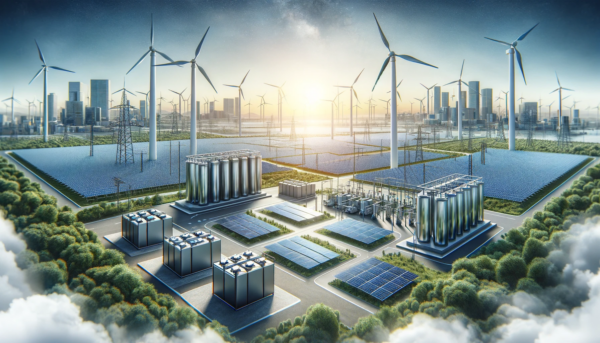


UNIGRID Inc. has become the first non-Chinese company to begin commercial-scale exports of sodium-ion batteries, launching international deliveries of its proprietary NCO cells from foundry partners to global customers. The U.S.-based company’s shipment marks a strategic inflection point in the sodium-ion space, challenging lithium-ion’s entrenched logistics chain while sidestepping the traditional gigafactory route.
By relying on a fabless, foundry-based manufacturing model and securing UN38.3 transport certification for sodium-ion chemistry, UNIGRID has positioned itself to fulfill multi-market offtake agreements throughout 2026.
Can sodium-ion exports from the U.S. reset assumptions around battery chemistries and supply chains?
UNIGRID Inc.’s announcement is more than a milestone in battery delivery logistics. It represents the first commercial demonstration of how sodium-ion cells, long considered a promising alternative to lithium-ion batteries, can scale across borders without requiring billion-dollar factory investments or Chinese ecosystem integration.
The company’s decision to operate on a foundry-subscription model—contracting manufacturing rather than building its own gigafactories—challenges the dominant assumption that new chemistries must wait for vertically integrated infrastructure to reach commercial volume. Instead, UNIGRID’s NCO sodium-ion cells are being fabricated in partner facilities and shipped directly in full-container loads, including via 40-foot ocean freight.
This move signals a structural advantage: UNIGRID avoids not just capital expenditure, but also circumvents bottlenecks linked to lithium procurement, Chinese manufacturing dominance, and certification hurdles that have stalled many competitors. By securing UN38.3 certification, the company became one of the few sodium-ion players globally to unlock international shipping—a precondition for scale.
While the sodium-ion landscape has been dominated by Chinese incumbents such as CATL and HiNa Battery, UNIGRID’s cross-border activation adds Western momentum to the mix. Ports that previously only processed lithium-ion shipments were forced to create new handling protocols for UNIGRID’s sodium-based chemistry, a subtle but foundational shift in battery trade infrastructure.
In effect, this is not just about UNIGRID moving a product. It is about setting precedent.
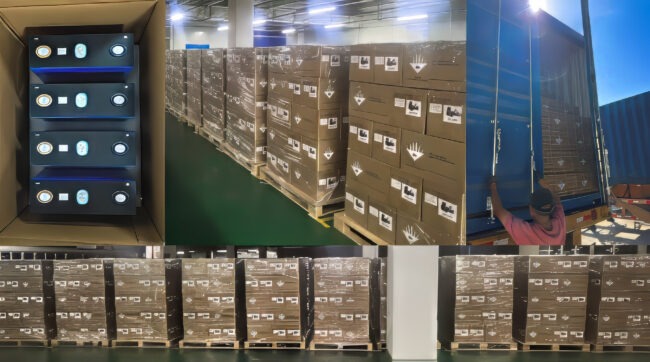
How does UNIGRID’s foundry-first model differ from lithium’s vertically integrated blueprint?
The critical deviation is capital efficiency. Lithium-ion supply chains, especially in the United States and Europe, have gravitated toward high-cost, vertically integrated gigafactories. The likes of Tesla, LG Energy Solution, and Panasonic have sunk billions into upstream cathode production, cell lines, and pack assembly—all tightly tied to rare earth and lithium availability.
UNIGRID is betting that sodium-ion’s lower energy density can be offset by lower cost, modular supply, and faster certification timelines. With sodium more abundant than lithium, the company avoids critical mineral chokepoints, which have recently triggered price and security-of-supply volatility across the EV and energy storage markets.
CEO Darren H. S. Tan emphasized that foundry scaling, when paired with a safe and certifiable chemistry, eliminates the “massive capital buildouts” that typically delay time-to-market. The result: UNIGRID has progressed from pilot-scale to commercial export volumes within a compressed time frame—less than 24 months—while remaining asset-light.
While the company hasn’t disclosed specific offtake partners, the reference to 40-foot containerized deliveries suggests industrial-grade demand, potentially in stationary energy storage, grid-scale backup, or logistics decarbonization segments.
What challenges remain for sodium-ion adoption beyond early export wins?
Despite the milestone, sodium-ion batteries still face technical and commercial headwinds before they can credibly displace lithium-ion dominance. Lower energy density remains a key constraint, limiting near-term viability in long-range EV applications. Although sodium-ion may be suitable for two- and three-wheelers, last-mile fleets, and stationary storage, large-scale automotive adoption will require further chemistry optimization or integration with hybrid systems.
There’s also the question of durability, especially in varied climatic and thermal conditions. Lithium-ion has a 30-year head start in deployment, validation, and investor familiarity. Sodium-ion must now deliver not just on safety and cost but also long-cycle stability, thermal consistency, and ecosystem integration.
Moreover, UNIGRID’s foundry-first approach must prove repeatable across geographies. Foundry-based scaling in semiconductors has decades of precedent, but battery manufacturing remains more complex from a materials handling and thermal uniformity standpoint. Reproducibility of cell performance across foundries will determine whether this model remains viable at scale—or hits variance issues.
Finally, although certification through UN38.3 is a significant achievement, other regional transport, recycling, and fire-safety regulations remain fragmented. Regulatory clarity in the U.S., EU, and Asia will be crucial to maintaining shipment cadence as volumes increase in 2026.
Is this a turning point for battery geopolitics—and what does it mean for China’s lead?
The geopolitical overtones are difficult to ignore. For years, sodium-ion development has been China-centric, with CATL’s sodium-ion roadmap tightly intertwined with state-aligned battery production capacity.
UNIGRID’s successful international deployment—starting from the United States and leveraging contract manufacturing—introduces a new axis of competition. It suggests that sodium-ion could become not just a China-sourced hedge to lithium, but an entirely new supply chain architecture in itself.
It also aligns with U.S. federal ambitions to diversify battery sourcing, reduce dependence on critical minerals, and derisk climate tech from foreign control. While UNIGRID is not yet at the scale of a Tesla or Panasonic, its success may spur federal interest in supporting fabless battery models—similar to how the CHIPS Act catalyzed advanced foundry investment.
Should UNIGRID’s model prove cost-effective and reliable, it could trigger a policy rethink around how alternative battery chemistries are commercialized—moving from factory-first to partner-first innovation strategies.
What happens next for UNIGRID and its sodium-ion commercialization roadmap?
With international shipments now underway, UNIGRID is expected to begin fulfilling early offtake agreements across 2026. The company will likely prioritize customers in stationary storage and low-power transport applications, where sodium-ion’s safety profile and cost advantages outweigh its energy density limitations.
The next phase of validation will be operational: deployment reliability, recharge performance under load, and customer retention will all determine whether the company moves from tech validation to commercial defensibility.
Investors will also be watching for partnerships or capital raises that reinforce the company’s scaling strategy. While fabless models reduce capital intensity, demand growth may eventually require more control over upstream inputs or dedicated foundry capacity—especially as rivals race to replicate the playbook.
UNIGRID’s model could inspire sodium-ion startups in Europe, India, and Southeast Asia to abandon gigafactory ambitions and license chemistries instead. The company’s early lead may be ephemeral—or it may define a new norm.
Key takeaways on what this development means for UNIGRID, its competitors, and the battery industry
- UNIGRID Inc. has become the first non-Chinese company to export sodium-ion batteries at commercial scale, activating a new phase of global competition.
- Its fabless, foundry-subscription model challenges the conventional gigafactory approach, compressing time-to-market while reducing capital intensity.
- Certification of sodium-ion chemistry for international shipping (UN38.3) removes a key barrier to scale and unlocks global logistics access.
- The milestone signals growing U.S. interest in sodium-ion technologies as a lithium-independent alternative for stationary and low-power mobility applications.
- Energy density limitations still constrain sodium-ion’s competitiveness in long-range EV segments, delaying head-to-head disruption.
- Execution risk lies in consistent quality across foundries and ensuring regional regulatory harmonization for shipment, handling, and recycling.
- If successful, UNIGRID’s model could catalyze new business models in battery manufacturing globally—especially in emerging markets.
- The development positions sodium-ion as a credible alternative in energy storage and decarbonization strategies, with broader implications for battery geopolitics.
Discover more from Business-News-Today.com
Subscribe to get the latest posts sent to your email.