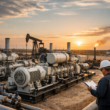




Iranian missile and rocket attacks on Qatar’s Ras Laffan Industrial City have destroyed 17 percent of QatarEnergy’s liquefied natural gas export capacity, with repairs expected to sideline 12.8 million tonnes of annual production for between three and five years, QatarEnergy’s chief executive officer and Qatar’s minister of state for energy affairs, Saad al-Kaabi, confirmed in an interview with Reuters on Thursday.
Al-Kaabi said two of Qatar’s 14 LNG trains and one of its two gas-to-liquids facilities were damaged in the Iranian strikes, projecting an estimated 20 billion United States dollars in lost annual revenue and threatening long-term supplies to Europe and Asia. He stated that production cannot restart until active hostilities cease.
Al-Kaabi, expressing disbelief at the scale of the attack, said he could not have imagined that Qatar and the region would be struck in this manner, particularly by a neighbouring Muslim country during the month of Ramadan. He added that the scale of the damage has set the region back 10 to 20 years.
The attacks represent the most consequential single act of energy infrastructure destruction to strike Qatar’s industrial base in the country’s modern history. Qatar operates the world’s largest liquefied natural gas export complex at Ras Laffan Industrial City, a facility that processes all gas extracted from the North Field, Qatar’s side of the world’s largest natural gas reserve shared geologically with Iran.
How Israeli strikes on Iran’s South Pars gasfield triggered Iranian retaliation against Qatar’s energy infrastructure
On March 18, 2026, an Israeli air raid targeted treatment facilities at Asaluyeh, the onshore processing hub for Iran’s South Pars gasfield and a core pillar of Iran’s domestic energy supply. The governor of Asaluyeh confirmed the facilities were taken offline to control fires following the attack.
South Pars provides approximately 80 percent of Iran’s national natural gas needs. Although Israel has not publicly claimed the South Pars attack, Israeli military sources acknowledged the operation targeted Iran’s gas infrastructure specifically.
A United States defence official confirmed to Axios that the South Pars strike was coordinated with and approved by Washington. Three Israeli officials subsequently told Reuters on condition of anonymity that the operation was coordinated with the United States, and that Israel was not surprised by Trump’s public distancing from the action. Trump stated on Truth Social that the United States had no prior knowledge of the strike and that Israel would not attack the gasfield again unless Iran resumed attacks on Qatar.
In the hours following the Israeli attack on South Pars, the Iranian Revolutionary Guard Corps issued warnings that five facilities across Saudi Arabia, the United Arab Emirates, and Qatar would be targeted in coming hours, naming Saudi Arabia’s SAMREF refinery and Jubail petrochemical complex, the UAE’s Al Hosn gasfield, and Qatar’s Ras Laffan refinery and Mesaieed petrochemical complex. Iran subsequently carried out those strikes across the Gulf region.
What the North Field and South Pars shared gasfield represents for global energy security
The North Field, known as South Pars on the Iranian side, lies beneath the waters of the Persian Gulf, straddling the maritime border between Qatar and Iran. It contains an estimated 51 trillion cubic metres of recoverable gas. On the Iranian side, South Pars produces 730 million cubic metres of gas per day, supplying approximately 70 percent of Iran’s domestic gas consumption and feeding power plants, heating systems, and petrochemical complexes.
The Qatari side of the field underpins Qatar’s liquefied natural gas industry, which exports roughly 77 million tonnes annually, representing approximately one-fifth of global LNG supply. These exports supply European household heating, Asian power generation, and a range of industrial feedstocks across the Indo-Pacific region.
Qatar’s position as the world’s second-largest liquefied natural gas exporter after the United States, combined with the scale of the infrastructure damage now confirmed, means the supply disruption will have direct and prolonged consequences for energy markets across Europe and Asia.
Which LNG trains were damaged and how do ExxonMobil and Shell partnerships extend the fallout to American and European companies
The two damaged LNG trains are designated S4 and S6. United States oil major ExxonMobil holds a 34 percent stake in LNG train S4 and a 30 percent stake in train S6. Shell is a partner in the damaged gas-to-liquids facility. LNG train S4 supplies Italy’s Edison and EDFT in Belgium, while LNG train S6 supplies South Korea’s KOGAS, EDFT, and Shell in China. Shell’s gas-to-liquids facility is projected to take up to a year to repair.
QatarEnergy is likely to declare force majeure on long-term supply contracts for up to five years for LNG bound for Italy, Belgium, South Korea, and China. Al-Kaabi noted that the company had already declared force majeure on a shorter-term basis and that the revised declaration would extend for the full duration of the repair period. The damaged units cost approximately 26 billion United States dollars to construct.
The invocation of force majeure on long-term contracts of this scale and duration will compel buyers in Italy, Belgium, South Korea, and China to seek replacement volumes on spot markets. European and Asian importers will compete directly for a significantly reduced global pool of available liquefied natural gas, with immediate consequences for natural gas prices, electricity generation costs, and industrial feedstock availability across multiple continents.
How the damage to condensate, LPG, helium, and naphtha exports extends the supply shock well beyond liquefied natural gas
The fallout from the Ras Laffan strikes extends well beyond liquefied natural gas. Qatar’s exports of condensate are projected to fall by approximately 24 percent, liquefied petroleum gas exports by 13 percent, helium output by 14 percent, and both naphtha and sulphur by 6 percent.
These losses carry downstream consequences ranging from liquefied petroleum gas shortages affecting household and restaurant use across India to helium supply reductions for South Korea’s semiconductor manufacturers. Qatar is among the world’s largest helium producers. Helium is a critical material used in semiconductor fabrication, magnetic resonance imaging equipment, fibre optic production, and aerospace instrumentation. A 14 percent reduction in Qatar’s helium output, sustained over a three-to-five-year repair horizon, will compound existing supply pressures in industries where alternative sourcing capacity is limited.
How Gulf states, the United States, and international institutions have responded to the escalating energy infrastructure attacks
Qatar declared Iranian military and security attaches and their staff at the Iranian Embassy in Doha persona non grata, ordering their departure within 24 hours.
Saudi Arabia’s foreign minister, Prince Faisal bin Farhan Al Saud, stated that what little trust had previously existed between Gulf states and Iran had been completely shattered, adding that both political and non-political responses to Iran remained under consideration. Saudi Arabia’s defence ministry confirmed it had intercepted an Iranian missile targeting the port of Yanbu, which has become a backup export route for Saudi crude given the effective closure of the Strait of Hormuz.
The United Arab Emirates said its air defence systems had intercepted seven Iranian missiles and 15 drones in a single day. Iran continued strikes against multiple Gulf neighbours, with Kuwait’s state-owned Mina Al-Ahmadi refinery also reporting a drone strike that sparked a fire.
United States President Donald Trump threatened on Truth Social to massively destroy the entirety of the South Pars Gas Field if Iran continued its attacks on Qatar’s LNG facilities. Trump added that the United States would act with or without the consent of Israel to carry out such strikes.
Iranian Foreign Minister Abbas Araghchi warned that Iran would show zero restraint if its infrastructure is struck again, writing that Iran’s retaliatory response had used only a fraction of its total capability and that the only reason for restraint had been respect for de-escalation requests. Araghchi added that any end to the war must address damage to Iranian civilian sites.
What the Strait of Hormuz closure and compounding supply disruptions mean for global energy prices and trade
Iran has effectively blocked the Strait of Hormuz, the critical maritime chokepoint through which approximately one-fifth of the world’s oil and liquefied natural gas supplies transit, driving soaring fuel prices and heightening global concerns about inflation.
European natural gas benchmark prices reflected the scale of the disruption rapidly, with the Calendar 2028 Title Transfer Facility contract rising 17 percent in a single trading day following news of the QatarEnergy chief executive’s interview. Asian spot liquefied natural gas prices also climbed sharply, erasing the supply surplus that energy analysts had previously projected for 2026.
The World Trade Organization warned that if crude oil and liquefied natural gas prices remained elevated throughout 2026 as a result of the conflict, global trade in goods could slow to 1.4 percent growth for the year. Brent crude oil prices spiked to 119 United States dollars per barrel before falling back to approximately 107 dollars following public remarks by Israeli Prime Minister Benjamin Netanyahu that the war was ending faster than people expected.
The simultaneous disruption of production infrastructure across multiple Gulf states and the continuing closure of the Strait of Hormuz represent a compounded energy supply shock without modern precedent in the Gulf region. The full duration of the disruption will depend entirely on when active hostilities cease and conditions at Ras Laffan are deemed safe enough to begin reconstruction and recommissioning of the damaged trains.
Key takeaways on what this development means for Qatar, global energy markets, and the countries affected by the LNG supply disruption
- Iranian missile and rocket strikes on Qatar’s Ras Laffan Industrial City have destroyed LNG trains S4 and S6 and one of two gas-to-liquids facilities, eliminating 17 percent of Qatar’s total LNG export capacity and 12.8 million tonnes of annual production for an estimated three to five years, with annual revenue losses projected at 20 billion United States dollars.
- QatarEnergy is expected to declare force majeure on long-term LNG supply contracts with buyers in Italy, Belgium, South Korea, and China, covering deliveries previously supplied through train S4 and train S6. ExxonMobil holds stakes of 34 percent and 30 percent respectively in the two damaged trains, and Shell is a partner in the damaged gas-to-liquids facility.
- The disruption extends beyond liquefied natural gas to associated export streams including condensate, projected to fall 24 percent; liquefied petroleum gas, projected to fall 13 percent; helium, projected to fall 14 percent; and naphtha and sulphur, each projected to fall 6 percent, with downstream consequences for semiconductor, petrochemical, and household energy markets across Asia and Europe.
- Iran’s effective blockade of the Strait of Hormuz, through which approximately one-fifth of global oil and LNG transits, compounds the production disruption and has already driven sharp increases in global fuel prices and heightened concerns about inflation.
- Iranian Foreign Minister Abbas Araghchi has warned of zero restraint on future strikes if Iran’s own infrastructure is targeted again, while United States President Donald Trump has threatened to destroy the entirety of the South Pars Gas Field if Iran continues attacking Qatar’s energy facilities, leaving the diplomatic and military trajectory of the conflict unresolved.
Discover more from Business-News-Today.com
Subscribe to get the latest posts sent to your email.