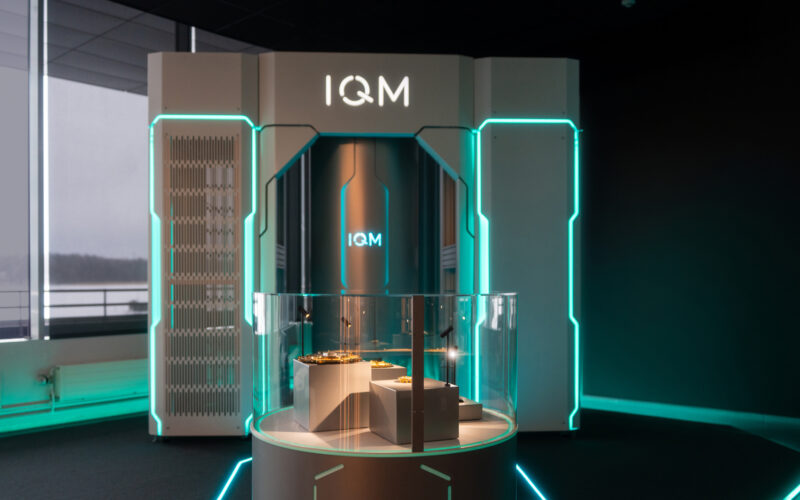
IQM Finland Oy and Real Asset Acquisition Corp. (Nasdaq: RAAQ) have moved closer to completing their proposed business combination after the registration statement tied to the deal was declared effective by the U.S. Securities and Exchange Commission. The milestone clears the way for Real Asset Acquisition Corp. shareholders to vote on the transaction at an extraordinary general meeting scheduled for June 25, 2026. If approved, the transaction would take IQM Finland Oy public through American Depositary Shares expected to trade on Nasdaq under the ticker IQMX, with the company also pursuing admission of its ordinary shares on Nasdaq Helsinki. Real Asset Acquisition Corp. shares recently traded around $10.90, below their recent 52-week high, suggesting investors are still weighing the promise of quantum computing against the familiar risks of SPAC redemptions, capital needs and long commercialization cycles.
Why does SEC effectiveness move IQM and Real Asset Acquisition Corp. closer to a public quantum listing?
The effectiveness of the Form F-4 registration statement is more than a procedural checkpoint for IQM Finland Oy and Real Asset Acquisition Corp. It changes the transaction from a proposed strategic announcement into a shareholder decision with a defined voting timetable. For investors, that matters because the risk profile shifts from regulatory completeness to approval mechanics, redemption behavior and post-closing capital execution.
The immediate consequence is that Real Asset Acquisition Corp. can now put the business combination to shareholders. That vote will determine whether IQM Finland Oy can complete its public market entry through the SPAC structure and begin trading as a listed quantum computing company. For a deep-tech company with heavy hardware requirements, public market access is not simply about branding. It is about balance-sheet endurance, customer confidence and the ability to fund multi-year technology development before mainstream commercial adoption is fully visible.
The development also comes at a sensitive point for quantum computing equities. Investor interest in quantum computing has strengthened because the sector sits at the intersection of national security, artificial intelligence, advanced computing, cryptography and sovereign technology strategy. However, public investors have also learned to be wary of long-duration technology stories that arrive in the market before revenue, margins and customer concentration risks are fully mature. Quantum may be glamorous, but cash flow still wears the boring shoes in public markets.
How does the proposed IQM and Real Asset Acquisition Corp. combination change Europe’s quantum capital markets story?
The strategic significance of the IQM Finland Oy transaction lies in its attempt to give Europe a visible public quantum computing platform at a time when the sector is increasingly shaped by U.S. capital markets, government funding and hyperscaler-adjacent ecosystems. IQM Finland Oy is headquartered in Finland and has major operations in Munich, giving the company a European industrial and research footprint that could appeal to governments, universities, high-performance computing centers and sovereign infrastructure buyers.
If the transaction closes, IQM Finland Oy would become one of the most visible European quantum computing companies in public markets. That matters because Europe has strong scientific institutions and public funding frameworks, but its technology companies often face a scaling gap when competing against U.S.-listed peers with deeper investor pools and higher risk tolerance. A Nasdaq listing would give IQM Finland Oy access to a broader technology investor base while preserving a European identity through the planned Helsinki admission.
The planned dual-market structure could also become a useful template for other European deep-tech companies. Nasdaq offers liquidity and visibility, while Nasdaq Helsinki could reinforce regional ownership and policy relevance. The challenge is that public market exposure brings quarterly scrutiny to a field where technology cycles are long, revenue conversion is uneven and commercial proof points can take time. In other words, Europe may get its quantum flag on the public market map, but investors will still ask for a roadmap, milestones and receipts.
Why does the upsized PIPE matter for IQM’s commercial quantum computing roadmap?
The previously announced upsized PIPE financing is important because IQM Finland Oy is not entering public markets as a software-light capital story. Quantum hardware companies need sustained investment in chips, fabrication, cryogenic systems, control infrastructure, software tooling, assembly capability and customer deployment support. The capital stack therefore matters as much as the listing milestone, particularly if the company wants to move from research-led demand into broader enterprise and high-performance computing use cases.
IQM Finland Oy has disclosed 2025 revenue of €31 million and has positioned itself around full-stack superconducting quantum computers that can be deployed on-premises or accessed through cloud-based models. That revenue base is meaningful for a quantum hardware company, but it remains early relative to the valuation and capital intensity implied by the transaction. The upsized PIPE gives the company additional room to support technology development and commercial expansion, but it does not eliminate the need to show that deployed systems can translate into repeatable revenue growth.
The investor quality behind a PIPE can matter as much as the amount raised. An expanded private investment commitment, including participation from Ilmarinen, signals institutional appetite for the transaction and gives public shareholders a reference point beyond SPAC sponsor enthusiasm. Still, PIPE commitments do not guarantee long-term market support. Once the company is public, investors will judge IQM Finland Oy on customer additions, backlog conversion, gross margin development, system reliability, roadmap credibility and the pace at which quantum use cases move from experimentation to operational budgets.
What does Real Asset Acquisition Corp. stock performance say about investor sentiment before the vote?
Real Asset Acquisition Corp. stock has not behaved like a market that has completely de-risked the transaction. Shares recently traded around $10.90 after previously reaching a 52-week high above $12. That gap matters because SPAC-linked equities often reflect not only excitement around the target company, but also assumptions about redemptions, trust value, closing probability and post-closing trading liquidity.
The stock’s position below its recent high suggests that investors are treating the SEC effectiveness milestone as necessary, but not sufficient. That is a rational stance. The registration statement becoming effective reduces one uncertainty, but investors still need to see the shareholder vote, redemption levels, final cash proceeds, PIPE completion and the early trading profile of the combined company. For a quantum computing company, the cash available after closing may be one of the most important numbers because it determines how much time management has to execute before returning to capital markets.
The valuation context also needs discipline. IQM Finland Oy is being positioned around a pre-money equity valuation of approximately $1.8 billion, while its 2025 revenue base was still modest by conventional public technology standards. That does not automatically mean the valuation is excessive because quantum companies are valued partly on strategic optionality, intellectual property and future infrastructure relevance. However, it does mean the company will need to close the gap between scientific credibility and financial scalability quickly enough to keep public investors engaged.
How could IQM’s on-premises quantum model affect customers, governments and high-performance computing centers?
IQM Finland Oy’s on-premises quantum computing model is one of the more strategically interesting parts of the transaction. Many quantum computing approaches rely heavily on cloud access, which can be efficient for broad experimentation. IQM Finland Oy’s model also emphasizes customer-owned systems, which may appeal to national laboratories, universities, supercomputing centers, defense-linked research agencies and customers that want greater control over infrastructure.
That distinction could matter in markets where sovereignty, data control and infrastructure ownership are becoming more important. Quantum computing is not only a commercial technology category. It is also a geopolitical and policy asset because of its long-term relevance to cryptography, materials science, optimization, defense research and artificial intelligence workloads. Governments may prefer domestic or allied infrastructure over dependence on a small number of foreign platforms, especially when the technology becomes more operationally sensitive.
The model is not risk-free. On-premises quantum systems require customer readiness, integration support, maintenance capability and a credible path to usable performance. Selling hardware into high-performance computing environments can create stronger customer relationships than purely remote access, but it can also lengthen sales cycles and increase deployment complexity. For IQM Finland Oy, the question is whether system deliveries can become a scalable commercial engine rather than a series of prestigious but operationally demanding projects.
What execution risks could still shape the outcome after the June shareholder vote?
The first near-term risk is shareholder redemption. Even when a SPAC transaction receives approval, high redemption levels can reduce the cash ultimately available to the target company. For IQM Finland Oy, that would matter because the public listing is intended to fund technology and commercial development. The headline transaction value will attract attention, but the usable cash balance after closing will be the more practical measure of execution capacity.
The second risk is commercialization pace. Quantum computing companies operate in a sector where technical progress can be impressive while customer budgets remain cautious. Research institutions and government-backed programs can support early demand, but public investors will eventually look for broader enterprise adoption, higher system utilization, repeat purchases and evidence that software and services can improve the revenue mix. A company can be scientifically credible and still struggle to satisfy market expectations if revenue growth is uneven.
The third risk is competitive intensity. IQM Finland Oy is entering public market visibility in a field that includes IonQ, D-Wave Quantum, Rigetti Computing, Quantinuum and major technology companies with quantum research programs. Those companies do not all pursue the same technical architecture, but they compete for investor attention, technical talent, customers, government relationships and ecosystem mindshare. IQM Finland Oy’s European positioning and on-premises model may be differentiated, but differentiation only becomes durable if it produces repeatable commercial outcomes.
What are the key takeaways on what IQM’s proposed Nasdaq listing means for quantum computing investors and competitors?
- The effectiveness of the registration statement moves IQM Finland Oy and Real Asset Acquisition Corp. from filing-stage uncertainty toward a defined shareholder vote, making June 25, 2026 the next critical transaction milestone for the proposed quantum computing listing.
- The planned Nasdaq ticker IQMX would give IQM Finland Oy broader access to U.S. technology investors, while the intended Nasdaq Helsinki admission could preserve regional relevance for European deep-tech and sovereign infrastructure stakeholders.
- Real Asset Acquisition Corp. shares trading below their recent high suggest that investors are not treating the transaction as fully de-risked, despite the regulatory progress and the heightened interest in quantum computing.
- The upsized PIPE gives IQM Finland Oy more financial room to support product development and commercial deployment, but the company still needs to prove that capital can translate into revenue scale and margin improvement.
- IQM Finland Oy’s on-premises quantum model may appeal to high-performance computing centers, universities, governments and customers with sovereignty concerns, but it could also create longer deployment cycles and support requirements.
- The transaction places Europe more visibly into the public quantum computing market, where U.S.-listed companies and government-backed initiatives already dominate investor attention and sector narratives.
- The valuation case depends on whether investors give IQM Finland Oy credit for strategic optionality, technical depth and public-sector demand before conventional financial metrics become stronger.
- The most important post-closing metric may not be the opening share price, but the cash available after redemptions, PIPE funding and transaction costs because that will define the company’s execution runway.
- Competition from IonQ, D-Wave Quantum, Rigetti Computing and Quantinuum means IQM Finland Oy must show differentiated commercial traction, not just differentiated technology architecture.
- For the broader quantum industry, the deal will test whether public markets are ready to fund European hardware-heavy deep tech with patience, discipline and enough skepticism to avoid another SPAC hangover.
Share this:
Discover more from Business-News-Today.com
Subscribe to get the latest posts sent to your email.