
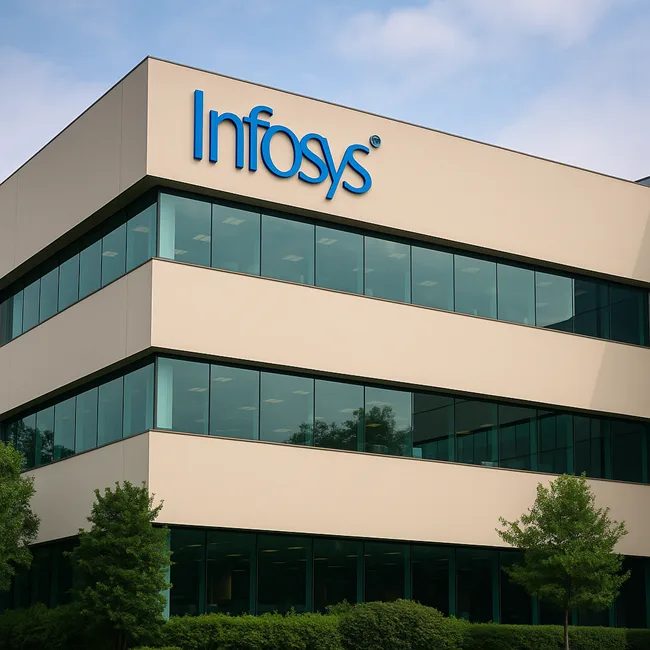


Infosys Limited (NSE: INFY; NYSE: INFY) has expanded its strategic collaboration with Truist Financial Corporation (NYSE: TFC) to support the US bank’s artificial intelligence-focused global capability centre in Hyderabad, India. The October 19, 2026 announcement confirms that Truist is consolidating capabilities currently delivered through multiple Indian supplier relationships into a more unified operating model, with Infosys supporting the development and eventual transition of the centre. The companies expect to mark the onboarding of more than 1,000 colleagues later in October, establishing a significant early workforce milestone for the expanding operation. The agreement strengthens Infosys’ position in financial services technology, although its eventual commercial value will depend on the undisclosed contract economics, delivery responsibilities and pace of technology adoption.
The Hyderabad centre forms part of Truist’s broader effort to develop a global technology and operations workforce capable of supporting banking services, data engineering, artificial intelligence and digital transformation. Infosys will use its financial services expertise, Infosys Topaz AI capabilities and build-operate-transfer approach to help establish a more integrated delivery environment. The bank intends to reduce reliance on fragmented third-party arrangements and develop durable internal expertise over time. This creates an important strategic balance for Infosys because the company is supporting a client’s longer-term technology independence while seeking to generate revenue and strengthen its relationship during the centre’s development.
What does the expanded Infosys and Truist partnership mean for Hyderabad’s banking technology sector?
The agreement positions Hyderabad as an increasingly important location in Truist’s global operating network. The bank already has contract professionals working in India across engineering, data and operational activities, and the expanded collaboration is intended to bring more of those capabilities into a coordinated structure. Rather than establishing an entirely new operation from scratch, the announcement describes the continued build-out of an existing capability centre. The anticipated onboarding milestone of more than 1,000 colleagues indicates that the centre has progressed beyond a purely conceptual investment plan.
For Infosys, the programme extends an established relationship with a large US financial institution into a more substantial operational partnership. The company will support the scaling of teams and the development of processes intended to connect technology, data and banking operations across geographies. Such programmes can create demand for software engineering, infrastructure management, cybersecurity, analytics and enterprise application services, although the October announcement does not specify a separate commercial value for each workstream. The project could also reinforce Infosys’ banking technology capabilities through experience gained in managing complex, regulated operating environments.
Hyderabad’s importance reflects its established technology workforce, multinational financial services presence and experience supporting global banking operations. A capability centre combining software engineering and business operations can offer financial institutions access to specialised skills while maintaining closer control over processes than conventional outsourced delivery arrangements. The economic benefits depend on hiring quality, management integration, knowledge transfer and operational performance. Developing these capabilities requires more than increasing headcount because banking technology processes must also meet demanding standards for reliability, governance and security.
Why is Truist Financial consolidating multiple Indian technology suppliers under a more unified operating model?
Truist’s stated objective is to simplify the delivery of functions currently spread across multiple supplier relationships. Fragmented operating structures can create challenges involving process ownership, technology integration, overlapping management arrangements and inconsistent data practices. The expanded collaboration with Infosys is intended to bring those activities into a more coordinated framework, potentially improving accountability and supporting faster implementation of technology changes. The announcement does not quantify existing supplier spending or disclose a targeted percentage reduction in operating costs.
The operating model also reflects a strategic preference for building internal institutional expertise. Financial institutions increasingly depend on sophisticated technology systems for customer engagement, payments, risk management, compliance and data processing. Retaining greater control over engineering capabilities and operational knowledge can strengthen the ability to modify those systems as business requirements change. However, the transition from external suppliers to a capability centre introduces its own challenges involving workforce integration, documentation, management continuity and service-level performance.
Steve Hagerman, Truist’s chief information officer, described the centre as an investment in the bank’s future technology capabilities and its transition toward a more agile, artificial intelligence-enabled organisation. His comments emphasised the role of integrated global operations in improving the speed of innovation and customer service. That objective is consistent with Truist’s wider efforts to modernise its operating structure, although the Hyderabad programme should be assessed independently from the bank’s balance-sheet restructuring and consumer loan disposals. The financial consequences of those different initiatives operate through separate mechanisms and timelines.
How will Infosys’ build-operate-transfer model work for Truist’s global capability centre?
Infosys has identified its build-operate-transfer capabilities as part of the expanded collaboration. Under this type of arrangement, a technology services provider supports the development of an operating centre, manages agreed activities during an initial period and facilitates a subsequent transition toward greater customer control. The model allows a financial institution to use an established services company’s recruitment, process design and operational expertise while developing capabilities intended to become more self-sustaining. The October 19 release does not provide a confirmed transfer date, detailed ownership schedule or complete commercial terms.
The model differs from a conventional long-term outsourcing arrangement because the customer’s ability to develop internal capabilities forms part of the strategic objective. During the initial operating period, Infosys may benefit from implementing technology platforms, coordinating delivery teams and supporting operations. As the centre matures, the commercial relationship could shift toward specialised engineering, artificial intelligence, consulting or other services rather than continuing every original responsibility unchanged. The eventual revenue profile will depend on the specific contract provisions and the services Truist chooses to retain.
For Truist, operational control becomes increasingly relevant when technology systems support sensitive financial activities. Consolidating engineering and operational functions can improve coordination, but responsibilities relating to data access, model governance, cybersecurity and regulatory compliance must remain clearly defined. Artificial intelligence deployments in banking also require monitoring of reliability, human oversight and appropriate management of customer information. Those requirements create opportunities for specialist technology providers while limiting the extent to which automation can simply replace established control processes.
Dennis Gada, Infosys’ executive vice-president and global head of banking and financial services, linked the expanded partnership to the increasing adoption of artificial intelligence across financial institutions. He indicated that Infosys intends to combine its Infosys Topaz capabilities with its experience establishing and transitioning global capability centres. The commercial outcome will depend on whether that combination improves business processes and technology performance rather than merely introducing additional AI tools. Neither company has disclosed a quantified productivity improvement attributable to the programme.
Can Truist’s Hyderabad expansion strengthen Infosys’ financial services revenue growth?
The agreement arrives ahead of Infosys’ second-quarter FY27 results, scheduled for October 23, 2026. In its first quarter ended June 30, Infosys reported revenue of $5.08 billion, representing 2.4% year-on-year growth in constant currency, and an operating margin of 21.1%. Large deal total contract value reached approximately $3.6 billion, with 61% classified as net new business. Management previously guided to full-year constant-currency revenue growth of 1.5% to 3.0% and an operating margin of 20% to 22%.
The Truist programme is strategically relevant because financial services customers often require sustained technology investment across multiple connected systems. However, the October announcement does not disclose the contract’s total value, minimum committed spending or expected contribution to Infosys’ annual revenue. It would therefore be inappropriate to treat the centre’s workforce milestone as an equivalent measure of billable headcount or contracted revenue. The size of the potential financial contribution depends on the scope of the services, pricing terms and the timing of the operational transition.
The relationship also illustrates a commercial tension facing Indian technology services providers. Clients seeking greater control over their global delivery operations may reduce their reliance on conventional long-duration outsourcing contracts. At the same time, those clients can require substantial assistance designing, launching and modernising their internal capability centres. Providers able to support the full operating transition may preserve valuable customer relationships even when the client intends to bring more activities under direct control.
Infosys’ ability to generate profitable revenue from such arrangements will depend on delivery efficiency and the mix of services involved. Initial workforce expansion can require recruitment, training and management investment before operational productivity stabilises. Later project phases may provide opportunities for additional consulting and AI-related work, although these possibilities are not equivalent to announced contractual commitments. The company’s forthcoming financial results should provide a broader view of demand trends across its banking and financial services business.
What does the Infosys share price indicate ahead of the October 23 earnings announcement?
Infosys shares closed at approximately ₹1,130.70 on the National Stock Exchange of India on October 19, down 2.63% from ₹1,161.20 in the preceding session. The decline followed a strong increase on October 16, when the stock rose approximately 4.6%. Across the two sessions, the share price remained above its October 14 closing level of ₹1,088, illustrating the volatility of investor expectations ahead of the earnings release. The October 19 movement coincided with the collaboration announcement, but the available evidence does not establish that the Hyderabad agreement caused the decline.
Market attention is likely to remain focused on Infosys’ consolidated revenue growth, operating margins, large contract wins and demand for AI-enabled services. The Truist collaboration provides evidence of continued customer engagement, but its undisclosed economics limit the extent to which investors can translate the announcement directly into earnings forecasts. The more consequential commercial question is whether Infosys can secure profitable work from clients that are simultaneously adopting automation and building stronger internal technology teams. The October 23 results may provide additional context on that transition.
The next operational milestones for the Hyderabad centre will include completion of the anticipated 1,000-plus colleague onboarding milestone, further consolidation of supplier-delivered functions and progress toward a self-sustaining operating model. For Truist, success would involve stronger control over strategic technology capabilities and improved service delivery. For Infosys, it would involve demonstrating that its build-operate-transfer model can generate profitable business while establishing future opportunities in specialised technology services. The relationship’s long-term value will become clearer as staffing growth is accompanied by measurable operating and commercial outcomes.
What are the key takeaways from Infosys’ expanded Truist Hyderabad technology partnership?
- Infosys has expanded its collaboration with Truist Financial Corporation.
- The agreement supports Truist’s AI-focused global capability centre in Hyderabad.
- Truist is consolidating functions currently delivered through multiple Indian suppliers.
- The companies expect to mark the onboarding of more than 1,000 colleagues later in October.
- Infosys is supporting the centre through its build-operate-transfer capabilities.
- The programme involves banking technology, artificial intelligence, data and operational services.
- The announcement does not disclose a confirmed contract value or transfer timetable.
- Truist intends to develop more self-sustaining internal technology expertise.
- Infosys reported $5.08 billion in first-quarter FY27 revenue and a 21.1% operating margin.
- Infosys’ October 23 earnings announcement will provide the next broader assessment of its growth trajectory.
Discover more from Business-News-Today.com
Subscribe to get the latest posts sent to your email.