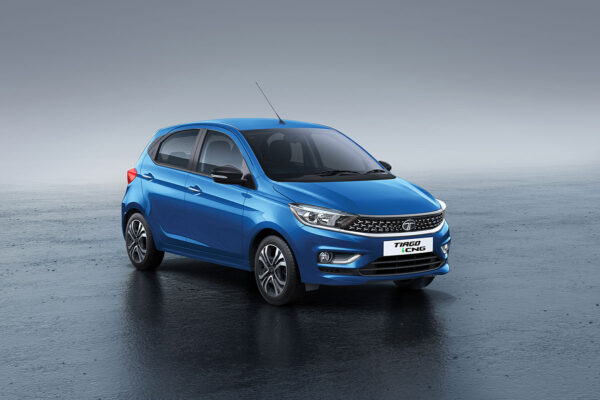





Hyundai Motor India Limited has announced its entry into India’s commercial mobility sector with the launch of its dedicated taxi lineup, the Prime HB hatchback and Prime SD sedan. With factory-fitted compressed natural gas support, extended warranties, and a suite of comfort and safety features tailored for high-uptime commercial use, the move marks a deliberate diversification of Hyundai Motor India Limited’s domestic business portfolio at a time when the passenger car market is nearing saturation in key metros.
Positioned to compete directly with entrenched players such as Maruti Suzuki India Limited, Tata Motors Limited, and Mahindra & Mahindra Limited, the company’s foray into the high-volume fleet space underscores a strategic shift toward lower-margin, higher-volume business models with recurring maintenance and service tailwinds. Starting prices of ₹599,900 for the Prime HB and ₹689,900 for the Prime SD signal a focused pricing strategy designed to disrupt legacy taxi vehicle offerings while leveraging Hyundai Motor India Limited’s expansive dealership and service footprint.
Can Hyundai Motor India scale quickly in a commercial market where total cost and uptime dominate decisions?
The Prime HB and Prime SD models are built around a 1.2-liter Kappa four-cylinder engine, capable of operating on petrol and compressed natural gas. This configuration enables operators to optimize earnings per kilometer in a fuel-cost-sensitive business model. Hyundai Motor India Limited reports a certified mileage of 28.40 kilometers per kilogram for the Prime SD and 27.32 kilometers per kilogram for the Prime HB. These figures aim to exceed operator expectations around efficiency while signaling to cost-conscious buyers that the brand understands core operating economics.
Critically, Hyundai Motor India Limited has bundled its offer with commercial segment-specific value drivers. A three-year standard warranty can be extended to five years or 180,000 kilometers, designed to match high-utilization scenarios common among fleet vehicles. This also includes maintenance cost predictability pegged at ₹0.47 per kilometer. Repayment tenure of up to 72 months is being supported through flexible financing arrangements via third-party lenders. With a booking amount of just ₹5,000, Hyundai Motor India Limited is removing the initial friction for operators looking to replace aging vehicles or expand their fleets.
Unlike retrofitted variants of personal-use models that competitors often introduce into the taxi market, Hyundai Motor India Limited appears to have engineered these two models specifically for fleet requirements. Standard features include six airbags, speed limiting at 80 kilometers per hour, steering-mounted audio controls, rear air conditioning vents, full power windows, front and rear USB charging, and central locking systems. Additional optional upgrades, such as a 9-inch infotainment screen with wireless Android Auto and Apple CarPlay and vehicle tracking systems with panic buttons, reflect a hybrid approach to commercial safety, regulatory readiness, and rider satisfaction.
What operational risks could slow Hyundai Motor India’s growth in this segment?
Despite the comprehensive feature set and competitive pricing, Hyundai Motor India Limited will need to overcome deeply entrenched relationships between incumbent automakers and fleet aggregators. Maruti Suzuki India Limited has long dominated India’s taxi market, not only through products like the Dzire Tour and Ertiga Tour but also through strong brand affinity, simplified service access, and favorable resale economics. Tata Motors Limited has in recent years consolidated its urban fleet presence through the Tigor EV and other electrified offerings designed to align with government fleet electrification mandates. Mahindra & Mahindra Limited, meanwhile, continues to dominate certain regional markets with diesel and electric alternatives depending on the state’s fuel infrastructure.
Hyundai Motor India Limited’s decision to prioritize compressed natural gas rather than offer an electric variant at launch will restrict its adoption in cities where electric vehicle incentives are shaping fleet procurement policies. In metros like Delhi and Mumbai, large aggregators are being nudged toward zero-emission vehicles through regulatory and financial nudges. By aligning its taxi strategy with compressed natural gas, Hyundai Motor India Limited is likely aiming to target Tier II and Tier III cities where compressed natural gas infrastructure is expanding but electric vehicle charging penetration remains low. However, any material slowdown in the expansion of compressed natural gas refueling stations could directly impact the usability of the Prime range for outstation or high-frequency routes.
Moreover, execution risk at the dealership level remains a wildcard. The company’s decision to deploy trained Fleet Care Advisors at its showrooms suggests a desire to professionalize commercial customer engagement. Yet success in this model depends not just on initial service quality but sustained uptime, rapid parts availability, and transparent maintenance scheduling. Fleet owners often run razor-thin margins and tend to choose vehicles that can guarantee uninterrupted earnings. Hyundai Motor India Limited’s after-sales service commitment will therefore be under constant scrutiny.
Could Hyundai Motor India use this move to offset saturation in the personal vehicle segment?
Hyundai Motor India Limited’s entry into the taxi and fleet vehicle segment is arriving at a time when the personal passenger vehicle market in urban India is becoming more competitive and mature. Consumer preferences are shifting toward sport utility vehicles and electric vehicles, and macro headwinds such as rising interest rates, urban congestion, and cost of ownership are moderating first-time car buyer enthusiasm in some regions.
By entering the commercial segment, Hyundai Motor India Limited is creating a potential parallel revenue stream based not just on unit sales, but also on aftermarket services, scheduled maintenance, accessories, and multi-year service agreements. In a scenario where individual car buyers stretch replacement cycles or defer upgrades, fleet sales can help stabilize monthly volumes, smoothen plant utilization rates, and bolster dealer service center throughput.
If this commercial push succeeds, Hyundai Motor India Limited could also consider segment expansion in the future. The potential to develop compressed natural gas or electric variants of larger body styles, including multi-utility vehicles or ride-sharing-ready platforms, remains open. In this regard, the Prime HB and Prime SD serve as test cases not just for taxi product viability but for Hyundai Motor India Limited’s appetite to create a dedicated commercial vehicle ecosystem within its Indian business.
How does Hyundai’s offering reshape competitive pricing and feature standards in India’s taxi market?
Hyundai Motor India Limited’s decision to integrate safety and convenience features that are often optional or unavailable in legacy taxi models introduces a new benchmark for commercial vehicle expectations. The inclusion of six airbags as standard, for instance, directly addresses evolving road safety norms and insurance-linked liabilities. Comfort-focused inclusions such as adjustable driver seats, footwell lighting, and rear air conditioning vents elevate the passenger experience, especially in aggregator-operated vehicles that compete on ride quality.
By aligning its feature list closer to personal-use vehicles while maintaining commercial-grade durability and uptime promise, Hyundai Motor India Limited is attempting to redefine what operators and drivers expect from an entry-level fleet car. The integration of panic buttons and vehicle tracking is also indicative of a design philosophy that anticipates regulatory tightening around operator accountability and passenger safety.
This feature-forward approach may also pressure rivals to revisit their value propositions. Maruti Suzuki India Limited, for instance, may be compelled to extend more personal-vehicle features into its commercial models. Tata Motors Limited, which has focused heavily on value and electric differentiation, may respond by deepening its financing and fleet servicing incentives. Hyundai Motor India Limited’s move could thus initiate a cascading shift in how automakers approach India’s taxi market, long considered a bare-minimum, utility-first segment.
Key takeaways on Hyundai Motor India’s strategic entry into the taxi and commercial vehicle segment
- Hyundai Motor India Limited has formally launched the Prime HB and Prime SD to mark its entry into the commercial mobility sector, targeting fleet operators and taxi owners with compressed natural gas variants designed for low-cost, high-uptime operation.
- The vehicles are priced competitively at ₹599,900 and ₹689,900 and include up to five years or 180,000 kilometers of extended warranty support, reflecting the company’s commitment to long-term fleet viability.
- Hyundai Motor India Limited is positioning the models with segment-leading features such as six airbags, rear AC vents, touchscreen infotainment options, and vehicle tracking systems—elements typically absent from fleet-focused offerings.
- The focus on compressed natural gas may limit adoption in metros with electric-first procurement mandates, but creates strategic headroom in compressed natural gas-dominant Tier II and III markets.
- The company’s execution risks lie in its after-sales servicing network, which must match the uptime and responsiveness standards already expected by commercial buyers.
- This launch reflects Hyundai Motor India Limited’s broader strategy to reduce reliance on personal-use passenger vehicles and generate recurring revenue via the commercial segment.
- Competitors such as Maruti Suzuki India Limited and Tata Motors Limited may face pricing and feature-pressure if Hyundai Motor India Limited can maintain fleet satisfaction and deliver on service benchmarks.
- The taxi market entry also signals that Hyundai Motor India Limited is potentially laying the groundwork for future electric vehicle and multi-utility commercial platforms depending on initial success and regulatory trends.
Discover more from Business-News-Today.com
Subscribe to get the latest posts sent to your email.