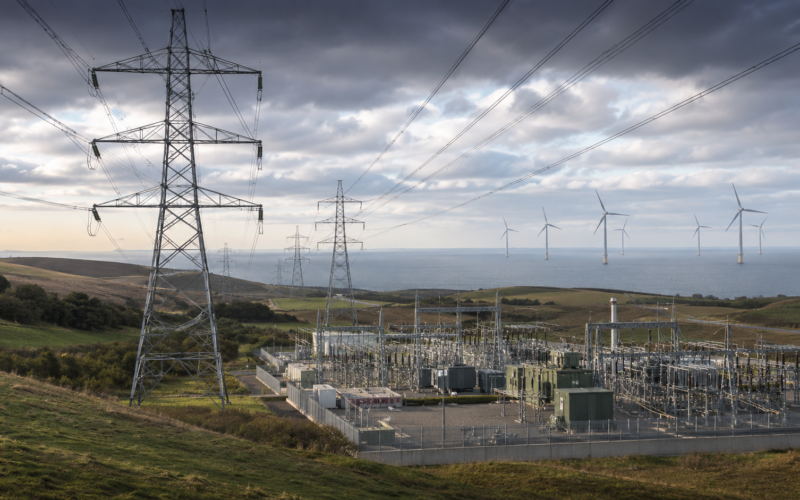
Hydro One Limited (TSX: H), through Hydro One Networks Inc., has filed a leave-to-construct application with the Ontario Energy Board to build the Durham Kawartha Power Line in central and eastern Ontario. The proposed project is an approximately 55-kilometre, double-circuit, 230-kilovolt transmission line between Clarington Transformer Station in the Municipality of Clarington and Dobbin Transformer Station in Peterborough County. Hydro One expects the C$430 million investment to increase transmission transfer capability, support growth across Peterborough, Quinte West and the Ottawa region, and enter service in 2029 if regulatory approvals and construction execution stay on track. The filing matters because electricity demand, grid reliability and regional growth are becoming central investment themes for regulated utilities, while Hydro One stock is trading near C$56.69, below its 52-week high of C$60.46 but still well above its 52-week low of C$47.54. For investors, the issue is whether the Durham Kawartha Power Line can strengthen Hydro One’s regulated rate-base growth story without creating cost, approval or execution pressure.
Why does Hydro One’s Durham Kawartha Power Line application matter for Ontario’s grid growth?
Hydro One’s application is strategically important because transmission investment is becoming one of the most decisive bottlenecks in electricity planning. Ontario’s load growth is being shaped by population expansion, housing development, industrial demand, electrification, data infrastructure and reliability needs across fast-growing corridors. A new line between Clarington and Peterborough County does not sound dramatic at first glance, but transmission projects often decide whether economic growth has enough electrical backbone to actually happen. Wires are not glamorous, but try running growth without them.
The proposed Durham Kawartha Power Line is designed to increase transfer capability in the provincial transmission system. That matters because power demand is not only about total generation. It is also about whether electricity can move to the regions where demand is growing. If the grid cannot move enough power reliably, housing, manufacturing, commercial development and public infrastructure plans become harder to support. Hydro One is therefore positioning this project as a regional growth enabler, not merely an asset replacement programme.
The timing also reflects the broader shift in utility investment priorities. For years, energy transition debates focused heavily on generation, including wind, solar, nuclear, gas and storage. The next phase is more practical and less tweet-friendly: transmission, distribution, substations, grid automation and resilience. Hydro One’s C$430 million proposal sits squarely in that less flashy but increasingly essential layer of the energy transition.
How does the C$430 million project support Hydro One’s regulated rate-base strategy?
For Hydro One, transmission capital spending is not only an infrastructure obligation. It is also a core route to regulated earnings growth. Regulated utilities typically earn returns on approved capital investments that enter the rate base, subject to regulatory oversight and prudence reviews. That makes projects such as the Durham Kawartha Power Line strategically relevant to shareholders because they can support long-term earnings visibility if delivered within approved cost and schedule expectations.
Hydro One already has a sizeable investment profile. The company reported C$39.7 billion in assets as of December 31, 2025, annual revenue of C$9 billion in 2025 and C$3.4 billion of investment in its transmission and distribution networks during 2025. A C$430 million project is not transformational by itself against that asset base, but it is meaningful as part of a wider portfolio of grid investments. Utility value creation often comes through accumulation rather than drama, which is why one line can still matter inside a multi-year capital plan.
The key financial question is whether the project moves smoothly through Ontario Energy Board review and then into construction without major overruns. If approved and executed well, the line can support predictable rate-base expansion and reinforce Hydro One’s defensive earnings profile. If the project faces delays, cost escalation or community friction, investor attention could shift from growth to regulatory risk. In regulated utilities, capital spending is only attractive when the regulator agrees that the spending was necessary, prudent and fairly costed.
Why is the Ontario Energy Board approval process central to the Hydro One investment case?
The Ontario Energy Board process is central because Hydro One cannot simply decide to build major transmission infrastructure and move ahead on its own timetable. The leave-to-construct application under Ontario’s regulatory framework requires the company to provide details on route, design, timing and cost. That process is designed to assess whether the project is needed, whether alternatives have been considered and whether customers will be asked to pay for infrastructure that is justified.
For investors, this makes the approval process both a risk filter and a credibility test. A successful review would validate the need for the Durham Kawartha Power Line and support Hydro One’s broader case that transmission investment is necessary to serve regional demand. A more difficult process could signal concerns around cost, routing, land use, community engagement or project necessity. The market is unlikely to price a dramatic reaction immediately, but approval progress will matter to the long-term capital plan.
The regulatory backdrop also reinforces why Hydro One’s stock behaves differently from many growth companies. Investors are not looking for explosive revenue surprises. They are looking for approved capital programmes, stable earnings, dependable dividends and manageable regulatory outcomes. That is why the Durham Kawartha filing deserves investor attention even though it does not resemble a conventional corporate catalyst. Regulated utility catalysts move slowly, but they can still move valuation.
What role does the First Nation Equity Partnership Model play in the project?
Hydro One’s First Nation Equity Partnership Model is one of the most strategically important features of the Durham Kawartha Power Line proposal. The company said proximate First Nations will have the opportunity to invest in a 50% equity stake in the transmission line component of the project. That structure matters because it moves Indigenous participation beyond consultation and into ownership economics, which can reshape how large infrastructure is planned, governed and accepted.
The model has potential benefits for both Hydro One and participating First Nations. For First Nations, equity participation can create long-term economic exposure to infrastructure located near their communities. For Hydro One, shared ownership can support deeper alignment, reduce social licence risk and improve project legitimacy. It does not remove the need for consultation, environmental review or local engagement, but it changes the conversation from project impact alone to project participation.
The execution risk is that partnership models require careful structuring, transparent economics and sustained trust. Equity participation must be meaningful, financeable and clearly understood by all parties. If the model works, it could strengthen Hydro One’s infrastructure delivery framework and become a useful template for future projects. If it falters, the company could face reputational and project-timing consequences. Infrastructure partnership is easy to announce and much harder to administer over decades.
How should investors read Hydro One stock performance around the transmission filing?
Hydro One stock closed at C$56.69 on June 12, 2026, up 0.73% on the day, with a 52-week range of C$47.54 to C$60.46 and a quoted market value of roughly C$34 billion. That places TSX:H below its March 2026 high but still comfortably above its 52-week low. Recent trading has been fairly range-bound in the mid-C$50s, which suggests investors are treating Hydro One as a stable regulated utility rather than chasing the Durham Kawartha filing as a sudden re-rating trigger.
The stock context is important because Hydro One already trades with the characteristics of a defensive utility: low beta, dividend appeal, regulated earnings and sensitivity to interest rates. The company’s Q1 2026 results supported that profile, with net income attributable to common shareholders rising to C$391 million from C$358 million a year earlier and basic earnings per share increasing to C$0.65 from C$0.60. That gives investors a stronger base from which to evaluate incremental capital projects.
The transmission filing does not radically change near-term earnings. Instead, it reinforces the longer-term argument that Hydro One can keep expanding its regulated asset base as Ontario’s electricity needs grow. The catch is valuation. When a utility already trades near the upper part of its yearly range, investors become more sensitive to interest rates, regulatory decisions and capital spending discipline. The Durham Kawartha Power Line is supportive for the story, but not a free pass for the multiple.
What execution risks could affect the Durham Kawartha Power Line timeline?
The first execution risk is regulatory timing. Hydro One expects the line to enter service in 2029, but that assumes approval, design, procurement, construction and commissioning proceed without major disruption. Transmission projects can face delays from routing debates, environmental studies, permitting requirements, land access, procurement constraints and construction complexity. A 55-kilometre line may be modest compared with mega-projects, but grid infrastructure has a talent for making simple maps look optimistic.
The second risk is cost inflation. Utility infrastructure projects require materials, skilled labour, specialised equipment and long lead-time components. Inflation in steel, transformers, conductors, labour or civil works can pressure budgets if costs move faster than estimates. Hydro One’s C$430 million figure gives investors a reference point, but the real test will be whether the final cost remains aligned with the approved scope and regulatory expectations.
The third risk is customer affordability. Transmission investment supports reliability and growth, but regulated spending ultimately flows into the broader rate-setting framework. Ontario needs grid capacity, yet ratepayers and regulators remain sensitive to the pace and scale of utility investment. Hydro One must therefore balance infrastructure urgency with cost discipline. The company’s strongest argument will be that the project prevents bigger reliability and growth constraints later.
Why does the Durham Kawartha project signal a wider shift in Canadian utility infrastructure?
The Durham Kawartha Power Line is part of a broader Canadian utility trend in which transmission is becoming a strategic national and provincial priority. Electricity systems are being asked to do more at the same time: connect new demand, withstand severe weather, accommodate cleaner generation, enable electrification and maintain affordability. That combination creates a multi-decade need for capital investment across wires, substations and grid controls.
For Hydro One, this creates a favourable long-term demand backdrop. Ontario’s electricity system needs infrastructure that can serve residential growth, commercial development and industrial activity while improving resilience. Transmission expansion can also help unlock regional capacity that supports other policy goals, including housing, manufacturing and clean-energy adoption. In that sense, the Durham Kawartha Power Line is not just an electrical asset. It is economic infrastructure.
The second-order implication is that utilities with credible execution records may become more important in public-market portfolios. Investors often think of utilities as sleepy dividend names, but grid investment is becoming a growth story wrapped in a regulated wrapper. The wrapper is still boring, yes. But the contents are getting more interesting.
What should investors watch next as Hydro One advances the Ontario power line project?
Investors should first watch the Ontario Energy Board review process. Approval timing, cost treatment and any conditions attached to the decision will shape the project’s investment value. A clean approval would reinforce Hydro One’s capital plan, while a delayed or heavily conditioned approval could increase uncertainty.
The second watch point is Indigenous participation. If proximate First Nations take up the 50% equity opportunity in the transmission component, the project could become a more visible example of shared infrastructure ownership in Ontario. That would strengthen Hydro One’s partnership narrative and may improve confidence in future project development.
The third watch point is capital spending discipline across Hydro One’s wider investment portfolio. The company already invests billions annually in transmission and distribution networks. The Durham Kawartha Power Line will matter most if it fits into a coherent, regulator-supported capital programme that sustains earnings growth without creating affordability backlash. Utility investors do not need fireworks. They need the wires to work, the regulator to agree and the balance sheet to stay calm.
What are the key takeaways from Hydro One’s Durham Kawartha Power Line proposal for TSX:H investors?
- Hydro One’s Durham Kawartha Power Line filing is a regulated infrastructure catalyst that supports the company’s long-term rate-base growth story rather than a short-term earnings event.
- The proposed C$430 million investment would build a 55-kilometre, 230-kilovolt double-circuit transmission line between Clarington and Peterborough County.
- The project is designed to improve transfer capability and support electricity demand growth across Peterborough, Quinte West and the Ottawa region.
- The planned 2029 in-service date creates a clear execution timeline, but approval, routing, procurement and construction risks remain important.
- Hydro One’s First Nation Equity Partnership Model could allow proximate First Nations to invest in a 50% equity stake in the transmission line component.
- TSX:H is trading below its 52-week high but remains well above its 52-week low, showing investor confidence in the defensive utility profile while leaving valuation sensitivity intact.
- Hydro One’s Q1 2026 earnings growth strengthens the investment backdrop, but future upside will depend on regulated capital execution and approval outcomes.
- The Ontario Energy Board process is central because the project’s financial value depends on regulatory approval and cost recognition.
- The proposal reinforces the wider Canadian shift toward grid modernisation as electrification, regional growth and reliability needs put pressure on transmission systems.
- The main risks are regulatory delays, cost inflation, route or community friction, ratepayer affordability pressure and the challenge of delivering infrastructure on schedule.
Discover more from Business-News-Today.com
Subscribe to get the latest posts sent to your email.