



The United States-Israel-Iran conflict has turned the Strait of Hormuz from a familiar geopolitical risk into an active supply-chain redesign problem for the global oil, gas and petrochemical markets. Gulf exporters, Asian refiners, shipping companies and commodity traders are no longer treating the disruption as a temporary pricing event, but as a structural test of how energy flows can move when the world’s most important oil chokepoint becomes unreliable. ADNOC’s use of an alternative Oman-linked route for naphtha exports and Gulf importers’ testing of Red Sea and Saudi land corridors show that the market is already adapting around physical constraints rather than waiting for diplomacy to tidy the map. The strategic question for energy executives is no longer whether the Strait of Hormuz matters, because it obviously does, but how much of the old Gulf-to-Asia logistics model can survive if insurers, shipowners and buyers price the waterway as a recurring conflict zone.
Why is the Strait of Hormuz disruption becoming a supply-chain problem rather than only an oil-price shock?
The Strait of Hormuz disruption matters because it has moved from headline risk into operational reality. Oil markets are used to adding a geopolitical premium when tensions rise in the Gulf, but the current conflict has forced companies to rethink cargo scheduling, ship availability, storage placement, insurance coverage and even the commercial attractiveness of certain refinery feedstocks. That is a deeper problem than a simple Brent crude spike because it touches the physical architecture of trade.
The International Energy Agency’s May 2026 oil market update shows why the issue is bigger than sentiment. The agency estimated that output from Gulf countries affected by the Strait of Hormuz disruption was far below pre-conflict levels, while cumulative supply losses from Gulf producers had already exceeded 1 billion barrels. Even if flows gradually resume, the market is dealing with damaged confidence, disrupted shipping patterns and a new risk premium for any cargo that must pass through the chokepoint.
This matters most for Asia because the Gulf has historically supplied a large share of crude, condensate, liquefied natural gas and petrochemical feedstocks to Asian economies. China, India, Japan, South Korea and Southeast Asian importers do not simply need barrels. They need predictable barrels delivered through reliable routes at financeable costs. The Strait of Hormuz problem therefore becomes a refinery-margin problem, an industrial-feedstock problem and a macroeconomic stability problem at the same time.
How are Gulf exporters using Oman and Saudi Arabia to bypass chokepoint exposure?
The clearest signal of supply-chain adaptation is ADNOC’s reported resumption of naphtha exports using an alternative route through Oman’s Sohar port. Naphtha is not the loudest commodity in the energy market, but it is critical for petrochemicals, plastics and industrial value chains. When a major Gulf producer adjusts routing for a feedstock cargo, it tells the market that logistics flexibility is becoming as valuable as production capacity.
The Sohar workaround is strategically important because Oman sits outside the Strait of Hormuz chokepoint exposure that affects many Gulf routes. By using ship-to-ship transfers and alternative port handling, exporters can keep some cargo moving even when direct flows through the strait are constrained. The volumes may not fully replace normal trade, but they create a proof of concept for rerouting high-value cargoes when the main passage is unsafe or commercially unattractive.
Saudi Arabia’s NEOM route tells a related story on the import side. Gulf businesses have started testing Red Sea and land-linked corridors to move goods into the region while traditional maritime routes are disrupted. These alternatives are more expensive and cannot yet replace the efficiency of the old system, but they show that the Gulf logistics map is being stress-tested in real time. The old assumption was that Hormuz risk would flare, fade and return to normal. The new assumption is that companies need backup routes before the next flare-up.
Why does the conflict expose a deeper vulnerability in Asian refining and petrochemical supply chains?
Asia’s refining and petrochemical system is vulnerable because it was built around efficiency, scale and Gulf connectivity. The model worked well when sea lanes were reliable and energy trade could be priced mainly around crude benchmarks, freight rates and refinery margins. It becomes much less comfortable when one chokepoint can disrupt crude oil, condensate, liquefied petroleum gas, naphtha and liquefied natural gas at the same time.
Naphtha illustrates the problem neatly. Asian petrochemical producers rely heavily on naphtha as a feedstock, and any disruption in Middle Eastern supply can ripple through olefins, aromatics, plastics and downstream manufacturing. The reported fall in Asian naphtha prices after ADNOC resumed alternative exports does not mean the supply-chain risk has disappeared. It shows how quickly localized cargo movements can swing regional pricing when the market is already nervous.
The bigger implication is that Asian refiners and petrochemical companies may have to diversify procurement faster than previously planned. That could mean more Atlantic Basin crude purchases, more U.S. liquefied petroleum gas, more flexible naphtha sourcing, more inventory buffers and more long-term contracts with suppliers outside the Gulf. None of that comes free. Longer voyages, higher freight costs and more complex blending strategies can all eat into margins. Energy security always looks noble in strategy decks. In procurement meetings, it usually arrives as a higher invoice.
How could the oil tanker market become the hidden bottleneck in the new energy-security map?
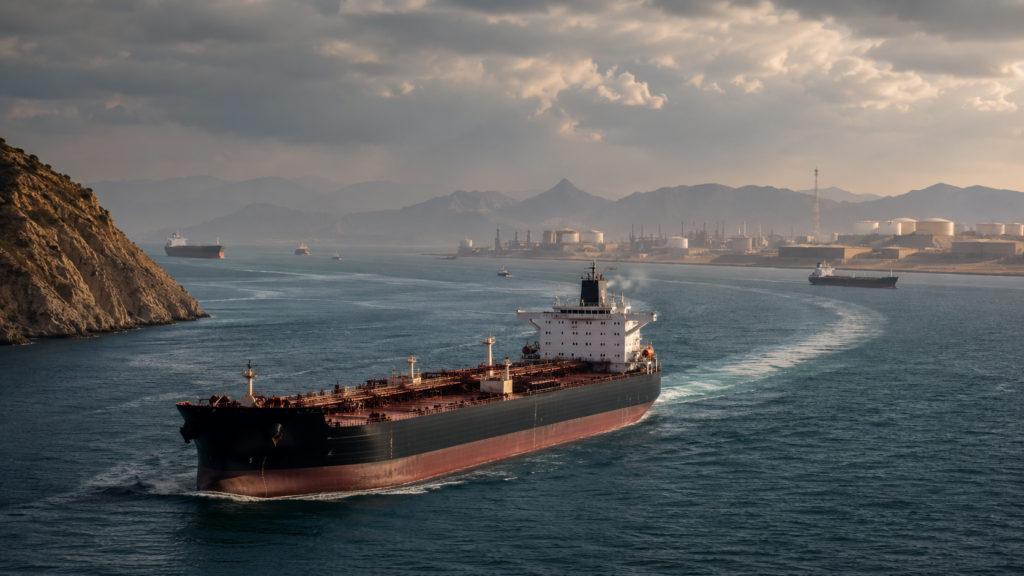
The tanker market is emerging as one of the hidden constraints because ships are not infinitely flexible assets. Very Large Crude Carriers, product tankers and liquefied natural gas carriers operate on schedules, charter terms and safety assumptions. When a high-risk corridor becomes unreliable, shipowners may demand higher rates, insurers may increase premiums and charterers may avoid certain routes unless the reward is compelling.
Even if the Strait of Hormuz reopens more fully, confidence may not return at the same speed as vessel traffic. Shipowners will have to assess whether the risk of detention, attack, mine threats, military escalation or sudden closure justifies sending high-value vessels into the region. That creates a lag between political announcements and commercial normalization. A strait can be declared open before the market believes it is safely open.
This is where supply chains can remain distorted after the immediate conflict eases. If tanker availability is redirected toward safer routes, Gulf exporters may face delays while Atlantic Basin producers gain temporary bargaining power. Refineries in Asia may pay more for delivered cargoes even when headline crude prices soften. The tanker market, in that sense, becomes the oil market’s nervous system. When it refuses to relax, the rest of the body keeps twitching.
What does the crisis mean for Gulf producers trying to protect market share in Asia?
Gulf producers face a difficult strategic balance. They remain among the world’s most important low-cost oil and gas suppliers, but buyers are now being reminded that low production cost does not automatically mean low delivered risk. The Strait of Hormuz crisis gives Asian customers a reason to reassess concentration risk, even when Gulf barrels remain commercially attractive.
For ADNOC, Saudi Aramco, QatarEnergy and other regional players, the next phase is likely to involve greater emphasis on route optionality, storage outside chokepoints, flexible loading points and customer assurance. Exporters that can prove they have credible alternatives may retain more buyer confidence. Those that cannot may face wider discounts, longer negotiations or more cautious term contracting.
The competitive implication extends beyond the Gulf. U.S. crude exporters, Brazilian producers, Guyana-linked suppliers, West African producers and Australian liquefied natural gas projects may all benefit from buyers seeking diversification. That does not mean the Gulf loses its central role. The resource base is too large and too cost-competitive. But the crisis reduces the comfort premium that Gulf suppliers historically enjoyed in Asian energy planning.
Why could the conflict accelerate investment in storage, pipelines and non-Hormuz export infrastructure?
The current disruption is likely to strengthen the case for infrastructure that reduces chokepoint dependence. Pipelines that bypass the Strait of Hormuz, storage hubs outside conflict-prone areas, Red Sea export facilities, Omani port capacity and emergency stockpiles are no longer boring resilience assets. They are becoming strategic insurance.
This is especially relevant for governments and national oil companies. The cost of spare infrastructure is often hard to justify in normal markets because redundancy looks inefficient when everything is calm. The problem is that calm is not a permanent operating condition. Once a chokepoint disruption forces emergency rerouting, expensive redundancy starts to look like basic hygiene.
Private investors may also see opportunities in terminals, floating storage, refined-products logistics and regional distribution corridors. However, the economics will depend on whether customers are willing to pay for resilience after the immediate crisis fades. Energy markets have a bad habit of rediscovering risk, paying for protection and then forgetting the lesson when prices fall. This time, the scale of the disruption may make the memory last longer.
How should policymakers and energy executives read the new oil supply-chain risk?
Policymakers should read the crisis as proof that energy security is not only about production volume. It is about transport routes, inventory depth, spare refining capacity, shipping insurance, port infrastructure and diplomatic risk. A country can have enough theoretical supply and still face real disruption if the route from producer to consumer becomes unstable.
Energy executives should treat the conflict as a planning shock. Procurement teams need more diversified supplier books. Refiners need greater feedstock flexibility. Petrochemical producers need contingency sourcing for naphtha, liquefied petroleum gas and condensate. Shipping desks need scenario planning that assumes partial reopening, intermittent closure and prolonged insurance dislocation rather than a clean return to normal.
The investment signal is clear. Companies that can offer flexible supply, alternative routing, storage optionality and contract reliability will have a stronger commercial position in the next energy cycle. The Strait of Hormuz will remain vital, but the market is beginning to price the cost of depending on it too heavily. That is the real shift. The crisis is not just moving oil. It is moving strategy.
Key takeaways on how the United States-Israel-Iran conflict is reshaping oil and gas supply chains
- The United States-Israel-Iran conflict has turned the Strait of Hormuz from a geopolitical risk premium into a physical supply-chain constraint for oil, gas and petrochemical markets.
- ADNOC’s use of an alternative Oman-linked export route for naphtha shows that Gulf producers are already testing practical workarounds rather than waiting for full normalization.
- Asian refiners and petrochemical producers are among the most exposed buyers because Gulf crude, condensate, naphtha, liquefied petroleum gas and liquefied natural gas remain deeply embedded in regional supply chains.
- The International Energy Agency’s estimate of more than 1 billion barrels in cumulative Gulf supply losses underlines why the disruption is being treated as a structural market shock.
- Tanker availability, insurance pricing and shipowner confidence may remain bottlenecks even if the Strait of Hormuz gradually reopens to more traffic.
- Gulf producers still have cost and scale advantages, but buyers are likely to demand stronger route optionality, storage support and delivery assurance in future contracts.
- Alternative corridors through Oman, Saudi Arabia and the Red Sea may not replace the Strait of Hormuz, but they can become commercially important pressure valves during crises.
- The disruption could strengthen investment cases for bypass pipelines, non-Hormuz terminals, floating storage, regional stockpiles and flexible refined-products logistics.
- U.S., Brazilian, Guyanese, West African and Australian suppliers may gain negotiating leverage as Asian buyers seek to reduce overdependence on Gulf-linked shipping routes.
- The longer-term lesson for energy executives is that supply security now depends as much on logistics resilience as on access to barrels.
Discover more from Business-News-Today.com
Subscribe to get the latest posts sent to your email.