



Adnoc Gas Plc (ADX: ADNOCGAS), the integrated gas processing and infrastructure operator based in Abu Dhabi, is positioning itself at the center of the UAE’s evolving energy strategy by aligning its $5 billion Rich Gas Development (RGD) program with the country’s push toward downstream industrialization. While the RGD program is designed to expand throughput across major gas facilities, its true impact may be in how it facilitates the flow of natural gas liquids (NGLs) and ethane—critical feedstocks that underpin the nation’s methanol, ammonia, and polymer ambitions.
Following the launch of the TA’ZIZ industrial complex in Ruwais and multiple joint ventures with global chemical majors, Adnoc Gas is emerging as the primary upstream enabler of the UAE’s gas-to-chemicals future. Institutional investors increasingly view the Emirati gas processor not only as a reliable energy exporter but also as a critical infrastructure layer supporting vertical industrial integration.
What gas-to-chemicals projects are emerging in Ruwais and how are they connected to Adnoc Gas?
At the heart of the UAE’s gas-to-chemicals strategy is the Ruwais Industrial City, home to TA’ZIZ, a joint venture between Abu Dhabi National Oil Company and ADQ. In February 2025, TA’ZIZ awarded a $1.7 billion engineering, procurement, and construction (EPC) contract to Samsung E&A for the country’s first methanol plant, designed to produce 1.8 million tonnes per annum. Nearby, Mitsui & Co. is developing a blue ammonia facility with planned capacity of 1 million tonnes annually, supported by carbon capture and storage integration.
Adnoc Gas is the designated feedstock supplier for these and future projects, channeling rich gas, ethane, and associated NGLs through its expanded pipeline and fractionation network. The RGD phase one upgrades at Habshan, Asab, Buhasa, and Das Island are structured to ensure continuous flow of high-purity gas to Ruwais, while unlocking new production from underutilized rich gas reservoirs.
How does phase one of the rich gas development program enhance feedstock supply to downstream chemical plants?
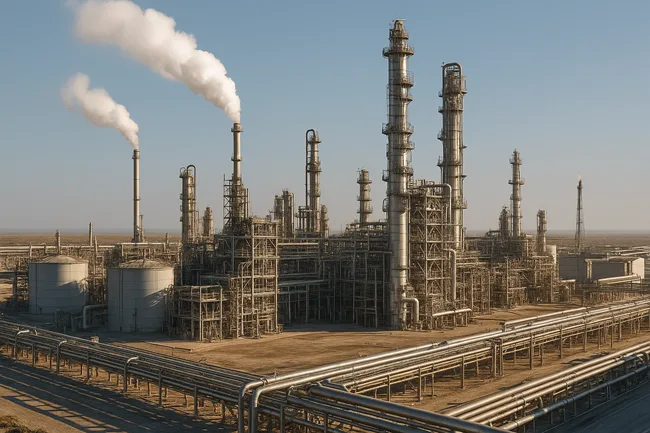
The $5 billion in EPCM contracts awarded under the first phase of the Rich Gas Development program includes major processing expansions at key Adnoc Gas facilities. Wood Group was awarded the largest tranche—worth $2.8 billion—to upgrade Habshan, a critical node that connects to Ruwais via pipeline infrastructure. Additional contracts at Das Island, Asab, and Buhasa were awarded to Petrofac and Kent Plc, focused on boosting ethane and condensate extraction.
These facilities will deliver the volumes required to operate new methanol and ammonia facilities under development. The enhancements target a 25–30 percent increase in gas handling capacity by 2028, enabling higher availability of ethylene, hydrogen, and CO₂-derived intermediates. This upgrade cycle aligns with the timelines of Borouge 4, TA’ZIZ methanol, and blue ammonia projects, ensuring operational continuity.
Why are institutional investors showing growing interest in integrated gas-to-chemicals models?
Institutional investors tracking Adnoc Gas have expressed increasing confidence in the company’s strategic direction. They cite the synergies between upstream gas processing and downstream chemical production as a de-risked revenue model. Rich gas streams offer diversification benefits through higher-margin derivatives such as ethylene, methanol, and ammonia, with reduced exposure to volatile LNG spot pricing.
Analysts believe this vertically aligned model improves asset productivity, reduces feedstock costs for downstream ventures, and strengthens national energy security. The entry of global partners—such as Shell, TotalEnergies, BP, and Mitsui—into TA’ZIZ and Ruwais LNG reinforces external confidence in the UAE’s industrial-scale integration model.
How does Adnoc Gas fit into the UAE’s broader downstream diversification strategy?
The UAE’s strategic shift toward gas-to-chemicals dates back to its 2018 Downstream Investment Forum, where Abu Dhabi first articulated a vision to triple petrochemical output by 2025. The Ruwais ecosystem, powered by Adnoc Gas feedstock, now includes world-scale assets such as Borouge 3 and the upcoming Borouge 4, alongside TA’ZIZ.
Borouge 4, currently under construction, is expected to expand total polymer output capacity to 6.4 million tonnes annually by 2026. The facility will rely heavily on ethane and propane streams enabled by upstream rich gas upgrades. Blue ammonia, low-carbon methanol, and hydrogen-ready LNG are being developed simultaneously to ensure the UAE has a diversified portfolio of chemical and energy products aligned with global decarbonization trends.
What role will Ruwais LNG play in enabling parallel exports alongside downstream expansion?
Adnoc Gas is also spearheading the development of Ruwais LNG, a 9.6 mtpa liquefied natural gas export terminal powered entirely by clean electricity. Once operational by late 2028, the facility will form the export backbone of the UAE’s gas-to-chemicals cluster, complementing domestic utilization with flexible volumes for Asia and Europe.
The company’s acquisition of a 60 percent stake in the project signals its intent to dominate midstream and downstream gas monetization channels. Institutional sentiment suggests that linking LNG, ammonia, and methanol capabilities within one industrial corridor could create one of the world’s most tightly integrated gas ecosystems.
What financial impact could gas-to-chemicals integration have on Adnoc Gas’ performance?
Analysts estimate that integrated feedstock supply to TA’ZIZ, Borouge, and Ruwais LNG could lift Adnoc Gas’ EBITDA margins by 150–200 basis points from 2027 onward. The methanol and ammonia plants, with projected commissioning in 2027–2028, are expected to contribute stable cash flows, benefiting from off-take agreements with export markets in Asia.
CapEx across RGD phase one and downstream tie-ins is estimated at over $7 billion between 2025 and 2028. Adnoc Gas anticipates that these investments will yield margin-accretive returns compared to standalone LNG plays, and provide insulation from cyclical commodity pricing trends due to diversified product exposure.
What are the key execution risks as Adnoc Gas expands into downstream infrastructure enablement?
Execution risk remains a concern, particularly as multiple projects come online within a narrow two-year window. Adnoc Gas must synchronize feedstock readiness with methanol, ammonia, and LNG start-ups to avoid processing gaps. Coordinated commissioning across Habshan, Ruwais LNG, and TA’ZIZ is critical to realising full integration value.
Global price fluctuations in methanol, urea, and polymer markets could also impact downstream profitability. However, long-term supply agreements, clean energy positioning, and access to Abu Dhabi’s port logistics ecosystem mitigate many of these operational risks.
How significant is the UAE’s gas-to-chemicals strategy for its long-term energy transition and global energy competitiveness?
The United Arab Emirates’ gas-to-chemicals strategy represents one of the most consequential shifts in its national energy policy since the first wave of oil production. This strategic pivot is not simply about diversifying revenue streams—it reflects a foundational recalibration toward low-carbon, high-value industrial growth. By leveraging rich gas reserves, particularly those with high concentrations of ethane, propane, and butane, the UAE aims to move up the value chain—from being a supplier of raw energy to a manufacturer of globally traded chemical commodities.
Adnoc Gas is at the center of this transition. As the country’s integrated gas infrastructure operator, it has the mandate and capacity to convert NGL-rich gas streams into sustainable industrial feedstock. This includes the steady supply of ethylene precursors for Borouge’s polymer manufacturing units, hydrogen and nitrogen streams for blue ammonia synthesis, and methanol intermediates that support clean fuel blending and plastics production. These are not side businesses—they are positioned as core pillars of the UAE’s Net Zero by 2050 pathway, as well as its industrial strategy under Operation 300bn and the Abu Dhabi Industrial Strategy.
The significance of this transition also lies in its ability to reduce carbon intensity across export portfolios. By embedding carbon capture, electrified LNG trains, and low-emissions ammonia pathways into every stage of the Ruwais and TA’ZIZ ecosystem, the UAE is engineering a competitive advantage in future-facing commodity markets. Buyers in Asia and Europe are increasingly prioritizing carbon-neutrality in procurement. The UAE’s ability to offer low-carbon LNG, blue ammonia, and clean methanol enhances its relevance in global energy trade beyond the traditional hydrocarbons narrative.
If construction and commissioning schedules remain on track through 2028, the Ruwais corridor could rank among the world’s most integrated industrial gas value chains—offering LNG, ammonia, methanol, urea, polyethylene, polypropylene, and associated derivatives from a single, export-optimized zone. This would not only elevate Adnoc Gas’ financial profile through margin-accretive, demand-stable revenue streams but also solidify the UAE’s role as a global player in energy transition infrastructure.
In this context, the gas-to-chemicals strategy is not merely significant—it is foundational. It anchors the UAE’s broader ambition to lead in both traditional and emerging energy systems, ensuring that its resource base remains monetizable, its industries globally competitive, and its economy structurally resilient to the volatility of fossil fuel markets. For Adnoc Gas, it sets a course toward long-term earnings durability, platform scalability, and global strategic relevance.
Discover more from Business-News-Today.com
Subscribe to get the latest posts sent to your email.