



GreenPower Motor Company Inc. (NASDAQ: GP) has announced a major milestone in its push to scale production of all-electric school buses. On November 14, 2025, the Los Angeles-based commercial electric vehicle manufacturer confirmed the activation of a financing facility of up to $18 million aimed at accelerating deliveries from a record $50 million backlog. The new facility, structured in tranches of $2 million, is designed to tightly align capital deployment with production timing, reducing working capital strain and expediting revenue recognition.
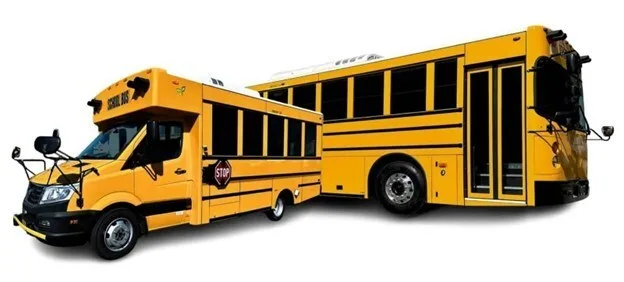
The production boost specifically targets GreenPower’s flagship school bus lineup, including the Type A Nano BEAST and Type D BEAST models. According to the company, over 130 bus chassis have already been pre-built, including 100 Nano BEAST and 30 BEAST chassis, positioning GreenPower for an aggressive push into the U.S. school transportation market at a time when federal and state incentives are reshaping fleet procurement priorities.
This development comes just days before GreenPower Motor Company Inc. delists from the TSX Venture Exchange (TSXV), a strategic move the company says is focused on simplifying its operational footprint and consolidating investor engagement under its Nasdaq listing.
What will GreenPower’s $18 million facility unlock for school bus delivery and cash flow?
The $18 million facility is structured to be drawn in tranches, each capped at $2 million, allowing GreenPower Motor Company Inc. to align funding directly with vehicle production and delivery cycles. Chief Executive Officer Fraser Atkinson noted that this setup gives the company operational leverage at a time when it is sitting on more than $50 million in school bus purchase orders. The pre-production of 130 bus chassis was a deliberate pre-financing move designed to shorten lead times and streamline backlog conversion.
The goal is clear: accelerate revenue recognition and improve gross margins while building toward sustained positive operating cash flow. GreenPower Motor Company Inc. is one of the few fully electric OEMs offering both Class 4 Type A and Class 8 Type D school buses, which positions it to serve a broader segment of public and private school districts as they transition to zero-emission fleets.
Analysts tracking electric vehicle infrastructure and adoption across the education sector believe the production-first strategy demonstrates a tactical pivot toward execution. With delivery timelines collapsing due to pre-built inventory and funding alignment, the company is now entering a phase where financial outcomes are expected to materialize faster than in previous cycles.
Why is GreenPower exiting the TSX Venture Exchange, and how will it impact investors?
GreenPower Motor Company Inc. is voluntarily delisting from the TSX Venture Exchange effective November 14, 2025. The decision, according to the company’s prior announcement on November 5, is grounded in three key rationales: persistently low trading volumes on the Canadian exchange, high regulatory and compliance costs, and a broader strategy to focus on markets delivering stronger shareholder value.
During the nine months ended September 30, 2025, less than 2 percent of GreenPower Motor Company Inc.’s trading volume occurred on the TSXV. In contrast, its Nasdaq activity has consistently dominated shareholder engagement and liquidity. By removing the dual listing, the company expects to redirect resources toward growth programs, financing optimization, and investor communications in its primary U.S. market.
The company confirmed that the delisting would not affect share ownership or shareholder rights. GreenPower Motor Company Inc. will continue to operate as a Canadian reporting issuer, ensuring transparency and compliance with Canadian securities regulations. For retail and institutional shareholders still holding positions in Canada, the company has recommended reaching out to brokers or financial advisors to manage any trading adjustments following the delisting.
Industry watchers view the TSXV exit as a realistic step that aligns with GreenPower’s growing U.S. operational and financial center of gravity. The firm’s headquarters, market base, incentive program targets, and financing mechanisms are now overwhelmingly American, reinforcing the logic behind the strategic consolidation.
How is GreenPower positioned within incentive-backed school and commercial EV adoption?
GreenPower Motor Company Inc. is well positioned to benefit from California’s reopened Innovative Small E-Fleet (ISEF) program. On October 6, 2025, the company confirmed that its EV Star vehicle lineup qualified for up to $130,000 in incentive support under the ISEF Set-Aside. The funding, part of the California Hybrid and Zero-Emission Truck and Bus Voucher Incentive Project (HVIP), is specifically designed to help small fleet operators transition to zero-emission vehicles.
The eligible GreenPower products include the EV Star Passenger Van, EV Star ReeferX, EV Star Mobility Plus, EV Star Stakebed Truck, and EV Star Utility Truck. These vehicles qualify for 90 percent of their cost to be covered under the program, with a focus on operators managing fewer than 20 vehicles and generating less than $15 million in annual revenue.
Nahui Olin, Vice President of Business Development and Commercial Operations at GreenPower Motor Company Inc., stated that multiple product configurations are already available for immediate delivery. The EV Star platform supports ADA-compliant seating options, refrigerated transport variants, utility-focused upfits, and cab-and-chassis derivatives for custom builds.
The urgency to act is not lost on the firm. GreenPower Motor Company Inc. is actively encouraging eligible buyers to prepare applications, as the ISEF program’s funds are typically exhausted within days of opening. The company is offering technical and advisory support to help customers meet submission requirements and secure available funding before allocations run out.
The company’s positioning within the ISEF framework is particularly important in today’s incentive-driven fleet transition landscape, where speed to delivery and funding alignment often determine competitive advantage. Analysts believe that GreenPower’s broad commercial lineup, coupled with its ability to deliver within accelerated timelines, could give it a meaningful edge over peers focused on narrower vehicle categories.
How does GreenPower’s capital strategy align with its operational goals?
In parallel with its production financing facility, GreenPower Motor Company Inc. has also utilized at-the-market equity offerings to shore up liquidity. As part of a previously disclosed Sales Agreement with Roth Capital Partners, the company raised approximately $357,132 in gross proceeds during the quarter ended September 30, 2025. This raise followed the issuance of 77,202 shares on Nasdaq at an average price of $4.63 per share, adjusted for a 10-for-1 share consolidation that took effect on September 8, 2025.
After deducting a $10,714 commission to the sales agent, GreenPower netted $346,418 in capital. While modest in size, this equity raise underscores the company’s cautious but proactive approach to funding, balancing strategic financing with shareholder dilution.
The current financing mix, including both equity and production-linked credit lines, suggests that GreenPower Motor Company Inc. is focused on managing its capital stack to support near-term growth without overleveraging. Observers expect the company to continue supplementing working capital through targeted equity issuance and programmatic access to debt, particularly if demand from school districts continues to rise amid new infrastructure allocations from state and federal programs.
What lies ahead as GreenPower navigates the next phase of execution?
Looking ahead, institutional interest in GreenPower Motor Company Inc. is likely to concentrate around key performance indicators in Q4 2025 and Q1 2026. These include margin expansion, backlog conversion velocity, and cash flow stabilization. Given the company’s unique positioning in offering both Class 4 and Class 8 school buses and a full suite of commercial EVs, investors will be watching closely to see whether execution matches ambition.
The company’s ability to convert its $50 million school bus backlog into on-time deliveries under the new $18 million facility will serve as a litmus test for operational credibility. Equally important will be its traction within ISEF-funded procurement cycles, especially as competitors like Lion Electric Company, Blue Bird Corporation, and Thomas Built Buses ramp up their own activities.
Institutional sentiment currently remains neutral-to-positive, with some upside optimism contingent on visible delivery metrics and gross margin improvement in upcoming earnings cycles. Shareholder forums and analyst coverage continue to flag GreenPower’s streamlined U.S. focus and OEM capabilities as differentiators, even as the capital markets environment for small-to-mid-sized EV manufacturers remains volatile.
GreenPower Motor Company Inc.’s roadmap now appears tightly interwoven with execution speed, incentive alignment, and simplified market focus. The next two quarters will likely define whether its shift from backlog to bottom line gains real traction.
Key takeaways: What GreenPower’s latest announcements signal for investors and the electric school bus market
- GreenPower Motor Company Inc. secured up to 18 million dollars in new financing to accelerate production and convert more than 50 million dollars in contracted school bus orders.
- More than 130 school bus chassis, including 100 Nano BEAST and 30 BEAST units, have already been pre-built to shorten delivery timelines and support faster revenue recognition.
- The company is voluntarily delisting from the TSX Venture Exchange to reduce regulatory costs, streamline operations, and concentrate investor activity on its Nasdaq listing.
- GreenPower’s EV Star lineup qualifies for up to 130,000 dollars in incentives through California’s reopened Innovative Small E-Fleet program, creating strong demand potential among small fleet operators.
- A recent at-the-market equity raise generated more than 346,000 dollars in net proceeds to support working capital and operational scaling.
- Analysts remain focused on backlog conversion, margin improvement, and cash flow trends as GreenPower navigates a pivotal execution phase through late 2025 and early 2026.
Discover more from Business-News-Today.com
Subscribe to get the latest posts sent to your email.