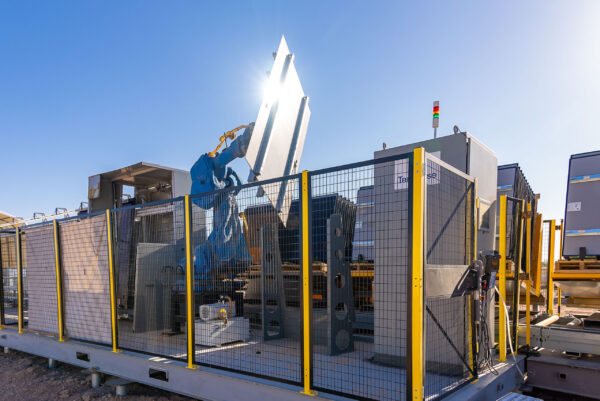
GE Vernova Inc. (NYSE: GEV), the Cambridge, Massachusetts-based power equipment and electrification group, has disclosed an agreement to supply seven 4.2 MW wind turbines to Eurus Energy Holdings Corporation for the 29.4 MW Hiyamizutouge Wind Farm in Japan’s Aomori Prefecture. The package includes two years of service with an option for another two years and uses GE Vernova’s 4 MW platform, which has accumulated more than two million operating hours.
The September 15 announcement does not represent a new third-quarter booking. GE Vernova specifically said the order had already been booked during the second quarter of 2026, an important distinction for investors attempting to reconcile press-release activity with reported orders and backlog. The company said its technology accounts for around 25% of installed onshore wind capacity in Japan, where the government is targeting a 36% to 38% renewable share of electricity generation by 2030.
Why is the 29.4 MW Japanese wind project more strategically interesting than its size suggests?
By global wind-industry standards, seven turbines and 29.4 MW constitute a relatively modest project. GE Vernova said it secured 339 MW of Japanese orders during 2025 alone, meaning Hiyamizutouge represents less than 9% of that earlier annual volume.
The strategic relevance lies in repeatability. GE Vernova has emphasised a “workhorse” approach built around more standardised turbine platforms rather than excessive product variation, an attempt to improve reliability and execution after years when the wind industry struggled with inflation, warranty costs and difficult project economics. The 4.2 MW platform’s two million operating hours provide a sizeable field base from which reliability can be assessed.
Japan also presents demanding operating conditions and relatively constrained land availability, making established equipment performance important for project developers. Continued orders from existing customers such as Eurus Energy can therefore matter more strategically than the absolute megawatt figure attached to one wind farm.
Is GE Vernova’s Asia story becoming broader than renewable energy?
Yes. On September 15, Reuters separately reported that GE Vernova and Thailand-based B.Grimm Power had signed two agreements spanning gas generation and long-term servicing. One covers a gas turbine and generator for a new power plant in Perlis, Malaysia, where equipment is scheduled for delivery in 2027 and commercial operation is targeted for the fourth quarter of 2029. B.Grimm linked the project partly to rising electricity demand from data-centre development.
A second agreement provides 14 years of services for five GE Vernova LM6000 gas-turbine packages at B.Grimm Power’s Bangkadi 1 and Bangkadi 2 facilities in Thailand. That long service duration matters because equipment sales can generate recurring maintenance, parts and upgrade revenue long after the initial turbine is delivered.
Together, the Japanese wind announcement and Southeast Asian gas agreements illustrate why GE Vernova is difficult to value as a single-theme renewable-energy stock. The group participates in wind, conventional generation, grid equipment, electrification and long-cycle services, allowing it to benefit both from decarbonisation investment and from rising electricity demand that still requires dispatchable generation.
How strong were GE Vernova’s underlying second-quarter numbers?
GE Vernova reported $24.2 billion of second-quarter orders, an organic increase of 88%, while backlog expanded by $13 billion sequentially. Revenue increased 22% to $11.1 billion, adjusted EBITDA reached $1.2 billion and adjusted EBITDA margin expanded to 11.3%, up 340 basis points organically.
Free cash flow reached $5.1 billion during the quarter, more than the company generated during all of 2025, while cash stood at $13.1 billion. GE Vernova consequently raised its 2026 revenue and free-cash-flow expectations while maintaining a 12% to 14% adjusted EBITDA-margin target.
Power and Electrification led the growth, reinforcing an important shift in the GE Vernova investment narrative. Wind remains strategically important, but investors increasingly value the company for exposure to constrained power-generation equipment, grid infrastructure and the enormous electricity requirements associated with data centres and artificial intelligence.
Why did GE Vernova shares fall 8.6% despite those fundamentals?
GE Vernova shares closed at approximately $874.66 on September 14, falling 8.6% in one session. The decline came amid a broader selloff in artificial-intelligence-linked infrastructure stocks and a new Sell rating from GLJ Research analyst Gordon Johnson, who placed a $470 price target on the stock.
The bearish argument centres on valuation. GLJ estimated GE Vernova was trading around 26 times projected 2027 EBITDA, roughly double the multiple cited for the S&P 500, while forecasting 2027 EBITDA of $7.4 billion versus a consensus estimate around $9.5 billion. The difference illustrates just how much future execution is already embedded in the share price.
The view is far from consensus. Barron’s reported that nearly 80% of analysts covering GE Vernova still had Buy ratings and that the consensus target was around $1,240, while Jefferies had recently moved its target to $1,185.
Do the new Asian deals answer the valuation question?
Not by themselves. A 29.4 MW wind project and undisclosed-value gas agreements do not materially alter earnings forecasts for a company that generated $11.1 billion of revenue in one quarter. Their value lies in demonstrating that order momentum is geographically and technologically diversified.
GE Vernova’s challenge is increasingly one of expectations rather than demand. The company has strong order growth, rising margins, enormous cash generation and exposure to some of the tightest areas of the global power-equipment market. Investors are now debating how much of that strength is already reflected in a share price that has climbed dramatically since the company became independent.
That makes September 15’s announcements useful supporting evidence rather than a stand-alone investment thesis. Japan shows continued progress in making wind more repeatable, Malaysia connects gas equipment directly with expanding data-centre electricity demand, and Thailand adds a 14-year services relationship.
The bullish case says those recurring orders validate a multi-year power supercycle. The bearish case says the market already values GE Vernova as though that supercycle will proceed with few setbacks. The next several quarters will determine which assumption is doing more work than the operating numbers justify.
Discover more from Business-News-Today.com
Subscribe to get the latest posts sent to your email.