





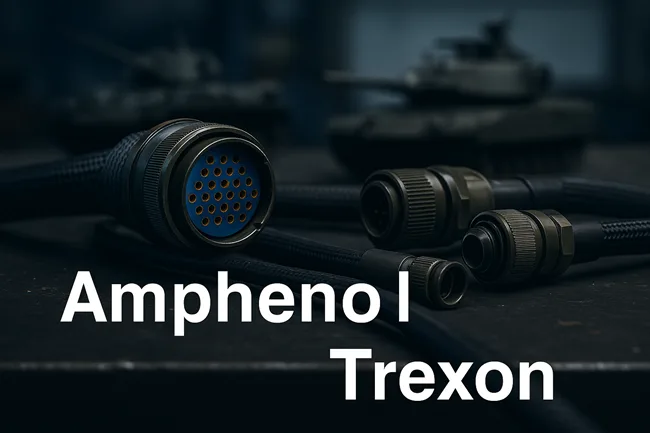
Amphenol Corporation (NYSE: APH) has agreed to acquire Trexon, a U.S. and U.K.-based provider of high-reliability interconnect and cable assemblies, in a $1 billion all-cash deal. The transaction, which is subject to regulatory approvals and customary closing conditions, is expected to close in the fourth quarter of 2025. Amphenol will fund the acquisition with cash on hand, positioning the move as a strategic expansion of its Harsh Environment Solutions segment.
With Trexon projected to deliver $290 million in 2025 sales and EBITDA margins of around 26%, the deal adds a highly profitable asset to Amphenol’s portfolio. Executives said the acquisition would be accretive to earnings per share in the first year post-closing, reinforcing the company’s growth outlook amid strong demand for defense-grade interconnect solutions.
Why is Amphenol acquiring Trexon and how does it fit into its defense market growth strategy?
Amphenol, headquartered in Wallingford, Connecticut, has evolved into one of the largest and most diversified manufacturers of electrical, electronic, and fiber optic connectors globally. Its portfolio also spans sensor-based products, antennas, and coaxial and high-speed specialty cables, giving the company a central role in enabling connectivity across industries. By supplying interconnect systems that withstand both commercial and harsh environments, Amphenol has positioned itself not only as a component supplier but also as a critical technology partner for industries undergoing digital and electrification transformations.
The American interconnect manufacturer has historically maintained a balanced revenue mix across multiple verticals, including automotive, commercial aerospace, communications networks, defense, industrial equipment, and information technology infrastructure. This diversification has allowed Amphenol to cushion itself against cyclical downturns in any single sector while capturing growth in others. In automotive, the company’s connectors and sensors support the shift toward electric vehicles and advanced driver-assistance systems. In commercial aerospace, its products are integrated into next-generation aircraft systems where reliability is paramount. For communications and data centers, Amphenol provides high-speed interconnect solutions that support cloud computing, 5G rollouts, and growing demand for low-latency connectivity.
Defense and industrial applications remain equally critical, with Amphenol supplying ruggedized interconnect and cable systems designed to perform in extreme conditions. Its presence in information technology and mobile devices complements this portfolio, ensuring exposure to both consumer-driven and enterprise-driven technology cycles. Analysts have often pointed out that this diversified presence across high-growth end-markets has been central to Amphenol’s ability to deliver consistent earnings growth, strong margins, and attractive returns to shareholders.
The addition of Trexon strengthens Amphenol’s foothold in the defense sector, a market segment where resilience, reliability, and mission-critical performance are key differentiators. Trexon’s cable assemblies are widely used in defense systems requiring durability under harsh conditions, which makes them complementary to Amphenol’s existing portfolio.
Chief Executive Officer R. Adam Norwitt said the combination would allow Amphenol to deliver more high-technology solutions to its global defense customer base. Institutional sentiment has reflected that the transaction underscores Amphenol’s commitment to high-margin, specialized niches in interconnect technology rather than pursuing commoditized, lower-value segments.
What is Trexon’s market position and why does its profitability matter to Amphenol?
Boston-based Trexon operates a network of specialized facilities across the United States and the United Kingdom, positioning itself as a trusted supplier of mission-critical interconnect and cable assembly solutions. The company’s core customer base is concentrated in the defense industry, where reliability, durability, and compliance with strict military specifications are essential. Trexon’s assemblies are designed to withstand extreme environments, making them integral to systems such as radar, avionics, naval platforms, and secure communications infrastructure.
For 2025, Trexon is projected to generate approximately $290 million in sales while maintaining EBITDA margins of 26%, a level that significantly outpaces many peers in the broader interconnect and cable assembly sector. This profitability reflects not only the premium attached to defense-grade products but also the high barriers to entry in securing contracts with government and aerospace clients. Unlike more commoditized consumer or industrial interconnects, Trexon’s offerings command higher margins due to technical complexity, lengthy certification cycles, and long-term program embedment.
By consistently delivering double-digit margins, Trexon has demonstrated strong operating discipline and a business model resilient to supply chain fluctuations and pricing pressure. Analysts tracking the interconnect market have noted that margins at this level highlight the company’s differentiated position in high-reliability solutions, compared to the thinner profitability often seen among commodity cable producers. For Amphenol, integrating such a profitable and defense-focused player strengthens its Harsh Environment Solutions segment and broadens its exposure to high-value government and defense contracts.
Such robust financial performance reflects not only high-margin defense contracts but also the technical complexity and certification requirements of Trexon’s product line. By integrating Trexon into its Harsh Environment Solutions business, Amphenol gains an asset that enhances both scale and financial leverage, offering accretive earnings potential.
Analysts have noted that margins at this level give Amphenol a stronger defense-focused profit pool to offset cyclical pressures in other segments like automotive and consumer devices.
How are investors reacting to Amphenol’s expansion and what does the stock performance indicate?
Shares of Amphenol Corporation (NYSE: APH) have shown resilience in 2025, supported by robust demand in defense and industrial markets. Institutional investors have generally viewed the acquisition of Trexon as a strategically sound deployment of Amphenol’s strong balance sheet.
With Amphenol financing the $1 billion deal through existing cash reserves, the company avoids taking on incremental debt, which analysts consider prudent in the current interest rate environment. The expected accretive impact on EPS from 2026 provides a clear earnings growth driver, likely reinforcing institutional buy-side sentiment.
While Amphenol’s stock has already benefitted from defense sector tailwinds, the transaction is expected to provide another catalyst for stable-to-positive price momentum. Some fund managers are categorizing the outlook as accumulation-worthy, particularly given the high-margin nature of Trexon’s contribution.
What does the acquisition mean for the global interconnect industry and defense supply chains?
The global interconnect industry is highly competitive, with growth driven by digitalization, electrification, and defense modernization programs. Amphenol’s acquisition of Trexon positions the company more firmly as a defense-focused interconnect provider, competing with other major players in ruggedized and mission-critical solutions.
The deal also has broader implications for defense supply chains in the U.S. and allied nations. By adding Trexon’s manufacturing capacity in both the U.S. and the U.K., Amphenol expands its geographic reach in two defense hubs at a time when governments are prioritizing secure, domestic production of critical defense technologies.
Analysts said the acquisition may also reflect a consolidation trend, where larger interconnect manufacturers are moving to secure specialized, high-margin players in defense and aerospace supply chains.
What is the future outlook for Amphenol following the Trexon acquisition?
Looking forward, Amphenol expects the integration of Trexon to strengthen its Harsh Environment Solutions segment, a business unit already focused on ruggedized products for defense and aerospace. By capturing Trexon’s existing contracts and leveraging cross-selling opportunities, Amphenol could accelerate its penetration of long-term defense programs.
Institutional sentiment suggests that the acquisition reinforces Amphenol’s identity as a diversified interconnect leader while sharpening its focus on profitable, defense-oriented verticals. Analysts broadly expect further earnings growth and stable cash generation, keeping Amphenol attractive for both growth and income-focused investors.
As global defense spending continues to climb, the acquisition is expected to give Amphenol additional exposure to a sector that has proven resilient across economic cycles. Investors are likely to track execution closely, but early indications are that the deal aligns with the company’s disciplined acquisition strategy.
Discover more from Business-News-Today.com
Subscribe to get the latest posts sent to your email.


