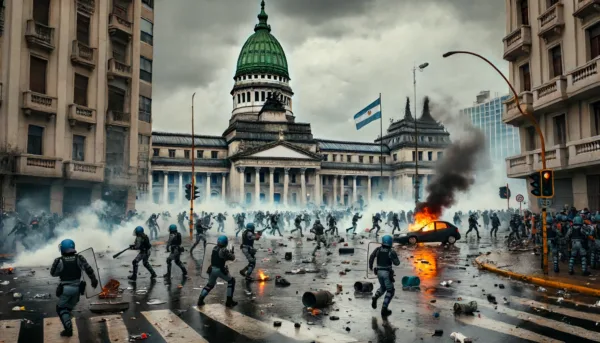

French prosecutors opened an attempted murder investigation on November 1, 2026, after an incendiary device exploded near a group of gendarmes during demonstrations in Paris, setting an officer’s protective equipment alight and causing injuries. The attack occurred shortly before 6 pm on October 31 near Porte de Charenton in the city’s 12th arrondissement, where security personnel were managing the dispersal of a protest against rising living costs and deteriorating public services. The Paris prosecutor’s office confirmed an investigation into attempted homicide involving people exercising public authority, while France’s National Gendarmerie said members of its mobile unit from Dreux had been injured. No suspect had been arrested in connection with the specific incendiary attack as of the latest publicly confirmed investigative updates.
The incident occurred during the third consecutive weekend of nationwide demonstrations that brought an estimated 320,000 people onto French streets, according to government figures, while organisers placed participation at approximately 500,000. Most demonstrations proceeded peacefully, but confrontations developed in Paris and several other cities as security personnel attempted to disperse groups accused of throwing projectiles and damaging property. Interior Minister Laurent Nuñez condemned the attack on the gendarmes and described it as an attempted killing, while prosecutors began examining the criminal responsibility of those involved. The investigation has intensified debate over protest violence, police tactics and the limits of public-order enforcement during a period of sustained political dissatisfaction.
What happened during the October 31 Molotov cocktail attack at Porte de Charenton?
The confrontation took place near the end of an authorised protest march that had travelled from Porte de Bagnolet to Porte de Charenton in eastern Paris. According to the National Gendarmerie, the procession had been dispersing normally when members of Mobile Gendarmerie Squadron 26/3 from Dreux came under attack from a group of hostile individuals. Projectiles, including an explosive and incendiary device, were directed towards the security personnel. Several officers were injured as the confrontation developed.
Photographs and video recordings from the scene showed an incendiary device landing close to officers before flames spread across the protective equipment of at least one gendarme. Other personnel responded immediately, helping extinguish the flames while attempting to maintain their position. The footage attracted considerable public attention because it showed how rapidly an incendiary attack could endanger officers wearing protective equipment. However, the recordings alone do not establish the identity of the person who launched the device or the precise intentions of those involved.
The National Gendarmerie subsequently confirmed that the commanding officer of the affected squadron, identified as Captain Alexandre, was among those injured during the confrontation. The force described the attack as sudden and said conditions had been relatively calm immediately beforehand. Senior gendarmerie commanders visited the unit on November 1 to provide support and acknowledge the officers’ response. The incident remains under criminal investigation, with responsibility yet to be established through the legal process.
Why have Paris prosecutors opened an attempted murder investigation?
The Paris prosecutor’s office announced on November 1 that it had opened an investigation into attempted homicide against people exercising public authority. The decision followed evidence that explosive and incendiary devices had been thrown towards a group of approximately 15 gendarmes and other police officers. Prosecutors indicated that the circumstances warranted examination under a serious criminal classification rather than being treated solely as routine public-order offences. The investigation has been entrusted to the appropriate territorial criminal investigation authorities in Paris.
The opening of an attempted murder investigation does not establish that the individuals responsible have already been identified or that the required criminal intent has been proved. Investigators must determine who launched the incendiary device, the surrounding circumstances and whether the evidence supports the legal elements of the alleged offence. The use of a potentially lethal device against security personnel is an important part of that inquiry, but prosecutorial classification remains distinct from a conviction. No completed judicial finding had been announced in the initial updates.
Laurent Nuñez publicly characterised the attack as an attempted killing before prosecutors formally confirmed the investigation. His description reflected the government’s assessment of the seriousness of the incident, while the prosecutor’s office is responsible for examining the evidence under criminal law. The investigation is expected to consider video recordings, witness testimony and forensic material associated with the device. Further developments may clarify whether identified suspects can be linked to the attack.
How seriously were French gendarmes injured during the Paris petrol bomb attack?
The Paris prosecutor’s office reported that the injuries under assessment included possible second-degree burns and hearing-related symptoms associated with explosive noise. Officials cautioned that the medical assessment was incomplete and that the full extent of injuries had not yet been established. The affected officers had been exposed to incendiary and explosive projectiles during a brief but intense confrontation. The preliminary injury descriptions should therefore not be treated as final diagnoses for every person involved.
A government and police assessment released on October 31 recorded five injured security personnel in Paris, comprising four police officers and one gendarme. The National Gendarmerie’s subsequent account described several members of its Dreux squadron as injured during the Porte de Charenton confrontation. These statements were released at different stages and may reflect evolving information or different reporting categories. The confirmed investigative record does not support combining them into an invented final injury total.
The affected gendarme’s protective equipment caught fire during the attack, but contemporary reporting described the officer’s immediate injuries as relatively limited compared with the potentially severe consequences of direct exposure to an incendiary device. Other personnel reported injuries associated with explosive noise and the confrontation. Medical assessments remain important for establishing the consequences of the attack and any subsequent criminal proceedings. The possibility of serious harm is relevant to the investigation, but it should not be confused with a confirmed fatality because no death was reported from this incident.
How many protesters joined the October 31 demonstrations across France?
French authorities estimated that approximately 320,000 people participated in the October 31 demonstrations, while organisers reported around 500,000. The difference reflects separate assessments by officials and protest groups, rather than two competing counts that have been reconciled by an independent authority. The government figure was lower than its estimates of 550,000 participants on October 17 and 410,000 on October 24. Even with the decline, the demonstrations represented a substantial nationwide mobilisation for a third consecutive weekend.
The movement began with concerns about education, school conditions and opportunities for young people before expanding to include broader dissatisfaction with purchasing power, public services and government policy. Labour organisations, students and other protest groups participated in demonstrations across major French cities. Their demands included stronger investment in essential services and measures to address the financial pressures affecting households. The movement has also attracted criticism of police tactics and restrictions imposed on certain protest routes.
The overwhelming majority of demonstrators were not involved in the attacks reported against security personnel. French authorities themselves acknowledged that most marches proceeded peacefully, with violence concentrated in particular locations or during dispersal operations. That distinction is important because participation in a lawful demonstration does not establish involvement in criminal activity. The attempted murder investigation concerns specific conduct and the people responsible for it, not everyone who attended the wider protests.
Why did France deploy 70,000 security personnel for the Halloween demonstrations?
The French government deployed approximately 70,000 police officers and gendarmes nationwide following serious disturbances during earlier demonstrations in October. Authorities had warned about the risk of groups attempting to attack security personnel, damage businesses or exploit larger crowds for violent activity. The operation included reinforced policing around major demonstration routes, public transport infrastructure and commercial districts. Local restrictions were also introduced in selected areas where officials considered the risk of disorder particularly high.
In Paris, authorities restricted the use of certain central demonstration routes, directing authorised protest activity towards an alternative procession on the city’s eastern side. The route from Porte de Bagnolet to Porte de Charenton was permitted, while other proposed marches were subject to prohibitions upheld through legal proceedings. These decisions generated criticism from organisers who argued that restrictions were narrowing the practical exercise of the right to demonstrate. The government maintained that they were necessary to reduce the risk of further serious disturbances.
Authorities reported more than 560 arrests across France during the October 31 unrest, although those detentions involved a range of suspected offences rather than solely the Porte de Charenton attack. The Paris prosecutor’s office separately described cases involving alleged possession of prohibited weapons, incendiary substances and participation in groups suspected of preparing violence or property damage. Arrests and police custody are not equivalent to criminal convictions. The status of each case depends on subsequent investigative and judicial decisions.
What evidence could help identify those responsible for the Paris Molotov attack?
Investigators are examining photographs, videos and accounts from officers and witnesses present at Porte de Charenton. The extensive media coverage of the confrontation may provide multiple recordings showing the moments before and after the incendiary device was launched. Such material can help establish the direction of the projectile, the movements of individuals and the sequence of events. However, identifying a person in footage is only one part of establishing their criminal responsibility.
Forensic examination of recovered materials may provide additional information about the incident. Investigators may also compare evidence from different camera angles and seek testimony from people who observed the confrontation. Any potential suspect must be linked to conduct meeting the elements of the alleged offence. The presence of an individual in a protest crowd, including someone dressed similarly to others, is not sufficient on its own to establish involvement.
As of November 2, reporting continued to indicate that no suspect had been arrested specifically for the attempted homicide investigation. Accounts suggesting investigators were examining several potential perpetrators should not be interpreted as proof that those individuals committed the offence. Prosecutors will need to determine whether the evidence justifies arrests, charges or other legal action. The case remains at an investigative stage.
What happens next as France prepares for further strikes and demonstrations?
French student and labour organisations have called for further demonstrations and industrial action during the first week of November, including planned activity around November 5. Some student groups have also urged blockades of educational institutions, arguing that the government has not adequately responded to their demands. These planned actions indicate that the wider protest movement may continue despite the violence and extensive policing on October 31. Participation and the extent of any disruption remain to be established.
The attempted murder investigation will proceed separately from broader negotiations over wages, education and public services. Criminal responsibility for the incendiary attack must be determined through evidence and legal proceedings, while the wider grievances motivating peaceful protesters remain political and economic issues. The government faces the challenge of protecting security personnel and the public without treating all demonstrations as inherently violent. The authorities’ response to subsequent gatherings will therefore remain an important test of proportionality.
The October 31 confrontation has become one of the most serious individual incidents associated with the latest French protests because of the apparent danger posed by an incendiary device directed towards security personnel. The confirmed facts establish the location, timing, nature of the attack and opening of an attempted homicide investigation, but not the identity or guilt of the perpetrators. Any subsequent arrests, charges or medical updates will require careful verification. The outcome could influence future public-order measures as France continues confronting disputes over living costs, public services and political accountability.
Discover more from Business-News-Today.com
Subscribe to get the latest posts sent to your email.