

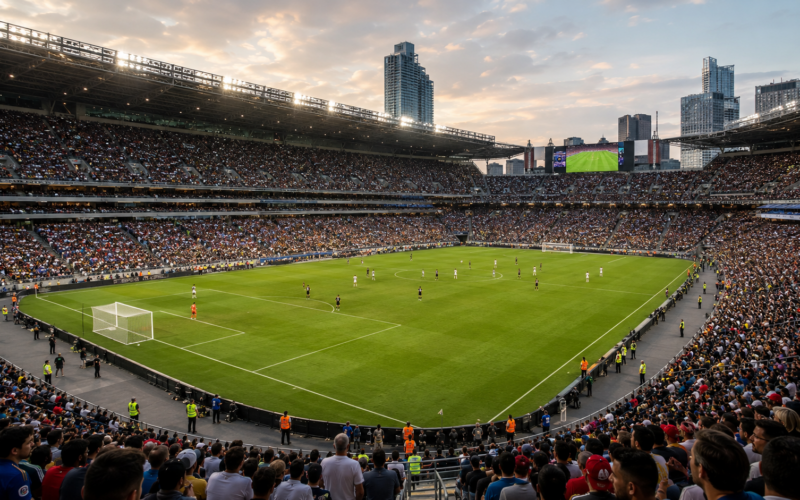
Spain reached the FIFA World Cup 2026 semi-finals with a 2-1 win over Belgium at Los Angeles Stadium in Inglewood, California, on Friday, July 10, 2026. Fabián Ruiz put Spain ahead in the 30th minute, Charles De Ketelaere equalised for Belgium in the 41st minute, and substitute Mikel Merino scored the decisive goal in the 88th minute.
The quarter-final turned on Spain’s sustained pressure, Belgium’s injury disruption and a decisive late goalkeeping error. Thibaut Courtois had made several important saves before going off in the second half with a leg problem, and replacement Senne Lammens spilled Pau Cubarsí’s low strike into Merino’s path.
Spain’s win sends Luis de la Fuente’s side into a semi-final against France at Dallas Stadium on Tuesday, July 14. The result also marks Spain’s first World Cup semi-final appearance since 2010, when they went on to win the tournament.
Belgium exit after a resilient but disrupted performance in which Youri Tielemans was injured in the warm-up, Amadou Onana was already unavailable, and Courtois’ second-half withdrawal became the defining tactical and emotional rupture. Rudi Garcia’s side stayed alive through De Ketelaere’s first-half header, but Spain’s depth and control eventually forced the late breakthrough.
FIFA World Cup 2026 Spain 2-1 Belgium full match scorecard and key incidents
How did Spain’s possession and pressure shape the first-half pattern against Belgium?
Spain’s 4-2-3-1 structure gave them the platform to dominate possession, with Rodri, Fabián Ruiz and Dani Olmo helping Luis de la Fuente’s side move the ball into Belgium’s half for long spells. Belgium also used a 4-2-3-1, but the absence of Youri Tielemans after a warm-up injury left them needing Hans Vanaken to adjust quickly in midfield.
Spain’s early pressure was less about reckless attacking and more about territorial control. They kept Belgium’s wide outlets pinned back, forced De Ketelaere to spend long phases isolated, and used Lamine Yamal’s right-sided threat to stretch the Belgian defensive line.
The opening goal in the 30th minute came from sustained pressure rather than one clean passing move. Courtois initially made an excellent diving save, but Belgium could not clear the second phase, and Fabián Ruiz reacted sharply to fire through traffic and put Spain ahead.
Belgium’s response was important because it stopped the match from becoming a one-way Spanish possession exercise. Their equaliser showed that even with limited possession, they still had enough crossing quality, timing and aerial presence to hurt Spain when the delivery was right.
Why did Charles De Ketelaere’s equaliser briefly shift the emotional balance of the quarter-final?
De Ketelaere’s 41st-minute equaliser was Belgium’s clearest tactical success of the match. Timothy Castagne’s delivery gave the forward the chance to attack the box with proper timing, and De Ketelaere’s header ended Spain’s long defensive shutout at the tournament.
The goal was significant because Spain had reached this stage without conceding at FIFA World Cup 2026. Once Belgium scored, the match became less about whether Spain could keep their perfect defensive record and more about whether they could handle a knockout game that had finally become uncomfortable.
Belgium needed that equaliser to validate their plan. They were not matching Spain for possession or shot volume, but they showed that direct wide attacks and well-timed box movement could still trouble Unai Simón and Spain’s back line.
The equaliser also gave Belgium the emotional lift they needed before half-time. After being pushed back for much of the opening period, they reached the interval level, with enough evidence to believe that Courtois’ saves and De Ketelaere’s finishing could keep the upset alive.
How did Courtois’ injury and Lammens’ late error decide Spain vs Belgium?
Courtois’ withdrawal was the match’s turning point because it removed Belgium’s most influential player on the night. He had made several major saves and had repeatedly delayed Spain’s second goal, even as the pressure grew after half-time.
Rudi Garcia later indicated that Courtois was not fully fit, and the goalkeeper himself was visibly emotional when he left the field. The change was understandable from a player-health standpoint, but it immediately changed the risk profile of the match because Spain were still pressing and still producing shots.
The decisive mistake came in the 88th minute. Pau Cubarsí hit a low effort from distance, Lammens could not hold it, and Merino reacted quicker than Belgium’s defenders to score the rebound. It was a harsh moment for the substitute goalkeeper, but it was also the product of Spain’s repeated pressure.
That is why the goal should not be framed only as a Belgian error. Spain had kept forcing actions in Belgium’s defensive third, and when the mistake arrived, Merino’s positioning and anticipation turned it into a semi-final place.
Why does Mikel Merino keep becoming Spain’s late knockout-stage answer?
Merino’s 88th-minute winner continued one of the most striking individual patterns of Spain’s tournament. He had already scored the late winner against Portugal in the round of 16, and against Belgium he again entered from the bench before deciding a knockout match.
The value of Merino is that he changes the texture of Spain’s midfield without making the team less controlled. He can arrive late into the box, contest second balls, protect possession and still offer the kind of penalty-area instinct that many midfield substitutes do not provide.
His goal also underlined De la Fuente’s trust in squad depth. Spain did not need all of their decisive players to start the match because the bench gave them a tactical reset late in the contest. Merino’s introduction for Olmo in the 86th minute gave Spain fresh energy at exactly the moment Belgium were trying to survive.
There is a wider lesson here for knockout football. The five-substitution era has made late-game specialists more valuable, and Spain are using that reality better than most. Merino is no longer just a useful squad player. He is becoming Spain’s closer.
How did Lamine Yamal influence the match even without scoring for Spain?
Yamal did not score, but his influence was constant. Belgium had to treat his right-sided threat as a major danger zone, and that changed how much freedom they could give Maxim De Cuyper and the left side of their defensive structure.
His dribbling created repeated moments of panic because he could attack outside, cut inside or delay long enough for Spain’s midfield runners to arrive. Courtois denied him in key moments, and one second-half chance would not have counted because of an offside flag, but the pressure he created still mattered.
Yamal’s role was also psychological. Belgium could not step out aggressively without worrying about the space behind, and that helped Spain keep Belgium in reactive positions for much of the second half. Even when he did not produce the final touch, he helped tilt the field.
For Spain, that is the beauty of this attacking structure. Yamal can entertain and destabilise, while players such as Ruiz, Merino, Pedri, Olmo and Oyarzabal occupy the spaces that open around him. It is not just flair. It is functional disruption.
What did Belgium’s injuries reveal about the limits of their World Cup run?
Belgium’s quarter-final exit was shaped heavily by availability. Tielemans was removed from the starting plan before kick-off, Onana was already out after his previous injury, and Courtois’ second-half withdrawal took away their best defensive safety net.
That matters because Belgium’s tactical plan was already demanding. Against a Spain side that controlled 68% possession, Belgium needed experienced midfield legs, clean transitions and elite goalkeeping. Losing pieces in all three layers made the task increasingly difficult.
Still, Belgium were not passive. Doku carried threat on the left, De Ketelaere gave them a genuine attacking reference point, and De Bruyne still had moments of craft despite not being able to dominate the match for long stretches.
The problem was sustainability. Belgium could produce moments, but Spain could produce pressure. Over 90 minutes, that difference usually wins knockout matches, and in Inglewood it produced Merino’s late winner.
What does Spain 2-1 Belgium mean for the FIFA World Cup 2026 semi-final route?
Spain’s win confirms a heavyweight semi-final against France at Dallas Stadium on Tuesday, July 14. It is the kind of match that now defines the top half of the bracket: Spain’s control, pressing and depth against France’s pace, power and ruthless transition quality.
The semi-final will also test whether Spain can keep turning possession into enough clear chances. Against Belgium, they had the territory, the xG edge and the shot volume, but they still needed a late rebound after Courtois’ replacement made a costly mistake.
Belgium’s campaign ends in the quarter-finals, which is both a respectable finish and a frustrating missed opportunity. They reached the last eight, beat the United States convincingly in the previous round and showed enough resilience to trouble Spain, but the injuries and late goalkeeping error left their tournament feeling unresolved.
Spain, meanwhile, now look like a team capable of winning in multiple ways. They can dominate the ball, survive a setback, use the bench decisively and keep pressure high deep into the match. That combination is why France will face a semi-final opponent with rhythm, confidence and serious tactical variety.
FIFA World Cup 2026 Spain and Belgium knockout progression table after the quarter-final
What must Spain improve before facing France in the semi-final?
Spain’s first improvement area is final-third efficiency. A 17-5 shot advantage and a 1.96 to 0.34 xG advantage showed clear superiority, but the match still required an 88th-minute rebound winner because Belgium’s goalkeeper situation and defensive resistance kept the score level for so long.
De la Fuente will also review how Belgium scored with relatively little possession. Castagne’s cross and De Ketelaere’s header were well executed, but Spain will not want France’s forwards attacking similar moments with more speed, power and finishing quality.
The positive for Spain is that the team did not panic after conceding for the first time in the tournament. They returned to possession control, used the bench well and kept forcing Belgium backward until the decisive mistake arrived.
Against France, however, Spain may need more protection against transitions. France can survive without the ball and punish space quickly, which means Spain’s rest defence, counterpressing and full-back positioning will be just as important as their passing rhythm.
What must Belgium address after another painful major-tournament exit?
Belgium’s immediate frustration will centre on the Courtois substitution and Lammens’ error, but the deeper issue is how dependent they were on goalkeeper excellence to stay in the game. When Courtois was on the pitch, he gave Belgium the platform to survive Spain’s pressure. Once he went off, that safety net disappeared.
Garcia’s side also need to examine the midfield fragility created by injuries. Tielemans’ warm-up setback and Onana’s absence left Belgium with less control and less ball-winning power against one of the best possession teams in the world.
There were still positives. De Ketelaere’s goal, Doku’s threat and the resilience shown against Spain suggest Belgium are not entering a full reset. Younger players such as Nicolas Raskin and Nathan Ngoy also gained important tournament experience.
The question is whether Belgium can build toward Euro 2028 with clearer midfield balance and less reliance on veteran rescue acts. This World Cup run showed progress, but the quarter-final showed the gap between being competitive and being ruthless enough to beat Spain.
Key takeaways from Spain vs Belgium at FIFA World Cup 2026
- Spain beat Belgium 2-1 at Los Angeles Stadium on Friday, July 10, 2026, to reach the FIFA World Cup 2026 semi-finals.
- Fabián Ruiz opened the scoring in the 30th minute after Spain’s early pressure forced Belgium into a rebound situation.
- Charles De Ketelaere equalised in the 41st minute with a header from Timothy Castagne’s cross, ending Spain’s tournament clean-sheet run.
- Thibaut Courtois made several important saves before leaving the match in the 71st minute with a leg issue.
- Senne Lammens replaced Courtois and later spilled Pau Cubarsí’s low strike, allowing Mikel Merino to score the winner in the 88th minute.
- Merino scored only two minutes after coming on for Dani Olmo, continuing his remarkable run as Spain’s late knockout-stage specialist.
- Spain dominated the match statistically with 68% possession, 17 shots, 1.96 xG and 41 touches in Belgium’s box.
- Belgium were disrupted before kick-off when captain Youri Tielemans was injured in the warm-up and replaced by Hans Vanaken.
- Lamine Yamal did not score but remained one of Spain’s most influential attacking players through his right-sided dribbling and pressure.
- Spain will face France at Dallas Stadium on Tuesday, July 14, while Belgium are eliminated at the quarter-final stage.
Share this:
Discover more from Business-News-Today.com
Subscribe to get the latest posts sent to your email.