



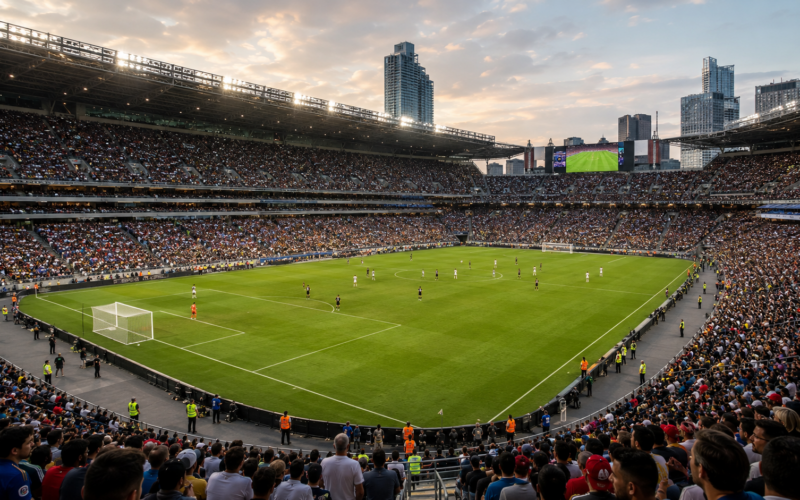
Brazil beat Haiti 3-0 at Philadelphia Stadium on June 19, 2026 local time, June 20 in India, as Matheus Cunha scored twice before Vinícius Júnior completed a decisive first-half performance in their FIFA World Cup 2026 Group C match. Cunha opened the scoring in the 23rd minute and added his second in the 36th, while Vinícius converted Lucas Paquetá’s pass during first-half stoppage time.
The victory moved Brazil above Morocco at the top of Group C on goal difference, with both teams holding four points. Scotland remain third with three points, while Haiti became the first team mathematically eliminated from the tournament after suffering their second consecutive defeat.
Carlo Ancelotti received the stronger attacking display he demanded following Brazil’s 1-1 opening draw with Morocco. Cunha’s movement gave the attack greater balance, Vinícius influenced all three goals and Brazil defended with sufficient control to record their first clean sheet of the tournament.
The result was overshadowed by an apparent leg injury suffered by Raphinha, who left the match in the 40th minute. The severity of the injury was not immediately confirmed, creating uncertainty before Brazil’s decisive final group fixture against Scotland.
Brazil vs Haiti FIFA World Cup 2026 match scorecard
How did Matheus Cunha give Brazil the attacking balance missing against Morocco?
Ancelotti brought Cunha into the starting line-up after Brazil’s attack struggled to connect during the opening draw with Morocco. The forward replaced Igor Thiago and immediately offered more movement between Haiti’s centre-backs and midfield.
Cunha did not remain fixed inside the penalty area. He dropped into deeper positions, combined with Vinícius and Paquetá and then accelerated forward when Brazil recovered possession.
His first goal arrived in the 23rd minute after Vinícius attacked from the left and forced goalkeeper Johny Placide into a save. Hannes Delcroix attempted to clear the loose ball, but Cunha’s pressure ensured the ball crossed the line.
The goal reflected the value of following attacks into the six-yard area. Brazil had controlled possession without producing enough penetration during the opening 20 minutes, but Cunha remained alert while Haiti attempted to clear.
His second goal demonstrated a different quality. Haiti lost possession while attempting to move forward, allowing Brazil to counterattack into open space.
Vinícius released Cunha with a pass into the forward’s diagonal run. Cunha appeared to lose balance momentarily but recovered quickly and drove a powerful finish into the upper area of the goal.
The two finishes gave Cunha his first World Cup goals and strengthened his case to remain Brazil’s starting centre-forward against Scotland.
Brazil have several talented attacking options, including Endrick, Igor Thiago, Gabriel Martinelli and Rayan. However, Cunha’s ability to connect midfield with attack may give Ancelotti the structure required around Vinícius.
Why was Vinícius Júnior involved in every decisive first-half Brazilian attack?
Vinícius entered the match after rescuing a point against Morocco and again became Brazil’s most important attacking player.
He helped create the opening goal by attacking Haiti’s defence and forcing Placide to parry his initial effort. Cunha and Delcroix contested the rebound before the ball crossed the line.
Vinícius directly assisted the second goal. He received possession during a rapid transition, recognised Cunha’s run and played into the space between Haiti’s defenders.
His own goal arrived in the third minute of first-half stoppage time. Paquetá lifted a pass over Haiti’s defensive line, allowing Vinícius to accelerate into the area and finish low beyond the advancing Placide.
The goal effectively settled the match before half-time. Haiti had continued competing despite conceding twice, but recovering from a three-goal deficit against Brazil was beyond their realistic reach.
Vinícius has now scored in both of Brazil’s Group C matches. His output is especially important while Neymar continues recovering from a calf injury and Raphinha faces uncertainty after leaving the field.
The performance also showed how Ancelotti can maximise Vinícius without asking him to create every attack alone. Cunha’s movement attracted defenders, while Paquetá and Bruno Guimarães supplied forward passes from midfield.
Brazil remain dependent on Vinícius for their most decisive actions, but the Haiti match suggested a more functional supporting structure is beginning to emerge.
What happened to Raphinha and how could his injury affect Brazil’s next match?
Raphinha began the match brightly and believed he had scored during the opening period before an offside flag ruled out the effort.
The winger later missed another opportunity during a move that was also stopped for offside. His positioning and movement nevertheless caused problems for Haiti before his match ended unexpectedly.
Raphinha dropped to the ground shortly after Cunha scored Brazil’s second goal. He appeared to be experiencing discomfort in his leg and was replaced in the 40th minute.
Rayan entered and provided Brazil with another direct wide option. The teenager showed confidence when carrying the ball and later created an opportunity that Endrick converted from an offside position.
Ancelotti did not immediately provide a detailed diagnosis. Until further medical assessment is completed, Brazil cannot be certain whether Raphinha will be available against Scotland.
His absence would matter because he provides intensity, pressing and movement without possession. Brazil have other technically gifted attackers, but few combine attacking output with the same defensive work rate.
Martinelli, Rayan or Endrick could enter the starting line-up if Raphinha is unavailable. Ancelotti may also alter the system and use Paquetá or another midfielder closer to the attack.
Brazil have already managed Neymar’s absence, but losing another established forward would reduce Ancelotti’s tactical options before a match that will determine first place in Group C.
Why did Brazil slow down after half-time despite goal difference remaining important?
Brazil entered the interval leading 3-0 and appeared capable of producing a much larger victory. Instead, Ancelotti’s team reduced the intensity and managed the second half conservatively.
The approach protected players from unnecessary physical strain, particularly after Raphinha’s injury. Brazil controlled space, retained possession when required and avoided exposing the defence.
However, the decision carried strategic risk. Brazil and Morocco are level on four points, meaning goal difference could determine which team wins Group C.
Brazil created several second-half chances without sustaining the same pressure. Martinelli struck the crossbar after a clever Vinícius touch, while Endrick had a goal ruled out for offside.
Vinícius also passed up an opportunity to shoot after receiving an excellent diagonal ball from Marquinhos. Brazil’s final actions lacked the urgency displayed before half-time.
Haiti gained more possession and pushed players forward. Their efforts rarely threatened Brazil’s defensive structure, but the change showed that Ancelotti’s team had deliberately moved into a lower gear.
Brazil’s +3 goal difference gives them a two-goal advantage over Morocco. That may be enough, but Morocco face eliminated Haiti in the final round and could improve their own record significantly.
Ancelotti must therefore balance qualification security with the potential value of winning the group. Brazil cannot assume that four points and their current goal difference will remain sufficient.
How did Haiti continue competing after becoming overwhelmed in the first half?
Haiti began with energy and avoided retreating completely into their own penalty area. Their players pressed selectively and attempted to move forward through Jean-Ricner Bellegarde, Ruben Providence and Frantzdy Pierrot.
The Caribbean side survived the opening 20 minutes and briefly frustrated Brazil’s slower build-up. Once Cunha scored, however, the gap in speed and finishing quality became more visible.
Sébastien Migné changed the structure after half-time. Haiti moved toward a back four and introduced Leverton Pierre Simon and Wilson Isidor to increase their midfield and attacking presence.
The adjustments allowed Haiti to retain more possession. Bellegarde continued carrying the ball into forward areas, while Providence showed confidence when isolated against Brazilian defenders.
Ricardo Adé produced Haiti’s best opportunity in the 64th minute. He attacked a near-post corner and directed a powerful header toward goal, forcing Alisson into a reaction save.
Gabriel Magalhães completed the clearance and protected Brazil’s clean sheet. Alisson later denied additional attempts as Haiti continued attacking during the final minutes.
Haiti’s performance did not threaten the result, but it showed the players had not abandoned the match. Their effort remained strong despite the scoreline and the confirmation that their qualification hopes were ending.
The final fixture against Morocco now offers Haiti an opportunity to score their first goal of the tournament and leave with a more positive final memory.
What did Brazil’s defensive performance reveal before facing Scotland?
Brazil recorded their first clean sheet of the tournament after conceding during the opening draw with Morocco.
Marquinhos and Gabriel Magalhães controlled most of Haiti’s direct attacks and prevented Pierrot from receiving enough service inside the penalty area.
Casemiro protected the space in front of the defence, while Bruno Guimarães helped recover possession whenever Haiti attempted to counter through midfield.
Brazil’s defensive performance was helped by Haiti’s limited attacking quality, but the team still demonstrated concentration during a second half in which the match had already been decided.
Alisson remained alert despite long periods without involvement. His save from Adé preserved the clean sheet and prevented Haiti from gaining emotional momentum.
Scotland will present a different type of challenge. Clarke’s team will use set pieces, crosses and the physical presence of McTominay, Dykes and other aerial threats.
Brazil must therefore defend dead-ball situations more carefully than they were required to against Haiti. Scotland’s need for victory will also create greater pressure and intensity.
The clean sheet provides confidence, but the final group match will offer a more realistic measure of whether Brazil’s defensive structure is ready for the knockout rounds.
What does Brazil’s victory mean for the FIFA World Cup 2026 Group C table?
Brazil lead Group C on goal difference after completing two matches without defeat. Morocco also have four points, while Scotland remain one point behind.
Haiti have zero points after defeats against Scotland and Brazil. The direct result against Scotland means Haiti cannot recover enough ground to reach a qualifying position.
FIFA World Cup 2026 Group C points table
| Team | P | W | D | L | GF | GA | GD | Pts |
|---|---|---|---|---|---|---|---|---|
| Brazil | 2 | 1 | 1 | 0 | 4 | 1 | +3 | 4 |
| Morocco | 2 | 1 | 1 | 0 | 2 | 1 | +1 | 4 |
| Scotland | 2 | 1 | 0 | 1 | 1 | 1 | 0 | 3 |
| Haiti | 2 | 0 | 0 | 2 | 0 | 4 | -4 | 0 |
Brazil face Scotland in Miami during the final round, while Morocco meet Haiti in Atlanta at the same time.
A draw would move Brazil to five points and guarantee progression. Victory would take them to seven points and strengthen their chances of winning the group.
Scotland can qualify automatically by defeating Brazil. A draw would leave Scotland on four points and could still provide a route through the third-place ranking.
Morocco are strongly positioned because they face eliminated Haiti. Victory would guarantee qualification and could move them above Brazil if they produce the stronger goal difference.
Brazil cannot therefore treat the Scotland match as a formality. First place remains unsettled, and the final ranking could influence the difficulty of their Round of 32 opponent.
Why does Brazil’s 3-0 victory matter beyond the immediate Group C table?
Brazil needed a convincing response after their opening draw raised questions about creativity, attacking balance and Ancelotti’s preferred system.
The Haiti match provided some answers. Cunha gave the attack greater connection, Vinícius remained decisive and Brazil created enough first-half chances to settle the contest early.
The performance was still not consistently fluent. Brazil relied heavily on direct runs and passes over Haiti’s defensive line rather than producing sustained combinations through midfield.
The passive second half also prevented Brazil from delivering the larger victory that appeared possible. Against stronger opponents, reducing intensity so sharply could become dangerous.
The editorial view is that Brazil improved without fully resolving the concerns created by the Morocco match. The scoreline was convincing, but the performance still contained periods of slow possession and limited attacking invention.
Cunha’s emergence is the clearest positive. Brazil now have a forward capable of creating space for Vinícius while also converting opportunities inside the area.
Key takeaways from Brazil vs Haiti at FIFA World Cup 2026
- Brazil beat Haiti 3-0 at Philadelphia Stadium on June 19, 2026, to move top of FIFA World Cup 2026 Group C on goal difference.
- Matheus Cunha scored twice during the first half after being selected ahead of Igor Thiago as Brazil’s central forward.
- Cunha’s opening goal followed a Vinícius Júnior attempt that Johny Placide could only parry into a dangerous area.
- Vinícius assisted Cunha’s second goal before scoring Brazil’s third from Lucas Paquetá’s pass in first-half stoppage time.
- Raphinha had an early effort ruled out for offside and later left the match with an apparent leg injury.
- Brazil controlled the second half without adding another goal, despite Martinelli striking the crossbar and Endrick having a finish ruled out.
- Ricardo Adé forced Alisson into Haiti’s best opportunity, but Brazil completed their first clean sheet of the tournament.
- Brazil and Morocco have four points each, with Brazil leading Group C because of their superior goal difference.
- Haiti became the first team eliminated from FIFA World Cup 2026 after losing their opening two matches.
- Brazil next face Scotland in Miami, while Haiti complete their campaign against Morocco in Atlanta.
Discover more from Business-News-Today.com
Subscribe to get the latest posts sent to your email.