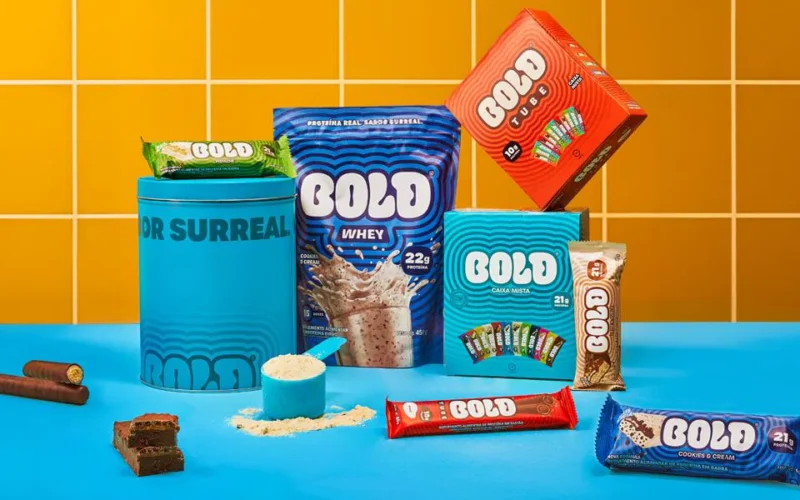
Ferrero Group, the Luxembourg-headquartered family-owned confectionery giant behind Nutella, Kinder, and Ferrero Rocher, has signed an agreement to acquire Bold Snacks, a Brazilian premium protein snack company founded in 2018 and based in Divinopolis, Minas Gerais. The deal, announced on 18 March 2026, marks Ferrero’s first entry into the better-for-you snack segment in South America, extending a portfolio diversification strategy that has accelerated sharply over the past three years. Bold Snacks built its brand through a digital-first commercial model, a protein bar range that resonated with fitness-oriented Brazilian consumers, and a more recent expansion into whey powders. For Ferrero, the transaction closes one of the few remaining geographic gaps in its growing protein and health-snack portfolio, which already spans Eat Natural and FULFIL in Europe and Power Crunch in North America.
Why is Ferrero Group targeting Brazil’s protein snack market now rather than through organic growth?
The strategic logic behind the Bold Snacks acquisition runs deeper than a single country deal. Brazil is the largest economy in Latin America, home to over 215 million people and a consumer class that has rapidly absorbed the global wellness trend. The country’s protein ingredients market was valued at USD 1.44 billion in 2024 and is projected to grow at a compound annual rate of 8.4 percent through 2033, according to Grand View Research, with food and beverages as the dominant application. That backdrop rewards early entry with a credible local brand rather than years of shelf-building from scratch. Bold Snacks already occupies the premium digital-native segment, selling protein bars and whey powders through channels that reach the fitness and health-conscious demographic directly. Ferrero is buying proven distribution and brand equity, not just a factory.
The parallel with Ferrero’s Power Crunch acquisition in North America in early 2025 is intentional rather than coincidental. Both are digitally-oriented brands with protein as their core proposition. Ferrero appears to be executing a repeatable playbook: identify a fast-growing functional snack brand in a target geography, acquire it before regional scale makes valuations prohibitive, and then apply Ferrero’s global manufacturing scale and distribution reach. The speed at which the group is executing this formula across three continents suggests this is a deliberate platform strategy rather than opportunistic deal-making.

How does the Bold Snacks deal fit into Ferrero Group’s broader portfolio diversification strategy since 2020?
Ferrero’s transformation from a confectionery specialist into a diversified food group is one of the more remarkable strategic pivots in the global food industry over the past five years. The group entered biscuits via Burton’s and Fox’s in the UK, ice cream via Wells Enterprises and Halo Top in North America, cereals via the USD 3.1 billion acquisition of WK Kellogg Co. which closed in September 2025, and protein snacking via FULFIL, Eat Natural, and Power Crunch. Consolidated turnover reached EUR 19.3 billion for the financial year ending August 2025, up 4.6 percent on the prior year and roughly double the group’s 2015 revenue of around EUR 11 billion, reflecting both organic growth and the compounding effect of targeted M&A.
The Bold Snacks acquisition slots neatly into the better-for-you tier of this expanding portfolio. Until now, Ferrero’s health-focused snack brands were concentrated in Europe and North America. Adding a South American asset with an established consumer base addresses a clear geographic gap and signals that protein snacking is now a global pillar of the group’s strategy rather than a regional experiment. For a group that reached roughly EUR 25 billion in total economic universe revenue when affiliated entities are included, a bolt-on acquisition in Minas Gerais represents a low-capital-intensity way to plant a flag in one of the world’s highest-growth consumer markets.
What operational assets and capabilities does Ferrero gain from the Divinopolis facility and workforce?
Beyond the brand, the transaction delivers immediate manufacturing infrastructure. Ferrero will take ownership of Bold Snacks’ office and production facility in Divinopolis, Minas Gerais, with approximately 300 employees transferring to Ferrero Brazil. This is not trivial. Building food-grade protein bar manufacturing capacity in Brazil from scratch, navigating Brazilian labour law, environmental licensing, and supplier relationships for whey protein inputs, would take years and substantial capital. Acquiring a functioning facility with trained staff collapses that timeline to near-zero and maintains continuity for consumers and retail partners. Divinopolis itself sits in a regional food production cluster, which provides access to the supply chain infrastructure that a protein bar operation requires.
Ferrero already has a substantial Brazilian footprint. Through its affiliated company Dori Alimentos, which is owned by Ferrara, and its own direct operations, the group employs around 4,500 people across five plants and three offices in Brazil. The Bold Snacks facility adds a sixth manufacturing site to the Brazilian cluster, and the 300-person workforce bolsters local headcount by close to seven percent. The integration risk appears manageable given that Ferrero has extensive experience absorbing acquired businesses, from North American confectionery brands to UK biscuit makers, without disrupting the acquired brand’s consumer positioning.
How might Ferrero’s distribution network and retail relationships accelerate Bold Snacks’ growth in Brazil and beyond?
Bold Snacks’ founder and chief executive Gabriel Ferreira was explicit about the commercial rationale: access to Ferrero’s global distribution is the primary growth lever the deal unlocks. Bold Snacks scaled through digital channels and direct-to-consumer engagement, a model that is effective for building brand awareness but carries inherent limits in physical retail penetration. Ferrero’s established relationships with major Brazilian supermarket chains, convenience retailers, and food service operators across five existing plants provide an immediate pathway to shelf space that Bold Snacks could not replicate organically at comparable speed. The brand enters a distribution network that already moves Nutella, Kinder, and Tic Tac to consumers in every retail tier across the country.
The international dimension is equally relevant. Ferrero’s operations span over 170 countries, and a protein snack brand with a credible Brazilian origin story and an established product range could find receptive audiences in other Latin American markets, as well as among Brazilian diaspora communities in Europe and North America. Ferrero has demonstrated repeatedly that it can take acquired brands from their home geography into adjacent markets using existing infrastructure, as seen with the European rollout of Power Crunch-adjacent positioning. Bold Snacks would follow a well-worn integration path, with the Divinopolis plant likely serving as the regional export hub.
What execution risks does Ferrero face integrating a digitally-native Brazilian startup into a EUR 19 billion food conglomerate?
The commercial upside of the deal is clear, but the execution risks deserve scrutiny. Bold Snacks was founded in 2018, making it an eight-year-old company at the time of the deal. Its growth has been built on digital agility, a direct consumer relationship, and a founder-led culture. Integration into a large multinational introduces the risk of bureaucratic friction eroding the speed and product innovation cadence that made Bold Snacks valuable in the first place. Ferrero’s track record on this point is mixed: FULFIL retained its brand identity and innovation rhythm post-acquisition, but larger integrations such as the WK Kellogg deal are still in early stages and carry their own complexity.
There is also a category positioning question. Ferrero’s core portfolio is anchored in indulgent confectionery, and the group’s public health rankings have historically placed it near the bottom of assessments of large food companies’ healthy product splits. Bold Snacks’ consumer base is health-conscious and fitness-focused, precisely the demographic most sensitive to brand authenticity. If Ferrero’s ownership is perceived to compromise the nutritional positioning or product quality of Bold Snacks, brand trust could erode faster than distribution gains can compensate. Managing the parent-subsidiary narrative carefully, including preserving founder involvement and brand independence, will be critical to protecting the acquisition’s strategic rationale. Notably, no deal terms were disclosed, which is consistent with Ferrero’s practice as a private company, but also means that any future write-down or brand performance shortfall would not be publicly observable.
What does Ferrero’s move into Brazilian protein snacks signal to competitors like Mars, Mondelez, and Nestle about Latin America strategy?
For the broader confectionery and snacking industry, the Bold Snacks deal is a signal that premium functional snacking in Latin America has entered the strategic acquisition window. Mars has been executing its own diversification via the USD 36 billion Kellanova acquisition, which closed in early 2025 and gave it control of protein bar brand Kind. Mondelez has invested in the better-for-you tier through its SnackFutures venture arm. Nestle has been rationalising its confectionery portfolio rather than expanding aggressively into functional snacking at this stage. None of the major confectionery players had a meaningful branded protein snack presence in Brazil before this deal. Ferrero has moved first in a market where first-mover distribution advantage compounds quickly.
The global protein snacks market was valued at USD 54.86 billion in 2025 and is projected to reach USD 120.43 billion by 2034, according to Fortune Business Insights, representing a compound annual growth rate that comfortably outpaces traditional confectionery. Latin America, and specifically Brazil, Chile, Colombia, and Peru, are identified as high-growth contributors to this trajectory. Legacy confectionery companies with balance sheet capacity face a narrowing window to acquire credible health-snack brands in these markets before valuations rise or strategic alternatives are consolidated by competitors. Ferrero’s Bold Snacks deal may prove to be the catalyst that accelerates a wave of similar transactions across the region.
Key takeaways on what the Ferrero Group and Bold Snacks acquisition means for the company, its competitors, and the global snacking industry
- Ferrero Group’s acquisition of Bold Snacks is the group’s first better-for-you brand entry in South America, closing the final major geographic gap in its protein snack portfolio, which now spans Europe, North America, and Latin America.
- The deal follows a deliberate repeatable playbook: identify a digitally-native protein brand with proven consumer traction in a high-growth market, acquire it at a pre-scale valuation, and apply global distribution to accelerate revenue. Power Crunch in North America was the template.
- Bold Snacks’ Divinopolis factory and 300-strong workforce give Ferrero immediate manufacturing capacity in Brazil, avoiding multi-year greenfield timelines and regulatory complexity that new entrants would face.
- Ferrero’s existing 4,500-employee, five-plant Brazilian operation via Dori Alimentos and its own assets provides an established distribution channel that can rapidly expand Bold Snacks’ physical retail reach beyond its current digital-first model.
- The key execution risk is brand integrity: Bold Snacks’ health-focused consumer base is sensitive to corporate ownership signals, and Ferrero must manage brand independence carefully to preserve the product credibility that justified the acquisition.
- The global protein snacks market is projected to grow from USD 54.86 billion in 2025 to over USD 120 billion by 2034, and Brazil’s protein ingredients sector alone is on an 8.4 percent CAGR trajectory through 2033, underpinning the long-term strategic rationale.
- Competitors including Mars, Mondelez, and Nestle have no branded protein snack presence in Brazil. Ferrero’s first-mover distribution advantage in this market could compound over the next three to five years as retail relationships deepen.
- The deal is undisclosed in financial terms, consistent with Ferrero’s practice as a private company, which limits external visibility into valuation discipline and return expectations but also insulates the group from short-term performance pressure.
- Ferrero’s broader transformation from a confectionery specialist to a diversified food group generating EUR 19.3 billion in annual turnover is being executed through a portfolio that now spans ice cream, biscuits, cereals, and protein snacks, positioning the group to compete across more eating occasions and consumer demographics.
- For the Latin American food industry, this deal signals that the premium functional snack acquisition window is open. Other well-capitalised global food groups may now accelerate their own regional brand searches before valuations rise and strategic options consolidate.
Discover more from Business-News-Today.com
Subscribe to get the latest posts sent to your email.