



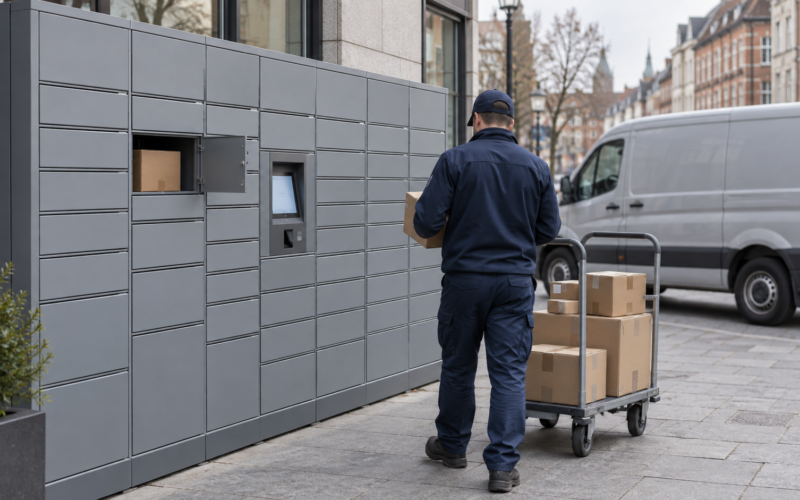
FedEx Corporation (NYSE: FDX), Advent International and their consortium partners have crossed the principal shareholder-acceptance hurdle in their €7.8 billion all-cash acquisition of InPost S.A. (Euronext Amsterdam: INPST). InPost said shareholders tendered 89.81% of its shares, comfortably exceeding the 80% minimum acceptance condition attached to the €15.60-per-share offer. The transaction still needs to complete formally, after which InPost has said its shares will be delisted from Euronext Amsterdam while its name, management structure and Polish headquarters remain in place.
The acceptance milestone gives FedEx exposure to one of Europe’s largest automated parcel-machine networks at a moment when e-commerce delivery is shifting away from purely door-to-door logistics. InPost ended the second quarter with 68,925 automated parcel machines, up 29% year over year, after deploying more than 4,200 lockers during the quarter alone. The group processed 380.9 million parcels in the period, a 16% increase, while quarterly revenue rose 18.2% to PLN4.18 billion.
Why did FedEx want InPost despite the parcel company’s margin pressure?
InPost’s revenue is growing rapidly, but expansion has become increasingly expensive. Second-quarter adjusted EBITDA rose only 4.4% to PLN1.04 billion even though revenue increased 18.2%, while adjusted EBITDA margin fell to 25% from 28.3%. First-half free cash flow was negative PLN541 million as capital expenditure, international expansion and the transformation of the UK operation consumed cash.
Those pressures help explain why a private ownership structure may suit InPost’s next stage. The company plans continued network expansion across Europe, which requires spending on lockers, logistics infrastructure and software before the full revenue benefit is visible. Public shareholders had increasingly questioned whether faster top-line growth justified weaker free cash flow and rising leverage, while a consortium led by a strategic logistics operator and private capital can take a longer view of those investments.
FedEx brings something more than financing. It operates a global delivery network whose fiscal 2026 revenue reached $94.7 billion, up from $87.9 billion a year earlier, while adjusted operating income increased to $6.61 billion. Integrating access to InPost’s European out-of-home delivery network could therefore improve FedEx’s ability to offer lower-cost last-mile alternatives without constructing tens of thousands of lockers independently.
How large has InPost’s European network become?
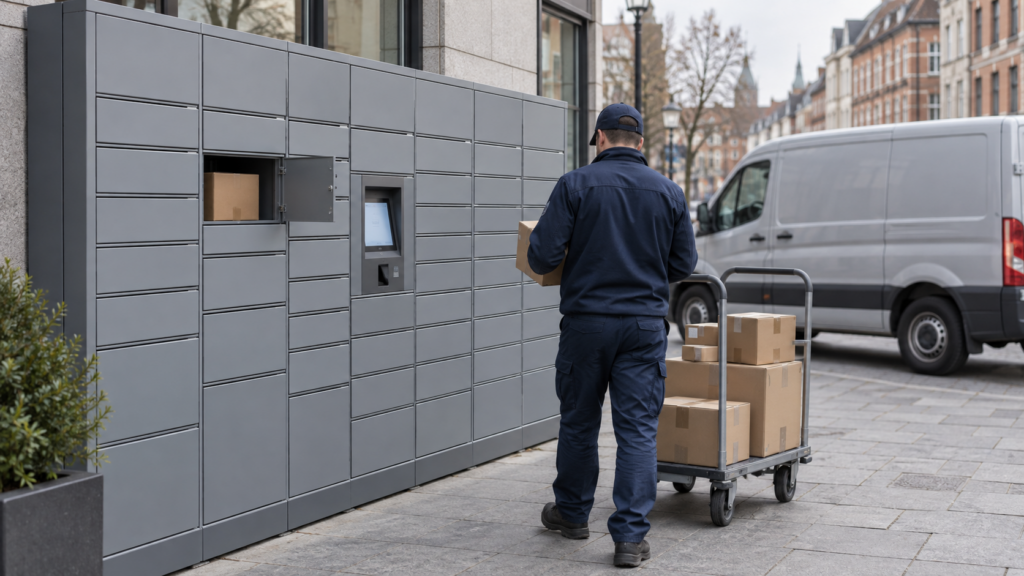
The scale extends well beyond the Polish lockers that originally defined the company. At the end of June, InPost had 98,206 out-of-home delivery points across its markets, including 68,925 automated parcel machines and 29,281 pick-up and drop-off locations. Poland remained the largest individual market with 29,912 lockers, but the Eurozone network had reached 23,385 and the UK and Ireland had 15,628.
International operations now generate more revenue than Poland. InPost said international markets accounted for 54% of second-quarter revenue, with Eurozone revenue rising 37.9% and UK and Ireland revenue increasing 9.8%. Eurozone adjusted EBITDA grew 39.8%, demonstrating that international expansion can produce attractive operating leverage once network density reaches sufficient scale.
The UK remains much harder. InPost completed the rebranding of Yodel under the InPost name in July, but UK and Ireland adjusted EBITDA fell 39.9% year over year in the second quarter and first-half adjusted EBITDA remained negative. That gives the buyers a clear operational challenge alongside the growth opportunity.
Why are automated parcel lockers strategically valuable to FedEx?
Door-to-door delivery is expensive because a driver must physically travel to thousands of individual addresses. A locker allows multiple packages to be delivered at one stop, potentially improving vehicle utilisation and lowering the cost per parcel while letting customers collect packages when convenient.
The economics become increasingly attractive as locker density rises. InPost says nearly half of Polish e-commerce parcels already flow through lockers, creating a market in which consumers treat automated collection as an ordinary delivery option rather than a niche service. InPost’s network density also means 90% of Poland’s urban population lives within a seven-minute walk of one of its automated machines.
FedEx and InPost had already begun moving toward commercial cooperation before the takeover closes. InPost disclosed in its second-quarter report that the companies were negotiating an arm’s-length commercial agreement and planned to begin pilot last-mile services for FedEx in the UK and Poland during September. The acquisition therefore deepens a relationship that was beginning at operating level rather than creating one from scratch.
Why did InPost’s growth become harder for public shareholders to finance?
InPost’s first-half numbers show the trade-off clearly. Revenue increased 24% to PLN8.04 billion and parcel volumes climbed 23% to 740 million, but adjusted EBITDA was almost flat at PLN1.95 billion and adjusted net profit fell 66.1% to PLN204.8 million. Net leverage increased to 2.5 times from 2.2 times at the end of 2025.
Management also reduced its 2026 outlook in August. InPost now expects adjusted EBITDA to decline by a mid-single-digit percentage rather than remain flat, while capex is expected at about PLN2.1 billion and full-year free cash flow is forecast to be negative. International expansion remains strategically attractive, but those figures illustrate why the public market had become less willing to value every new locker as pure growth.
FedEx and Advent can effectively underwrite that investment cycle privately. If network economics improve as utilisation grows, the consortium captures the upside without requiring InPost to defend quarterly margin dilution to public investors.
What does the 89.81% acceptance level mean for the remaining transaction?
The 80% minimum acceptance condition was one of the most important remaining deal hurdles, and crossing it materially increases certainty that the acquisition will close. All required regulatory clearances had already been obtained by late August, according to InPost’s transaction documents.
The €15.60 cash price values InPost at roughly €7.8 billion. Once settlement is completed, InPost plans to leave the Amsterdam exchange, ending a public-market chapter that began with its 2021 listing.
For FedEx, the next strategic question begins after closing rather than before it. Owning exposure to one of Europe’s densest locker platforms could make the company more competitive in e-commerce delivery, but the value of the acquisition will depend on whether international utilisation grows quickly enough to reverse InPost’s recent margin and free-cash-flow pressure.
Discover more from Business-News-Today.com
Subscribe to get the latest posts sent to your email.