


Energy Transition Minerals Limited (ASX:ETM) has secured approval from the Xunta de Galicia to transfer the Section C mining concession at the Penouta tin-tantalum-niobium project to its Spanish subsidiary, removing the final regional approval required before the acquisition can be formally completed. The breakthrough arrived only days after Greenland rejected an extension of the exploration licence covering ETM’s much larger Kvanefjeld rare earths project, sending the shares sharply lower and forcing investors to reconsider where the company’s near-term value will come from. ETM closed at A$0.043 on July 3, giving the company a market capitalisation of approximately A$95 million and leaving the stock around 17 per cent below its June 26 close. The immediate investment question is whether Penouta can become a credible near-term producer quickly enough to reduce ETM’s dependence on a lengthy and uncertain Greenland legal battle.
The Penouta approval is commercially important, but it should not be described as a completed acquisition or mine restart. The regional resolution formally recognises Energy Transition Minerals Spain as the incoming holder of the mining rights, after which the insolvency administrator must complete the transaction. ETM must then finalise the restart plan, establish operating and capital requirements, satisfy environmental obligations and demonstrate that the existing plant can produce saleable concentrates at acceptable recoveries and costs.
What does Energy Transition Minerals own after the Penouta approval and Greenland setback?
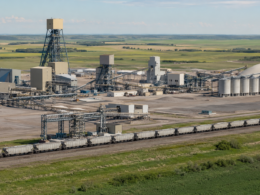
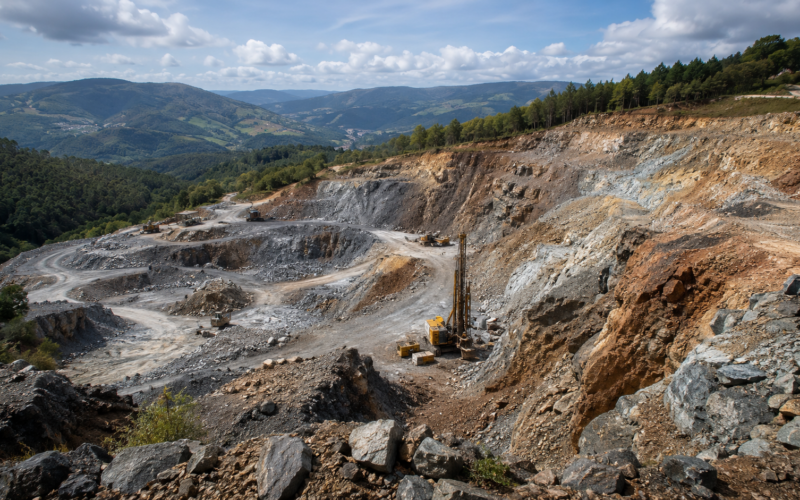
Energy Transition Minerals is attempting to transform itself from a company whose valuation depended overwhelmingly on one disputed Greenland rare earths project into a diversified critical-minerals developer with assets in Spain, Greenland and Canada. Penouta is now the most immediate commercial opportunity because it contains an existing open pit, a crushing, grinding and gravity-processing plant, tailings facilities and supporting infrastructure.
The mine operated as recently as October 2024, producing tin and tantalum concentrates with the potential to add niobium. Previous investment in the site has been estimated at approximately €28 million, while ETM’s maximum acquisition consideration is only €5.2 million, equivalent to roughly A$9.2 million when the winning bid was announced. The purchase price includes payments to secured and unsecured creditors, a possible €1 million contingent component and funding associated with retained employees.
Kvanefjeld remains the company’s largest geological asset. The southern Greenland project contains a JORC-compliant resource of approximately one billion tonnes grading 1.1 per cent rare earth oxides, including neodymium, praseodymium, dysprosium and terbium. It benefits from proximity to an ice-free fjord, access to potential hydropower and extensive historical feasibility and metallurgical work.
The problem is that Kvanefjeld cannot currently be developed. Greenland’s 2021 Uranium Act prohibits uranium exploration and production, while the government argues that the law prevents ETM from receiving the exploitation licence required for the project. The rejection of the exploration licence extension further limits ETM’s ability to undertake new field programmes while the legal dispute continues.

Why does the Penouta concession transfer matter if the acquisition has not formally closed?
The Xunta de Galicia approval represents the final regional step in transferring Penouta’s Section C concession, which covers the hard-rock mineral resource. ETM had already received judicial approval through the Spanish insolvency process and foreign direct investment clearance confirming that its proposed acquisition met Spanish regulatory and national-security requirements.
This considerably reduces transaction uncertainty. ETM is no longer merely a preferred bidder seeking permission to acquire a strategic Spanish mine. It has been recognised as the incoming holder of the relevant mining rights, leaving the insolvency administrator to complete the asset transfer and related formalities.
Completion will give ETM access to infrastructure that could reduce the time and capital needed to reach production compared with a greenfield mine. Existing processing equipment, roads, utilities, buildings, technical data and an experienced local workforce provide a platform for a restart rather than requiring development from an empty site.
However, the licence transfer does not mean production can begin immediately. ETM must determine the condition of the plant after the shutdown, identify necessary repairs and improvements, validate the processing flowsheet and ensure that environmental, water-management and rehabilitation requirements are satisfied.
The Section C concession has also been affected by prior litigation concerning the adequacy of the environmental assessment. ETM must clearly explain the present legal status, any remaining appeal process and the conditions under which hard-rock mining can recommence. Early production may instead focus on historical tailings and waste under the Section B concession while the broader Section C pathway is clarified.
Can Penouta’s 108-million-tonne resource support a commercially meaningful restart?
ETM’s May 2026 resource update outlined approximately 108 million tonnes grading 437 parts per million tin, 80 parts per million tantalum and 91 parts per million niobium. The scale provides a substantial geological foundation, although the average grades are modest and require efficient mining, recovery and by-product optimisation.
Penouta differs from many undeveloped critical-minerals projects because the deposit has already been mined and processed. Historical operations provide actual information about ore behaviour, concentrate production, recoveries and operational bottlenecks rather than relying solely on laboratory test work.
The existing plant was designed around the project’s polymetallic ore and uses physical separation techniques to recover cassiterite and tantalum-niobium minerals. A gravity-based process can be less chemically intensive than some critical-mineral flowsheets, although profitability will depend on particle size, mineral liberation, recovery and the quality of the resulting concentrates.
The challenge is that a large resource does not guarantee strong economics. Tin, tantalum and niobium contribute different proportions of potential revenue, while recovery rates and payable terms can vary significantly. ETM must demonstrate that enough of each metal can be recovered consistently to offset mining, processing, labour, power, environmental and logistics costs.
A restart study should therefore become one of the most important forthcoming documents. Investors need a credible production rate, capital estimate, mine sequence, operating cost, recovery profile and commissioning timetable. Without those figures, Penouta remains a strategically attractive acquisition rather than a measurable cash-flow business.
How could the Traxys agreement reduce marketing risk without guaranteeing mine revenue?
Energy Transition Minerals signed a memorandum of understanding with Traxys Europe covering the potential sale, marketing and distribution of Penouta concentrates. Traxys could receive exclusivity over as much as 100 per cent of tin, tantalum and niobium concentrate production, subject to the parties negotiating a binding agreement.
The memorandum initially runs for 12 months and could be converted into an offtake agreement lasting six years from the beginning of production. Product pricing would be linked to prevailing market conditions and terms agreed with end customers, while ETM would retain approval rights over sales.
Traxys brings established relationships across critical-minerals trading, processing and industrial procurement. Its involvement could help ETM identify suitable customers, understand required product specifications and negotiate transport, treatment and payment terms before the mine restarts.
That commercial support is particularly valuable for tantalum and niobium, which do not trade through the same transparent and liquid benchmarks available for commodities such as gold or copper. Transactions can depend on concentrate chemistry, impurities, customer qualification and private contract negotiations.
The memorandum does not guarantee volumes, prices or revenue. Traxys is not required to purchase uneconomic or off-specification material simply because it has entered discussions with ETM. A binding offtake agreement will only become meaningful when it contains minimum quantities, quality requirements, pricing mechanisms, payment terms and responsibilities for transport and processing.
Why did the Greenland licence rejection overwhelm Penouta’s positive approval news?
Greenland formally declined ETM’s application to extend exploration licence 2010/02, which covers Kvanefjeld. The company had requested an extension in September 2025 and participated in consultation with the government before receiving the final adverse decision in late June.
ETM argues that the decision-making process did not adequately consider its 2025 exploration results, which identified additional rare earth mineralisation containing uranium concentrations below the 100-parts-per-million threshold in Greenland’s Uranium Act. The company also objected to receiving only 48 hours to respond to additional geological memoranda and being refused a requested one-week extension.
The government’s position is that further exploration is unlikely to identify a deposit capable of being exploited under the existing uranium legislation. Greenland has maintained that environmental concerns and the wishes of communities in southern Greenland support its approach to uranium-bearing projects.
The rejection does not resolve ETM’s separate litigation over the exploitation licence or its potential damages claims. ETM has indicated that the licence area will not be allocated to another company while those proceedings remain unresolved, preserving some strategic value while the courts consider the dispute.
The market reaction reflects the difference between geological ownership and commercially usable rights. Kvanefjeld may contain an enormous strategically important rare earth resource, but shareholders cannot assign conventional project value to it while development remains blocked by legislation and litigation.
Penouta’s approval provides a partial strategic answer. It gives ETM an asset that may be capable of producing revenue under a more supportive European Union policy framework. It does not replace the scale of Kvanefjeld, but it could prevent the company from remaining entirely dependent on an unpredictable legal outcome.
Is ETM’s A$95 million valuation supported by cash, Penouta and the remaining Kvanefjeld option?
ETM closed at A$0.043 on July 3, unchanged for the session but around 17 per cent below the June 26 close of A$0.052. The shares were approximately one-quarter below early-June levels and almost 80 per cent beneath the A$0.21 upper end of their 52-week range.
The company reported A$49.8 million in cash and cash equivalents at March 31, following the completion of an approximately A$24.65 million placement at A$0.13 per share. The proceeds were allocated to Penouta, the company’s United States strategy, cash reserves and the Kvanefjeld legal process.
That cash balance is substantial relative to the present market capitalisation, although it should not be treated as surplus capital. ETM must pay the Penouta purchase consideration, fund technical and environmental work, maintain its corporate operations and continue financing litigation involving two governments.
The contrast with the capital-raising price is striking. At A$0.043, the shares trade roughly 67 per cent below the A$0.13 placement level used in February. Investors who participated in that financing expected Penouta progress, a continuing Greenland strategy and potentially a stronger international capital-markets profile.
The current valuation suggests the market has applied a heavy discount to Kvanefjeld and remains uncertain about how much Penouta will cost to restart. It appears to recognise ETM’s cash and strategic assets without assuming that either major project will generate near-term earnings.
This creates possible leverage in both directions. Formal Penouta completion and a well-supported low-capital restart plan could materially improve sentiment from the current depressed base. Further regulatory complications, larger-than-expected restart expenditure or adverse legal rulings could consume cash without producing operating revenue.
What must happen before Penouta can move from strategic asset to operating mine?
The first milestone is formal completion of the acquisition by the insolvency administrator. ETM should then disclose the final consideration paid, assets and liabilities transferred, workforce arrangements and any outstanding conditions attached to the concessions.
The second milestone is a detailed technical inspection of the plant and infrastructure. Equipment that operated until October 2024 may still require repairs, replacement components and recommissioning work. ETM must assess crushers, mills, gravity circuits, tailings systems, power supply, water infrastructure and laboratory capability.
The third milestone is a restart study containing capital expenditure, production volumes, operating costs and a realistic timetable. Investors should look for separate economics covering tailings or waste processing under Section B and hard-rock mining under Section C because each source may have different grades, recoveries and regulatory requirements.
The fourth milestone is environmental and legal clarity. The company must explain what additional studies, restoration plans or operating conditions will be required before Section C production can resume. A transferred concession is valuable, but its value depends on whether ETM can exercise the underlying mining rights without another prolonged court process.
The fifth milestone is a binding Traxys agreement or another credible product-sales arrangement. The agreement should explain product specifications, volumes, pricing, treatment charges and how revenue is divided among tin, tantalum and niobium concentrates.
The final milestone is commissioning and sustained production. Restart announcements can create short-term excitement, but lasting value will depend on monthly throughput, recoveries, concentrate quality, operating costs and cash receipts.
Why does ETM continue attracting investor attention despite two highly complex projects?
Energy Transition Minerals offers exposure to two unusually strategic but very different assets. Kvanefjeld provides enormous rare earth scale and geopolitical relevance, while Penouta offers existing infrastructure and a possible route to earlier production inside the European Union.
That combination creates a visible conflict. The company may be undervalued if Penouta restarts successfully and ETM ultimately secures compensation or development rights in Greenland. It may remain a value trap if legal costs continue, Penouta requires substantially more capital than expected and neither asset reaches reliable production.
The rapid share-price decline has intensified this disagreement. Some investors may interpret the Greenland decision as confirmation that Kvanefjeld should carry little or no near-term project value. Others may view the sell-off as overlooking Penouta, the company’s cash position and the continuing legal protections around its Greenland interests.
The company’s international positioning adds another layer. ETM has appointed advisers with United States public-policy experience and has considered a possible Nasdaq listing. These initiatives may broaden investor access and strengthen engagement around Western critical-mineral security, but they will not replace project-level execution.
The next rerating is therefore more likely to come from Penouta completion, restart economics and binding commercial terms than from another broad strategic narrative. ETM already owns a compelling story. The market now wants an operating plan.
What are the key Energy Transition Minerals takeaways for investors watching ASX:ETM?
- Energy Transition Minerals has received Xunta de Galicia approval to transfer Penouta’s Section C concession, clearing the final regional approval before formal acquisition completion.
- The Penouta transaction has not yet been described as closed, and the mine has not restarted production.
- ETM is acquiring the existing mine, processing infrastructure and related assets for a maximum of approximately €5.2 million.
- Penouta contains an updated resource of approximately 108 million tonnes carrying tin, tantalum and niobium, but restart economics have not yet been disclosed.
- Traxys may market up to 100 per cent of Penouta concentrate production, although the current memorandum is not yet a binding revenue contract.
- Greenland has rejected the Kvanefjeld exploration licence extension, but ETM’s separate litigation and potential damages claims remain active.
- ETM closed at A$0.043 on July 3, around 17 per cent below its June 26 close and approximately 67 per cent below its recent A$0.13 placement price.
- The company held A$49.8 million in cash at March 31, providing capacity to complete Penouta work while maintaining the Greenland legal strategy.
- Formal Penouta completion, restart capital estimates, environmental clarity and binding offtake terms are the next milestones capable of changing the valuation.
Discover more from Business-News-Today.com
Subscribe to get the latest posts sent to your email.