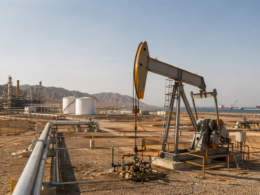





Enbridge Inc. (TSX: ENB, NYSE: ENB) has agreed to form a C$2.7 billion joint venture with capital managed by KKR and Apollo to fund the Aspen Point and Sunrise expansion programmes on its Westcoast natural gas pipeline system in British Columbia, creating a structure that brings external infrastructure capital into two already sanctioned projects without surrendering operational control. KKR and Apollo will fund approximately C$2.7 billion, including C$700 million of cash payable to Enbridge at closing, and will ultimately hold an indirect cumulative 29% interest in the aggregate Westcoast system once Sunrise enters service. Enbridge retains majority ownership, continues operating Westcoast and remains responsible for executing the expansions, while the private-capital partners begin receiving distributions as the respective projects enter service.
The economics make the transaction more interesting than a simple minority stake sale. Aspen Point and Sunrise have already received regulatory approval and are commercially supported by long-term take-or-pay contracts, which means KKR and Apollo are entering infrastructure with substantial construction and customer risk already addressed. Enbridge, meanwhile, converts part of its future economic interest into immediate capital while preserving control and gains the right to repurchase the investors’ interest at any time between the seventh and fourteenth year after closing.
How much pipeline capacity are KKR and Apollo helping Enbridge build?
Aspen Point is designed to add as much as 535 million cubic feet per day of capacity on the T-North section of Westcoast and is targeted to enter service in late 2026. The programme includes approximately 18 kilometres of new pipeline looping, electric-driven compressors, transmission power lines, meter infrastructure and modifications to existing compressor stations.
Sunrise adds another 300 million cubic feet per day on the T-South system and is targeted for service in late 2028. Construction formally began in July after Canadian federal approval in April, with the project carrying an estimated C$4 billion capital cost. Taken together, the two programmes provide 835 million cubic feet per day of incremental capacity across different sections of the Westcoast network, although those capacities should not simply be added to the current system-wide 3.6 Bcf/d figure because the projects expand different pipeline segments and system bottlenecks.
Why would Enbridge sell 29% of a strategic pipeline system?
The transaction allows Enbridge to fund a large portion of its expansion programme without relying exclusively on retained cash flow or new corporate debt. The company says its broader capital-recycling programme has generated approximately C$19 billion of proceeds since 2014, and the Westcoast joint venture extends that model by bringing long-duration private capital into an asset that Enbridge still controls operationally.
The 29% stake should therefore be viewed as a financing and portfolio-management decision rather than evidence that Enbridge is retreating from British Columbia gas infrastructure. The company keeps 71% of the aggregate system economics after Sunrise enters service, controls operations and receives C$700 million immediately at closing, while KKR and Apollo absorb a material share of expansion funding.
This can improve capital efficiency if Enbridge redeploys the freed capital into projects carrying returns at least as attractive as the portion of Westcoast economics transferred to its new partners. The company said the transaction is not material to 2026 guidance or its medium-term financial outlook, reinforcing that management views it primarily as balance-sheet optimisation within a much larger investment programme.
Why are private infrastructure investors willing to accept a minority position?
The attraction lies in contracted cash flows and essential infrastructure. Aspen Point and Sunrise are backed by long-term take-or-pay arrangements, limiting direct exposure to short-term changes in gas transportation volumes because customers reserve capacity under contractual commitments. KKR and Apollo also avoid responsibility for operating the system or managing construction directly, responsibilities that remain with Enbridge.
That profile resembles the type of infrastructure investment sought by large private-capital managers: long-lived physical assets, experienced operators, relatively predictable contracted revenue and exposure to structural demand growth. Apollo managed approximately US$1.05 trillion of assets as of June 30, while KKR has an extensive global infrastructure portfolio, making the C$2.7 billion commitment significant but comfortably within the financial capacity of the participating funds.
What is driving the expansion of British Columbia’s gas network?
Western Canadian gas production is increasingly being connected to Pacific Coast LNG export facilities as Canada develops an export route to Asian markets that is independent of traditional pipeline flows into the United States. Enbridge has said its British Columbia system is undergoing more than C$7 billion of expansion work, including Aspen Point, Sunrise and the separate Birch Grove programme, while its Aitken Creek storage facility is also being expanded to provide additional flexibility.
The demand case is not limited to LNG. Westcoast supplies customers in British Columbia, Alberta and the United States Pacific Northwest, while increasing power demand and industrial requirements create additional calls on natural gas infrastructure. The pipeline stretches more than 2,900 kilometres from northern British Columbia to the United States border and can currently transport as much as approximately 3.6 Bcf/d.
How much capital had Enbridge already committed before bringing in partners?
Enbridge’s June-quarter filing listed Aspen Point at approximately C$1.2 billion of capital cost with about C$1 billion spent or committed by mid-year, while Sunrise carried an estimated C$4 billion cost with approximately C$860 million spent at that stage. The two projects therefore represent more than C$5 billion of total investment, materially exceeding the C$2.7 billion being provided through the new partnership.
The transaction consequently does not shift the entire expansion burden to KKR and Apollo. It shares a meaningful portion of investment and future economics while leaving Enbridge exposed to construction performance, schedule execution and the majority of long-term returns.
Why does Enbridge’s repurchase option matter?
Enbridge can repurchase the investors’ joint-venture interest between years seven and fourteen after closing. The option creates strategic flexibility after the construction phase has passed and the enlarged Westcoast system has accumulated several years of operating history.
If Enbridge later has excess balance-sheet capacity or concludes that the pipeline’s long-term value exceeds the cost of buying back the minority stake, it has a route to restore greater ownership. Conversely, if capital remains better deployed elsewhere, the company can leave the structure in place while continuing to operate the system.
The mechanism makes this less permanent than a straightforward 29% asset sale, although the future repurchase price and economics have not been publicly disclosed. Investors therefore cannot assume that buying the stake back will necessarily be inexpensive.
What does the deal mean for Enbridge investors?
Enbridge shares traded around C$69 on the Toronto Stock Exchange on August 27 after closing at C$69.80 the previous day, leaving the stock near recent levels rather than producing a dramatic transaction-driven move. The muted reaction is consistent with Enbridge’s statement that the partnership does not materially alter current-year guidance.
The more relevant investor effect lies in future funding requirements. Enbridge has a large secured growth backlog across natural gas, liquids pipelines, utilities and renewable infrastructure, so every dollar recycled from mature or contracted assets can reduce pressure to raise additional debt or equity for new projects.
The Westcoast structure consequently answers an increasingly important infrastructure question: how can a large operator keep building multibillion-dollar projects without owning 100% of every dollar of future cash flow? Enbridge’s answer is to retain control, sell a minority economic interest, collect immediate cash and preserve a later route to buy the stake back if circumstances justify it.
Discover more from Business-News-Today.com
Subscribe to get the latest posts sent to your email.