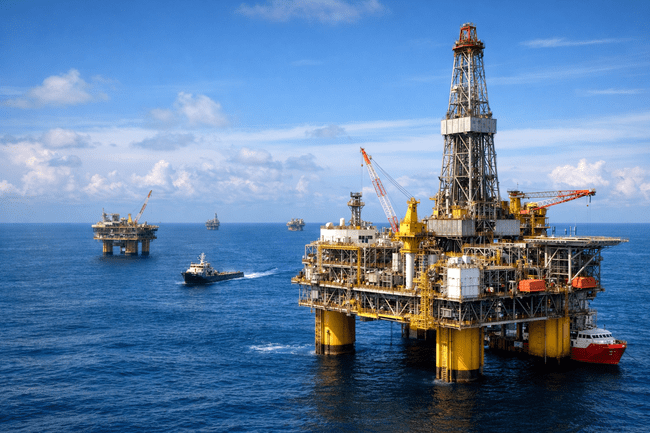
Enbridge Inc. (TSX: ENB; NYSE: ENB) and its Whistler Joint Venture partners have sanctioned the Bay Runner Twin Pipeline, a natural gas transmission project designed to deliver up to 2.6 billion cubic feet per day of additional capacity from Agua Dulce to NextDecade Corporation’s Rio Grande LNG facility near Brownsville, Texas. The pipeline will follow the existing right-of-way of the under-construction Bay Runner project and is expected to enter service by 2030. All incremental capacity is supported by long-term take-or-pay agreements, substantially reducing Enbridge’s direct exposure to natural gas prices and short-term utilisation risk. The sanction strengthens the infrastructure link between Permian Basin gas production and a Rio Grande LNG complex where five liquefaction trains representing around 30 million tonnes per annum of capacity are already under construction. The central tension is whether commercial certainty and an established corridor can keep project returns predictable as Enbridge manages a C$41 billion secured growth backlog and leverage above its stated target range.
Why does the Bay Runner Twin matter for Rio Grande LNG’s five-train construction programme?
Bay Runner Twin is being developed to serve additional liquefaction capacity at Rio Grande LNG rather than speculative demand that may or may not emerge. NextDecade has moved beyond the early development phase on its first five trains, with construction progressing across Phase 1, Train 4 and Train 5. The five-train complex is expected to produce approximately 30 million tonnes of liquefied natural gas annually when fully operational.
The first three trains entered construction in July 2023, while construction began on Train 4 in September 2025 and Train 5 in October 2025. NextDecade expects first LNG production from Train 1 during the first half of 2027. Guaranteed substantial-completion dates for the five trains extend from the fourth quarter of 2027 through the second quarter of 2031, creating a staggered increase in feed-gas requirements rather than one immediate step change.
The original Bay Runner pipeline is expected to enter service during the third quarter of 2026 and will support commissioning and initial operations at Rio Grande LNG. Bay Runner Twin is intended to provide another 2.6 Bcf/d by 2030, aligning more closely with the later stages of the five-train construction programme and additional LNG expansion. This sequencing reduces the risk of building all pipeline capacity years before associated liquefaction demand materialises.
The relationship between the LNG terminal and its feed-gas infrastructure is commercially important. A liquefaction plant cannot operate at design capacity without reliable access to large, continuous natural gas volumes. Pipeline constraints, compressor outages or inadequate supply diversity could reduce LNG production even after billions of dollars have been invested in liquefaction equipment. Bay Runner Twin therefore functions as essential production infrastructure rather than a peripheral connection.
How does following the original Bay Runner right-of-way reduce construction and permitting risk?
Enbridge said Bay Runner Twin will run along the right-of-way of the Bay Runner extension already under construction between Agua Dulce and the Rio Grande area. Reusing an established corridor may reduce the need to identify an entirely new route, negotiate a separate set of land arrangements and repeat portions of the development work associated with a greenfield alignment. It could also allow the partners to use existing engineering knowledge, access routes and construction logistics.
This does not make Bay Runner Twin a simple duplication exercise. A second high-capacity pipeline will still require detailed engineering, compression infrastructure, procurement of large-diameter pipe, construction crews, environmental compliance and the relevant state and federal authorisations. The project must also be built without disrupting the first Bay Runner pipeline or other infrastructure within the corridor.
Following an existing right-of-way can lower some development risk, but it can introduce congestion and construction-management challenges. Contractors may have to coordinate work around operating facilities, existing crossings and communities already affected by the first project. Material prices, labour availability and compressor-equipment lead times could also change substantially before the targeted 2030 start date.
Enbridge has not disclosed the project’s capital cost, construction start date or its share of the required investment. The absence of these figures prevents a precise assessment of capital efficiency. The right-of-way strategy appears economically sensible, but the eventual return will depend on whether the partners can translate that advantage into lower unit costs and on-time delivery.
Why do long-term take-or-pay agreements materially reduce Bay Runner Twin revenue risk?
The strongest feature of Bay Runner Twin’s commercial structure is that all incremental service capacity is supported by long-term take-or-pay agreements. Under this model, customers generally commit to paying for reserved transportation capacity regardless of whether they use the full amount during every period. The arrangement gives the pipeline owner more predictable cash flow than a system dependent mainly on short-term nominations or spot transportation demand.
This structure does not eliminate customer or project risk. The value of the contracts depends on their duration, pricing, credit protection and the financial strength of the counterparties. Enbridge has not disclosed the customer names, contract length, toll structure or contractual protections associated specifically with Bay Runner Twin. The company has therefore established that the project is commercially supported without providing enough detail for investors to calculate its expected contribution.
Take-or-pay contracts also separate pipeline economics from the daily direction of natural gas prices. Enbridge’s return should be driven primarily by contracted transportation payments, operating availability and cost control rather than by whether Henry Hub prices rise or fall. This supports the company’s broader strategy of generating cash flow from infrastructure services instead of taking large unhedged commodity positions.
The remaining dependency is the successful development and operation of Rio Grande LNG. Long-term contracts offer protection, but a significant delay or restructuring at the LNG facility could still create legal, commercial or scheduling complications. The risk is lower than it would be for an uncontracted pipeline, but contractual certainty should not be confused with construction certainty.
How does Bay Runner Twin expand Enbridge’s Whistler Joint Venture strategy in the Permian Basin?
Enbridge holds a 19% interest in the Whistler Parent Joint Venture, alongside WhiteWater and I Squared Capital with 50.6% and MPLX LP with 30.4%. The partnership owns the Whistler pipeline network and related assets connecting Permian Basin natural gas production with Agua Dulce, Gulf Coast LNG terminals and other demand centres. Enbridge accounts for the holding as an equity-method investment rather than consolidating the entire joint venture into its financial statements.
The existing Whistler Pipeline stretches from the Permian Basin to Agua Dulce, creating the upstream transportation leg required to move gas toward the South Texas coast. Bay Runner and Bay Runner Twin extend that commercial pathway from the Agua Dulce hub toward Rio Grande LNG. The combination provides a more integrated route from a major producing basin to an export terminal.
The strategy addresses a persistent challenge in the Permian Basin. Oil production brings associated natural gas to the surface, meaning gas volumes can grow even when producers are primarily targeting crude oil. When takeaway capacity fails to keep pace, regional gas prices can weaken sharply and may occasionally become negative. New pipelines can improve market access for producers while supplying LNG terminals with competitively priced feed gas.
Enbridge’s minority ownership limits its share of both the project’s capital requirements and future earnings. This can improve capital efficiency because the company gains exposure to a large infrastructure network without funding every dollar itself. The trade-off is that Enbridge does not independently control the joint venture’s project selection, construction decisions or operating strategy.
The joint-venture model is therefore a form of financial and operational risk sharing. It allows the partners to pursue infrastructure that may be too large or concentrated for one participant to fund alone. Bay Runner Twin will test whether that model can deliver complex projects while maintaining clear governance, cost accountability and alignment among multiple owners.
What does Rio Grande LNG’s construction progress indicate about future gas demand?
NextDecade reported that overall construction progress at the end of June 2026 had reached approximately 74% for Trains 1 and 2, 50.4% for Train 3, 15.5% for Train 4 and 9.4% for Train 5. Train 1 electrical commissioning was underway, the main substation had been energised and more than 100 operating employees had been seconded to Bechtel as part of commissioning and start-up preparations.
The figures demonstrate that the first phase is moving toward operations while the later trains remain at earlier construction stages. This supports the phased pipeline strategy. Original Bay Runner capacity can assist the early trains, while Bay Runner Twin is scheduled to arrive as Train 4 and Train 5 approach or achieve substantial completion.
Rio Grande LNG’s first five trains are also substantially commercialised. NextDecade reported that approximately 85% of expected production capacity across Trains 1 through 5 was covered by long-term LNG sale and purchase agreements. The customer base includes major international energy and utility companies, while most contracted pricing is linked to Henry Hub.
Long-term LNG sales do not guarantee uninterrupted construction or operation, but they provide stronger demand visibility than reliance on spot cargoes. They also strengthen the case for dedicated gas transportation because NextDecade must secure reliable feed gas to meet future delivery commitments. Bay Runner Twin is therefore linked to contracted LNG volumes as well as the physical buildout of the terminal.
Rio Grande LNG also has expansion ambitions beyond Train 5. NextDecade filed a Federal Energy Regulatory Commission application for Train 6 in May 2026 and is targeting a potential final investment decision in the second half of 2027, subject to permits, commercial support and financing. Further trains could create additional demand for pipeline capacity, although Bay Runner Twin should be evaluated on the contracted service already disclosed rather than on unapproved expansion.
Can Enbridge fund Bay Runner Twin while managing a C$41 billion secured project backlog?
Enbridge ended the second quarter of 2026 with approximately C$41 billion of secured growth projects and expects to fund that programme through annual growth-capital capacity of C$10 billion to C$11 billion. The company had sanctioned C$9 billion of projects during the first half and remained on track with its target of announcing C$10 billion to C$20 billion of new projects across 2026 and 2027.
The backlog spans liquids pipelines, natural gas transmission, utilities, storage and renewable power. This diversification gives Enbridge several routes to growth, but it also raises the importance of construction sequencing and capital discipline. Simultaneous projects can compete for engineering resources, management attention and financing even when each project is supported by long-term contracts.
Enbridge reported second-quarter adjusted EBITDA of C$4.78 billion, up from C$4.64 billion a year earlier. Cash provided by operating activities increased to C$4.11 billion from C$3.24 billion, while distributable cash flow was approximately C$2.9 billion. The company reaffirmed 2026 guidance for adjusted EBITDA of C$20.2 billion to C$20.8 billion and distributable cash flow per share of C$5.70 to C$6.10.
The financial position is substantial, but not without pressure. Rolling 12-month debt-to-EBITDA stood at 5.1 times at the end of the second quarter, above Enbridge’s stated target range of 4.5 to 5 times. Management attributed part of the elevation to foreign-exchange translation, but higher debt balances also contributed to increased interest expense during the quarter.
Bay Runner Twin’s joint-venture structure should reduce the amount Enbridge must fund relative to the pipeline’s total cost. However, the company has not disclosed the project cost or its expected contribution. Investors will need evidence that Enbridge can fund the wider backlog without relying excessively on asset sales, equity issuance or leverage remaining above target for an extended period.
Why did Enbridge shares decline despite stronger EBITDA and the Bay Runner Twin sanction?
Enbridge shares closed at C$76.28 on the Toronto Stock Exchange on July 31, 2026, down 1.8% during the session in which the company released its second-quarter results and announced Bay Runner Twin. The stock had fallen approximately 4.9% from its July 24 close of C$80.21 and was around 0.8% below its June 30 close of C$76.91.
The shares remained close to the upper end of their 52-week range of C$61.99 to C$80.65. The July 31 close was only about 5.4% below the 52-week high and approximately 23% above the 52-week low. Enbridge’s New York-listed shares ended at US$54.46, giving the company a market capitalisation of roughly US$119 billion.
The market response should not be attributed solely to Bay Runner Twin. The company reported lower GAAP earnings and a modest decline in adjusted earnings per share, while higher interest expense and depreciation offset part of the improvement in adjusted EBITDA. Leverage at 5.1 times and the rapid expansion of the project backlog may also have tempered enthusiasm.
Bay Runner Twin is unlikely to produce a material near-term earnings contribution because service is not expected until 2030. Its value lies in extending Enbridge’s longer-term contracted growth profile. Investors evaluating the announcement must therefore weigh future cash-flow visibility against the capital required before those cash flows begin.
The stock’s position near its 52-week high indicates that the market had already assigned considerable value to Enbridge’s defensive cash flows, dividend record and infrastructure-growth opportunities. In that context, another sanctioned project may support the long-term thesis without producing an immediate rerating. Further gains are likely to require continued execution and visible per-share growth rather than backlog expansion alone.
What milestones will determine whether Bay Runner Twin creates durable shareholder value?
The first milestone is successful completion and operation of the original Bay Runner pipeline. Its expected third-quarter 2026 in-service date will provide an early test of the corridor, construction approach and commercial interface with Rio Grande LNG. Reliable operation would reduce uncertainty surrounding the larger twin project.
The second milestone is continued progress across Rio Grande LNG’s first five trains. First LNG from Train 1 in the first half of 2027 would demonstrate that the terminal is moving from construction into revenue-generating operations. Timely completion of Trains 4 and 5 will be especially important because Bay Runner Twin is intended to serve additional LNG capacity later in the decade.
Enbridge and its partners must also disclose or demonstrate greater clarity around Bay Runner Twin’s cost, construction schedule, permits and expected returns. Full capacity contracting is a strong starting point, but shareholders still need to know whether the investment can earn an attractive return after financing, construction and operating costs.
The final test is balance-sheet execution. Enbridge must place projects into service, convert backlog into EBITDA and move debt-to-EBITDA back within its stated range. Bay Runner Twin will strengthen the investment case only if its contracted cash flows contribute to per-share growth without forcing the company to compromise financial flexibility elsewhere.
Enbridge has improved the project’s commercial position by securing take-or-pay agreements for all incremental capacity and locating the pipeline along an established right-of-way. The unresolved questions concern capital cost, attributable investment and delivery risk across a complex LNG-linked infrastructure chain. Successful operation of the first Bay Runner system, continuing Rio Grande LNG construction and measurable leverage improvement would strengthen the thesis. Delays, cost inflation or prolonged balance-sheet pressure would weaken the argument that a larger backlog automatically creates greater shareholder value.
What are the key takeaways from Enbridge’s Bay Runner Twin Pipeline sanction?
- Enbridge and its Whistler Joint Venture partners have sanctioned the Bay Runner Twin Pipeline in Texas.
- The project will provide up to 2.6 Bcf/d of additional natural gas transportation capacity.
- Bay Runner Twin will run along the existing Bay Runner right-of-way between Agua Dulce and the Rio Grande LNG area.
- The pipeline is expected to enter service by 2030.
- All incremental capacity is supported by long-term take-or-pay agreements.
- NextDecade has five Rio Grande LNG trains representing approximately 30 MTPA under construction.
- The original Bay Runner pipeline is expected to enter service during the third quarter of 2026.
- Enbridge owns 19% of the Whistler Parent Joint Venture, limiting but not eliminating its capital exposure.
- Enbridge has not disclosed Bay Runner Twin’s total cost or its attributable investment.
- Project execution, Rio Grande LNG commissioning and improvement in Enbridge’s 5.1-times leverage ratio are the next major proof points.
Discover more from Business-News-Today.com
Subscribe to get the latest posts sent to your email.