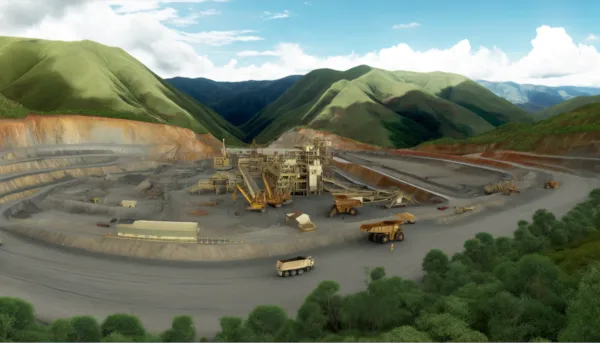
Chile’s state-owned copper producer Codelco is working on a broad restructuring plan that could reshape its workforce, contractor base and operating model as new Chief Executive Officer Jorge Gómez attempts to reverse years of stagnant production and rising costs. Reuters reported on September 16, citing four people familiar with the discussions, that potential workforce reductions under consideration could range from 5% to 20%, although Codelco itself said it was too early to speculate on the eventual measures and no final layoff programme has been announced.
The distinction is crucial because the restructuring remains under development and could extend until the end of 2026 rather than being completed in October as previously anticipated. Union representatives had not been formally informed of a specific layoff plan when Reuters reported the discussions, and the company has described its current work as a diagnostic process aimed at defining strategic priorities and a recovery programme. That means any percentage attached to future workforce reductions should remain clearly attributed to sources familiar with the process rather than presented as a decision already made by management.
What is already confirmed is the operating pressure facing Gómez. Codelco’s own copper production fell 11% year over year to 564,000 metric tons during the first half of 2026, while direct cash costs increased and operational restrictions affected major assets including El Teniente, Chuquicamata and Ministro Hales. At the same time, a powerful copper-price rally lifted first-half EBITDA by 68% to $4.65 billion and consolidated profit to $669 million, creating an unusual restructuring environment in which the company’s financial results are improving even while its underlying production efficiency remains under pressure.
Why is Codelco considering a major restructuring when copper prices are so strong?
Codelco’s current financial performance demonstrates why high commodity prices can temporarily mask operational problems without actually solving them. First-half EBITDA reached $4.648 billion, up 68% from the comparable period in 2025, while contributions to Chile’s Treasury increased 15% to $933 million. Those gains were driven largely by stronger copper prices rather than a surge in physical output, because Codelco produced fewer tonnes while its direct operating costs moved higher.
The first-half production decline to 564,000 tonnes was particularly concerning because Codelco has spent years attempting to stabilise aging mines and bring major structural projects into production. Reuters reported that the company did not reaffirm its earlier full-year production range of approximately 1.33 million to 1.36 million tonnes after the first-half results, reflecting the difficulty of recovering lost output after disruptions at key operations. Direct cash cost increased 7% to 231.6 cents per pound in the first half, adding another layer of pressure even as higher copper prices strengthened earnings.
The restructuring therefore appears aimed at improving the underlying productivity of the company rather than responding to a short-term earnings collapse. Copper prices can rise or fall quickly, while labour structures, contractor arrangements, equipment utilisation and mine productivity are far more persistent. Gómez is effectively being asked to create an operating model capable of generating stronger production and lower unit costs even when the commodity-price environment is less favourable than it is today.

How large is Codelco’s workforce exposure if job cuts become part of the plan?
Codelco is not simply a large mining employer; it operates an enormous ecosystem of direct employees, service contractors and project contractors across Chile. Its 2024 annual reporting showed 15,831 direct employees alongside 59,564 contractor workers, including 23,878 people performing operating and service work and another 35,686 working on investment projects. That means the wider workforce connected to Codelco operations can exceed 75,000 people before considering additional indirect employment generated through suppliers and local economies.
The company has continued to describe itself as employing roughly 16,000 direct workers, while its contractor system remains central to mine operations and capital-project execution. Codelco has previously said close to 80,000 people may require accreditation across its direct and indirect workforce at different times, demonstrating how deeply contractors are integrated into production, maintenance and project development. This scale explains why even relatively modest percentage reductions could have a substantial employment impact if workforce changes eventually extend beyond headquarters or management structures.
Reuters sources suggested contractors could be particularly exposed in any eventual restructuring, although Codelco has not confirmed that outcome. Contractor numbers naturally fluctuate as investment projects ramp up or conclude, making them easier to adjust than permanent employment in some circumstances, but large reductions could also affect project schedules and maintenance capacity. Management will therefore have to distinguish between contractor positions associated with temporary investment peaks and capabilities required to restore production at assets where operational performance is already under strain.
Why has Jorge Gómez become central to the Codelco turnaround?
Gómez took over as chief executive on July 13 after the board appointed him to replace Rubén Alvarado, bringing more than three decades of mining experience and a long record in operational leadership. Before joining Codelco, he spent approximately 14 years as chief executive of the Collahuasi copper operation and previously held senior operating positions at Antofagasta Minerals and Codelco itself. His appointment was explicitly framed around strengthening operational management, stabilising production and restoring confidence in a business facing substantial strategic challenges.
On his first day, Gómez told employees that safety, operational stability and disciplined management would be central priorities, while subsequent visits to major divisions focused on closer management of operations and rigorous adherence to production plans. His first site visit as chief executive was to El Teniente, where he met employees and union representatives and reviewed safety measures following the fatal accident that affected the division in 2025. Those early actions suggest the restructuring is being built around operating discipline rather than functioning primarily as a financial cost-cutting exercise.
Gómez has also moved quickly to reshape senior leadership. In August and September, Codelco announced several new vice presidents covering operations, mining resources and innovation, strategy and management control, corporate affairs and sustainability, and human resources. The company said the changes were intended to combine existing internal capabilities with executives bringing new perspectives and experience, reinforcing the view that the restructuring began at the leadership level before any potential broader workforce action.
How serious is Codelco’s production problem?
Codelco remains the world’s largest copper producer by historical significance and one of the most strategically important suppliers to global metals markets, but its production base has struggled to return to earlier peaks. Total copper production including attributable output from investments such as El Abra, Anglo American Sur and Quebrada Blanca reached approximately 1.44 million tonnes in 2025, while Codelco’s own production remained around 1.3 million tonnes. Aging ore bodies, lower grades, project delays and operational disruptions have prevented the company from achieving the sustained recovery expected from its enormous capital-investment programme.
Codelco’s direct cash cost rose to 208.6 cents per pound in 2025 from 199.1 cents a year earlier, driven by factors including equipment rental, maintenance materials, labour costs and efforts to accelerate mine development. Management originally expected 2026 direct costs of approximately 221 to 225 cents per pound, yet first-half costs had already reached 231.6 cents per pound. That deterioration indicates why labour productivity, contracting structures and operational efficiency have become priorities even though copper prices are providing significant earnings protection.
The central restructuring challenge is therefore not simply to remove expenses but to recover output faster than costs rise. Cutting too deeply into mining, maintenance, engineering or project teams could temporarily reduce payroll while making it harder to stabilise production, which would undermine the reason for restructuring in the first place. Gómez must consequently find savings in areas where organisational complexity or contractor intensity exceeds operational value while protecting capabilities needed to operate complex underground and open-pit assets safely.
Why does El Teniente matter so much to the restructuring?
El Teniente is one of Codelco’s largest and most important divisions, and disruptions there have become a major factor behind weaker 2026 output. Codelco said first-half production was affected primarily by operational restrictions at El Teniente as well as lower production at Chuquicamata and Ministro Hales. The company’s 2025 figures already showed El Teniente production declining 13% to approximately 310,000 tonnes following the fatal accident and subsequent operating restrictions.
The incident also changed the leadership conversation around productivity because safety and production can no longer be treated as separate objectives. Gómez has repeatedly placed operational discipline and risk anticipation alongside output recovery, indicating that the company wants to avoid a turnaround strategy that pressures sites to produce more without addressing underlying safety and planning weaknesses. At El Teniente, he met employees and unions directly after assuming the CEO role and emphasised stabilising operations while rebuilding trust.
This matters for workforce decisions because contractor-heavy mining operations can become difficult to manage when responsibilities are fragmented across many companies and layers of supervision. A restructuring could theoretically reduce duplication and clarify accountability, but cutting resources indiscriminately after a serious operational incident would create obvious risks. The quality of any workforce redesign will therefore matter more than the headline percentage eventually attached to it.
Could contractors face greater pressure than permanent Codelco employees?
Contractors represent a much larger numerical workforce than Codelco’s direct employees and are deeply embedded in maintenance, construction, operational services and structural projects. At the end of 2024, Codelco reported almost 60,000 contractor personnel compared with approximately 15,800 direct employees, meaning changes to contractor deployment can produce substantially larger workforce effects without altering the permanent payroll by the same magnitude.
The contractor population is also more variable because investment-project staffing rises and falls as major mine developments move through construction phases. That provides management with flexibility to reduce contractor numbers as projects reach completion or priorities change, but it also means contractors carry a substantial portion of the technical work required to keep Codelco’s capital programme progressing. Reuters reported that industry observers expect contractor employment to receive particularly close scrutiny during the restructuring, although the company has not publicly confirmed a contractor-reduction target.
A major contractor reduction could therefore improve costs quickly while creating secondary consequences across mining suppliers, engineering companies and regional employment markets. Codelco will need to differentiate between contractor roles that reflect excessive organisational complexity and those necessary to prevent further delays in strategic mine developments. That distinction is especially important because delays in structural projects have been one of the reasons Codelco’s production recovery has taken longer than originally expected.
Why are stronger copper prices not enough to solve Codelco’s cost problem?
Copper prices have provided an extraordinary financial buffer during 2026. Reuters reported an average first-half realised copper price of around 653.2 cents per pound compared with approximately 461.7 cents a year earlier, helping pre-tax profit rise sharply despite falling production. That pricing environment explains why EBITDA can climb 68% while own copper production declines 11%, but it does not change the amount of labour, equipment, energy and capital required to produce each tonne.
Commodity producers become particularly vulnerable when strong prices postpone difficult operating decisions because the financial consequences of poor productivity remain hidden until the price cycle turns. Gómez appears to be attempting the opposite approach by using the current earnings environment to diagnose structural weaknesses while Codelco still has substantial financial capacity. If successful, the company could emerge better positioned for a future period in which copper prices are less supportive.
Codelco also faces enormous capital requirements as it works to extend the lives of mature assets and develop replacement production. Its 2026 plan had envisaged approximately $4 billion to $5 billion of capital expenditure, a scale that leaves little room for persistent cost overruns or projects that fail to produce expected output. Workforce productivity, contractor management and project execution therefore feed directly into the company’s ability to finance long-term production recovery.
What does the management reshuffle suggest about where Codelco may cut costs?
Codelco’s leadership changes provide some evidence that Gómez is first targeting how the organisation is managed rather than beginning with a publicly announced mass-layoff programme. The company added new leaders in corporate strategy, operations, mining resources, sustainability and human resources during August and September, explicitly saying the management team would focus on safety, operating stability and restoring results. That approach suggests the eventual restructuring could involve reporting lines, accountability and organisational layers in addition to straightforward headcount reductions.
Large industrial organisations often accumulate overlapping corporate functions and contractor structures over decades, particularly when expansion projects create temporary teams that later become embedded in the organisation. Codelco’s recovery plan gives Gómez an opportunity to examine whether those structures still support production or have become sources of delay and cost. Reuters sources indicated that potential workforce reductions under discussion could span a wide 5% to 20% range, which itself suggests management has not yet settled the extent or design of any employment action.
The wide range also makes it inappropriate to calculate a definitive number of future job losses. Applying speculative percentages to Codelco’s entire direct and contractor population would produce figures that the company has neither confirmed nor endorsed, particularly because different categories of employees may be treated differently. The more reliable conclusion is that workforce productivity is now formally part of the turnaround debate while management continues assessing the operational consequences.
Is there a Codelco stock price for investors to monitor?
Codelco is wholly owned by the Chilean state and does not have publicly traded common shares, so there is no Codelco stock price that can provide a daily market reaction to restructuring reports. Investors instead assess the company through its international bonds, credit quality, production outlook, copper prices, debt and ability to generate sufficient cash to fund both government contributions and capital investment.
That structure makes operational performance particularly important because the company cannot issue conventional equity to public shareholders when large projects need additional funding. Codelco reported consolidated profit of $2.423 billion and EBITDA of $6.67 billion for 2025, while contributions to Chile’s Treasury totalled $1.778 billion. The first half of 2026 continued to generate strong financial contributions, but declining production and higher unit costs mean investors in its debt still have reason to focus on whether the apparent earnings strength is sustainable beyond the copper-price cycle.
For bondholders and commodity markets, a credible restructuring could therefore be positive if it produces higher production and lower costs without creating operational disruption. A poorly executed workforce reduction, by contrast, could damage project delivery or production at precisely the moment when the global copper market increasingly depends on new supply. The eventual details of Gómez’s turnaround plan will consequently matter far beyond Codelco’s employees.
What should Codelco employees and contractors watch next?
The first milestone is the timing of the formal recovery plan. Codelco has indicated that the restructuring could take until the end of 2026 to finalise rather than being ready in October, giving Gómez and his new management team additional time to diagnose operational weaknesses and determine where changes are required. Until that process is complete, reports of workforce reductions should remain framed as possibilities under consideration rather than decisions already communicated to employees.
The second issue is whether management differentiates between direct employees and contractors. Codelco’s contractor workforce is several times larger than its own permanent headcount and varies significantly with investment activity, making it an obvious area for review as the company seeks lower costs. However, many contractors perform critical operational, maintenance and project functions, meaning reductions that appear attractive financially could become counterproductive if they delay development or weaken operating reliability.
The third milestone is production. Codelco’s first-half decline to 564,000 tonnes means the restructuring will ultimately be judged less by the number of positions eliminated than by whether the company can restore tonnes while containing unit costs. Gómez has repeatedly framed safety, operational stability and management discipline as interconnected priorities, and that framework will be tested once the turnaround moves from diagnosis into implementation.
Codelco therefore presents a workforce restructuring story with an important contradiction. Financial results are benefiting enormously from high copper prices, yet the operating engine underneath those results is producing less metal at higher cost, forcing management to reconsider how one of the world’s most important mining organisations is structured. The company has not confirmed mass layoffs, but workforce and contractor productivity are clearly moving closer to the centre of the recovery debate as Gómez prepares a plan that could determine not only employment across Codelco but the future output trajectory of a company central to global copper supply.
Discover more from Business-News-Today.com
Subscribe to get the latest posts sent to your email.