




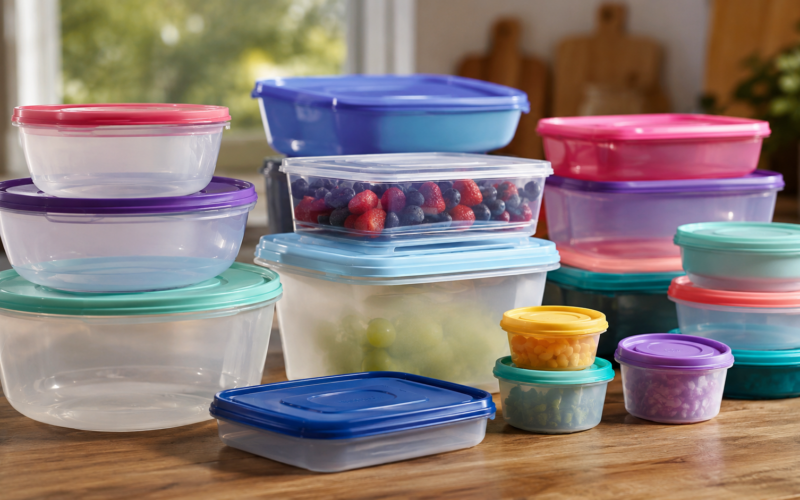
Betterware de México, S.A.P.I. de C.V. (NYSE: BWMX) has completed its acquisition of Tupperware’s Latin America operations, giving the Mexican consumer products group ownership of a major regional household brand and a perpetual, royalty-free, exclusive license to the Tupperware brand across Latin America. The $250 million transaction adds a business that still carries deep consumer recognition in markets such as Mexico and Brazil, even after Tupperware’s global restructuring pressures weakened the brand’s broader corporate position. The acquisition is strategically relevant because Betterware de México is combining Betterware, Jafra, and Tupperware under a broader direct-selling and household products platform. With BWMX recently trading around $18.85 and the company valued near $703 million, investors are now weighing whether this deal can accelerate earnings growth or add integration and leverage risk to an already ambitious regional expansion strategy.
Why Betterware de México’s Tupperware acquisition matters for Latin American direct selling
Betterware de México’s acquisition of Tupperware’s Latin America operations is more than a brand rescue story. It gives Betterware de México control of a household name that still carries decades of recognition in food storage, kitchenware, and direct-selling networks across the region. The value of Tupperware in Latin America is not only in the products themselves, but in the installed base of consumers, distributors, independent representatives, manufacturing assets, and emotional familiarity attached to the brand.
The deal also strengthens Betterware de México’s position in a direct-selling market that remains structurally different from North America and Europe. In Latin America, relationship-based selling, catalog-driven commerce, and local representative networks still matter, even as digital channels become more important. Betterware de México already operates with direct-to-consumer and social-selling capabilities, and Tupperware gives the company another major brand to route through that infrastructure.
The strategic logic is clear. Betterware de México is not simply adding sales. It is attempting to consolidate consumer categories, representative networks, and household product relevance under a more diversified platform. That could create cross-selling opportunities across Betterware, Jafra, and Tupperware. It could also create operational complexity if each brand has different customer profiles, margins, distribution needs, and legacy systems. The opportunity is big, but so is the management workload.
How the $250 million structure could affect BWMX investors and balance-sheet risk
The transaction structure matters because Betterware de México is paying $250 million for Tupperware’s Latin America operations, with $215 million in cash funded through debt and $35 million in BeFra shares. That gives the company immediate strategic scale, but it also increases financial obligations at a time when consumer demand, interest rates, currency volatility, and integration spending can all affect returns. For BWMX investors, the deal is not just about whether Tupperware is famous. Everyone knows the containers. The harder question is whether the acquisition price, financing mix, and integration costs can create attractive shareholder returns.
The company previously positioned the transaction as highly accretive, citing expectations for meaningful earnings per share contribution and EBITDA from the acquired business. That accretion case is important because it gives investors a measurable framework for judging whether the deal is working. If Tupperware’s Latin America operations contribute expected earnings and Betterware de México improves margins through manufacturing, procurement, product innovation, and distribution synergies, the financing burden may look justified.
However, debt-funded acquisitions come with less room for disappointment. If revenue recovery is slower than expected, if integration spending runs high, or if consumer demand softens in key markets, the balance-sheet impact could become more visible. Betterware de México is buying a brand with real regional equity, but Tupperware’s global struggles also show what can happen when a legacy direct-selling model fails to adapt fast enough to digital commerce and changing consumer behavior.
Why Tupperware still has strategic value despite its global restructuring problems
Tupperware’s global challenges do not erase the brand’s remaining value in Latin America. In fact, the acquisition case depends on the idea that Tupperware’s regional consumer relevance has outlasted the weaknesses of its former global corporate structure. That distinction is important. A brand can be financially distressed at the parent level while still retaining powerful customer awareness in specific geographies.
In Latin America, Tupperware has historically benefited from household penetration, representative networks, and strong association with food storage and kitchen organization. The region also offers markets where direct-selling relationships can still support product discovery and repeat purchasing. Betterware de México appears to be betting that Tupperware’s brand equity can be revived with fresher product development, stronger digital tools, more disciplined distribution, and better integration into an existing regional platform.
The risk is that nostalgia does not pay invoices by itself. Consumers may recognize Tupperware, but recognition must be converted into purchase frequency, margin stability, and representative productivity. The company must modernize the brand without stripping away the trust and familiarity that made it valuable. That is a delicate repositioning exercise. Lean too hard into legacy, and the brand may feel dated. Push too aggressively into reinvention, and Betterware de México could lose the emotional shorthand that makes Tupperware worth buying.
How Betterware, Jafra, and Tupperware could create a broader household and lifestyle platform
The acquisition gives Betterware de México a more layered brand architecture. Betterware focuses on household products and organization, Jafra brings beauty and personal care exposure, and Tupperware adds kitchenware and food storage heritage. Together, the three brands create a direct-selling portfolio that reaches multiple household spending categories. That matters because category breadth can improve representative economics, customer engagement, and average order opportunities.
This portfolio structure could help Betterware de México deepen its relationship with consumers who already buy through social or representative-led channels. A customer who purchases beauty products through Jafra may also be reachable for Tupperware kitchen products. A Betterware household products customer may be more open to broader home and kitchen offerings. If Betterware de México can unify technology, logistics, training, and marketing across the platform, it could generate operating leverage from a larger sales ecosystem.
The challenge is avoiding brand confusion. Betterware, Jafra, and Tupperware have different histories, product identities, and customer expectations. Betterware de México must preserve each brand’s distinct position while using shared infrastructure behind the scenes. That is often where consumer acquisitions either create value or quietly lose it. The customer sees the brand. The investor sees the margins. Management has to satisfy both.
Why BWMX stock sentiment depends on acquisition execution more than brand nostalgia
BWMX recently traded around $18.85, giving Betterware de México a market capitalization of approximately $703 million. That valuation makes the $250 million Tupperware Latin America acquisition a major strategic move relative to the size of the company. Investors are therefore likely to judge the transaction not as a small bolt-on, but as a defining platform expansion.
The positive case for BWMX stock is that Betterware de México has acquired a recognizable brand at a valuation that could look attractive if management delivers projected EBITDA and earnings accretion. Tupperware’s regional operations could add scale, diversify revenue, improve procurement economics, and deepen the company’s direct-selling platform. If integration succeeds, the deal could make Betterware de México a more important Latin American consumer products consolidator.
The cautious case is that the market may demand proof quickly because the acquisition uses debt, adds operational complexity, and brings a brand that needs reinvention. Investors may ask whether Betterware de México can manage leverage while investing enough to rebuild Tupperware’s growth trajectory. A famous name can open the door, but it does not guarantee repeat sales, modern relevance, or margin expansion. Brand equity is useful. Execution is what turns it into free cash flow.
What integration risks could challenge Betterware de México after closing the deal
The most immediate execution risk is integration across markets, systems, people, suppliers, and sales networks. Tupperware’s Latin America operations are not a single simple asset. The acquired platform spans regional operations, manufacturing, distribution, brand licensing, and independent representative relationships. Betterware de México must bring those pieces into its operating model without disrupting customer service or representative confidence.
Manufacturing and supply-chain integration will also matter. Tupperware has production assets in the region, including important operations in Mexico and Brazil. If Betterware de México can improve utilization and procurement efficiency, manufacturing synergies could help margins. If integration creates bottlenecks or service issues, the company could damage the brand at the exact moment it is trying to relaunch momentum.
There is also a cultural and commercial integration challenge. Tupperware’s representative network and consumer culture may not behave exactly like Betterware’s or Jafra’s. Training, incentives, digital tools, product catalogs, pricing, and promotions all need to be aligned carefully. Direct-selling businesses depend heavily on trust and motivation across their representative base. If representatives feel confused or under-supported, the acquisition thesis could weaken long before it appears in a quarterly margin line.
How the Tupperware deal could reshape Betterware de México’s long-term growth profile
If executed well, the Tupperware Latin America acquisition could change Betterware de México’s long-term growth profile by making the company a more diversified regional consumer platform. The deal expands category exposure, adds manufacturing and distribution assets, and creates a stronger brand portfolio across home, kitchen, organization, beauty, and personal care. That breadth could make Betterware de México more resilient than a narrower direct-selling business.
The acquisition could also give Betterware de México a stronger position in Latin American consumer consolidation. Many legacy consumer brands have value but need new ownership, digital tools, and operational discipline. If Betterware de México successfully revives Tupperware’s regional operations, investors may begin viewing the company as a platform capable of acquiring, modernizing, and scaling established brands through its direct-to-consumer infrastructure.
The next phase will decide whether this becomes a growth story or a leverage story. Betterware de México has acquired a brand with real regional power, but the company now has to prove that it can convert that power into revenue acceleration, EBITDA contribution, debt service capacity, and shareholder value. The market will not reward sentimentality forever. Even Tupperware has to close the lid on the numbers.
Key takeaways on Betterware de México’s Tupperware acquisition and BWMX stock
• Betterware de México has completed the acquisition of Tupperware’s Latin America operations, adding a major regional household brand to its consumer platform.
• The $250 million deal includes $215 million in debt-funded cash and $35 million in BeFra shares, making balance-sheet execution central to the investment case.
• The acquisition gives Betterware de México a perpetual, royalty-free, exclusive license to the Tupperware brand across Latin America.
• Betterware, Jafra, and Tupperware together create a broader direct-selling portfolio across household products, kitchenware, beauty, and personal care.
• BWMX investors may view the transaction as strategically attractive if Betterware de México delivers projected EBITDA contribution and earnings accretion.
• The main risks include integration complexity, leverage, representative network execution, brand modernization, and consumer demand volatility.
• Tupperware’s global restructuring problems do not eliminate its Latin American brand value, but Betterware de México must prove the brand can regain growth.
• Manufacturing assets in Mexico and Brazil could support operational synergies if Betterware de México improves utilization and supply-chain discipline.
• The acquisition may strengthen Betterware de México’s position as a Latin American consumer products consolidator if execution is successful.
• BWMX stock sentiment will likely depend on whether the deal becomes a platform-growth catalyst or a debt-funded integration challenge.
Discover more from Business-News-Today.com
Subscribe to get the latest posts sent to your email.

