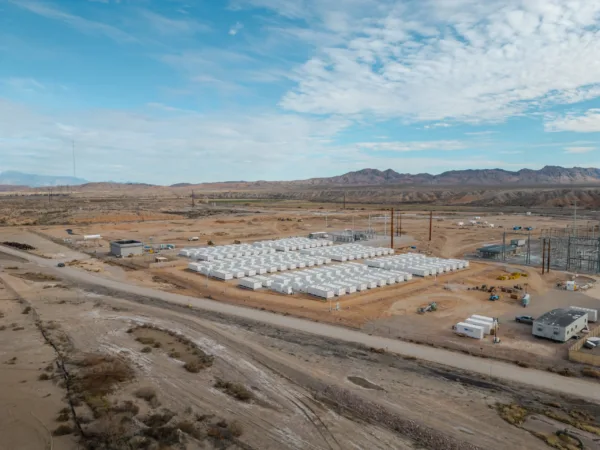



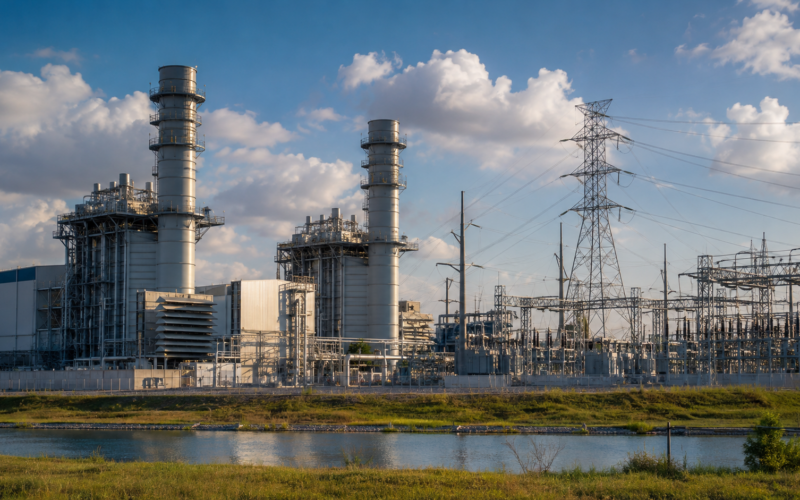
Constellation Energy Corporation (NASDAQ: CEG) has agreed to sell the 606MW Brazos Valley Energy Center in Texas to LS Power for $860 million before closing adjustments, completing the final asset-sale agreement required under regulatory commitments associated with Constellation Energy’s acquisition of Calpine Corporation. The natural gas-fired combined-cycle facility, formerly known as the Jack A. Fusco Energy Center, operates in the Electric Reliability Council of Texas market near Houston and is expected to transfer to LS Power by the end of 2026, subject to United States Department of Justice approval and customary closing conditions. The transaction values the plant at approximately $1,419 per kilowatt, placing a substantial price on operating dispatchable generation at a time when Texas electricity demand is expanding. For Constellation Energy, the disposal removes the final outstanding plant-level antitrust commitment while generating cash that can support capital allocation elsewhere. For LS Power, the central question is whether acquiring an existing efficient gas plant at a premium valuation will prove more attractive than attempting to build equivalent generation in an increasingly constrained development environment.
Why is LS Power paying approximately $1,419 per kilowatt for the Brazos Valley Energy Center?
The $860 million transaction value divided by the plant’s 606MW capacity produces an acquisition price of approximately $1,419 per kilowatt. That headline metric is significant because LS Power agreed in March to pay $5 billion for approximately 4.4GW of predominantly natural gas-fired Constellation Energy generation in the PJM Interconnection, a transaction Constellation Energy valued at approximately $1,142 per kilowatt. Brazos Valley therefore carries a roughly 24% higher headline price per kilowatt than the separate PJM portfolio.
The comparison should not be treated as evidence that one transaction is intrinsically expensive or cheap. Power plants differ in age, efficiency, fuel access, maintenance requirements, location, market design, operating history and expected earnings. The PJM transaction also contains multiple facilities and approximately 4.4GW of capacity across Delaware and Pennsylvania, while Brazos Valley is one 606MW combined-cycle plant in the ERCOT market.
Location may explain part of the difference. ERCOT has experienced rapid electricity-demand growth associated with population expansion, industrial investment, electrification and large-load development. Existing plants with grid interconnection, permits, gas supply arrangements and operating histories can therefore carry scarcity value that is not captured by capacity alone.
The alternative for LS Power would be to develop new generation. A greenfield project must secure a site, transmission interconnection, gas supply, permits, turbines, engineering contractors and financing before generating its first megawatt-hour. Equipment lead times and competition for skilled construction resources can stretch project schedules. Buying Brazos Valley gives LS Power operating capacity without waiting through the entire development cycle.
That advantage helps explain why existing generation assets are increasingly being evaluated against replacement cost rather than historical construction cost. LS Power is effectively buying time, grid access and operational certainty alongside the physical plant.

Why does the Brazos Valley sale complete an important regulatory chapter for Constellation Energy?
The sale is a direct consequence of the antitrust resolution that allowed Constellation Energy to complete its acquisition of Calpine Corporation on January 7, 2026. The United States Department of Justice and the State of Texas had raised concerns that combining the companies without divestitures could reduce competition in wholesale electricity generation in parts of ERCOT and PJM.
The December 2025 settlement required ownership interests in six power plants to be divested. Four were in the PJM region: Bethlehem Energy Center, York Energy Center, Hay Road Energy Center and Edge Moor Energy Center. The two ERCOT assets were the Jack A. Fusco Energy Center, now called Brazos Valley Energy Center, and an interest in Gregory Power Plant near Corpus Christi.
Constellation Energy had already disposed of the required Gregory Power Plant interest. In March, it agreed to sell approximately 4.4GW of PJM generation to LS Power for $5 billion. Brazos Valley was consequently the final facility awaiting an announced buyer.
The August agreement therefore has greater strategic significance to Constellation Energy than the 606MW capacity alone suggests. Once the Brazos Valley transaction closes with the required approval, management expects to have completed all asset sales mandated by its regulatory commitments related to Calpine.
Constellation Energy said its required divestitures are expected to generate approximately $5.9 billion of gross proceeds. Management also highlighted that the divestiture valuation represents a premium to the approximately $960-per-kilowatt implied purchase price associated with the Calpine transaction. The comparison supports Constellation Energy’s argument that it has been able to satisfy regulatory requirements without disposing of assets at distressed valuations.
Why has an antitrust-mandated sale still attracted a substantial valuation?
A forced regulatory divestiture does not necessarily mean the seller must accept a weak price. The Department of Justice required Constellation Energy to dispose of the plant to preserve competition, but the asset itself remains an operating electricity-generation facility in one of the fastest-changing power markets in the United States.
LS Power therefore appears to be evaluating Brazos Valley on its future cash-generating capability rather than on the reason Constellation Energy must sell it. The distinction is important. Regulatory pressure belongs to the seller, while the operating economics of the plant transfer to the buyer.
The transaction also comes during a period in which dispatchable generating assets are receiving renewed strategic attention. Wind, solar and battery storage are expanding rapidly in Texas, but electricity demand continues during periods when renewable production falls. Combined-cycle gas plants can respond to those conditions while also operating for extended periods when market prices support generation.
Brazos Valley’s combined-cycle configuration offers better fuel efficiency than traditional simple-cycle peaking plants because heat from the gas turbines is reused to produce additional electricity through a steam cycle. Efficiency matters financially because fuel represents a major component of a gas plant’s variable operating cost.
Existing generation also carries option value. A plant does not need to run at maximum output every hour to be economically relevant. Its owner can respond to changes in power prices, natural gas costs, weather, renewable production and system scarcity, creating an earnings profile influenced by both plant efficiency and market timing.
The trade-off is volatility. Unlike an infrastructure asset supported entirely by a fixed long-term capacity contract, an ERCOT merchant generator can experience large differences in earnings between favourable and weak market periods. LS Power is paying for access to that upside while accepting the associated exposure.
How does ERCOT electricity-demand growth strengthen the strategic case for existing gas generation?
Texas is experiencing one of the strongest electricity-demand expansion cycles in the United States. New industrial facilities, semiconductor manufacturing, data centres, cryptocurrency operations, population growth and electrification are increasing expectations for future peak demand.
Not every proposed large load will reach operation, and electricity-demand forecasts can change as projects are delayed or cancelled. The underlying direction, however, has encouraged generators, transmission companies and policymakers to focus increasingly on the quantity of dependable capacity available during extreme system conditions.
Natural gas plants occupy an important position within that debate. Texas has enormous renewable resources, particularly wind and solar, but those technologies do not provide identical output during every hour. Battery storage can shift electricity over several hours, while gas generation can operate for longer durations when sufficient fuel is available.
This does not mean every gas plant will automatically produce high returns. ERCOT remains an energy-focused competitive market where plant profitability depends heavily on electricity prices, fuel costs and operating performance. Large additions of solar, storage or new gas generation could reduce scarcity periods and pressure merchant spreads.
The more favourable scenario for Brazos Valley would involve electricity demand growing rapidly while new dispatchable generation struggles to enter service. Existing plants could then operate more frequently or capture stronger margins during tight periods.
The less favourable scenario would involve slower load growth, rapid storage deployment or significant new generation arriving before expected demand. Under that outcome, LS Power could own a strategically useful asset whose financial returns nevertheless fall short of the valuation paid.
How does Brazos Valley fit into LS Power’s broader generation acquisition strategy?
LS Power has spent decades developing, acquiring and operating electricity infrastructure across the United States. Since its formation in 1990, the company says it has developed or acquired approximately 50GW of power generation across natural gas, renewable energy, hydroelectricity and battery storage.
Brazos Valley is therefore not an isolated move into conventional generation. It follows LS Power’s March agreement to purchase Constellation Energy’s 4.4GW PJM divestiture portfolio, including the Bethlehem, York, Hay Road and Edge Moor facilities.
Once pending transactions are completed, LS Power expects its United States operating generation fleet to reach approximately 14.1GW. Brazos Valley deepens that portfolio’s ERCOT exposure while the PJM transaction gives LS Power substantial dispatchable generation in the Mid-Atlantic market.
The strategy suggests LS Power sees value in established gas generation at a moment when replacement capacity can be difficult and expensive to build. The company can also spread engineering, maintenance, fuel procurement and commercial expertise across a larger fleet.
Scale can improve operating capability, but it also increases exposure to natural gas generation economics. Acquiring billions of dollars of existing plants places significant capital behind the assumption that dispatchable generation will remain valuable as power systems absorb more renewable electricity and new large loads.
LS Power can mitigate some of this risk through geographic diversity. ERCOT and PJM have different market structures, weather patterns, generation mixes and demand drivers. Weak conditions in one market will not necessarily be replicated identically in another.
The acquisition strategy therefore appears less like a directional bet on natural gas prices and more like a bet on the continuing scarcity value of dispatchable electricity capacity.
What operational risks could reduce the value of a 606MW combined-cycle plant in Texas?
Owning an existing facility eliminates development risk but replaces it with operating and maintenance exposure. Combined-cycle plants contain turbines, generators, heat-recovery systems, steam equipment and supporting infrastructure that require planned maintenance and can experience forced outages.
Availability becomes especially important during periods of high electricity prices. A plant outage during an ordinary low-price day may have limited financial impact, while an outage during an extreme summer or winter scarcity event can eliminate a disproportionate share of annual earnings.
Natural gas availability is another consideration. The February 2021 Texas winter crisis demonstrated that gas-fired generating capacity does not automatically guarantee electricity supply if fuel infrastructure is disrupted. ERCOT records from that period identified the then-Jack A. Fusco Energy Center as a 606MW natural gas resource in Fort Bend County.
Since that event, Texas generators and regulators have increased attention to weatherisation and fuel reliability. LS Power will still need to manage physical gas supply, transportation arrangements and plant preparedness for extreme conditions.
Environmental requirements also remain relevant. Natural gas generation generally produces less carbon dioxide per megawatt-hour than coal-fired generation, but it still produces greenhouse gases and regulated air pollutants. Future changes to federal or state environmental requirements could increase operating or capital costs.
The acquisition price therefore cannot be assessed solely against current capacity. The asset’s remaining economic life, maintenance requirements and ability to remain competitive under evolving environmental and electricity-market rules will determine how much value LS Power ultimately realises.
Does selling Brazos Valley weaken Constellation Energy’s Texas strategy after buying Calpine?
The sale reduces Constellation Energy’s ERCOT capacity, but it does not represent an exit from Texas or a reversal of the Calpine strategy. The combined Constellation Energy and Calpine platform has approximately 55GW of generation across nuclear, natural gas, geothermal, hydroelectric, wind and solar assets nationwide.
Calpine materially expanded Constellation Energy’s presence in Texas and California and added a large natural gas and geothermal portfolio to its existing nuclear-heavy generation base. Brazos Valley is one regulatory-mandated disposal within that much larger combination.
The company’s second-quarter results illustrate the importance of the enlarged fleet. Adjusted operating earnings increased to $2.55 per share from $1.91 a year earlier, with management attributing part of the improvement to the addition of Calpine and favourable market and portfolio conditions. Constellation Energy raised its full-year adjusted operating earnings guidance to between $11.50 and $12.50 per share from the previous $11 to $12 range.
Constellation Energy also reported a 6.2% equivalent forced outage factor across its natural gas, oil and pumped-storage hydro fleet during the quarter, highlighting how operational availability is becoming a more visible performance measure after the Calpine acquisition.
The Brazos Valley disposal should consequently be viewed as portfolio optimisation within the constraints imposed by regulators. Constellation Energy gives up one valuable ERCOT asset but receives $860 million before adjustments and clears the final outstanding plant-sale requirement from a transaction that dramatically increased the company’s overall generation scale.
How attractive are the divestiture proceeds for Constellation Energy shareholders?
Constellation Energy expects approximately $5.9 billion of gross proceeds from the required divestitures. Management has emphasised that those proceeds reflect valuations above the approximately $960-per-kilowatt implied price at which the Calpine generation portfolio entered the combined company.
Brazos Valley provides the clearest individual example. At approximately $1,419 per kilowatt, its headline sale valuation is about 48% above the $960-per-kilowatt benchmark Constellation Energy cites for the Calpine acquisition. The comparison is mechanical and does not adjust for asset-specific earnings, debt, taxes or transaction costs, but it shows that regulatory divestment has not automatically translated into a discounted price.
Cash proceeds can then be redeployed across several priorities. Constellation Energy has authorised substantial share repurchases, is investing in nuclear uprates and the restart of the Crane Clean Energy Center, and is pursuing long-term customer power agreements.
By the second-quarter update, Constellation Energy said it had deployed around $2.2 billion to share repurchases during 2026 and approximately $4.6 billion cumulatively since separation, with roughly $2.8 billion of current repurchase authorisation remaining. The company also identified approximately $3.9 billion of growth capital across projects it believes offer attractive returns.
That creates an important capital-allocation test. Selling an asset at an attractive valuation creates value only if the proceeds are subsequently deployed at comparable or better returns, used to reduce financial risk or returned efficiently to shareholders.
What does CEG stock performance through August 7 indicate after the asset-sale announcement?
Constellation Energy shares closed at $269.89 on Friday, August 7, the latest completed trading session before August 9. The stock rebounded 3.37% on Friday after falling 1.52% to $261.10 on August 6, when the company released its earnings and disclosed the Brazos Valley transaction.
The August 7 close was approximately 1.4% below the $273.71 close on Monday, August 3. Over the broader one-month period, available market data indicated a gain of approximately 12.6%. The stock remained far below the extreme valuation reached during the previous year, trading approximately 34.6% below its 52-week high of $412.70 while standing about 18% above the 52-week low of $228.63.
Constellation Energy’s market capitalisation stood at approximately $95.6 billion using the latest market reference.
The two-day movement after the earnings announcement does not support a simple conclusion that investors either rewarded or rejected the Brazos Valley sale. August 6 included stronger adjusted earnings, higher guidance, nuclear developments and several other commercial updates in addition to the divestiture.
The Friday rebound indicates renewed buying interest after the post-results decline, but the longer-term valuation remains tied much more heavily to Calpine integration, nuclear contracting, power prices, large-load demand and capital allocation than to a single 606MW plant disposal.
For Constellation Energy shareholders, Brazos Valley matters primarily because it removes the last major asset-sale condition attached to Calpine while generating additional cash at what management considers an attractive valuation.
What will determine whether LS Power’s $860 million ERCOT acquisition ultimately works?
The first milestone is regulatory approval and completion by the end of 2026. The United States Department of Justice must approve the buyer as part of the settlement framework, meaning the signed agreement should not yet be treated as a completed transfer.
The second test will be plant availability after LS Power assumes ownership. Brazos Valley must maintain reliability through peak Texas conditions if the buyer is to capture the scarcity value implied by its purchase price.
The third test will be ERCOT market economics. Strong load growth, slower competing generation additions and periods of tight reserve margins could support attractive merchant earnings. Lower demand growth or rapid expansion of alternative dispatchable capacity could reduce those opportunities.
The transaction already delivers a clearer result for Constellation Energy. The seller has secured $860 million for an asset it was required to divest and has now announced buyers for all plants covered by its regulatory commitments.
For LS Power, the evidence will take longer. Paying approximately $1,419 per kilowatt suggests confidence that an already-connected combined-cycle plant near one of the United States’ fastest-growing electricity-demand regions carries meaningful scarcity value. The investment thesis strengthens if ERCOT demand expands and Brazos Valley maintains high availability without requiring disproportionate additional capital. It weakens if market spreads compress enough that owning scarce capacity proves less profitable than the acquisition price anticipated.
What are the key takeaways from LS Power’s acquisition of the Brazos Valley Energy Center?
- Constellation Energy has agreed to sell the 606MW Brazos Valley Energy Center to LS Power for $860 million before closing adjustments.
- The natural gas combined-cycle facility operates in ERCOT near Houston and was formerly known as the Jack A. Fusco Energy Center.
- The transaction equates to approximately $1,419 per kilowatt of generation capacity.
- That headline valuation is roughly 24% above the approximately $1,142 per kilowatt LS Power agreed to pay for Constellation Energy’s separate 4.4GW PJM portfolio.
- Brazos Valley is the final asset-sale agreement required by Constellation Energy’s regulatory commitments following its Calpine acquisition.
- The United States Department of Justice must still approve the transaction before completion.
- Constellation Energy expects roughly $5.9 billion of gross proceeds from its required divestitures.
- LS Power expects its United States operating generation fleet to reach approximately 14.1GW after pending transactions close.
- Constellation Energy raised its 2026 adjusted operating earnings guidance to $11.50 to $12.50 per share alongside the announcement.
- CEG shares closed at $269.89 on August 7, rebounding 3.37% after falling on the August 6 earnings session.
Discover more from Business-News-Today.com
Subscribe to get the latest posts sent to your email.