


Ashwagandha, or Withania somnifera, is more than just a buzzword in wellness circles—this age-old botanical has deep medicinal roots in Indian systems of medicine and is now gaining global traction. With its unique chemical profile and multifaceted health effects, Ashwagandha stands out among herbal remedies for its adaptogenic, rejuvenating, and therapeutic properties.
This comprehensive article unpacks the botany, distribution, chemistry, and clinically relevant uses of Ashwagandha using simplified but accurate medical terminology. It also addresses the growing scientific interest in this herb’s role in immunity, reproductive health, and degenerative disorders.
Where does Ashwagandha grow and what are its morphological features?
Ashwagandha originates from the Solanaceae family, the same botanical group as tomatoes and bell peppers. The part of the plant most commonly used is the dried root, although stem bases and leaves have therapeutic uses as well.
Morphologically, the roots are unbranched, straight, and taper into a conical shape. Their external texture is defined by longitudinal wrinkles, and the color ranges from buff to grey-yellow. The plant emits a strong, musky odor reminiscent of horse sweat—this characteristic scent led to the Sanskrit name Ashwagandha, which translates to “smell of a horse.”
Ashwagandha grows abundantly in arid and semi-arid climates. It is native to the Indian subcontinent and cultivated widely in Madhya Pradesh, Rajasthan, Punjab, Uttar Pradesh, and Gujarat. Beyond India, it is found in North and East Africa (notably Egypt, Morocco, and South Africa), as well as regions in Jordan, Afghanistan, and Pakistan. Its resilience in dry soils makes it a sustainable crop for subtropical farming systems.
What are the main chemical constituents that give Ashwagandha its medicinal effects?
The remarkable therapeutic potential of Ashwagandha, also known as Withania somnifera, is primarily due to its rich phytochemical profile. The roots of the plant are particularly potent, containing a diverse array of biologically active compounds. These include alkaloids, steroidal lactones known as withanolides, acyl steryl glucosides, fatty acids, plant alcohols, and other secondary metabolites—all of which contribute to Ashwagandha’s adaptogenic, neuroprotective, and immune-modulating properties.
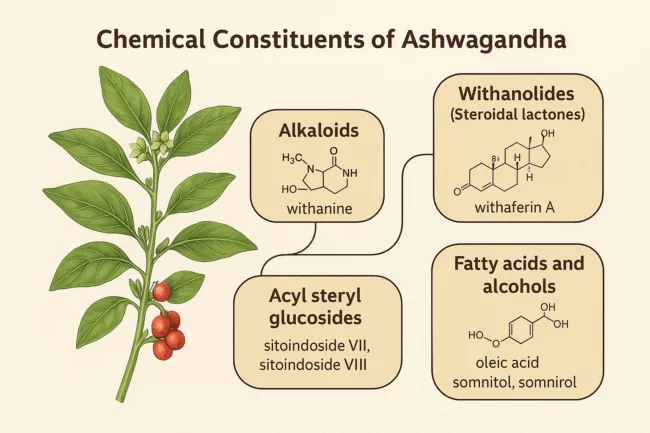
Among the most significant classes of compounds found in Ashwagandha are alkaloids, which are nitrogen-containing organic molecules known for their pharmacological effects. The chief alkaloid is withanine, widely recognized for its calming influence on the central nervous system and its ability to modulate neurotransmitter activity. Alongside withanine, Ashwagandha also contains lesser-known but medically relevant alkaloids such as somniferine, somnine, somniferinine, withananine, and tropine. These alkaloids work synergistically to produce sedative effects and help regulate the body’s stress responses, contributing to Ashwagandha’s well-documented adaptogenic actions.
Another essential group of constituents is the withanolides, a family of steroidal lactones unique to the Withania genus. Structurally similar to the body’s endogenous steroid hormones, withanolides consist of a steroidal nucleus, a lactone ring, and a functional carbon side chain. This structure enables them to interact with hormonal receptors and intracellular signaling pathways, giving them broad therapeutic utility. Withaferin A and withanolide D are two of the most studied withanolides in Ashwagandha, known for their potent anti-inflammatory, immunomodulatory, and anti-cancer effects. These compounds have been shown to inhibit NF-κB activity, modulate cytokine production, and support apoptotic processes in abnormal cells, making them highly relevant in chronic inflammatory and oncology research.
Ashwagandha also contains acyl steryl glucosides, particularly sitoindoside VII and sitoindoside VIII. These molecules are known to bolster the body’s antioxidant defenses and improve resilience to psychological and physiological stress. They have been studied in the context of neuroprotection, memory enhancement, and fatigue recovery—particularly in populations experiencing cognitive burnout or high cortisol levels.
A further set of constituents contributing to Ashwagandha’s biological profile includes fatty acids and natural plant alcohols. Among the most notable are unsaturated fatty acids like oleic acid, palmitic acid, and stearic acid. These lipids support cellular membrane integrity and play a role in inflammatory modulation. Complementing them are alcohols such as somnitol and somnirol, which have been implicated in nerve regeneration, metabolic balance, and possibly even mood regulation. These compounds work indirectly by enhancing mitochondrial function and supporting enzymatic processes involved in energy production and tissue repair.
In addition to these primary categories, Ashwagandha also contains several minor yet biologically significant molecules. These include ipuranol, cerotic acid, phytosterols, and withanic acid. Though present in smaller quantities, these secondary metabolites contribute to the herb’s overall antioxidant profile and reinforce its adaptogenic properties. Phytosterols, in particular, are known to support cardiovascular health and hormonal balance, while cerotic acid and ipuranol play subtle but meaningful roles in modulating inflammatory responses at the cellular level.
Altogether, the synergistic interaction of these diverse chemical constituents makes Ashwagandha a pharmacologically versatile herb. Unlike single-compound pharmaceuticals, Ashwagandha works across multiple systems—endocrine, nervous, immune, and metabolic—demonstrating a systems-level effect that aligns with its classification as a Rasayana (rejuvenator) in Ayurveda. This biochemical richness is why Ashwagandha remains one of the most widely studied and clinically applied herbs in both traditional and integrative medicine today.
How does Ashwagandha help the body cope with stress and fatigue?
One of the most popular uses of Ashwagandha in modern health science is its adaptogenic activity—that is, its ability to help the body manage stress. The herb influences the hypothalamic-pituitary-adrenal (HPA) axis, stabilizing cortisol levels and promoting resistance to both physical and emotional stressors.
Studies show that sitoindosides and withanolides act at the neuroendocrine level, enhancing energy metabolism and reducing symptoms of chronic fatigue syndrome. Ashwagandha supplements are commonly used by individuals experiencing burnout, poor sleep, and emotional exhaustion, and are often included in wellness formulations for mental resilience.
Because it regulates stress hormones without causing sedation, Ashwagandha is especially useful for health-conscious professionals, students, and older adults managing demanding lifestyles.
What are the neurological and cardiovascular effects of Ashwagandha?
Ashwagandha is well known for its nerve-calming and sleep-inducing properties. Its alkaloids bind to GABA receptors in the brain, offering a sedative effect that promotes restful sleep without impairing cognitive function. For people with insomnia, anxiety, or post-stress insomnia, it offers a safe, herbal alternative to pharmaceutical sedatives.
Cardiovascularly, Ashwagandha acts as a mild hypotensive agent, helping regulate blood pressure. It improves blood lipid profiles, lowers LDL cholesterol, and reduces markers of oxidative stress—all beneficial for patients at risk of atherosclerosis or hypertension.
Ashwagandha’s neuroprotective profile also includes benefits for neurodegenerative conditions. Withaferin A and other withanolides have shown promise in models of Alzheimer’s and Parkinson’s diseases by reducing inflammation, promoting synaptic health, and protecting against oxidative damage.
What is the role of Ashwagandha in immune modulation?
Ashwagandha enhances both innate and adaptive immunity. Its bioactive compounds stimulate the production of white blood cells, increase antibody responses, and promote the activity of macrophages. This makes the herb effective in boosting natural defenses against infections, particularly during periods of immune suppression or recovery.
At the same time, Ashwagandha acts as a regulatory immunomodulator, meaning it can suppress overactive immune responses, making it useful for individuals with autoimmune tendencies or chronic inflammatory conditions.
For athletes and fitness-focused users, Ashwagandha offers additional advantages by promoting muscle recovery, reducing oxidative damage after intense training, and supporting overall immune health under stress.
How does Ashwagandha support joint and bone health?
Ashwagandha is gaining popularity in the management of rheumatic conditions such as osteoarthritis and gout. Its anti-inflammatory activity is mediated by the inhibition of pro-inflammatory cytokines like IL-6 and TNF-alpha, while withanolides suppress cyclooxygenase enzymes that cause joint pain.
The herb also prevents degenerative changes in bone tissue, making it a natural adjunct in the prevention of osteoporosis and age-related joint deterioration. In traditional formulations, Ashwagandha is used as part of a bone-rejuvenating regime alongside calcium-rich herbs and minerals.
For individuals managing chronic musculoskeletal discomfort, Ashwagandha serves both a pain-relieving and tissue-regenerating function.
What are Ashwagandha’s effects on reproductive health?
Ashwagandha has long been considered a natural fertility booster, particularly in male reproductive health. Clinical evidence shows improvements in sperm count, motility, and testosterone levels following regular supplementation. This is attributed to the herb’s antioxidant effects on reproductive tissues and its ability to balance stress-related hormonal imbalances.
In women, Ashwagandha helps regulate menstrual cycles and manage conditions like polycystic ovarian syndrome (PCOS) by modulating stress hormones and supporting thyroid function.
Its reputation as a sexual stimulant and rejuvenator stems from its ability to boost energy, reduce performance anxiety, and improve overall endocrine function—factors that influence libido and vitality across genders and age groups.
Does Ashwagandha have antimicrobial or antiviral properties?
Ashwagandha leaf extracts have demonstrated antimicrobial activity, particularly against Staphylococcus aureus, a common cause of skin and respiratory infections. It also shows antiviral activity against the Ranikhet virus, a poultry-affecting pathogen, pointing to broader possibilities in virology research.
While not yet mainstream in antimicrobial therapy, Ashwagandha is being studied as a plant-based defense against drug-resistant bacteria and viruses, especially in an age of rising antibiotic resistance.
What are the regional names of Ashwagandha across Indian languages?
Ashwagandha, scientifically known as Withania somnifera, is a cornerstone of Ayurvedic medicine and traditional Indian pharmacology. Its uses range from stress relief and immune modulation to rejuvenation therapies and joint care. While the herb’s botanical identity is universally recognized in scientific circles, the local names of Ashwagandha vary widely across India’s linguistic and cultural regions. These regional synonyms reflect the herb’s embedded presence in local healing practices and traditional healthcare systems.
Understanding the different Indian names for Ashwagandha offers more than just cultural insight—it helps contextualize how communities across India have traditionally identified and used the herb for centuries. This article explores the various regional synonyms of Ashwagandha, organized by language and state, and explains the historical and phonetic significance of each.
What is Ashwagandha called in Sanskrit and Hindi?
In Sanskrit, the classical language of Ayurveda and Indian scholarly traditions, the herb is known as Ashvagandha. The name is derived from two Sanskrit words—ashva meaning “horse” and gandha meaning “smell.” This name reflects the characteristic odor of the plant’s roots, which are said to resemble the scent of a horse, and metaphorically symbolizes strength and vitality. Sanskrit texts, including the Charaka Samhita and Sushruta Samhita, reference Ashvagandha in formulations designed to rejuvenate body systems, enhance resilience, and promote longevity.
In Hindi, which is widely spoken across northern and central India, the herb is referred to as Asgand. This name is a phonetic derivative of its Sanskrit origin, and it is commonly used in Ayurvedic shops, Unani pharmacies, and traditional healer circles. In Hindi-speaking regions, Asgand is often prescribed in powdered form, known as churna, mixed with milk or ghee for use in stress management and reproductive health.
What is the name of Ashwagandha in Gujarati and Marathi?
In Gujarat, where the herb grows in the arid regions of Kutch and Saurashtra, Ashwagandha is locally called Asan. The name has likely evolved from its Sanskrit root but carries a shorter, dialectal tone common to western Indian languages. Traditional healers in Gujarat often use Asan in combination with other desert herbs for managing fatigue and inflammation.
In Maharashtra, Ashwagandha is known as Askandha, a variant that stays closer to the original Sanskrit but incorporates the Marathi linguistic structure. Askandha is frequently mentioned in regional Ayurvedic preparations meant for elderly care, vitality enhancement, and joint flexibility. Marathi-speaking Vaidyas (traditional physicians) often recommend it as a “balya”—a strength-promoting tonic for geriatric use.
How is Ashwagandha referred to in southern Indian languages like Kannada, Tamil, Telugu, and Malayalam?
In the Kannada-speaking regions of Karnataka, Ashwagandha goes by the name Hiremaddinegida. This name combines local terminology: hire meaning large or strong, maddi meaning root, and gida meaning plant. The term underscores both the physical structure and the perceived potency of the herb. Hiremaddinegida is commonly referenced in Siddha and regional folk medicine for enhancing energy and resistance to disease.
In Tamil Nadu, Ashwagandha is locally known as Ashvagandi. The name retains the root “ashva” from Sanskrit, indicating a close linguistic and conceptual tie to the herb’s classical origin. In Tamil traditional medicine, Ashvagandi is used in oil infusions and health tonics, particularly for treating nerve weakness and post-illness recovery.
In Andhra Pradesh and Telangana, where Telugu is the dominant language, the herb is called Asvtgandhis. This variant maintains the root term “gandh,” reflecting its identity through aroma and association with vitality. Folk medicine practitioners in these regions typically use Asvtgandhis in combination with cow’s milk or herbal decoctions for its adaptogenic properties.
In Kerala, where Malayalam is spoken, the herb is referred to as Amnkkiram. This name deviates more significantly from its Sanskrit root and likely stems from older Dravidian linguistic structures. In Kerala’s Ayurvedic tradition, Amnkkiram is included in formulations for treating arthritis, insomnia, and postnatal weakness. It also appears in Kerala’s famed “Rasayana Chikitsa” or rejuvenation therapy protocols.
What is the Punjabi name for Ashwagandha?
In Punjab, Ashwagandha is known as Asagand. The name closely mirrors the Hindi version but is softened with regional phonetics. Punjabi healers often use Asagand in winter tonics that combine warming spices, ghee, and dry fruits to support strength, especially in cold climates. Its use is deeply tied to seasonal medicine and is considered essential during periods of convalescence.
Why do Ashwagandha’s names differ across Indian states?
The variation in Ashwagandha’s names across Indian languages arises from both linguistic evolution and regional cultural integration. In each language, the root term often stems from the herb’s defining characteristics—its horse-like smell, energizing effects, or its physical form. These synonyms are not just transliterations but carry layers of medicinal, symbolic, and phonetic meaning relevant to the communities that use them.
While pharmaceutical and scientific nomenclature uses Withania somnifera, the regional names serve as vital identifiers in rural and traditional medicine. These names appear on packaging in Ayurvedic pharmacies, in the oral instructions given by traditional healers, and in the local dialects of wellness folklore. For public health workers, students of pharmacognosy, or cross-cultural researchers, understanding these names is key to bridging modern and indigenous healthcare systems.
Why do Ashwagandha’s synonyms matter in modern herbal education?
Ashwagandha’s multiple names across Indian languages serve as a linguistic map of its cultural and therapeutic legacy. From Ashvagandha in Sanskrit to Amnkkiram in Malayalam and Asgand in Hindi, each name reflects a facet of the herb’s identity—be it its smell, its energizing effects, or its role in traditional therapy.
For health-conscious readers, medical students, and practitioners of integrative medicine, recognizing these names supports better understanding of how botanical knowledge travels across regions, evolves with language, and maintains its clinical relevance. Whether you’re reading a classical Ayurvedic manuscript or exploring a modern herb label in a regional market, knowing the synonyms of Ashwagandha helps decode centuries of wellness tradition embedded in India’s linguistic diversity.
Why does Ashwagandha remain essential in modern health systems?
Ashwagandha’s longevity in traditional medicine and its growing relevance in modern healthcare are not coincidental. With a robust base of phytochemicals—ranging from withanolides to alkaloids and sterols—it provides therapeutic action across multiple physiological systems.
Its influence on stress, sleep, immunity, cardiovascular health, joint mobility, reproductive balance, and even antimicrobial defense positions it as a multi-system botanical tool. For medical students, health researchers, and wellness professionals alike, Ashwagandha offers a textbook example of how ancient plant science intersects with evidence-based medicine.
As the global demand for safe, natural, and multifunctional remedies continues to rise, Ashwagandha is not just surviving the test of time—it is redefining herbal relevance in the modern medical landscape.
Discover more from Business-News-Today.com
Subscribe to get the latest posts sent to your email.