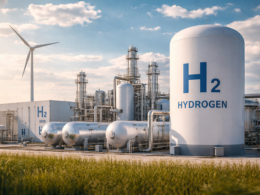




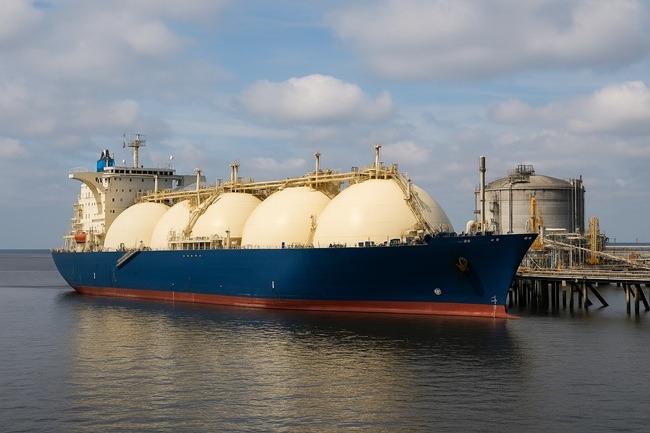
Cheniere Energy Partners, L.P. has signed a lump-sum turnkey engineering, procurement and construction contract with Bechtel Energy, Inc. for the first phase of the Sabine Pass LNG expansion project in Louisiana. The New York Stock Exchange-listed partnership, traded under the ticker CQP and controlled by Cheniere Energy, Inc., has also issued Bechtel Energy, Inc. a limited notice to proceed for early engineering and procurement. Phase 1 includes Train 7, a boil-off gas re-liquefaction unit, supporting infrastructure and tie-ins to the existing Sabine Pass LNG Terminal, with expected production capacity of more than 6mtpa including estimated debottlenecking. The move matters because Cheniere Energy Partners, L.P. is trying to expand one of the United States’ most strategically important LNG export platforms at a time when global buyers are paying more for supply security, but the project still needs regulatory clearance, financing and a final investment decision before construction economics become real.
Why does Cheniere Energy Partners’ Bechtel contract matter for the Sabine Pass LNG expansion?
Cheniere Energy Partners, L.P.’s Bechtel Energy, Inc. contract matters because it moves the Sabine Pass expansion from development planning into a more concrete pre-execution phase. A limited notice to proceed is not the same as a final investment decision, but it allows early engineering and procurement to begin before full sanction. In LNG megaprojects, that timing matters because long-lead equipment, design certainty and contractor mobilisation can shape cost control before the first major construction push begins.
The choice of Bechtel Energy, Inc. is strategically logical because the contractor has already played a central role in Cheniere Energy Partners, L.P.’s existing LNG build-out. The Sabine Pass LNG Terminal is not a blank-site project where every interface must be invented from scratch. Phase 1 will tie into existing infrastructure, which gives the expansion a brownfield advantage, but also creates integration risk because new equipment must work around a live operating export terminal.
For Cheniere Energy Partners, L.P., the contract helps preserve schedule credibility ahead of the expected final investment decision by early 2027. The company is effectively preparing the project so it can move quickly if regulatory approvals and financing align. That is a sensible strategy in a competitive LNG market where buyers want future supply visibility, but it also raises the stakes. Early work creates momentum, but the real test remains whether the economics justify full sanction.
How does Train 7 strengthen Cheniere Energy Partners’ position in U.S. LNG exports?
Train 7 would strengthen Cheniere Energy Partners, L.P.’s position by adding more than 6mtpa of incremental LNG production capacity, including estimated debottlenecking. That would deepen the role of Sabine Pass as one of the core export hubs in the United States LNG system. The facility already has more than 30mtpa of LNG production capacity in operation, along with regasification infrastructure, storage tanks, marine berths and pipeline connectivity through the Creole Trail Pipeline.
The expansion is strategically important because U.S. LNG exports are increasingly being pulled in multiple directions at once. Europe still needs flexible LNG supply after reducing dependence on Russian pipeline gas, while Asia has become more active when price spreads and supply disruptions make U.S. cargoes attractive. Recent export data showed U.S. LNG shipments to Asia rising to a one-year high in May even as maintenance reduced total U.S. export volumes, which underlines the growing importance of flexible destination supply.
Train 7 would give Cheniere Energy Partners, L.P. another lever in that global market. The company’s advantage is not only capacity, but optionality. Sabine Pass can serve different basins depending on pricing, contract structure and shipping economics. That flexibility is precisely why buyers value U.S. LNG, especially when geopolitical shocks make fixed-route gas supply feel slightly too adventurous for comfort.
Why are regulatory approvals still the key hurdle before Sabine Pass Phase 1 can move ahead?
Regulatory approvals remain central because the Federal Energy Regulatory Commission application for the Sabine Pass expansion and the Department of Energy application for exports to non-free trade agreement countries are still pending. Without those approvals, Cheniere Energy Partners, L.P. cannot fully convert the EPC framework into a sanctioned construction programme. LNG projects are large industrial assets, and U.S. regulators assess environmental, siting, safety and export-policy questions before giving developers the green light.
The Department of Energy approval is particularly important because non-free trade agreement export authorisations determine whether a project can serve a broad global customer base. LNG economics rely heavily on access to flexible destination markets. If export permissions are limited, customer optionality narrows and financing becomes harder. For a project built around long-term offtake, regulatory certainty is not paperwork. It is bankability.
The Federal Energy Regulatory Commission process also matters because brownfield expansions still raise site-level questions. Train 7, supporting infrastructure, boil-off gas handling and tie-ins to existing systems must be reviewed within the context of an operating terminal. That creates a different risk profile from a standalone greenfield project. The project may benefit from existing infrastructure, but it must also show regulators that incremental capacity can be added safely and responsibly.
What does the Bechtel agreement reveal about Cheniere Energy Partners’ capital discipline?
The lump-sum turnkey structure is important because it suggests Cheniere Energy Partners, L.P. is trying to define contractor cost exposure and execution responsibility clearly before a final investment decision. LNG construction has a history of cost overruns, schedule slippage and contractor disputes, especially when inflation or scope changes hit large projects. A lump-sum structure can help protect owners, although the details of pricing, allowances and risk-sharing ultimately determine how much protection exists.
The early limited notice to proceed also shows a balancing act. Cheniere Energy Partners, L.P. wants to advance engineering and procurement enough to preserve schedule and execution readiness, but full capital commitment remains tied to approvals and financing. That sequencing is sensible because it avoids a cold start after sanction while limiting premature exposure. LNG projects reward preparedness, but they punish overconfidence rather quickly.
For investors, the capital discipline question is whether Phase 1 can deliver attractive returns without stretching the partnership’s balance sheet or distribution profile. Cheniere Energy Partners, L.P. has long been valued partly for contracted cash flows and distributions. A large expansion can create growth, but it also requires financing discipline. Investors will want management to prove that Train 7 strengthens long-term cash generation rather than simply adding more steel to an already large platform.
How does the Sabine Pass expansion fit into the global LNG supply-security debate?
The Sabine Pass expansion fits into a global LNG debate shaped by energy security, price volatility and geopolitics. Europe’s reordering of gas supply after Russia’s invasion of Ukraine has made flexible LNG central to energy policy. Asia’s buyers, including Japan, South Korea, China and emerging Southeast Asian importers, continue to need reliable LNG supply even as renewables and nuclear power expand. Middle East disruptions and shipping uncertainty have only reinforced the value of diversified suppliers.
U.S. LNG has become strategically attractive because it offers contractual flexibility, deep upstream gas resources and access to Atlantic and Pacific demand. Sabine Pass is especially important because it is one of the established terminals that helped turn the United States into a major LNG exporter. Expanding that platform offers a faster and potentially lower-risk route to new capacity than building entirely new infrastructure from scratch.
The risk is that the global LNG market is also heading into a supply-heavy period as new projects from the United States, Qatar and other regions come online. Buyers want security, but they also want price leverage. Cheniere Energy Partners, L.P. must therefore ensure Phase 1 is cost-competitive enough to survive a market where long-term LNG demand remains attractive but buyers are increasingly sophisticated. In LNG, everyone wants security until the contract price arrives.
What does the market reaction say about Cheniere Energy Partners and Cheniere Energy stock sentiment?
Cheniere Energy Partners, L.P. recently traded around $64.47, giving the partnership a market capitalisation of about $31.2 billion. Cheniere Energy, Inc., traded under the ticker LNG, recently stood around $238.82 with a market capitalisation of about $50.3 billion. The share-price context suggests investors continue to value Cheniere’s LNG franchise, but they are also distinguishing between development momentum and fully sanctioned growth.
The Sabine Pass EPC contract is a positive signal for the long-term expansion story, but it is unlikely to be treated as a complete valuation reset until final investment decision is reached. Investors know the remaining hurdles: regulatory approval, export authorisation, financing terms, customer commitments and construction execution. A limited notice to proceed is meaningful, but the market tends to reserve the bigger applause for sanctioned projects with clear economics.
For Cheniere Energy, Inc., the broader sentiment remains tied to global LNG demand, capital returns, contract quality and the ability to expand without overextending. The parent company benefits from being associated with the largest U.S. LNG export platform, but valuation sensitivity rises when expectations are already strong. The stock is not being valued as a struggling infrastructure story. It is being valued as a high-quality LNG platform that now has to keep proving the quality bit.
Why does the boil-off gas re-liquefaction unit matter for project efficiency?
The inclusion of a boil-off gas re-liquefaction unit is technically important because it can improve efficiency at an operating LNG terminal. Boil-off gas is generated when LNG warms and part of the liquid vaporises during storage and handling. Re-liquefaction allows that gas to be captured and returned to LNG form rather than being consumed, flared or managed less efficiently, depending on terminal design and operating conditions.
For a brownfield expansion, this matters because incremental production capacity must be integrated into existing terminal systems. Adding Train 7 without sufficient supporting infrastructure would create operational bottlenecks. The boil-off gas re-liquefaction unit, tie-ins and supporting systems show that Cheniere Energy Partners, L.P. is not simply adding a liquefaction train. It is upgrading the terminal architecture around that train.
The strategic implication is that terminal efficiency is becoming more important as LNG buyers pay closer attention to emissions intensity, reliability and cargo availability. Re-liquefaction does not make LNG carbon-free, but it can improve operational performance and reduce waste. In a market where projects compete on cost, reliability and environmental scrutiny, these technical details can become commercially relevant.
What could still delay or weaken the Sabine Pass expansion investment case?
The most obvious risk is that regulatory approvals or export authorisations take longer than expected or arrive with conditions that complicate project economics. Cheniere Energy Partners, L.P. expects a final investment decision by early 2027, but that timeline depends on agencies, financing markets and project readiness aligning. LNG developers are familiar with the gap between expected and actual timelines. It is where many optimistic schedules go to do some quiet self-reflection.
Financing is another key risk. The project needs an acceptable financing arrangement, and capital markets can change quickly if interest rates, energy prices or investor risk appetite move against the company. LNG projects require substantial upfront capital, and even brownfield expansions must justify the cost of engineering, equipment, construction and commissioning. If financing terms become less attractive, returns can narrow.
Market risk also remains. LNG demand appears structurally supported, but future supply additions could pressure prices and contract terms. If buyers expect more global LNG supply later in the decade, they may resist long-term commitments at prices developers prefer. Cheniere Energy Partners, L.P. has said Phase 1 is commercially underpinned by long-term agreements with creditworthy counterparties, but investors will still look closely at contract depth, tenor and pricing exposure before assigning full value.
Can Cheniere Energy Partners turn early Bechtel work into a stronger LNG growth platform?
Cheniere Energy Partners, L.P. can turn the Bechtel Energy, Inc. contract into a stronger LNG growth platform if Phase 1 reaches final investment decision, clears regulatory hurdles and executes without major cost or schedule surprises. The ingredients are strong: an existing export terminal, an experienced contractor, a phased expansion plan, long-term commercial underpinning and a global market that still values secure LNG supply.
The phased approach is particularly important. By developing the Sabine Pass expansion for up to three large-scale liquefaction trains while starting with Train 7, Cheniere Energy Partners, L.P. can manage growth in stages rather than committing all future capacity at once. That allows the company to test market demand, financing appetite and regulatory conditions before moving deeper into the full expansion concept.
A neutral reading suggests the EPC contract and limited notice to proceed are important steps, not the finish line. Cheniere Energy Partners, L.P. has strengthened its expansion pathway, and Bechtel Energy, Inc. is now engaged in early work. The real investment case will be decided when regulators, lenders and customers align around final sanction. Until then, Sabine Pass Phase 1 is a highly credible option moving closer to execution, but still an option.
Key takeaways on Cheniere Energy Partners’ Bechtel contract and Sabine Pass LNG expansion
- Cheniere Energy Partners, L.P. has signed a lump-sum turnkey EPC contract with Bechtel Energy, Inc. for Phase 1 of the Sabine Pass LNG expansion project.
- The company has issued Bechtel Energy, Inc. a limited notice to proceed for early engineering and procurement work before a final investment decision.
- Phase 1 includes Train 7, a boil-off gas re-liquefaction unit, supporting infrastructure and tie-ins to the existing Sabine Pass LNG Terminal.
- The first phase is expected to add more than 6mtpa of LNG production capacity, including estimated debottlenecking opportunities.
- Cheniere Energy Partners, L.P. expects to reach final investment decision by early 2027, subject to regulatory approvals and acceptable financing.
- Federal Energy Regulatory Commission and Department of Energy applications remain pending, making regulatory clearance central to the project timeline.
- The brownfield nature of the expansion gives Cheniere Energy Partners, L.P. infrastructure advantages, but also requires careful integration with a live terminal.
- The project strengthens the long-term U.S. LNG supply-security story as Europe and Asia continue to seek flexible, reliable gas supply.
- Cheniere Energy Partners, L.P. and Cheniere Energy, Inc. shares reflect strong LNG-platform sentiment, but investors still want clarity on sanction, financing and execution.
- For Bechtel Energy, Inc., the contract reinforces a long-running relationship with Cheniere and keeps the contractor central to U.S. LNG infrastructure growth.
Discover more from Business-News-Today.com
Subscribe to get the latest posts sent to your email.