


Carbios is making measurable progress toward financing its first commercial-scale PET biorecycling plant while aggressive cost reductions have sharply slowed cash consumption across the French recycling technology company. Operating expenses fell 19% during the first half, the operating loss narrowed to €11.8 million from €15.6 million and the group ended June with €48 million of cash, which management says is sufficient to fund operating expenses for more than another 12 months. The more important development is at Longlaville, where credit committees representing a majority of project lenders have approved financing and Carbios is finalizing an agreement with a major beverage company that could increase contracted pre-sales to 60% of planned output. Construction nevertheless remains dependent on completion of the full financing package, and the company has already acknowledged that its previous financial-close timetable will not be met.
The results leave Carbios in a transitional position between technology development and commercial industrial deployment. Its enzymatic recycling process has attracted major consumer brands and licensing interest, but the investment case increasingly depends on demonstrating that the technology can operate economically at large industrial scale. Longlaville is therefore more than another manufacturing project: it is intended to become the reference facility that proves the commercial model to potential licensees around the world. At the same time, Carbios is building a second route to commercialization through its Wankai New Materials partnership in China, allowing the company to pursue a licensing-led model that requires considerably less direct capital than owning every plant itself.
Longlaville pre-sales could reach 60% as Carbios moves closer to completing plant financing
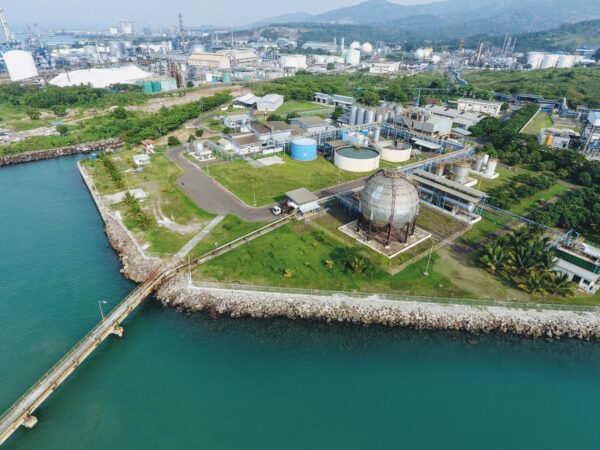
Longlaville remains the most important near-term catalyst for Carbios. The planned facility in northeastern France is designed to process approximately 50,000 tonnes of PET waste annually using the company’s enzyme-based depolymerization technology. Earlier project estimates placed capital expenditure at approximately €230 million, with €42.5 million of public support already secured.
The financing structure has evolved as Carbios attempts to limit the amount of capital the parent company must contribute directly. Management has been working toward a project-finance structure involving lenders, equity investors, export credit agencies and previously committed public funding, with the objective of making the project financially independent from Carbios itself.
Several important steps have now been completed. Independent technical, economic, environmental and legal reviews have supported the economic viability of the project and its French location, while credit committees representing a majority of lenders have approved participation. Due diligence by export credit agencies and prospective equity partners remains underway.
Commercial commitments are also improving. Carbios is finalizing a new agreement with a major beverage-industry participant that is expected to increase pre-sales coverage to approximately 60% of the plant’s nominal capacity. The company had previously secured commitments covering close to half of planned capacity from customers spanning beverages, cosmetics and textile-related applications.
Those contracts matter because lenders and equity investors typically want evidence that a first-of-its-kind industrial plant will have customers for its output before committing substantial capital. Moving from roughly 50% to 60% pre-sales reduces part of that commercial risk, although Carbios has not identified the new customer or disclosed pricing and contract duration.
The project is not yet fully financed. Carbios previously expected to reach financial close by the end of September but said the complexity of due diligence for an innovative first-of-its-kind facility means that target will not be achieved. Construction and the eventual production timetable will therefore remain delayed until financing is completed.
Operating losses narrow as Carbios reduces cash consumption and protects liquidity
Carbios is simultaneously reducing expenses to preserve its ability to reach commercialization without requiring an immediate corporate-level capital raise. Operating expenses fell by €3.4 million, or 19%, to €14.4 million during the first half after management reviewed spending across the business.
The operating loss narrowed by €3.9 million to €11.8 million, while the net loss improved to €9.4 million from €11.9 million. Operating revenue remained small at approximately €2.6 million because Carbios has not yet reached the stage where large-scale product sales or recurring licensing revenue dominate its financial statements.
Cash conservation was more significant than the accounting improvement. Carbios SA’s net cash consumption fell to only €4.2 million from €33.4 million during the comparable period, helped by an €8.3 million reduction in operating cash use, almost €14 million less investment spending and an €8 million repayment on a shareholder loan from subsidiary Carbios 54.
At group level, cash consumption fell to €11 million from €18 million. Cash stood at €48 million at the end of June, compared with approximately €59 million at year-end, giving management what it describes as more than 12 months of operating visibility excluding the large financing requirements associated with Longlaville.
That distinction is important. The existing cash balance is intended to support Carbios’ corporate operations, research, licensing activity and strategic development rather than finance the entire Longlaville plant directly. The plant requires its own financing package before construction can resume at scale.
The lower cash burn therefore buys Carbios additional time to complete those negotiations. It also reduces financing pressure at the parent-company level while management simultaneously pursues licensing agreements outside France.
Wankai partnership gives Carbios a second industrial route that requires less direct capital
Carbios’ partnership with Wankai New Materials could eventually become just as important as Longlaville because it provides a template for international licensing rather than wholly owned industrial expansion. Carbios and Wankai established Kaibio Biotechnology Co. Ltd to build a 50,000-tonne annual PET biorecycling facility in China. Wankai owns 70% of the joint venture and Carbios holds 30%, while the estimated €115 million construction cost is expected to be financed with 30% equity and 70% debt. Wankai has agreed to guarantee all of the project debt.
That structure materially limits Carbios’ direct capital burden compared with building a plant entirely on its own balance sheet. More importantly, Kaibio will license Carbios’ technology, supporting management’s longer-term ambition to generate value through intellectual property and licensing rather than owning every recycling facility.
Qualification testing has already confirmed that local PET waste streams can be processed using the Carbios technology, while operational work on the joint venture is underway. The agreement also creates a framework for additional licensed plants across Asia if certain capacity thresholds are met.
Under the broader arrangement, Wankai received conditional exclusivity to license the technology across Asia, initially tied to commitments for at least another 100,000 tonnes of annual capacity and potentially renewable if larger capacity targets are achieved. That gives Carbios a path to substantially greater installed capacity without having to finance all future plants itself.
Carbios is pursuing similar licensing opportunities in Europe, North America and South America. If the model works, future revenue could increasingly come from license fees, engineering services and technology-related economics rather than direct sales of recycled PET.
That shift would materially change the financial profile because licensing is typically less capital intensive than owning industrial production. It also depends on proving that the process performs reliably at commercial scale, making Longlaville and Kaibio critical demonstration projects.
Fiber-to-fiber recycling expands the addressable market beyond beverage packaging
Carbios is also broadening the technology beyond traditional bottle recycling. The company has validated its enzymatic process for complex textile waste, creating the possibility of closed-loop fiber-to-fiber recycling for polyester materials.
That opportunity is strategically significant because polyester represents a major portion of global textile consumption and has historically been difficult to recycle repeatedly into high-quality material. Conventional mechanical recycling can degrade polymer quality, while mixed textile waste presents additional technical challenges.
Carbios says its process breaks PET back into its core components, allowing them to be reused to manufacture new PET materials with properties comparable with virgin products. The company is working with apparel companies including Patagonia, PUMA, PVH Corp., On and Salomon through its textile consortium.
On the packaging side, Carbios has previously worked with companies including L’Oréal, Nestlé Waters, PepsiCo and Suntory Beverage & Food Europe. Those relationships do not guarantee future licensing contracts, but they provide validation that major global brands are actively evaluating the technology for circular packaging applications.
Expanding into textiles also increases the potential customer base for Longlaville. Management specifically cited validation of fiber-to-fiber recycling as one of the developments supporting financing discussions because a broader mix of end markets can reduce dependence on beverage bottles alone.
Carbios shares fall as investors remain focused on financing risk and delayed commercialization
Carbios shares traded lower following the results, falling roughly 4% and remaining near the bottom of their 52-week range. The stock has declined significantly over the past year as investors reassessed the time, capital and execution required to move the company from demonstration-scale technology into commercial operation.
That reaction highlights the difference between technical progress and financial completion. Carbios has secured lender approvals, customer commitments and public funding, but investors are still waiting for the final financing structure that allows physical construction at Longlaville to resume.
The company also carries the normal risks associated with first-of-a-kind industrial projects. Construction costs can rise, commissioning can take longer than planned, operating yields may differ from pilot performance and financing conditions can change before closing.
The improving cash position reduces near-term corporate financing pressure, while Wankai provides another commercialization route. Still, Longlaville remains an important proof point because successful industrial operation in France could make it easier for Carbios to sign additional global licenses.
The next major milestone is therefore straightforward: closing the Longlaville financing and restarting construction. A new commercial agreement lifting pre-sales to 60% would strengthen that process, but lender and equity due diligence must still be completed.
If Carbios can secure the remaining capital while maintaining its lower cash burn, the company could move from primarily financing technology development toward proving a scalable licensing model. Failure to finalize Longlaville financing would leave the company with valuable intellectual property and partnerships but delay the commercial validation that investors have been awaiting.
Key takeaways from Carbios’ Longlaville financing progress and lower cash burn
- Carbios reduced first-half operating expenses by 19% to approximately €14.4 million.
- The operating loss narrowed to €11.8 million from €15.6 million, while the net loss improved to €9.4 million.
- Group cash consumption fell to €11 million from €18 million, leaving Carbios with €48 million of cash.
- Management says existing liquidity can fund corporate operating expenses for more than another 12 months.
- Credit committees representing a majority of Longlaville project lenders have approved financing participation.
- A new beverage-industry agreement under negotiation could increase contracted Longlaville pre-sales to 60% of planned capacity.
- Export credit agencies and equity partners are still conducting due diligence, meaning the project is not yet fully financed.
- Carbios has already acknowledged that its earlier financial-close target will be missed, delaying the plant’s production timetable.
- The Wankai partnership creates a lower-capital licensing route in China through a 50,000-tonne facility financed primarily outside Carbios.
- Future value depends heavily on completing Longlaville financing and proving the PET biorecycling technology at full commercial scale.
Discover more from Business-News-Today.com
Subscribe to get the latest posts sent to your email.