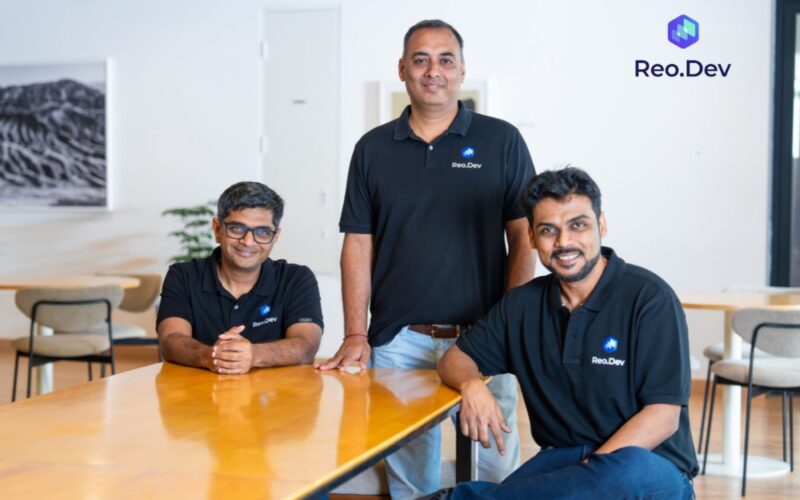
Reo.Dev has raised $11.3 million in a Series A funding round led by Elevation Capital, giving the startup additional capital to expand its artificial intelligence-powered go-to-market platform for companies selling software to engineering and technical teams. Existing investors Heavybit, India Quotient and Foster Ventures participated alongside new investor Uncorrelated Ventures and several angel investors. Reo.Dev said the financing increased its total funding to $15.3 million and would support its artificial intelligence capabilities, agent product roadmap and wider platform development. The strategic opportunity is significant because technical software purchasing increasingly begins with developer activity rather than a conventional sales enquiry, but the central test is whether Reo.Dev can consistently distinguish genuine commercial intent from the enormous volume of exploratory engineering behaviour.
Why does Reo.Dev’s $11.3 million Series A matter for companies selling software to engineers?
The Series A gives Reo.Dev greater capacity to build a specialist revenue-intelligence layer around a buyer category that conventional business-to-business sales systems often struggle to interpret. An engineer may begin evaluating software by reading technical documentation, installing a package, running a command-line interface, forking a repository or testing an application programming interface. None of these activities necessarily requires a conversation with a sales representative, filling in a contact form or requesting a demonstration.
That creates a blind spot for software vendors. By the time a traditional customer relationship management system records a qualified opportunity, a technical team may already have compared competing products, tested integrations and developed a strong preference. Reo.Dev is attempting to move commercial visibility earlier in that process by treating technical behaviour as an evolving buying journey rather than a collection of isolated digital events.
The company’s funding follows a $4 million seed announcement in October 2025 and a previously disclosed pre-seed financing. Reo.Dev now identifies $15.3 million as its cumulative funding, making that the controlling current figure rather than treating every historical announcement as an additional amount. The quick progression to a larger institutional round suggests investors see an opportunity to build a distinct software category at the intersection of developer tools, revenue intelligence and artificial intelligence automation.
Capital alone, however, will not establish category leadership. Reo.Dev must invest in data infrastructure, identity resolution, artificial intelligence models, integrations, customer support and enterprise sales while preserving the accuracy of its signals. The company’s value proposition depends less on collecting the greatest possible quantity of activity and more on identifying which combinations of behaviour have the strongest relationship with an eventual commercial decision.

How does Reo.Dev convert developer activity into commercial intent before sales teams become involved?
Reo.Dev analyses activity across sources including GitHub, package managers, documentation, product trials, command-line interfaces and other technical channels. It combines these signals with information about technology adoption, software migrations, hiring patterns, seniority and purchasing influence. The objective is to help sales, marketing and revenue operations teams identify which companies may be evaluating a product, who is involved and how far the technical evaluation may have progressed.
The distinction between usage and intent is commercially important. A developer downloading a package once may be experimenting, learning or working on a personal project. Repeated usage across several engineers at the same company, followed by documentation engagement, integration activity and a migration away from another technology, may represent a much stronger enterprise opportunity.
Reo.Dev therefore needs to interpret sequences rather than individual actions. The platform must determine whether a technology is merely present inside an organisation, being actively evaluated, entering production workflows or being phased out. It must then connect that activity to the people who can influence or approve a purchase.
This is a technically difficult problem because developer behaviour is fragmented, partly anonymous and frequently ambiguous. False positives could encourage sales teams to approach accounts too aggressively, while false negatives could cause high-value opportunities to remain undiscovered. The commercial quality of the platform will ultimately be judged by whether customers become better at prioritising accounts, improving conversion rates and shortening sales cycles, not simply by how many signals appear on a dashboard.
Why could Reo.Dev’s Agent Intent Gateway become its most important product expansion?
Reo.Dev is extending its proposition beyond human developer behaviour through an Agent Intent Gateway designed to capture interactions generated by artificial intelligence agents using the Model Context Protocol. According to the company, the gateway can record when an agent reads documentation, calls an application programming interface or runs a command-line tool, together with information that may help connect the interaction to an account.
The Model Context Protocol provides a standardised method for connecting artificial intelligence applications with tools, data sources and external systems. Its growing use means software evaluation may increasingly be conducted partly by coding assistants, research agents and other automated systems rather than solely through human browsing and testing.
That could alter the economics of enterprise software selling. A software provider may receive meaningful technical interaction from an agent acting on behalf of an engineering team without knowing that a commercial evaluation is under way. Reo.Dev is positioning the Agent Intent Gateway as an observability layer for this emerging activity.
The proposition is forward-looking, but its current commercial importance should not be overstated. Reo.Dev itself has acknowledged that agent-generated evaluation represents only a small part of the present pipeline. The strategic case depends on whether artificial intelligence agents gain more authority to compare products, test compatibility, recommend vendors and potentially initiate purchasing workflows.
Security and attribution will also become important. The United States National Security Agency has warned that Model Context Protocol implementations require careful security design because agents can connect with sensitive tools and information. Reo.Dev will need to show customers that agent intent can be captured accurately without creating unacceptable privacy, security or governance exposure.
Does a knowledge graph containing 100 million engineers create a lasting data advantage?
Reo.Dev said its Developer Knowledge Graph has surpassed 100 million engineer profiles spanning more than 3,000 technologies and over 250 technical functions. The company also reported that more than 200 businesses use its platform, including NVIDIA Corporation, LangChain, ElevenLabs, Couchbase, Nebius Group, n8n and Temporal Technologies.
Scale can provide an important advantage because technical buying signals become more useful when they are connected to a broader understanding of developer roles, organisational relationships, technology stacks and previous behaviour. A large data layer may allow Reo.Dev to train better classification models, recognise unusual combinations of activity and improve account-level recommendations.
However, a large profile count is not automatically a defensible moat. Profiles must remain accurate as engineers change jobs, companies reorganise, technologies are renamed and software usage patterns evolve. Identity resolution must avoid incorrectly connecting personal open-source activity with an employer’s purchasing intentions.
The stronger competitive advantage may therefore come from the relationship between the knowledge graph, customer-provided first-party data and the outcomes recorded through sales systems. Each successful or unsuccessful opportunity could help refine which technical behaviours deserve greater weight. This feedback loop could become harder to replicate as Reo.Dev processes more real commercial outcomes, although the company has not publicly disclosed enough financial or retention data to establish how far that advantage has developed.
What do Reo.Dev’s customer examples reveal about return on investment and monetisation?
Reo.Dev said DataHub generated $1.01 million in pipeline from accounts identified through its signals during one quarter. It also said Unstructured.io now sources 40% of its deal pipeline from accounts surfaced by Reo.Dev and books 20% more meetings from those accounts. These are company-reported customer outcomes and provide useful evidence that technical signals can influence sales productivity.
Pipeline generation, however, is not the same as recognised revenue. The most persuasive proof would include the proportion of signalled opportunities that become paying customers, the value of completed contracts, sales-cycle improvements and performance relative to accounts selected through conventional methods.
Reo.Dev will also need to demonstrate that its platform creates value across different technical software categories. Signals that predict demand for an open-source database may differ from those relevant to cybersecurity, cloud infrastructure, artificial intelligence models or developer productivity tools. The company’s ability to configure its intelligence for different buying journeys will influence how far it can expand beyond a concentrated group of developer-first businesses.
The funding round should allow Reo.Dev to produce broader evidence across customers and sectors. Strong renewals, increasing contract values and greater usage across sales, marketing and revenue operations teams would indicate that customers view the platform as part of their core commercial infrastructure rather than an experimental data source.
How does Reo.Dev compete with broader revenue-intelligence and go-to-market platforms?
The company operates in a crowded commercial software market that includes customer relationship management platforms, product analytics providers, account-based marketing tools and revenue-intelligence businesses. The funding announcement identified Common Room and Warmly among the companies competing for parts of this opportunity, while Reo.Dev is differentiating itself through a narrower focus on engineering behaviour and technical buyers.
Specialisation can be an advantage because generic intent data may not capture the meaning of repository activity, package installations, documentation usage or command-line behaviour. Reo.Dev can build workflows and scoring models specifically for companies whose adoption begins with engineers.
The same specialisation could limit its addressable market if the product remains relevant only to developer-tool companies. Reo.Dev will need to prove that its intelligence applies across a wider range of infrastructure, cybersecurity, data, artificial intelligence and enterprise software vendors without weakening the technical depth that distinguishes it.
The platform integrates with Salesforce, HubSpot, Salesloft, Outreach, Apollo and Claude, indicating that Reo.Dev is positioning itself as an intelligence layer within existing commercial systems rather than attempting to replace every customer relationship management and sales-engagement product.
That approach may reduce adoption friction. Customers can use Reo.Dev signals within tools their sales teams already understand. It also creates dependency on integration reliability and leaves larger platform providers free to develop competing technical-intent capabilities.
Where must the Series A funding produce operating evidence rather than product ambition?
Reo.Dev said the new capital will support its frontier artificial intelligence capabilities, accelerate its agent roadmap and improve how customers identify and engage technical buyers. These priorities are strategically connected, but management will need to translate them into a disciplined sequence of product and commercial milestones.
The first test is customer growth without deterioration in signal quality. Adding more data sources and profiles can make the platform appear more comprehensive, but customers will care most about whether recommended accounts produce qualified opportunities.
The second test is customer expansion. Reo.Dev should benefit when sales development, marketing, account executives and revenue operations teams use the same intelligence across the buying journey. Expansion within existing customers would provide stronger evidence of platform value than customer count alone.
The third test is the Agent Intent Gateway. Reo.Dev needs to show that agent-generated interactions are sufficiently attributable, frequent and commercially predictive to justify a distinct product layer. Until then, the gateway should be viewed as a strategically promising extension rather than a proven revenue engine.
The final test is financial efficiency. A large technical data estate can be expensive to collect, maintain and process. Reo.Dev must ensure that subscription revenue and customer expansion eventually grow faster than the infrastructure and commercial costs required to support its platform.
What is Business News Today’s view of Reo.Dev after the $11.3 million Series A?
Reo.Dev is addressing a genuine structural weakness in enterprise software selling. Engineering teams frequently reveal their preferences through technical behaviour long before they communicate with procurement or sales. A platform capable of interpreting those actions can help software vendors allocate commercial resources more efficiently.
The Series A validates the relevance of that problem and provides Reo.Dev with greater capacity to develop its specialised data layer. Returning investor participation also suggests that existing backers saw sufficient progress to support another financing, although funding itself is not proof of durable category ownership.
The most compelling part of the strategy is not the headline profile count. It is the possibility of combining technical activity, organisational context and customer sales outcomes into a continuously improving signal system. If Reo.Dev can demonstrate that its recommendations consistently lead to more completed contracts, stronger customer retention and higher sales productivity, the platform could become an important infrastructure layer for developer-focused go-to-market teams.
What remains unresolved is the precision of the data at greater scale, the conversion of reported pipeline into booked revenue and the commercial importance of AI-agent intent. Reo.Dev’s next phase will therefore be measured less by another expansion in signal volume and more by whether customers can attribute recurring revenue and demonstrably better sales decisions to the platform.
What are the key takeaways from Reo.Dev’s $11.3 million Series A funding round?
- Reo.Dev raised $11.3 million in a Series A led by Elevation Capital, taking its company-reported total funding to $15.3 million.
- Heavybit, India Quotient and Foster Ventures returned, while Uncorrelated Ventures joined as a new investor.
- The company analyses GitHub activity, package installations, documentation engagement, product usage and other technical signals to identify potential software buyers.
- Reo.Dev said its Developer Knowledge Graph contains more than 100 million engineer profiles across over 3,000 technologies.
- More than 200 companies use the platform, according to Reo.Dev, including NVIDIA Corporation, LangChain, ElevenLabs, Couchbase and Temporal Technologies.
- The Agent Intent Gateway is designed to reveal purchasing signals generated when artificial intelligence agents evaluate software through the Model Context Protocol.
- Customer pipeline examples provide early commercial evidence, but completed revenue, retention and contract expansion will be more important long-term measures.
- Reo.Dev’s competitive advantage will depend on signal accuracy, data freshness, integration quality and its ability to connect technical activity with actual purchasing outcomes.
- The company must show that its specialist approach can expand across artificial intelligence infrastructure, cybersecurity, data platforms and other technical software markets.
- The next measurable proof point is whether the Series A produces stronger customer expansion and verifiable pipeline-to-revenue conversion.
Discover more from Business-News-Today.com
Subscribe to get the latest posts sent to your email.