
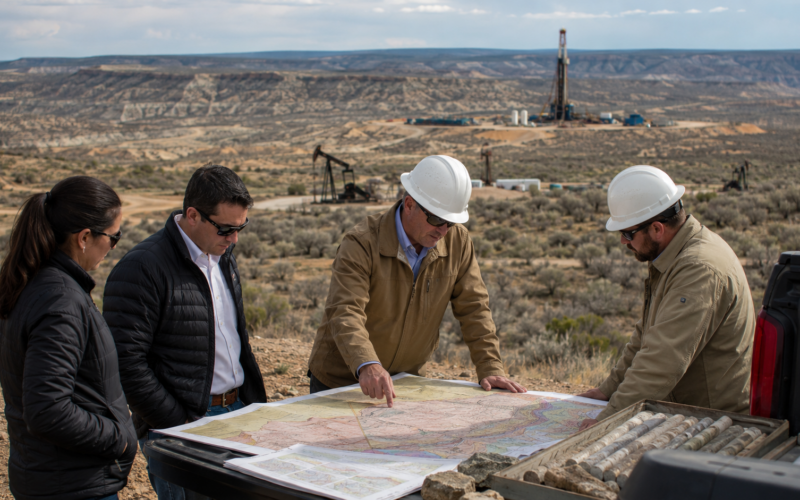
Matador Resources Company (NYSE: MTDR) has acquired 5,154 net undeveloped acres in the core of the Delaware Basin in southeast New Mexico for about $1.1 billion, strengthening its exposure to one of the most productive shale regions in the United States. Reuters reported that the acreage includes exposure to nine or more drilling zones and was acquired through a federal lease sale. The transaction expands Matador Resources Company’s inventory base at a time when high-quality Permian Basin acreage is becoming harder and more expensive to secure. Matador Resources Company shares last traded at $56.64, giving the Dallas-based oil and gas producer a market capitalization of about $6.99 billion, with the stock still below its 52-week high of $66.84.
Why is Matador Resources paying $1.1 billion for undeveloped Delaware Basin acreage?
Matador Resources Company’s latest acquisition is not a conventional producing-asset purchase. The company is paying about $1.1 billion for undeveloped acreage, which means the near-term value depends heavily on future drilling success, development timing, commodity prices, infrastructure access and well productivity. That makes the deal more strategic than instantly accretive. Matador Resources Company is effectively buying future drilling optionality in a region where inventory quality has become one of the most important differentiators among U.S. exploration and production companies.
The Delaware Basin sits within the broader Permian Basin and has become one of the most attractive oil and liquids-rich shale plays in North America. Its appeal comes from stacked reservoirs, strong well productivity, repeatable development potential and access to an increasingly mature midstream network. The acreage acquired by Matador Resources Company is described as having exposure to nine or more drilling zones, which is important because stacked-pay potential can increase the economic value of each surface acre. A single acreage position can support multiple development benches rather than one shallow inventory layer.
The strategic logic is clear enough. High-quality shale inventory is a wasting asset. Every well drilled reduces the remaining opportunity set, and companies with longer-duration core inventory tend to receive more investor credit than peers with shorter runways. Matador Resources Company has already built its identity around the Delaware Basin, particularly in southeast New Mexico and West Texas. This deal deepens that focus rather than diversifying the company into a new basin.
The risk is equally clear. At roughly $1.1 billion for 5,154 net undeveloped acres, the headline cost is large for a company with a market capitalization of about $6.99 billion. Investors will want proof that the acquired acreage can deliver well returns strong enough to justify the upfront price. In shale, buying inventory is easy if the cheque clears. Proving that the inventory earns its keep is the harder part.

How does the acquisition fit Matador Resources’ Delaware Basin strategy?
Matador Resources Company has been building its Delaware Basin position for years through a combination of larger acquisitions, smaller leasehold transactions and operational development. The company’s current operations are focused primarily on the oil and liquids-rich portions of the Wolfcamp and Bone Spring plays in the Delaware Basin in southeast New Mexico and West Texas, with additional operations in the Haynesville shale and Cotton Valley plays in northwest Louisiana.
That focus matters because Matador Resources Company is not trying to become a broad, multi-basin oil and gas conglomerate. Its strategy is more concentrated. The company has been adding acreage around areas where it already has operating knowledge, midstream access and development experience. That can reduce geological uncertainty and improve capital efficiency, particularly when new leases can be integrated into existing drilling plans, water infrastructure, gathering systems and completion operations.
The new acreage also follows Matador Resources Company’s earlier Delaware Basin expansion. Reuters reported in 2024 that Matador Resources Company agreed to acquire oil and gas assets and undeveloped acreage in the Delaware Basin from Ameredev II Parent for about $1.91 billion, a deal that increased its Delaware Basin footprint and production scale. That earlier transaction added both producing assets and midstream exposure, while the latest federal lease deal appears more squarely focused on undeveloped future drilling inventory.
The pattern is important. Matador Resources Company is not making a one-off bet. It is layering inventory into a basin where operational scale can matter. More acreage can allow longer laterals, better development sequencing, infrastructure efficiency and stronger control over drilling schedules. However, concentration also increases exposure to Delaware Basin cost inflation, New Mexico regulatory constraints, water management issues and commodity price volatility. Focus creates operating advantage, but it also reduces the comfort blanket of diversification.
Why does acreage scarcity matter in the Permian and Delaware Basin?
The Permian Basin remains the engine room of U.S. oil production, and that has made the best acreage increasingly scarce. Large producers have spent years consolidating core positions, while private operators and mid-sized exploration and production companies have been absorbed through acquisitions. As a result, undeveloped acreage in high-quality areas can command aggressive pricing, especially when it offers multi-zone potential and sits near existing operations.
That scarcity is visible across recent industry activity. Reuters reported that Devon Energy recently acquired 16,300 net undeveloped acres in the core Delaware Basin in New Mexico through a federal lease for $2.6 billion, with the acreage adding about 400 net drilling locations. That deal, like Matador Resources Company’s transaction, shows that companies are still willing to pay large sums for core undeveloped inventory even as investors demand capital discipline.
The industry’s logic is straightforward. Exploration and production companies are valued not only on current production and cash flow, but also on the depth and quality of future drilling inventory. Without enough high-return locations, a company can maintain production only by spending more, acquiring more or accepting decline. Investors therefore watch inventory life closely, especially for shale producers whose wells decline rapidly after initial production peaks.
The market tension is that inventory scarcity can tempt companies into expensive deals. Paying high prices for acreage can make sense if well results are strong, development costs stay controlled and oil prices remain supportive. It becomes much harder to defend if commodity prices weaken or if the acreage does not perform as modeled. In a sector that has spent the past decade promising discipline, every large acreage purchase is immediately judged against the old ghosts of shale over-expansion.
What does the deal mean for Matador Resources stock and investor sentiment?
Matador Resources Company stock closed at $56.64 on May 22, 2026, up slightly on the day, with a 52-week range of $37.14 to $66.84 and a market capitalization of about $6.99 billion. The stock is therefore trading meaningfully above its 52-week low but still below its high, suggesting investors recognize the company’s growth position while remaining cautious about valuation, commodity risk and capital allocation.
The muted stock reaction is understandable. The deal increases long-term inventory, but it also represents a major capital commitment. Investors are likely to ask whether Matador Resources Company is buying high-return acreage at an attractive long-term price or stretching its balance sheet to compete in an increasingly crowded Delaware Basin land market. The answer will not be obvious immediately because undeveloped acreage proves its value only after drilling programs generate repeatable well results.
Market sentiment toward Matador Resources Company had been improving before the deal. Investor’s Business Daily reported earlier in 2026 that Matador Resources Company’s relative strength rating improved, reflecting stronger share-price performance compared with other stocks. That momentum gives the company some credibility, but it also raises expectations. When a stock has already recovered materially, investors become less forgiving of aggressive capital allocation.
The key investor question is whether the acquisition extends Matador Resources Company’s high-quality inventory runway without damaging free cash flow discipline. If management can integrate the acreage into a measured development plan, the deal could strengthen the company’s long-term Delaware Basin position. If the market concludes that the company overpaid, the transaction could pressure sentiment even if the acreage is geologically attractive.
How could the Bureau of Land Management lease structure affect the investment case?
The federal lease structure matters because these transactions come with specific terms, regulatory obligations and development expectations. Reuters reported that Matador Resources Company acquired the acreage through a federal lease sale, while other reports noted that the transaction was tied to Bureau of Land Management acreage in southeast New Mexico. Federal leases can offer access to attractive acreage, but they also bring permitting processes, environmental oversight, land-use considerations and compliance requirements that can affect development timelines.
New Mexico is one of the most important oil-producing states in the United States, but it is also a state where water management, emissions regulation, federal land rules and environmental scrutiny are increasingly central to development economics. A high-quality subsurface position is only part of the story. Operators must also secure permits, manage produced water, control methane emissions, coordinate infrastructure and maintain community and regulatory relationships.
For Matador Resources Company, existing Delaware Basin experience should help. The company already operates in southeast New Mexico and West Texas, which means it is not entering unfamiliar regulatory territory. That reduces some execution risk compared with a new basin entry. However, it does not eliminate the risk that permitting, infrastructure constraints or cost inflation could slow value realization.
The lease structure also places pressure on development planning. Undeveloped acreage has value only if it can be developed efficiently within the appropriate timeframe. Matador Resources Company will need to sequence drilling so that it preserves lease value, optimizes well spacing, avoids parent-child well interference and integrates the acreage with existing operations. This is where acreage strategy becomes engineering homework. The rocks may be promising, but the spreadsheet still wants a schedule.
What are the biggest risks in Matador Resources’ Delaware Basin expansion?
The first risk is commodity price exposure. The economics of undeveloped shale acreage are highly sensitive to oil and natural gas prices. If crude prices remain supportive, the acreage could generate attractive returns. If prices weaken materially, the payback period lengthens and the acquisition becomes harder to defend. Matador Resources Company is buying future inventory in a cyclical business, which means timing always matters.
The second risk is development cost inflation. The Delaware Basin is a high-activity region, and service costs, labor availability, water handling, sand logistics, power access and takeaway infrastructure can all affect drilling economics. Even high-quality acreage can disappoint if completed well costs rise faster than productivity gains. Matador Resources Company will need to manage development discipline carefully.
The third risk is balance-sheet pressure. A $1.1 billion acquisition is meaningful for Matador Resources Company. Investors will watch how the company funds the purchase, how it affects leverage, whether capital spending plans need to change and whether shareholder returns are affected. Shale investors have become allergic to growth for growth’s sake, and the company will need to show that this deal supports value creation rather than simply acreage accumulation.
The fourth risk is geological translation. Exposure to nine or more drilling zones sounds attractive, but not every bench will necessarily deliver the same returns. Well spacing, reservoir quality, pressure communication, completion design and lateral placement will determine the true value of the acreage. The company’s operating track record in the basin helps, but investors will still wait for well results rather than accepting acreage descriptions at face value.
What does this transaction signal for U.S. shale M&A and asset competition?
Matador Resources Company’s acquisition reinforces a broader industry signal: U.S. shale consolidation and acreage competition are not over. The market has seen mega-mergers among larger producers, bolt-on acquisitions among mid-sized companies and aggressive lease purchases in core areas. The common thread is inventory. Companies with durable, high-return drilling locations are better positioned to maintain production, protect margins and attract institutional capital.
The Delaware Basin remains one of the clearest battlegrounds because it offers scale, stacked pay and established infrastructure. However, those same strengths make the basin expensive. As more high-quality acreage moves into the hands of committed operators, remaining opportunities become scarcer and more contested. That can push companies into larger checks for smaller acreage additions, especially when those additions sit near existing operations.
The transaction also shows that federal lease sales can still produce strategically important deals. In an industry where many acquisitions involve corporate mergers or private operator takeouts, lease-based acreage purchases remain another route to inventory growth. For companies with basin expertise and balance-sheet capacity, these auctions can provide access to acreage that might not otherwise be available through negotiated M&A.
For the wider sector, the message is mixed. On one hand, the deal shows confidence in long-term oil demand and Delaware Basin economics. On the other hand, it raises the familiar question of whether shale producers can maintain discipline when core acreage becomes scarce. The industry has promised investors that it has grown up. Deals like this are where that promise gets tested.
What happens next for Matador Resources after the acquisition?
The next phase is execution, not announcement. Matador Resources Company will need to explain how the new acreage fits into its development schedule, how many net operated locations it expects to add, what lateral lengths and drilling zones are most attractive, and how the purchase affects capital spending and free cash flow. Investors will also watch whether management updates production expectations or reserve potential as the acreage is evaluated.
The company’s ability to integrate the acreage into existing Delaware Basin operations will be critical. If the acreage sits near current infrastructure and operating areas, Matador Resources Company may be able to capture efficiencies through longer laterals, coordinated development and shared midstream systems. If integration is slower, the market may become more skeptical of the transaction’s near-term value.
The deal also increases pressure on communication. Investors do not need promotional language about “core-of-the-core” acreage as much as they need development economics, timing, cost assumptions and return thresholds. The more precisely Matador Resources Company explains the capital plan, the easier it becomes for the market to judge whether $1.1 billion was disciplined or ambitious.
For now, the deal strengthens Matador Resources Company’s Delaware Basin story but also raises the stakes. The company has bought more runway. Now it has to prove the runway leads somewhere profitable.
Key takeaways on what Matador Resources’ Delaware Basin acquisition means for shale investors
- Matador Resources Company has acquired 5,154 net undeveloped acres in southeast New Mexico for about $1.1 billion.
- The acreage sits in the core Delaware Basin and includes exposure to nine or more drilling zones.
- The deal expands Matador Resources Company’s future inventory base in one of the most productive U.S. shale regions.
- The acquisition reinforces the scarcity value of high-quality Permian Basin and Delaware Basin acreage.
- Matador Resources Company stock remains below its 52-week high, suggesting investors are still weighing growth potential against capital allocation risk.
- The transaction is strategically logical because it deepens Matador Resources Company’s existing Delaware Basin focus rather than diversifying into unfamiliar territory.
- The main risks are commodity prices, development costs, federal permitting, balance-sheet pressure and whether the acreage performs as modeled.
- The purchase follows Matador Resources Company’s earlier Delaware Basin expansion, including its 2024 Ameredev-related acquisition.
- The deal signals that shale companies are still willing to pay large sums for inventory even after years of investor pressure for discipline.
- The broader industry implication is that future oil and gas M&A may increasingly revolve around who controls the longest runway of high-return drilling locations.
Discover more from Business-News-Today.com
Subscribe to get the latest posts sent to your email.