


The intelligent cockpit is rapidly becoming one of the most competitive arenas in the automotive supply chain, and a new generation of technology providers is emerging to challenge the dominance of traditional Tier-1 suppliers. Among them is ECARX Holdings Inc. (Nasdaq: ECX), a China-headquartered mobility technology firm that has grown from a startup into a full-stack platform provider capable of delivering everything from chips and operating systems to cockpit domain controllers and human-machine interfaces. As vehicles become more software-defined and the cockpit turns into the focal point for user interaction and digital services, ECARX is positioning itself to disrupt legacy suppliers such as Visteon Corporation, Continental AG, Magna International Inc., and Denso Corporation.
Founded in 2017 by automotive entrepreneurs Ziyu Shen and Eric Li (Li Shufu), ECARX has built a vertically integrated solution stack for intelligent vehicle technology, including chipsets, central computing platforms, infotainment software, and digital cockpit solutions. The company has deep operational roots in China through its affiliation with Zhejiang Geely Holding Group but has expanded rapidly into global markets with offices in the United Kingdom, Sweden, Germany, the United States, Malaysia, and Singapore. As of 2025, ECARX’s technology has been integrated into more than 9 million vehicles worldwide.
The broader shift toward software-defined vehicles is fundamentally changing how automakers approach cockpit systems. Instead of relying on modular, hardware-specific infotainment setups supplied by traditional Tier-1 vendors, original equipment manufacturers are increasingly seeking full-stack, domain-based architectures that can be updated over-the-air, integrated with cloud services, and offer immersive user experiences across displays, voice interfaces, and connected ecosystems. ECARX is leveraging this shift to position itself not just as a supplier, but as a global platform enabler for the next generation of mobility experiences.
What is ECARX offering that traditional Tier-1 cockpit suppliers do not?
The core differentiator for ECARX lies in its vertically integrated platform strategy. While legacy Tier-1 suppliers typically focus on hardware modules or infotainment units with third-party integrations, ECARX delivers a consolidated cockpit domain solution. Its technology suite includes the silicon layer, in-house developed system-on-chip platforms, centralized cockpit controllers, middleware, artificial intelligence-driven user interfaces, and embedded software stacks. This allows ECARX to streamline the architecture across multiple displays and input devices while optimizing cost and compute efficiency.
ECARX has also demonstrated agility in forming strategic alliances with global technology companies. For example, it has partnered with Advanced Micro Devices Inc. to jointly develop an in-vehicle computing platform powered by AMD Ryzen Embedded V2000 processors and Radeon graphics, targeting next-generation electric vehicle architectures. This collaboration signals ECARX’s intent to scale globally and compete with players already embedded in Western OEM supply chains.
In another signal of ambition, ECARX has collaborated with Visteon Corporation to co-develop intelligent cockpit solutions based on Qualcomm’s Snapdragon Automotive Cockpit Platforms. These moves not only expand ECARX’s technological offerings but also build bridges into global Tier-1 ecosystems that were traditionally dominated by long-standing suppliers. In practical terms, ECARX claims that its cockpit solutions can reduce development costs by up to 20 percent while shortening time-to-market through software reuse, integrated simulation environments, and pre-certified platform layers.
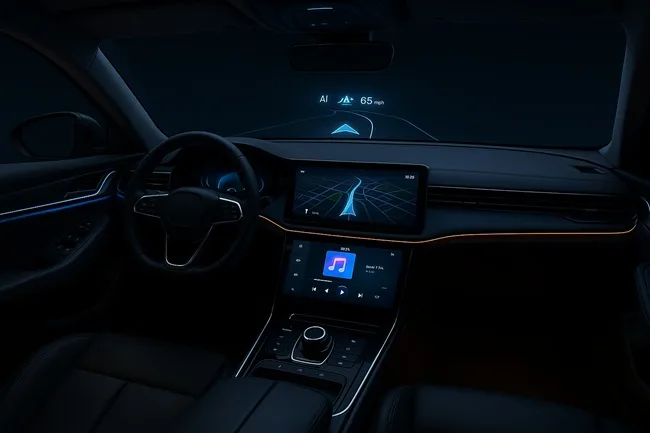
The company’s full-stack cockpit systems consolidate instrument clusters, infotainment systems, heads-up displays, and AI-based voice assistants into a single computing domain. This modular design supports zonal architecture deployments and over-the-air updates, key features in the shift toward software-defined vehicle frameworks.
Why are global automakers now rethinking their dependence on legacy Tier-1 suppliers?
The shift in preference toward full-stack suppliers like ECARX stems from a growing realization among automakers that traditional Tier-1 architectures are struggling to keep pace with the digitalization of the driving experience. Legacy setups, often comprising separate ECUs for different functions and relying on outdated operating systems or siloed user interfaces, are becoming costlier to maintain and slower to adapt to new feature sets demanded by consumers.
Today’s automakers are under pressure to deliver seamless digital experiences inside the cabin, ranging from app integrations and real-time navigation to natural language processing and cloud-connected services. As the cockpit increasingly becomes a brand differentiator, original equipment manufacturers are looking for suppliers that can provide tightly integrated, scalable, and upgradeable platforms. ECARX’s promise of an end-to-end system that includes silicon, software, and cloud connectivity under one roof offers a compelling value proposition, especially for electric vehicle and smart mobility programs seeking shorter development cycles and reduced component complexity.
Moreover, the emergence of zonal architecture in vehicle design wherein entire regions of the car are managed by centralized domain controllers instead of multiple ECUs is accelerating the push toward suppliers with high integration capabilities. ECARX’s offerings are already aligned with these trends, putting it in a strong position to meet next-generation automotive requirements.
What challenges does ECARX face in taking on the Tier-1 giants in cockpit integration?
Despite its rapid growth and global ambitions, ECARX faces significant hurdles in its attempt to disrupt a well-established supply chain. Traditional Tier-1s like Continental AG, Magna International Inc., and Denso Corporation have decades of experience delivering automotive-grade systems with proven reliability, safety compliance, and long-term support commitments. These incumbents have entrenched relationships with top global automakers and are often part of multi-domain programs that span beyond cockpit electronics, including powertrain, body electronics, and active safety systems.
ECARX, by comparison, is still viewed by some industry observers as heavily reliant on its historical relationship with Geely and its associated brands. Expanding beyond that ecosystem to win cockpit domain contracts from other global original equipment manufacturers will require significant investment in customer engineering support, production ramp-up capabilities, and compliance with international safety standards such as ISO 26262 and UNECE regulations.
There is also the issue of geopolitical perception. As a Chinese-origin company expanding into Western markets, ECARX must navigate increasingly complex regulatory and trust-related landscapes, especially in regions where cybersecurity and data governance are high-priority concerns. Convincing Western automakers to entrust a China-based technology partner with their in-cabin data infrastructure may prove difficult, particularly as cockpit systems become the central node for cloud interaction, voice assistants, and driver identity management.
What would a successful global expansion by ECARX mean for the intelligent cockpit supply chain?
If ECARX successfully scales its intelligent cockpit platforms across multiple global original equipment manufacturers, the ripple effects could be significant. First, it could force legacy Tier-1 suppliers to accelerate their own digital transformation efforts, either through acquisitions, joint ventures, or internal restructuring. Already, companies like Aptiv PLC, Panasonic Automotive, and Bosch are investing heavily in domain controller architecture and vehicle operating systems to retain their competitive edge.
Second, ECARX’s rise may lead to greater bifurcation in the automotive supply chain, with newer platform-focused firms commanding a larger share of value creation within the cockpit domain, while traditional module suppliers see erosion in their margins. As cockpit systems evolve to become dynamic user environments with upgradeable features and subscription-based models, suppliers with embedded software and over-the-air capabilities will be in stronger negotiating positions with automakers.
Third, if ECARX can establish a track record of mass-market production with international partners, it may serve as a case study for other Chinese technology firms seeking to globalize their automotive offerings. This could accelerate the shift in automotive innovation power from legacy manufacturing hubs to new digital-first regions.
What should investors, suppliers, and automakers be watching for next in the intelligent cockpit race?
Over the next 12 to 18 months, key indicators of ECARX’s global traction will include new design wins with non-Geely original equipment manufacturers, especially in Europe and North America. Mass production announcements, software updates at scale, and regional hiring in automotive engineering hubs will also signal progress.
Automakers should closely monitor how ECARX manages reliability, lifecycle support, and regulatory certification across multiple geographies. Suppliers may need to reconsider their positioning in the value chain and explore partnerships with software-first firms to stay competitive. Investors should watch for margin expansion potential from ECARX’s platform business model, recurring revenue from cockpit software updates, and traction in zonal architecture deployments.
In a market where the cabin is no longer just a physical space but a digitally orchestrated experience, ECARX’s push into the intelligent cockpit segment represents a broader industry shift from hardware provisioning to platform dominance.
Discover more from Business-News-Today.com
Subscribe to get the latest posts sent to your email.