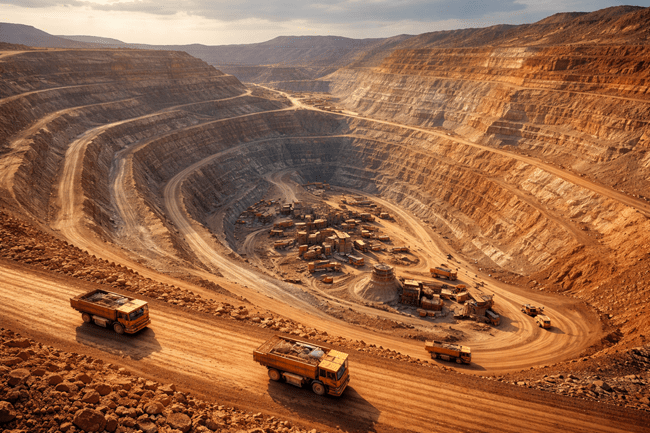



Aluminium Bahrain B.S.C. (Bahrain Bourse: ALBH), known as Alba, has agreed to acquire Aluminium Dunkerque from American Industrial Partners in a transaction valued at about $2.2 billion. The deal gives Aluminium Bahrain B.S.C. control of the largest aluminium smelter in the European Union, located near Dunkirk in northern France, and marks one of the Gulf company’s most significant international expansion moves. Reuters reported that French state-backed investment bank Bpifrance is expected to take a 6% stake in Aluminium Dunkerque for €100 million, giving France a strategic foothold in the asset after the sale. Aluminium Bahrain B.S.C. shares have recently traded around 1.26 Bahraini dinars, with the stock close to the upper end of its recent range as investors weigh the scale and funding impact of the acquisition.
Why is Aluminium Bahrain buying Aluminium Dunkerque at this point in the metals cycle?
Aluminium Bahrain B.S.C.’s acquisition of Aluminium Dunkerque is not simply a geographic expansion. It is a strategic move into European industrial infrastructure at a time when aluminium has become central to energy transition supply chains, automotive light-weighting, construction, packaging, power networks and low-carbon manufacturing. The deal gives Aluminium Bahrain B.S.C. a physical production base inside the European Union, rather than only an export relationship with European customers.
Aluminium Dunkerque is strategically important because it is the European Union’s largest primary aluminium smelter. Earlier reporting by the Financial Times said the site produces about 300,000 tonnes of aluminium per year and employs around 750 people. That scale matters because Europe has been losing energy-intensive industrial capacity under pressure from power costs, Chinese competition, tariff disputes and decarbonisation expenses. A buyer with Gulf industrial backing can bring capital and operating discipline, while France retains a minority strategic position through Bpifrance.
For Aluminium Bahrain B.S.C., the transaction also diversifies the company beyond its home base in Bahrain. The company is already one of the world’s largest aluminium smelter operators outside China, but adding a European asset changes its market access, customer mix and industrial footprint. It gives the company a stronger position in a region where customers increasingly care about supply security, carbon intensity, traceability and trade compliance.
The timing is also commercially interesting because aluminium markets are tightening around energy transition demand and trade realignment. Europe wants domestic or friendly supply of strategic materials, while Gulf producers want to move closer to end markets. Aluminium Dunkerque sits at the intersection of both needs. Not bad for a business that mostly turns electricity into metal and then into very serious boardroom conversations.
Why does France want Bpifrance inside the Aluminium Dunkerque ownership structure?
Bpifrance’s expected 6% stake is small in percentage terms but strategically large in meaning. It gives the French state-backed investment bank a seat in the ownership structure of a major industrial asset after its sale to a foreign buyer. In politically sensitive sectors such as aluminium, that matters. France wants to preserve jobs, industrial capability and strategic autonomy while still attracting international capital.
The structure also helps make the deal more politically acceptable. Aluminium Dunkerque is not just another factory. It is a large energy-intensive industrial site in northern France, and aluminium production is tied to defence, automotive, aerospace, power infrastructure and energy transition supply chains. Allowing Bpifrance to acquire a minority stake signals that France does not intend to be a passive observer after the transaction closes.
For Aluminium Bahrain B.S.C., Bpifrance participation can be useful. A local state-backed shareholder may help with stakeholder relations, labour confidence, permitting, energy discussions and long-term industrial planning. It can also reassure customers and policymakers that the asset will remain embedded in France’s industrial base rather than become a purely financial or export-driven holding.
The risk is that state participation can also add complexity. Aluminium Bahrain B.S.C. will need to balance commercial efficiency with French industrial policy priorities. Commitments around jobs, investment and long-term development may support political acceptance, but they can also limit restructuring flexibility. In Europe, buying a strategic factory means buying the politics that comes with it. Batteries are not included, but committees usually are.
How does the acquisition strengthen Aluminium Bahrain’s position in low-carbon aluminium?
The deal strengthens Aluminium Bahrain B.S.C.’s position because European customers are increasingly focused on carbon intensity, traceability and supply-chain compliance. Aluminium is an energy-intensive metal, and its emissions profile depends heavily on the source of electricity used in smelting. Europe’s carbon border adjustment framework and wider decarbonisation policy are likely to make carbon credentials more important in aluminium sourcing decisions.
Aluminium Dunkerque could therefore become more valuable if Aluminium Bahrain B.S.C. can position it as a secure European producer aligned with lower-carbon industrial demand. Earlier coverage of the site highlighted its role in addressing Europe’s aluminium supply deficit and serving demand for more sustainably produced metal. That matters because customers in automotive, construction, packaging and renewable infrastructure are under pressure to reduce embedded carbon in their own supply chains.
For Aluminium Bahrain B.S.C., combining Gulf-scale smelting expertise with a European operating footprint creates strategic optionality. The company can serve European customers locally from Dunkerque while continuing to run its major Bahrain operations. That geographic spread may become more valuable as trade flows shift and customers seek to reduce dependence on single-region supply.
The challenge is that low-carbon positioning will require sustained investment. Aluminium smelting is exposed to electricity prices, grid policy, renewable power access, technology upgrades and emissions regulation. Aluminium Bahrain B.S.C. will need to show that Aluminium Dunkerque can remain competitive not only on volume, but also on carbon profile and cost position. Europe wants green metal. Producers still need green margins.
What does the deal mean for American Industrial Partners and private equity in industrial carve-outs?
For American Industrial Partners, the sale represents a major industrial monetisation event. The investment firm took control of Aluminium Dunkerque in 2021 after the asset had previously been associated with Sanjeev Gupta’s metals empire. The Financial Times reported that the smelter’s net profit rose from €49 million in 2021 to €186 million in 2024, suggesting that the asset’s financial performance improved significantly under its current ownership.
That improvement helps explain why a strategic buyer such as Aluminium Bahrain B.S.C. would be willing to pay a large price. Private equity often creates value in industrial assets by stabilising operations, improving cost discipline, strengthening customer relationships and preparing businesses for strategic buyers that can justify higher long-term valuations. Aluminium Dunkerque fits that pattern. It is not a software-like asset, but it is strategically scarce.
The sale also shows that private equity exits in heavy industry remain possible when the asset has strategic value. Many investors associate private equity with technology, healthcare or services, but industrial assets can produce strong outcomes when they sit in critical supply chains. Aluminium Dunkerque benefits from scale, location, European policy relevance and demand from multiple industrial sectors.
For other private equity owners of metals, mining, chemicals or industrial manufacturing assets, the transaction is a useful signal. Strategic buyers remain willing to pay for capacity that gives them market access, supply-chain relevance and geopolitical positioning. The buyer universe may be narrower than in software, but when the right strategic acquirer appears, the cheque can still be very real.
How should investors read Aluminium Bahrain’s market position after the deal?
For Aluminium Bahrain B.S.C. shareholders, the deal is transformational enough to demand scrutiny. The company is moving from being a major Gulf aluminium producer into a more international operator with a large European asset. That could improve growth, geographic diversification and customer access, but it also introduces new operational, regulatory and energy-market exposure.
The $2.2 billion valuation is meaningful and will require careful funding. Reuters reported that the deal gives Aluminium Bahrain B.S.C. full ownership of Aluminium Dunkerque, while Bpifrance will take a 6% stake for €100 million. Investors will want clarity on debt, financing costs, cash flow contribution, integration spending and whether the acquisition affects dividends or future capital expenditure.
The market is likely to focus on three financial questions. First, can Aluminium Dunkerque generate enough cash flow to justify the purchase price? Second, can Aluminium Bahrain B.S.C. maintain balance-sheet flexibility after a large overseas acquisition? Third, can the company convert the European footprint into better customer access and stronger margins rather than simply becoming larger?
Aluminium Bahrain B.S.C.’s share price near the upper end of its recent range suggests investors have not rejected the strategic logic. However, confidence will depend on execution. Buying Europe’s biggest aluminium smelter sounds impressive. Running it profitably through Europe’s energy, labour and regulatory environment is the actual exam.
Why does Aluminium Dunkerque matter for Europe’s aluminium security?
Aluminium Dunkerque matters because Europe’s aluminium industry has faced serious pressure from high energy costs, cheaper imports and the capital cost of decarbonisation. Aluminium is essential for electrification, transport, packaging, construction and industrial equipment, but primary smelting is one of the most energy-intensive parts of the metals value chain. Losing domestic smelting capacity would increase dependence on imports at a time when Europe is trying to strengthen industrial resilience.
The acquisition also comes as global aluminium trade is being reshaped by geopolitical risk and tariff uncertainty. Reuters recently reported that Rio Tinto commissioned a $1.5 billion low-carbon aluminium smelter expansion in Quebec, with Canada also investing in ELYSIS technology, underlining how governments are focusing on secure and lower-carbon aluminium supply chains. The Aluminium Bahrain B.S.C. deal fits that wider industrial pattern: smelting capacity is becoming a strategic asset, not just a commodity plant.
For France and the European Union, keeping Aluminium Dunkerque active and investment-ready matters for industrial policy. The site supports jobs, regional manufacturing capability and downstream customers. If the new ownership structure brings capital while preserving local strategic influence, the deal could be viewed as a pragmatic compromise between foreign investment and domestic control.
The risk is that Europe’s structural cost challenges remain. Energy prices, grid access, climate policy and competition from lower-cost producers will continue shaping profitability. A new owner does not magically solve the economics of European smelting. It gives the asset a new strategic sponsor. The hard work comes after closing.
What are the biggest risks in the Aluminium Bahrain and Aluminium Dunkerque deal?
The first risk is energy cost exposure. Aluminium smelting depends heavily on electricity prices. If Aluminium Dunkerque cannot secure competitive long-term power arrangements, its cost position could weaken despite scale and strategic importance. European energy markets remain more complicated than Gulf producers may be used to managing.
The second risk is integration. Aluminium Bahrain B.S.C. is acquiring a major French industrial site with its own workforce, operating culture, regulatory context and customer base. Cross-border industrial integrations require patience, especially when labour relations and government stakeholders are involved.
The third risk is decarbonisation investment. European aluminium production will need continued capital spending to meet emissions expectations and customer requirements. Aluminium Bahrain B.S.C. may need to invest further in technology, energy sourcing and efficiency to preserve Aluminium Dunkerque’s competitiveness.
The fourth risk is commodity cyclicality. Aluminium demand is linked to construction, automotive, packaging, power infrastructure and industrial activity. If prices weaken or European demand slows, returns from the acquisition could come under pressure. Strategic assets still have commodity exposure. Metal prices are not sentimental.
What happens next for Aluminium Bahrain, Bpifrance and Aluminium Dunkerque?
The next phase will centre on closing, financing execution and stakeholder management. Aluminium Bahrain B.S.C. will need to provide investors with more detail on funding, expected returns, integration plans and long-term development priorities for Aluminium Dunkerque. Bpifrance’s minority role will also need to be formalised, with governance arrangements that balance French industrial interests and Aluminium Bahrain B.S.C.’s operating control.
After closing, the strategic focus will shift to operational performance. Aluminium Bahrain B.S.C. must demonstrate that it can run a major European smelter efficiently, preserve workforce stability, maintain customer confidence and invest in sustainability. The company will also need to explain how the acquisition fits its broader global strategy and whether it plans further international expansion.
For Europe, the deal will be watched as a case study in how strategic industrial assets can attract foreign capital without fully losing domestic policy influence. If Aluminium Dunkerque performs well under the new structure, the transaction may become a template for other energy-intensive European industrial assets seeking capital. If it struggles, critics may argue that ownership change cannot solve the deeper cost pressures facing European manufacturing.
The bigger signal is clear. Aluminium is becoming more strategic as electrification, trade policy and carbon rules reshape industrial supply chains. Aluminium Bahrain B.S.C. is betting that owning European capacity will matter more in that world. Now it has to prove the biggest smelter in the European Union can also be a profitable growth platform.
Key takeaways on what Aluminium Bahrain’s Dunkerque acquisition means for metals investors
- Aluminium Bahrain B.S.C. has agreed to acquire Aluminium Dunkerque from American Industrial Partners in a deal valued at about $2.2 billion.
- Aluminium Dunkerque is the largest primary aluminium smelter in the European Union and is located near Dunkirk in northern France.
- French state-backed investment bank Bpifrance is expected to take a 6% stake in Aluminium Dunkerque for €100 million.
- The deal gives Aluminium Bahrain B.S.C. a major European production base and closer access to European industrial customers.
- The acquisition strengthens Aluminium Bahrain B.S.C.’s position in aluminium supply chains tied to electrification, automotive, construction and low-carbon manufacturing.
- American Industrial Partners appears to be monetising the asset after a period of improved financial performance.
- The main risks are energy costs, integration complexity, European regulation, decarbonisation investment and aluminium price cyclicality.
- For France, the deal preserves strategic influence through Bpifrance while bringing in a major industrial buyer.
- For Europe, Aluminium Dunkerque remains important because domestic smelting capacity is under pressure from power costs, imports and decarbonisation requirements.
- The broader signal is that aluminium smelting capacity is becoming a geopolitical and industrial strategy asset, not just a commodity business.
Discover more from Business-News-Today.com
Subscribe to get the latest posts sent to your email.