


Alphabet Inc. (NASDAQ: GOOGL) has signed a definitive agreement to acquire Intersect, a data center and energy infrastructure developer, for $4.75 billion in cash and assumed debt. The transaction is expected to accelerate Alphabet’s U.S. data center capacity expansion while unlocking faster deployment of new energy projects via co-located infrastructure. Intersect will continue to operate under its existing brand with founder and chief executive officer Sheldon Kimber at the helm.
The deal signals Alphabet’s shift toward vertically integrated infrastructure strategies designed to meet surging artificial intelligence–driven compute demand without relying solely on external grid capacity. It also reinforces the company’s growing role as an anchor buyer of clean power, positioning energy development as a critical bottleneck in hyperscale cloud and AI growth.
Why is Alphabet acquiring Intersect—and why now?
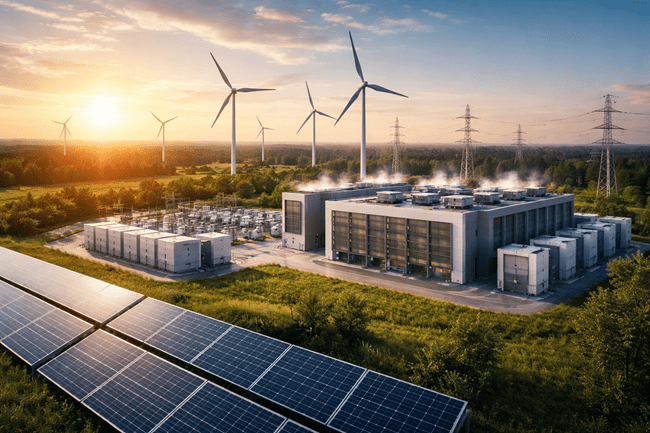
The acquisition builds on an existing partnership between Intersect and Google, formalized in December 2024, aimed at co-locating power and compute infrastructure at scale. At the heart of the deal is a strategic model: building gigawatt-scale clean energy and data center sites in tandem rather than relying on traditional power purchase agreements across fragmented geographies.
Alphabet’s move comes amid intensifying energy constraints and permitting delays across the United States, which have become a strategic barrier for hyperscalers attempting to expand data center footprints. In some cases, electricity availability—not land or capital—is becoming the primary limiting factor. Alphabet’s direct ownership of Intersect aims to bypass those grid constraints by controlling the timing and siting of new generation capacity.
The timing also aligns with Alphabet’s internal pressure to fulfill AI-related infrastructure buildouts across Google Cloud and proprietary models like Gemini. As enterprise AI adoption outpaces utility-scale grid expansion, Alphabet is repositioning itself to control more of the energy value chain.
What assets and partnerships are included in the Intersect transaction?
The acquisition includes Intersect’s core team and a portfolio of gigawatt-scale clean energy and data center projects currently in development or under construction, primarily through its earlier partnership with Google. A key near-term asset is a co-located data center and power generation facility already underway in Haskell County, Texas, scheduled to come online between 2026 and 2027.
Notably, Intersect’s existing operational and in-development assets in Texas and California will remain outside of the transaction. These assets, backed by TPG Rise Climate, Climate Adaptive Infrastructure, and Greenbelt Capital Partners, will continue to operate under the independent Intersect structure and serve third-party customers.
This carveout structure enables Alphabet to absorb the pipeline most strategically aligned with its needs, while allowing Intersect’s legacy investors to retain upside from mature or contracted assets not directly relevant to Alphabet’s infrastructure roadmap.
How does this deal reshape data center energy strategy for hyperscalers?
The Intersect acquisition marks a broader pivot in hyperscaler strategy—from virtual power purchase agreements and renewable energy credits to physical energy ownership and on-site generation. While companies like Amazon and Microsoft have also invested heavily in renewables, Alphabet’s approach appears more vertically integrated, with direct control over infrastructure design, permitting, and deployment.
By embedding data centers directly into clean energy projects, Alphabet can reduce latency in power availability, limit exposure to transmission congestion, and stabilize energy pricing for AI workloads—factors increasingly critical for sustaining cloud economics in power-constrained markets.
The approach also allows Alphabet to sidestep delays from interconnection queues and planning bottlenecks, enabling faster market entry in strategic locations. This “power-first” philosophy reimagines the sequencing of infrastructure development—starting with generation and letting compute follow, rather than the other way around.
What are the implications for Intersect and its role within Alphabet?
Post-acquisition, Intersect will continue to operate under its own brand, led by Sheldon Kimber. It will maintain operational separation from both Alphabet and Google while serving as a tightly aligned development partner. This mirrors Alphabet’s structure with other semi-autonomous units like DeepMind and Waymo—allowing focus and agility within a parent company that provides strategic capital and scale.
Kimber emphasized that Intersect’s mission to modernize American energy infrastructure aligns with Google’s ambitions in AI. He stated that modern compute is now inextricably tied to modern energy, and that community engagement, innovation, and speed-to-deployment must be rebalanced in favor of co-developed solutions.
The company has already begun executing on a $20 billion infrastructure plan—announced in 2024—that aims to deliver gigawatts of co-located data center and clean power capacity by decade’s end. This trajectory will likely accelerate under Alphabet’s ownership, with increased financial flexibility and strategic alignment.
Could Alphabet’s model scale beyond the United States?
While the current deal is focused on U.S. infrastructure, the underlying model of co-located energy and compute assets could prove exportable—particularly in markets facing similar power bottlenecks. Emerging markets in Asia and Latin America, where grid constraints are acute and data sovereignty concerns are rising, may see variations of this approach over time.
Google’s global energy team has already been involved in region-specific sourcing and capacity planning across Europe, Africa, and APAC. If Intersect’s integration proves successful, Alphabet may replicate the model internationally—though that would require navigating more complex regulatory and ownership frameworks around energy infrastructure abroad.
Still, with AI compute demand expected to double every 18 to 24 months, the ability to scale data center infrastructure alongside on-demand clean power will become a strategic differentiator not just in the U.S., but globally.
What are the risks and regulatory considerations tied to the deal?
Although the acquisition is subject to customary regulatory approvals and is expected to close in the first half of 2026, the broader energy strategy raises potential questions around market power. As Alphabet grows more active in power infrastructure, regulators may scrutinize whether its energy development arm could disadvantage competing cloud providers seeking grid access in the same regions.
Additionally, the carveout of certain Intersect assets could complicate customer relationships or raise questions about long-term service continuity. However, Intersect has committed to a seamless transition for legacy customers, with continued support from existing investors and no disruption in operations.
From an operational standpoint, co-locating data centers with clean energy requires sophisticated coordination of permitting, interconnection, and community engagement. Failure to align these timelines could result in stranded capital or delayed capacity—especially in markets with slower permitting regimes.
Yet if Alphabet succeeds, the model could reshape infrastructure economics and serve as a template for AI-era expansion that is both capital-efficient and grid-sensitive.
Key takeaways: Why Alphabet’s Intersect acquisition is a signal moment in AI-era infrastructure
- Alphabet’s $4.75 billion acquisition of Intersect provides direct access to gigawatt-scale co-located data center and clean energy projects.
- The deal deepens Alphabet’s strategy to vertically integrate power and compute infrastructure amid surging AI demand.
- Intersect’s existing operating assets in Texas and California are excluded, allowing legacy investors to retain upside in mature assets.
- The acquisition reinforces a shift from PPAs to physical ownership of clean energy aligned with data center load growth.
- Intersect will continue to operate independently under Sheldon Kimber, maintaining focus and agility within Alphabet’s ecosystem.
- The “power-first” model may be replicated globally to overcome grid bottlenecks and accelerate AI infrastructure deployment.
- Regulatory scrutiny may arise if Alphabet’s energy presence begins to crowd out competing cloud providers in constrained regions.
- Success could position Alphabet as a dual force in compute and power markets, reshaping infrastructure design for the AI era.
Discover more from Business-News-Today.com
Subscribe to get the latest posts sent to your email.

